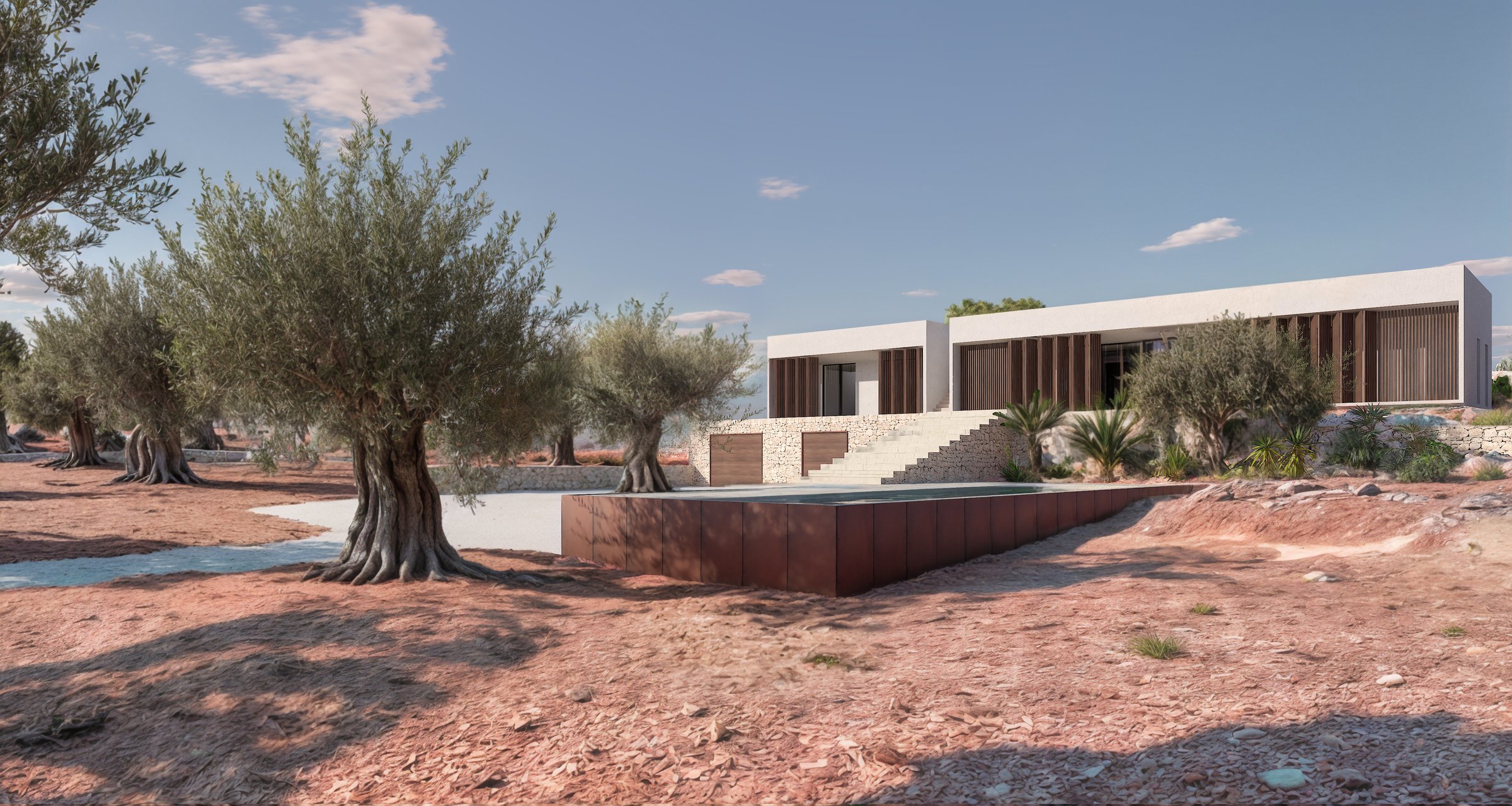
Villa in Carovigno – A bioclimatic residence amongst the olive trees in Puglia
A house on a podium that transforms the constraints of the Apulian agricultural landscape into the guiding principles of the design.
2024–2025 · Carovigno (BR), Apulia · Detached house · Sustainable Design
Living in an olive grove without altering it
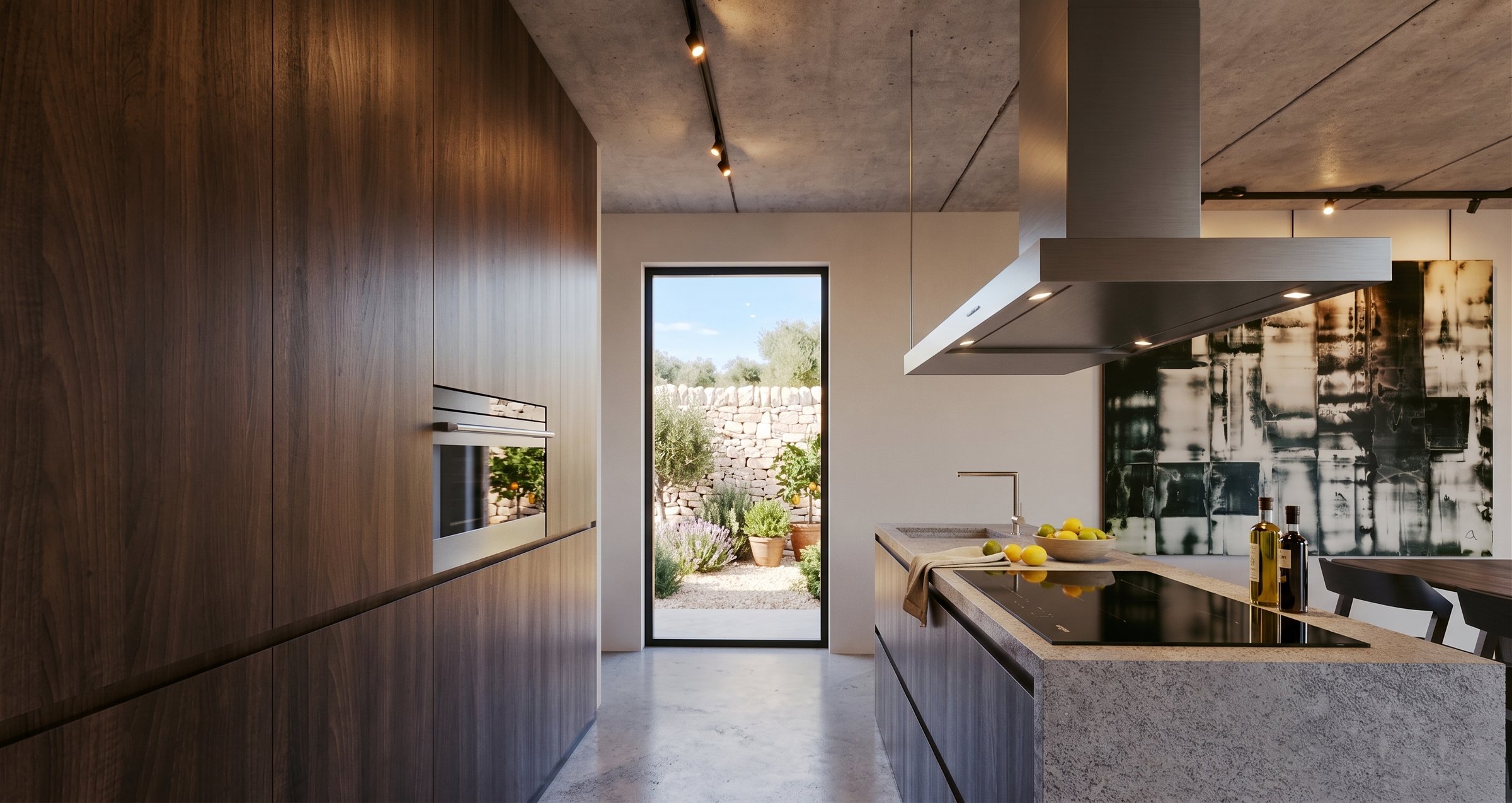
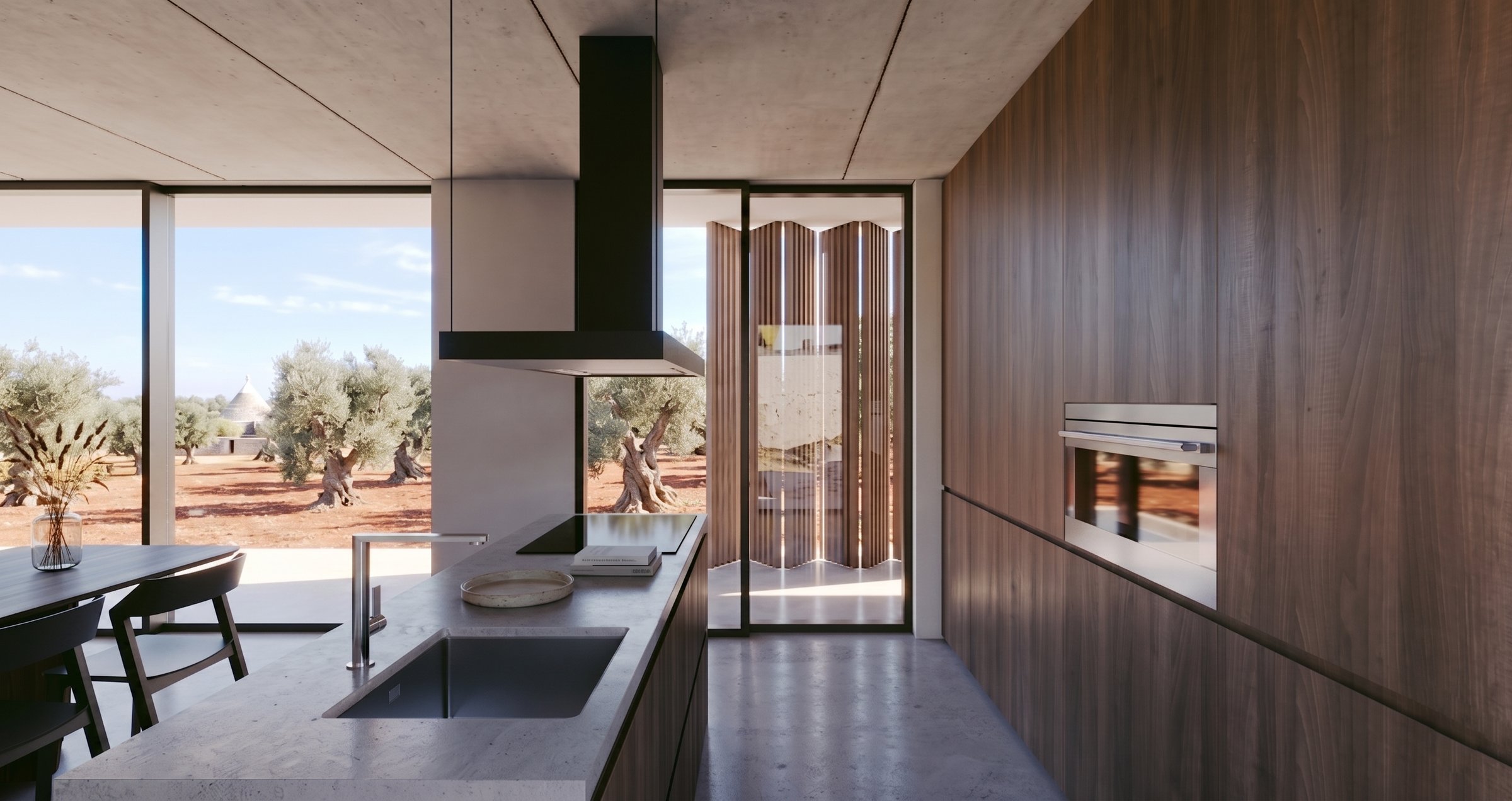
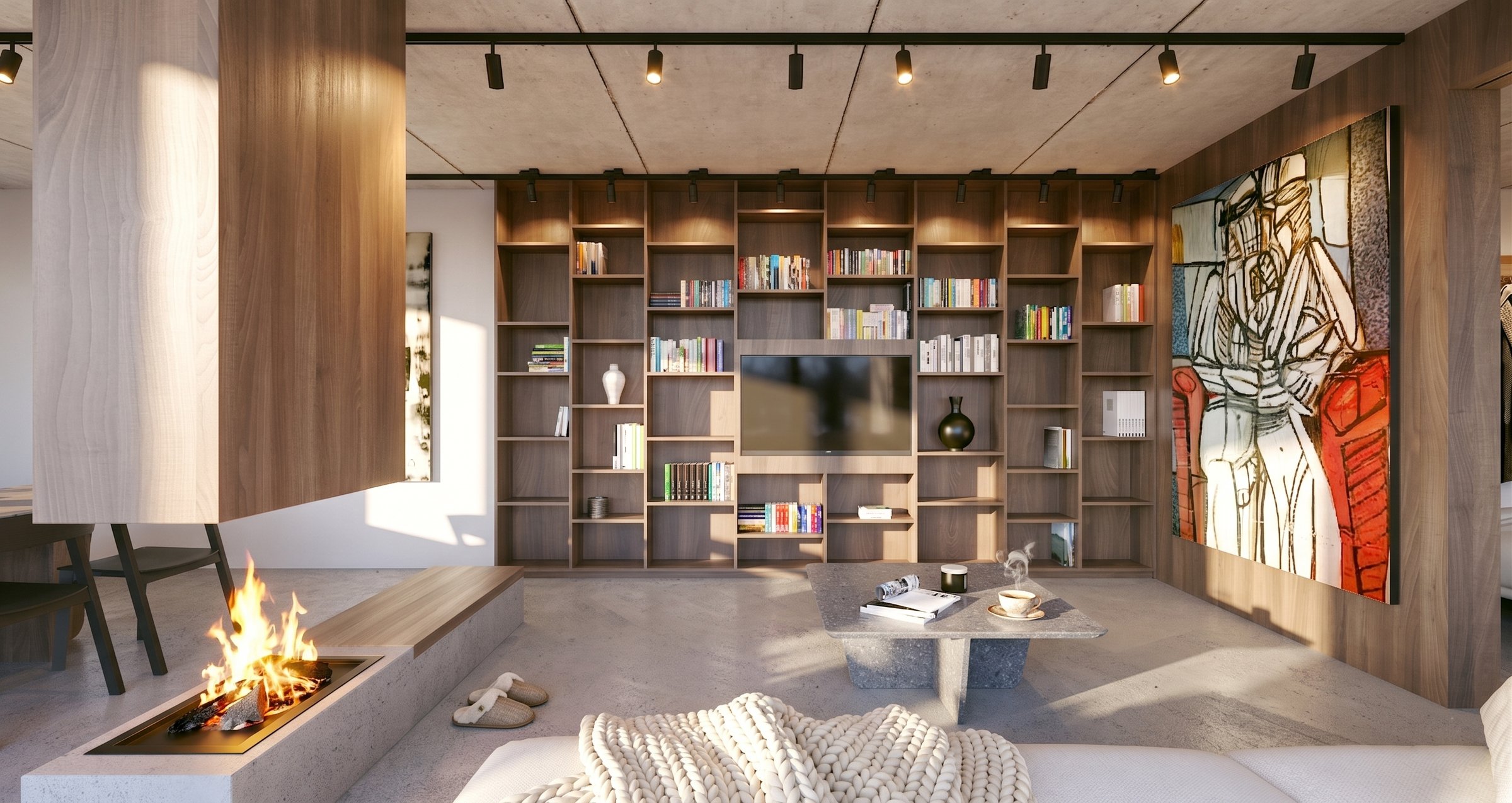
In Carovigno, in the Brindisi countryside of the Murgia dei Trulli, a plot of over 12,000 square metres entirely classified as an olive grove is the site of a new residence for a Belgian couple of clients. The area, bordered by dry stone walls and dotted with olive and almond trees, falls within agricultural zone E3 of the General Urban Plan: a context where building does not mean occupying, but rather integrating into a landscape balance that has been established for centuries. The design challenge was twofold: to comply with strict planning restrictions (maximum height 4 metres, floor area ratio 0.03 m³/m²) and to offer international clients a contemporary standard of living without distorting the character of the site.
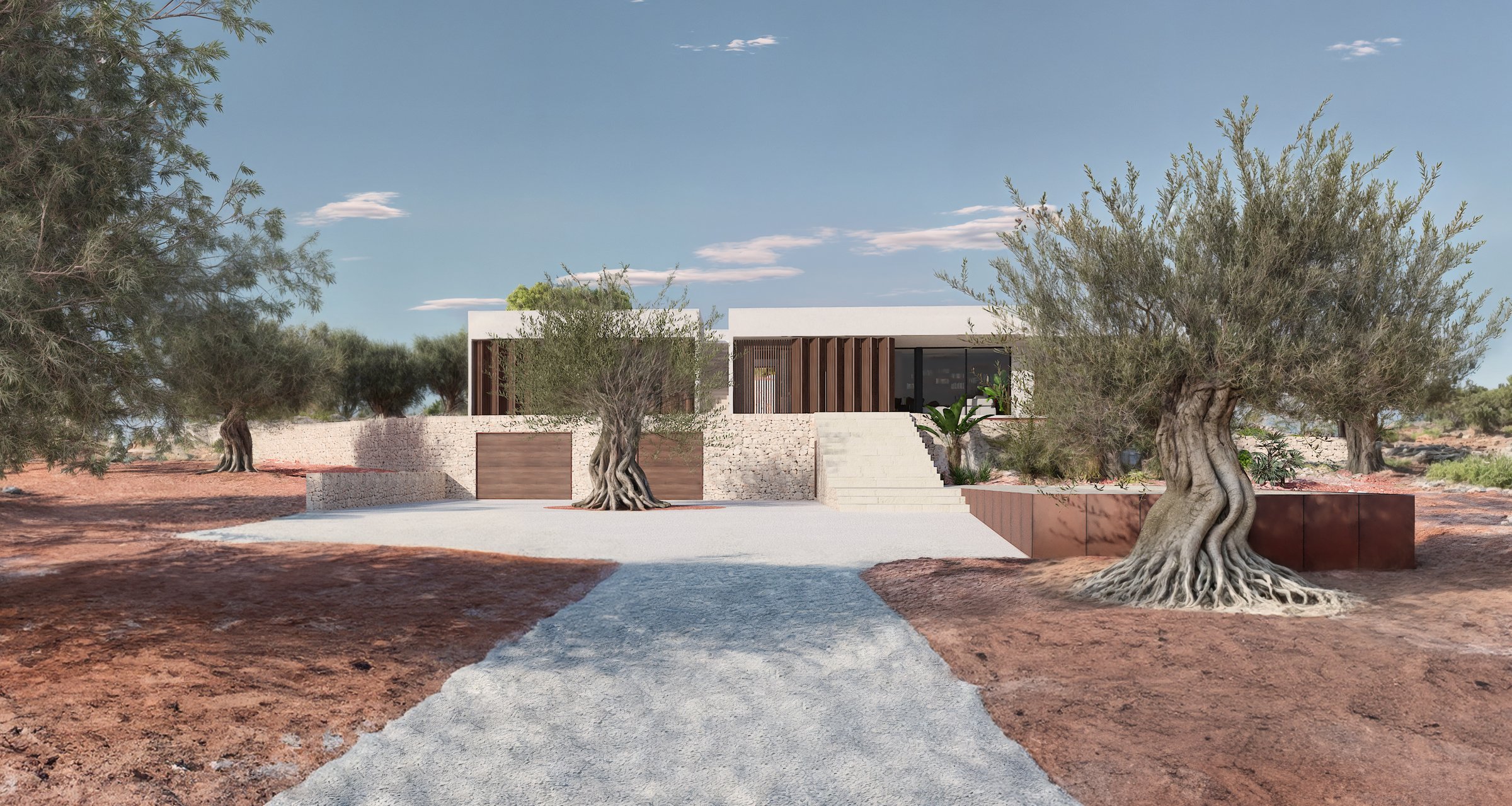
The strategy adopted by Architect Micaela Colella (project lead) and the team at Barberio Colella Architetti draws on a typology deeply rooted in the Mediterranean: the podium building. The house is situated on the existing natural terraced slope, at the innermost point of the plot, away from the road. This choice is not merely for aesthetic reasons: the distance from the road, combined with the dense tree cover, renders the building almost invisible from the outside. Beneath the podium, within the terraced volume, the garage, cellar and utility room are housed, making use of the existing elevation difference without adding any above-ground volume. The dry-stone perimeter wall of the terraced area is rebuilt using traditional techniques, transforming a maintenance project into an element of continuity with the landscape.
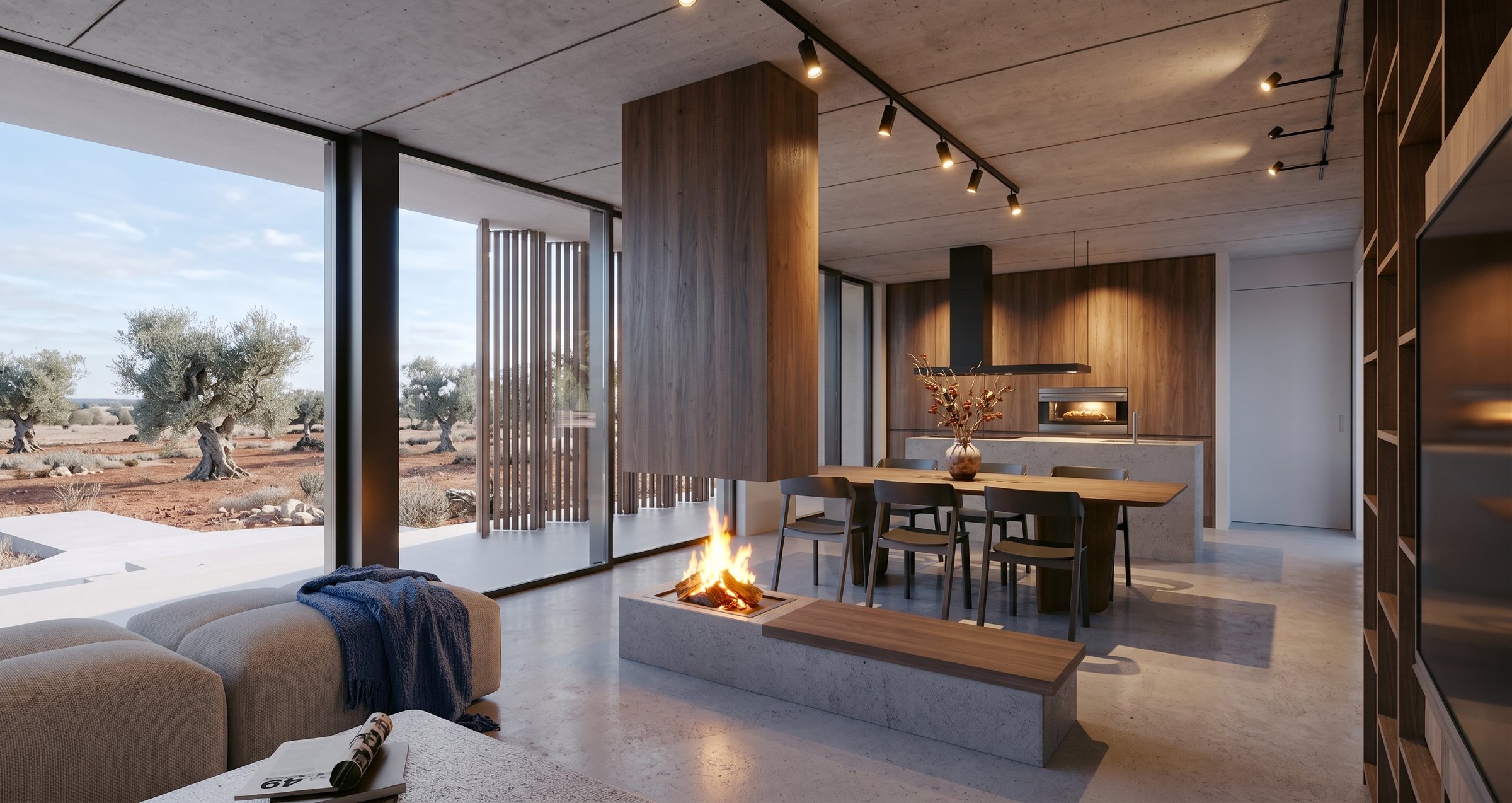
On the south-facing side, the facade features movable timber shading devices (a contemporary reinterpretation of traditional Apulian shutters) which can be closed completely to protect the interior from overheating and glare. The external cladding uses hempcrete blocks, a natural material with high-performance thermal properties, plastered and painted in the white of the traditional rural lime putty. Energy self-sufficiency is ensured by a 30-square-metre photovoltaic canopy and a solar thermal panel on the roof, both screened from view by vegetation. Air conditioning is provided by a high-efficiency hydronic heat pump with a storage tank.
Access to the property is via an existing opening in the dry-stone wall, with a driveway of compacted gravel, no asphalt, no waterproofing. The existing olive trees have been preserved in their original positions; only small shrubs may eventually be relocated within the plot. The project is currently at the planning permission stage, with the application submitted in July 2024.
Technical specifications
- Location
- Carovigno (BR), Apulia, Italy
- Year
- 2024
- Client
- Private
- Typology
- Detached house
- Area
- 137.51 m² (residential) + 76.98 m² (ancillary areas)
- Status
- Planning application submitted (July 2024)
- Designer
- Architect Micaela Colella (project manager), with Maurizio Barberio and Angelo Figliola
- Main materials
- Hempcrete blocks, local stone, timber for shading, reinforced concrete (RC)
How do you build a low-energy house in an agricultural zone of Puglia without altering the landscape?
Anyone who owns agricultural land in Puglia and wishes to build a home faces a paradox: the landscape and planning restrictions are so stringent that they seem incompatible with a contemporary, comfortable house. Reduced maximum heights, minimum plot ratios, protection of dry stone walls, respect for centuries-old olive trees, buffer zones around woodland, everything seems designed to hinder, not to guide. In reality, these restrictions can become the guiding principles for a high-quality project, provided that the architecture emerges from the context rather than imposing itself upon it. In Carovigno, the solution was a building that makes use of the terrain’s topography, traditional local materials and passive bioclimatic strategies to offer high levels of comfort with virtually no visual impact.
Frequently Asked Questions
Are you looking for a home in Puglia that blends in with the landscape and offers you every comfort?
If you own land in an agricultural zone and want to build a home that works with the climate, rather than against it, we can help you understand what’s buildable in your specific situation. Let’s discuss your project, with no obligation.
Let’s talk about your projectRelated projects
Sustainable Design
NEW ROOTS
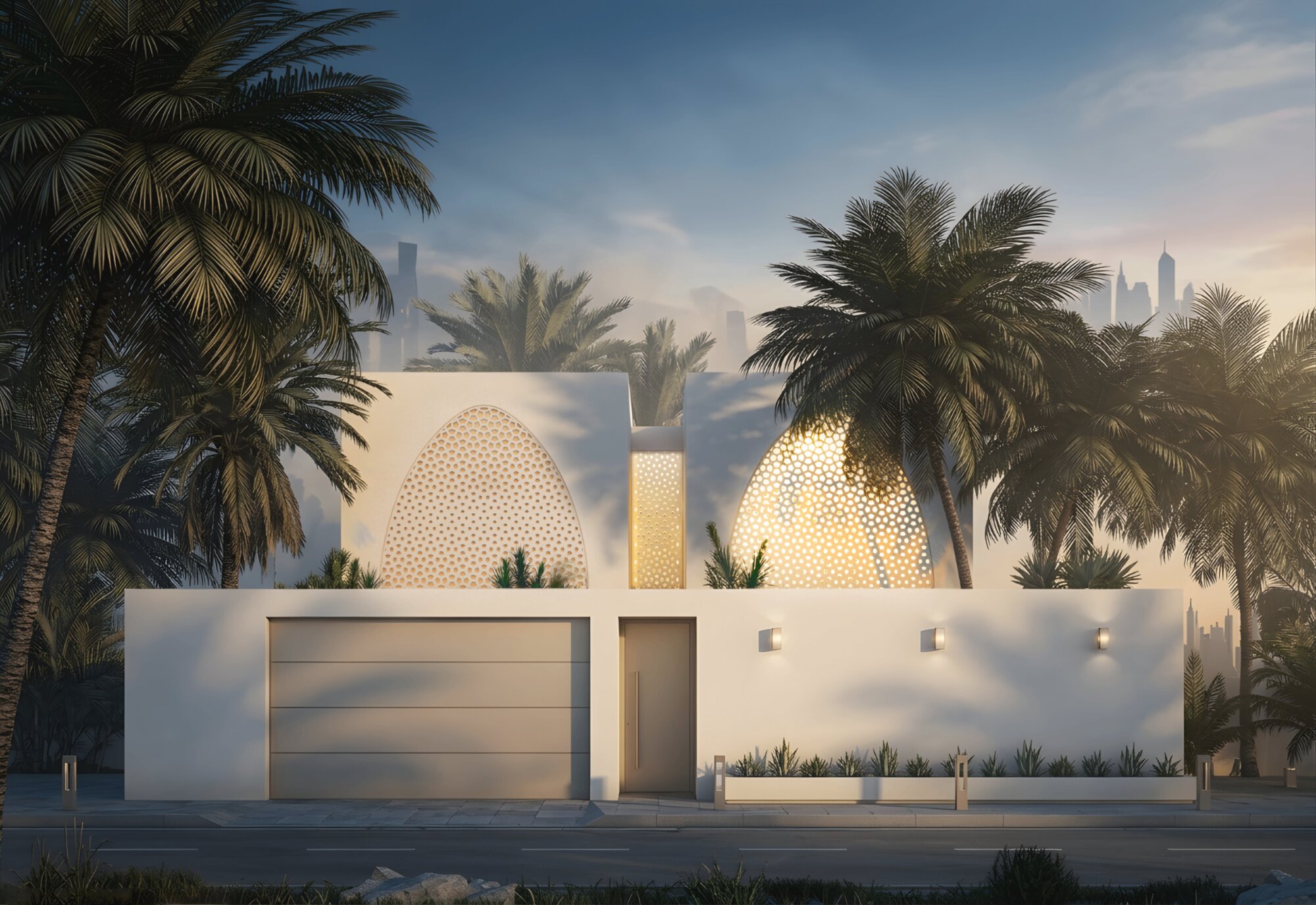
A residential project that reinterprets the elements of traditional Gulf architecture (compact forms, shading surfaces, and the integration of water and greenery) through a contemporary bioclimatic lens.
Sustainable Design
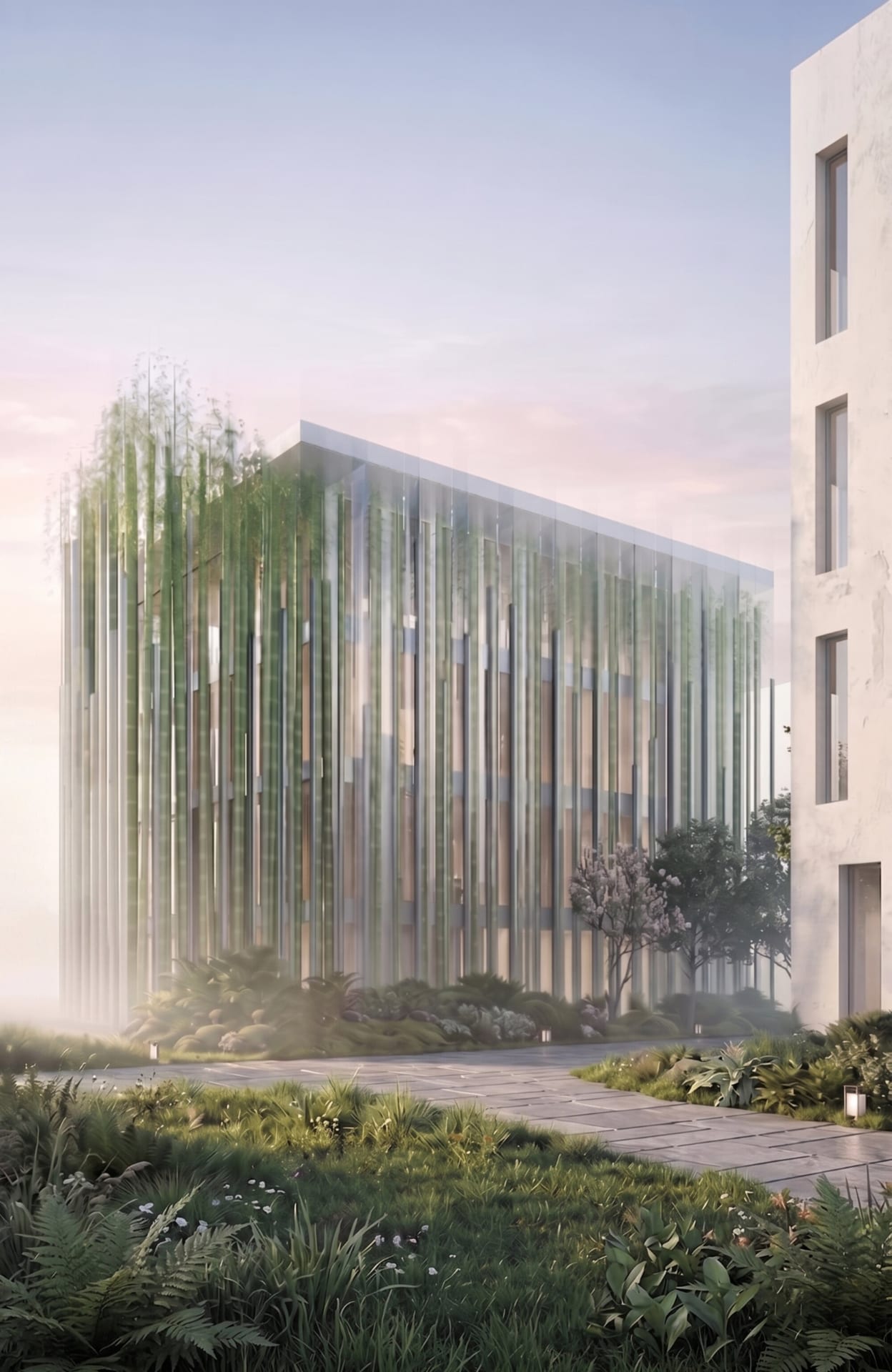
BAMBOO OFFICE
A building where the facade serves as the primary climate control system: a fifteen-metre-high bamboo forest that filters light, heat and wind.