Bamboo Office – A bioclimatic office building in Changzhou
A building where the facade serves as the primary climate control system: a fifteen-metre-high bamboo forest that filters light, heat and wind.
2018–2019 · Changzhou, Jiangsu, China · Office building · Sustainable Design
When the facade becomes a forest
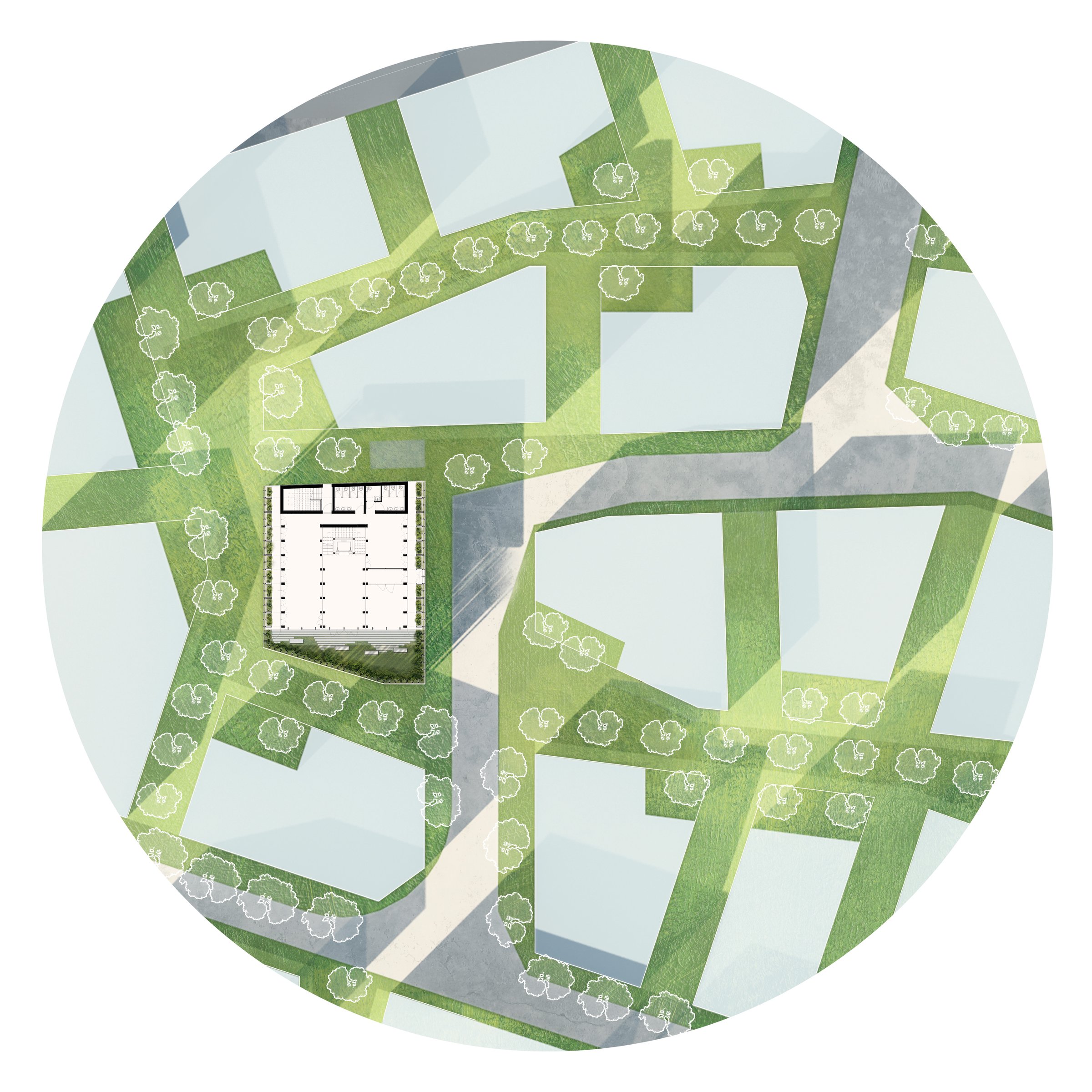
In the Wujin Green Industrial District in Changzhou, the Chinese authorities organised the 1st International Green/Ecological Building Competition (IGEBC) to build a model neighbourhood of sustainable buildings. Barberio Colella Architetti, in collaboration with Angelo Figliola, won Lot 14 with a proposal that overturns the conventional relationship between building and nature: instead of adding greenery as decoration, they make it the heart of the bioclimatic system.
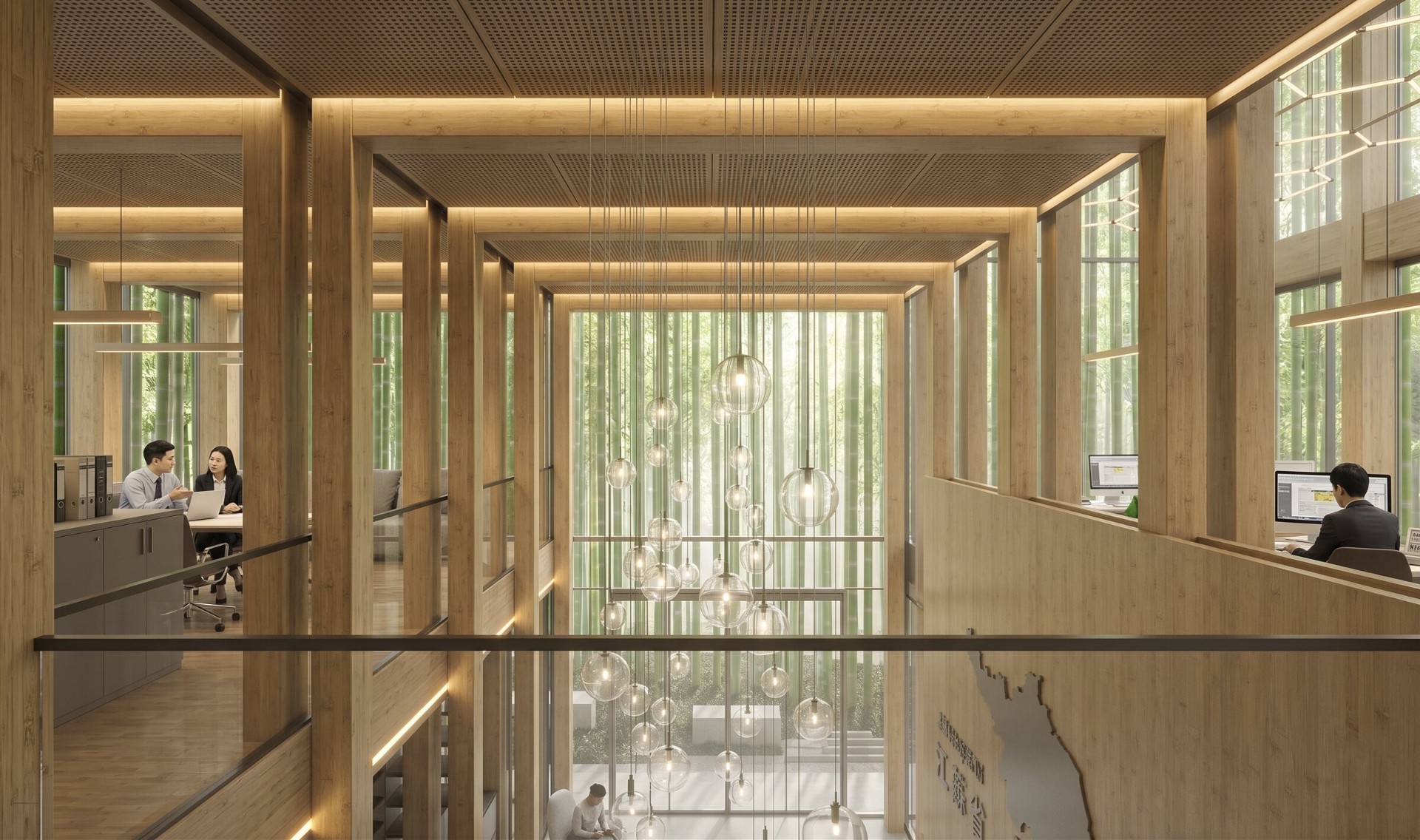
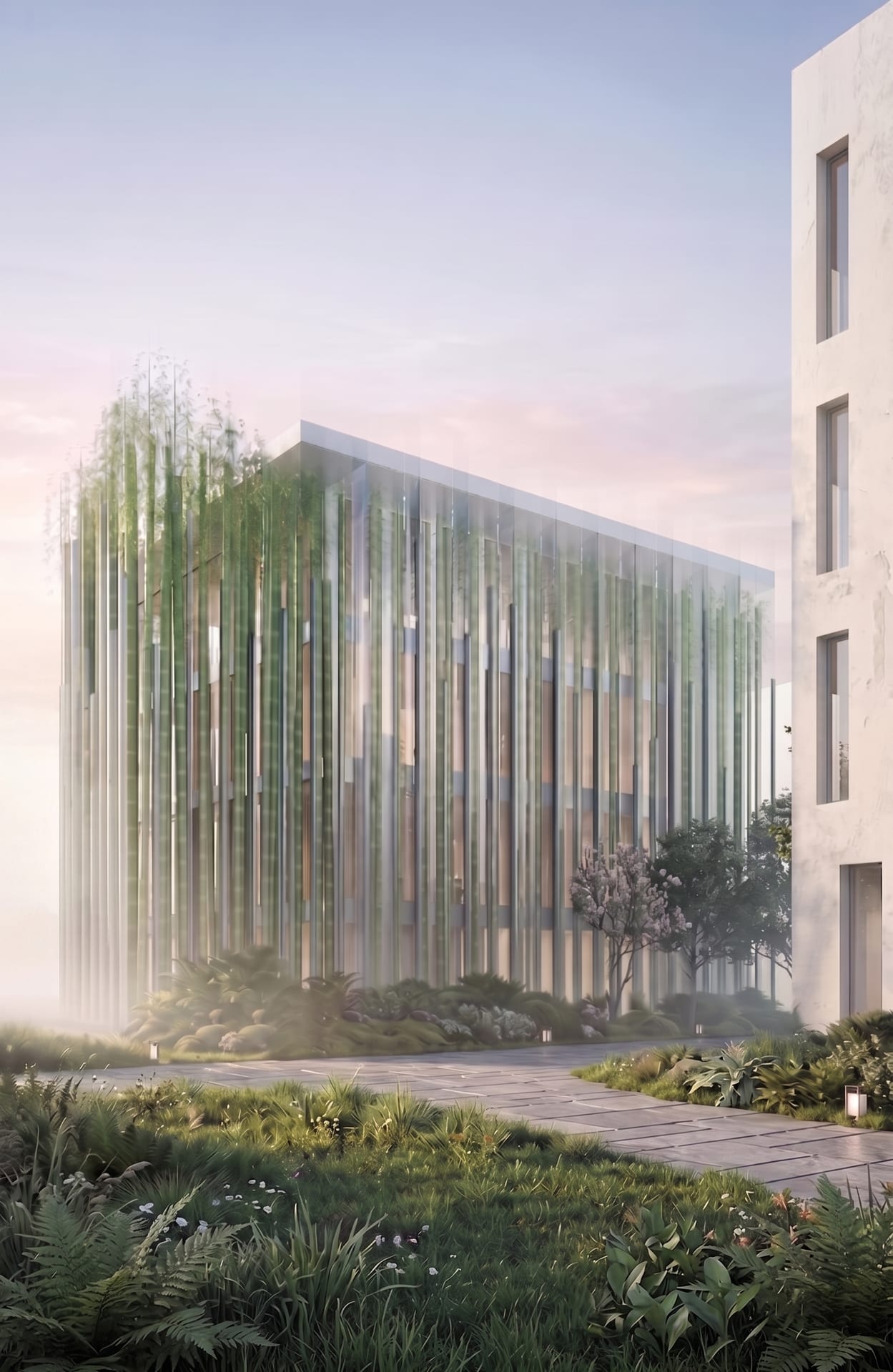
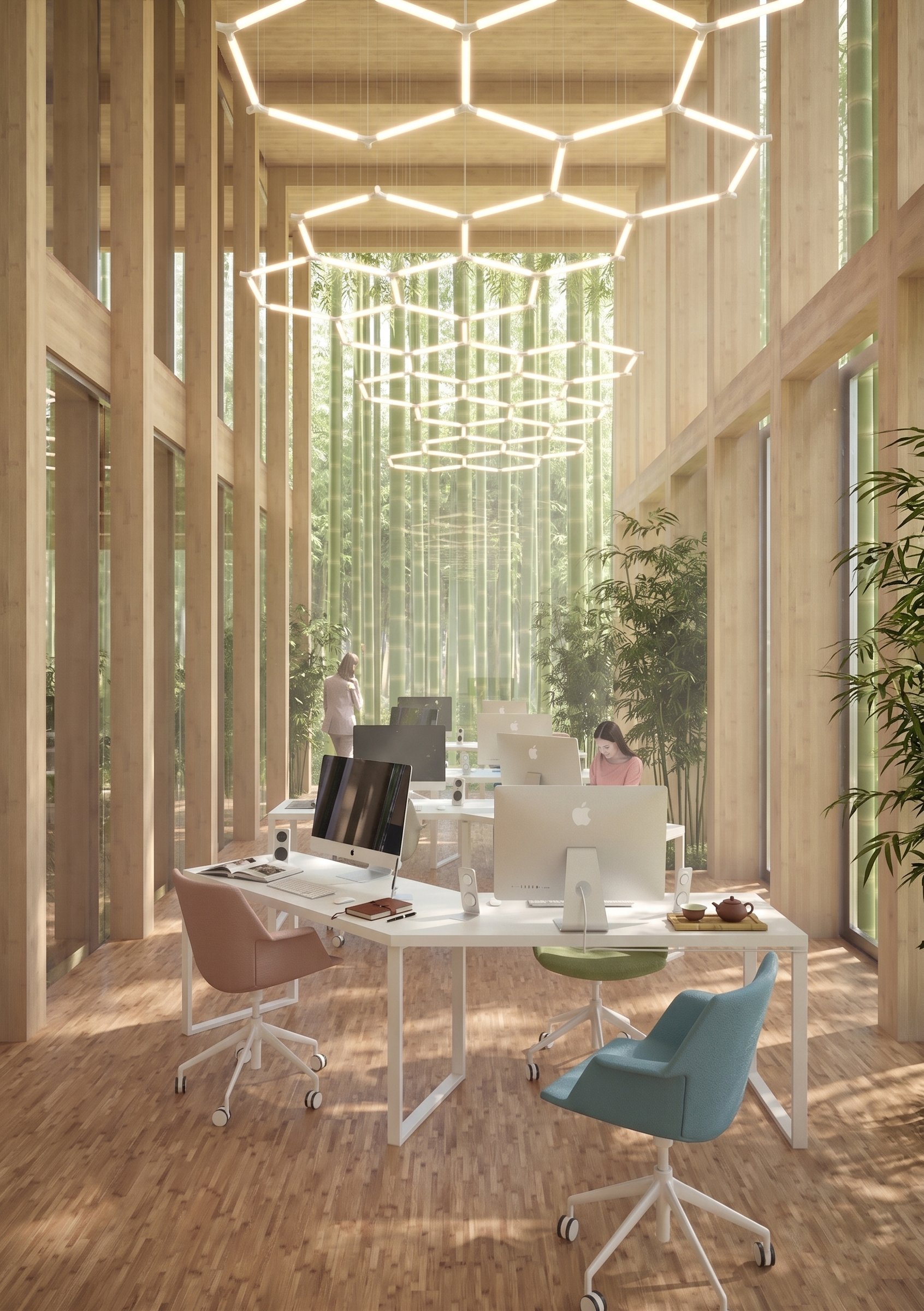
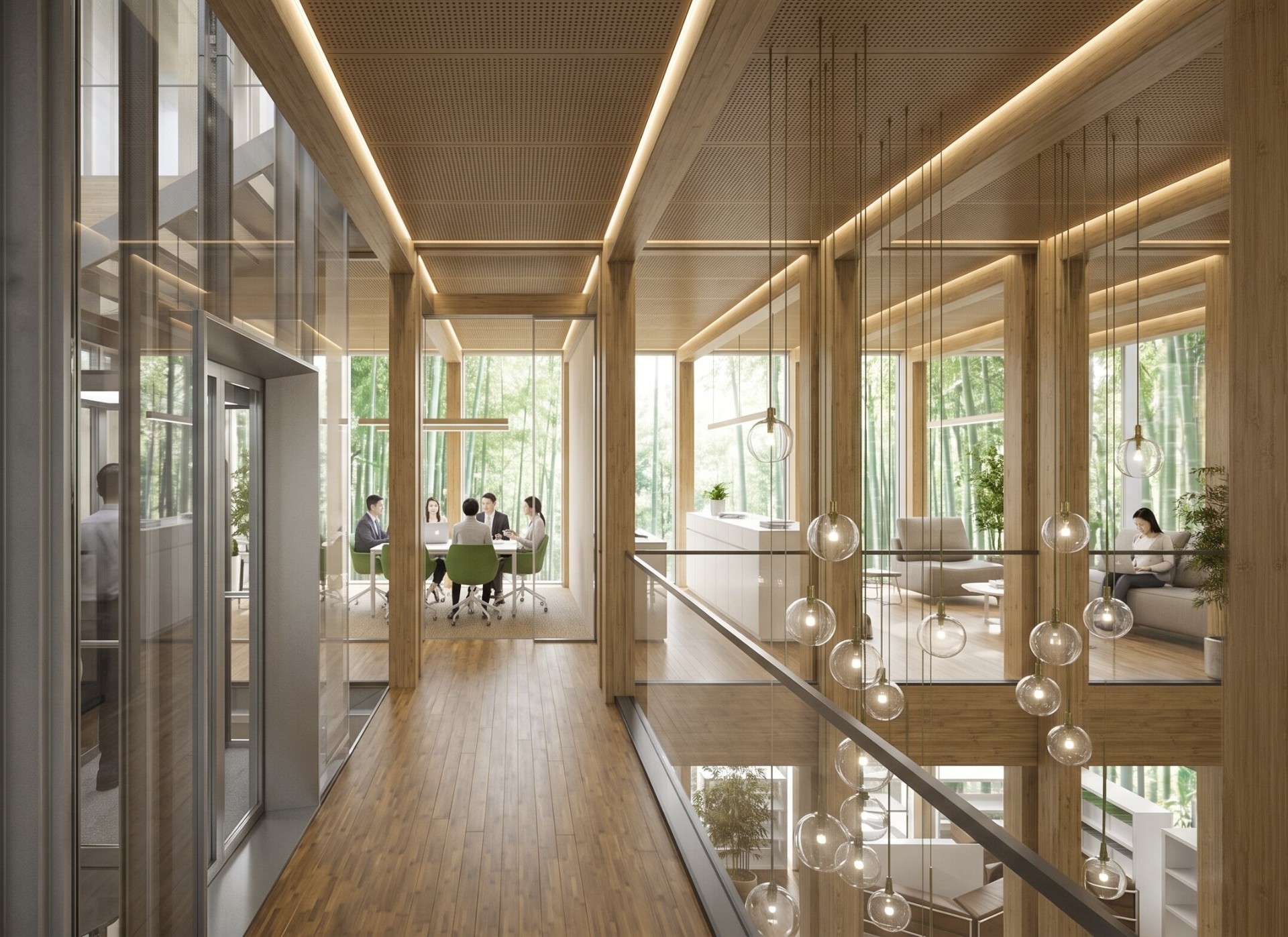
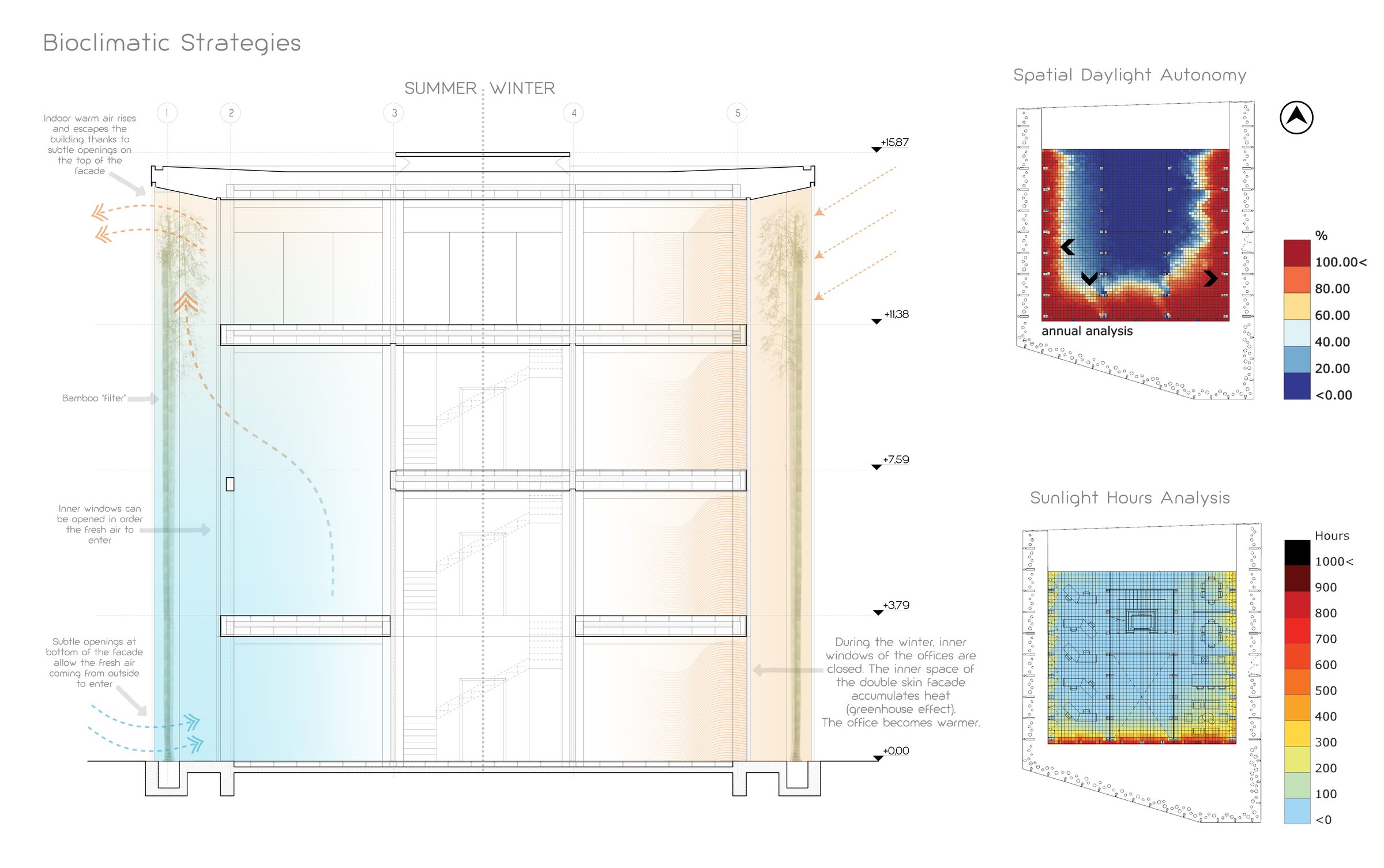
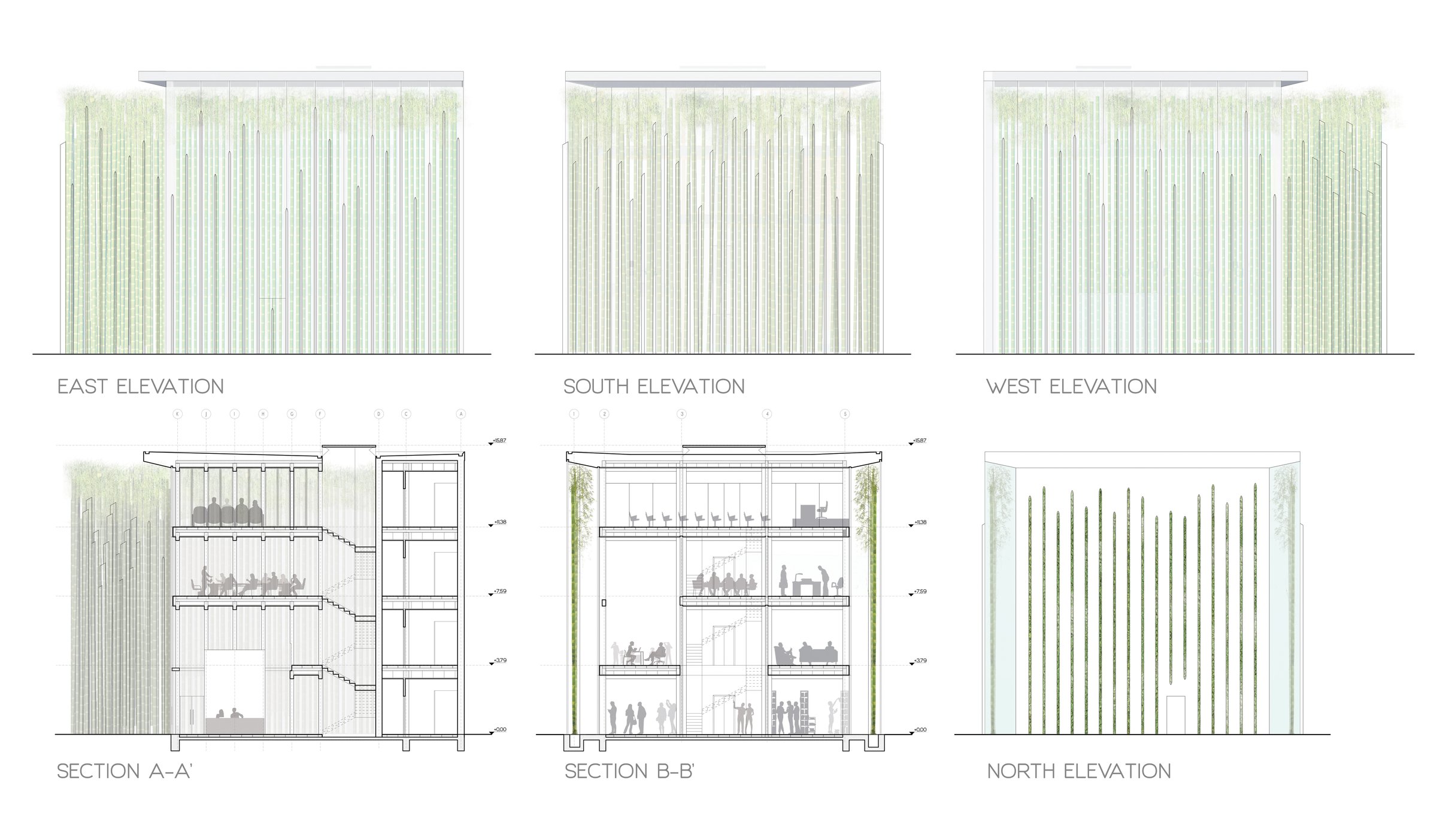
The design strategy stems from a precise observation: in conventional office buildings, workers lose all sense of time and the seasons. BCA’s solution is a fifteen-metre-high double-skin facade of structural glass, within which a continuous line of living bamboo grows. This ‘bamboo line’ is not merely an aesthetic feature: it is a bioclimatic device that controls the amount of solar radiation in a diffused manner, eliminating glare and reducing the thermal load on surfaces facing east, west and south.
Its operation is seasonal. In winter, the double-skin facade accumulates solar heat in the air cavity between the two glass walls, preheating the air before it enters the interior spaces. In summer, the system works in reverse: natural ventilation flows through the cavity, carrying away excess heat, whilst the bamboo shades the transparent surfaces. On the north side, a solid, well-insulated opaque building envelope protects against cold winds. The result is a building that drastically reduces dependence on mechanical systems, achieving a PMV (Predicted Mean Vote) of -0.01, practically neutral, the maximum possible thermal comfort.
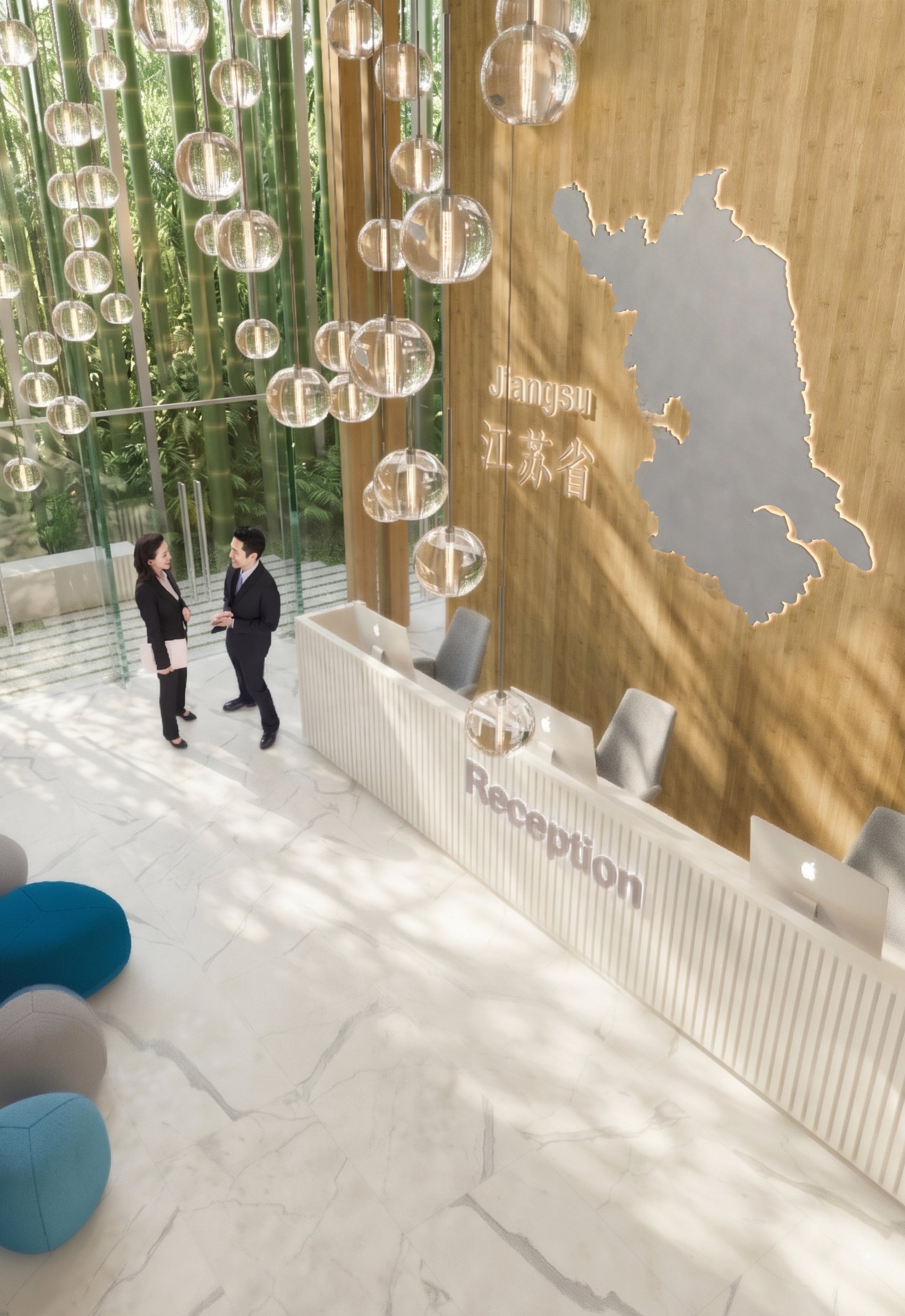
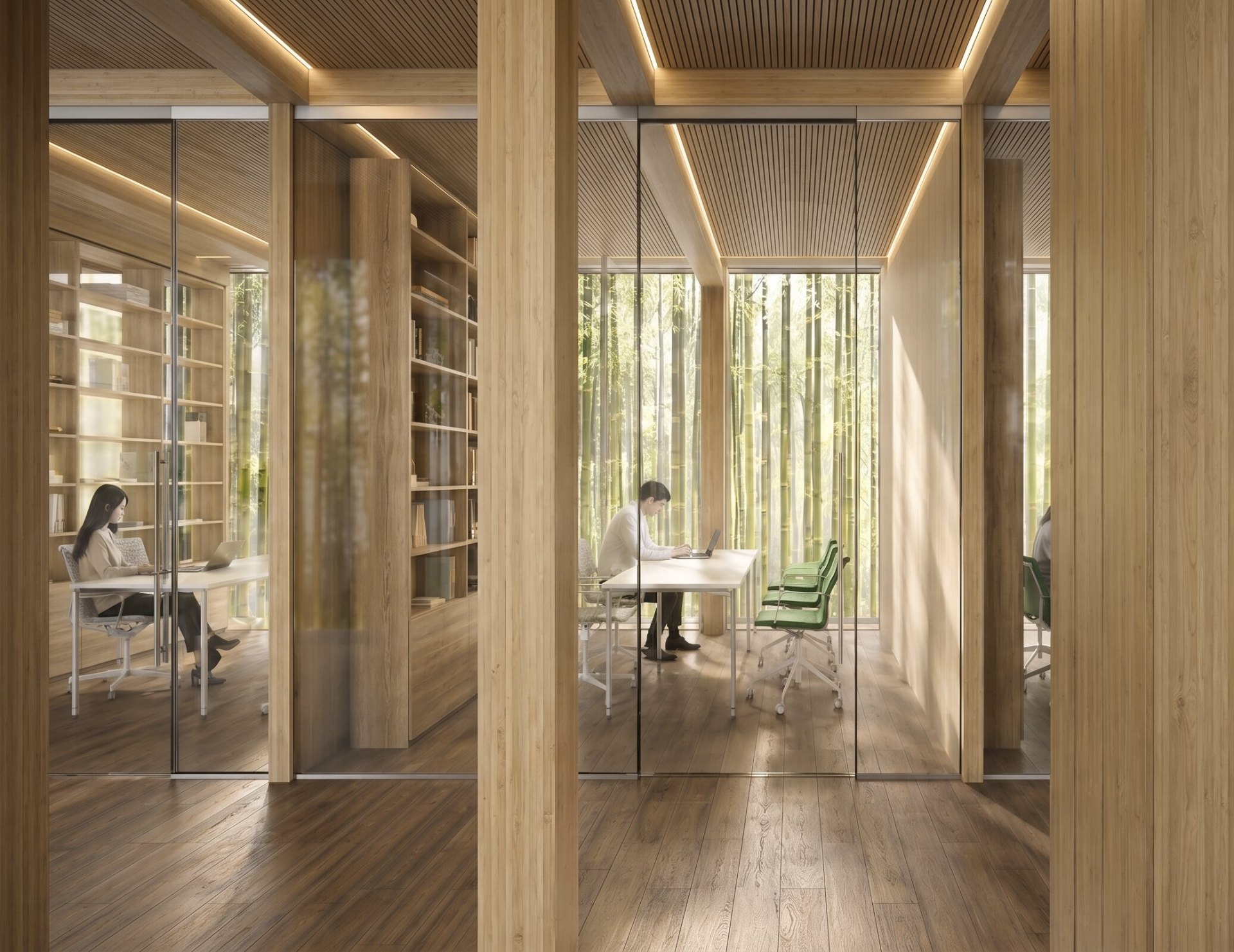
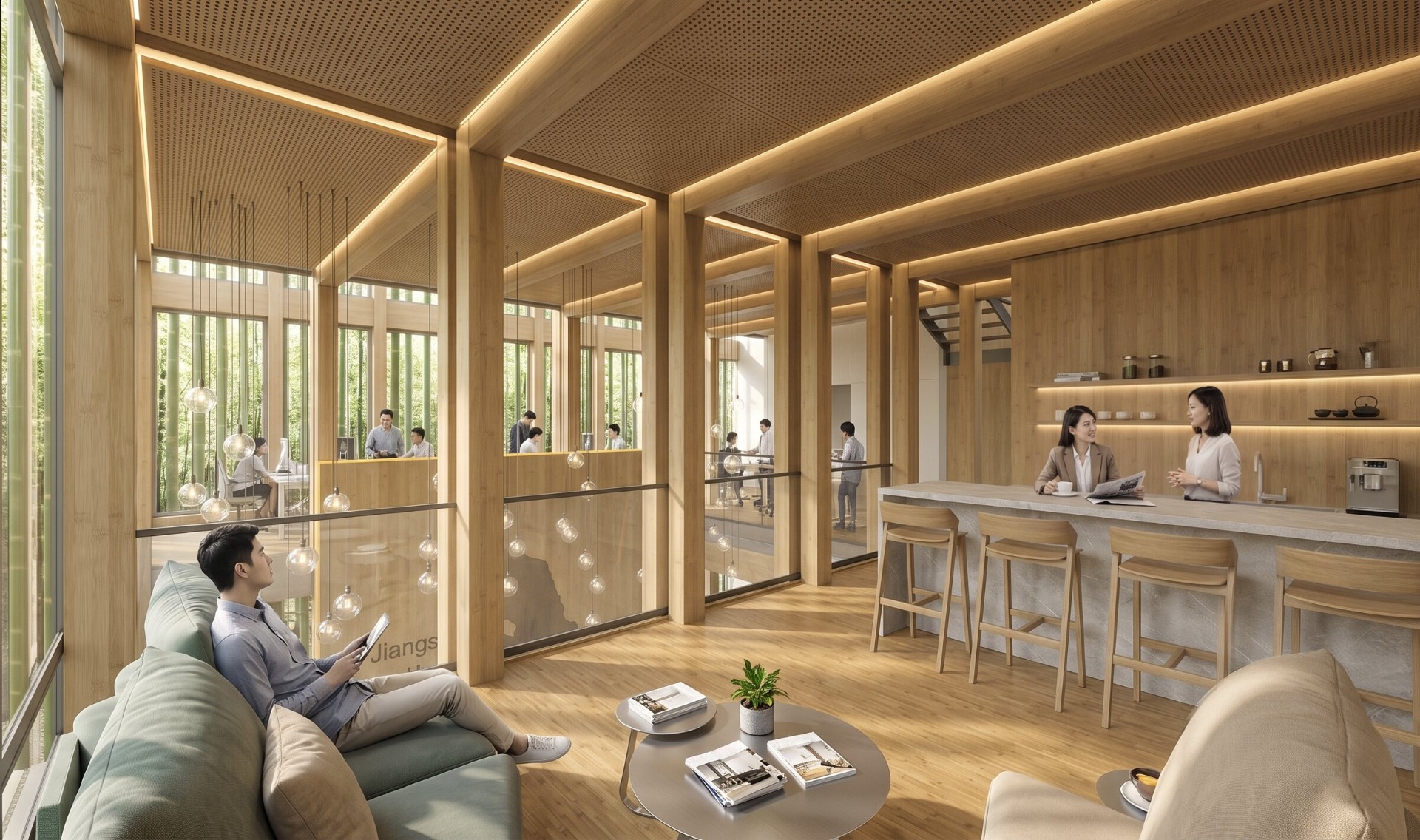
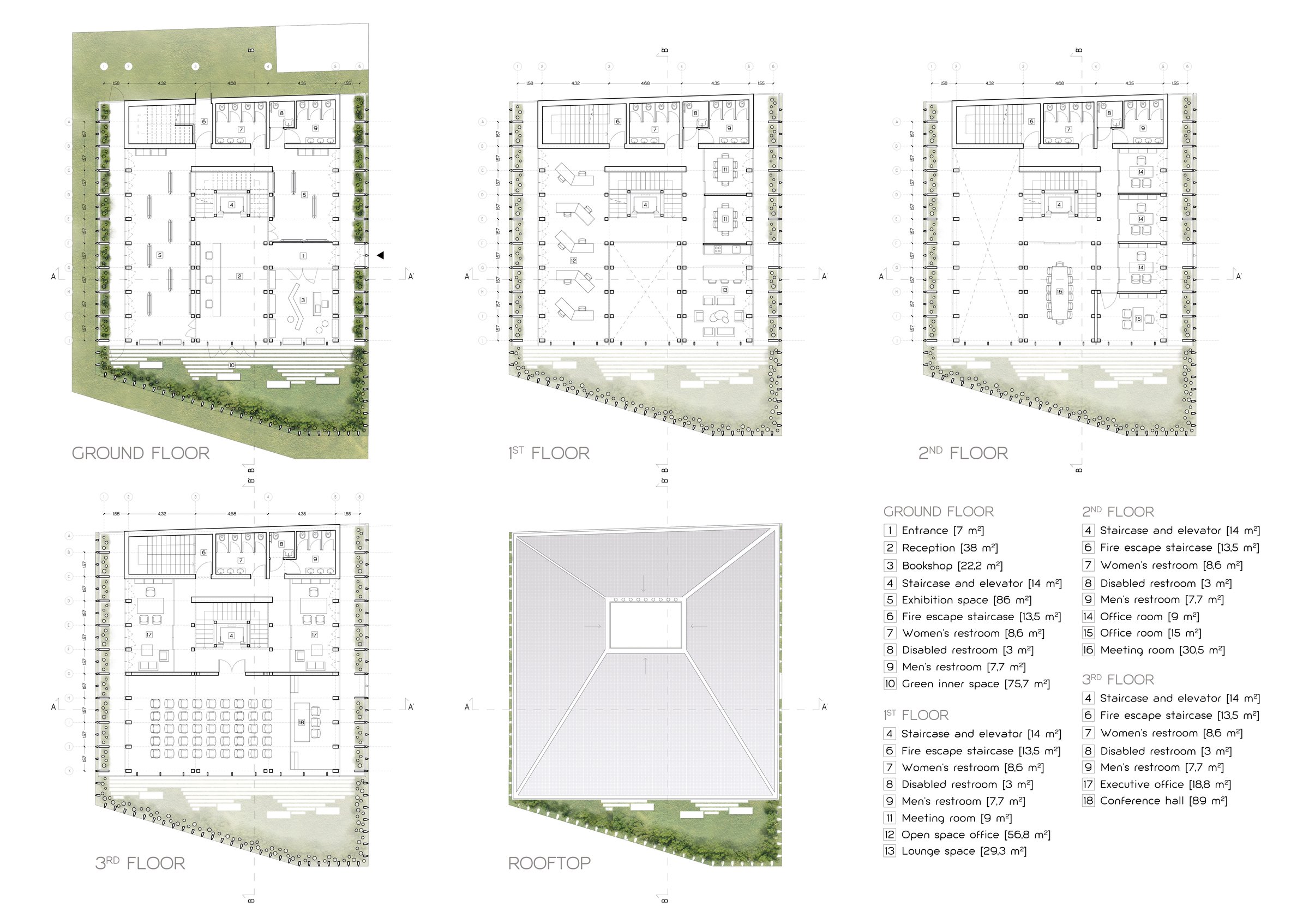
The entire load‑bearing structure is made of glued laminated bamboo with concealed metal connections, prioritising the use of local renewable resources. The 816 m² building houses offices, meeting rooms, a conference room, lounge areas and a double‑height reception space spread over four floors, overlooking a 70 m² inner garden. The roof, covered with PV film, collects rainwater for reuse. The competition jury (which included Mario Cucinella and Stefan Behnisch) selected the project from among 147 teams from 11 countries, recognising BCA’s proposal as a replicable model of office architecture where sustainability is not an afterthought, but the principle that generates the form.
Renders & Photos
Technical specifications
- Location
- Changzhou, Jiangsu, China
- Year
- 2018–2019
- Client
- Chinese Sustainable Design Centre / China New Building Materials Design & Research Institute
- Typology
- Office building
- Area
- 816 m²
- Green space
- 70 m²
- Status
- Winning concept in an international competition + professional commission
- Designers
- Maurizio Barberio, Micaela Colella (Barberio Colella ARC)
- Contributors
- Angelo Figliola (design and environmental analysis)
- Awards
- Winner of Lotto 14, the 1st International Green/Ecological Building Competition (IGEBC). Jury: Mario Cucinella, Stefan Behnisch. 147 teams from 11 countries.
- Main materials
- Glued laminated bamboo (structure), structural glass (double-skin facade), living bamboo (bioclimatic shading), photovoltaic film
Technical drawings
How do you design an office building that functions without 24/7 active climate control?
Those commissioning an office building face a paradox: comfort standards require constant temperatures and lighting, but conventional HVAC systems consume more energy than any other component of the building and often create artificial environments where workers lose all contact with the outside world. The most common ‘green’ solutions (thermal insulation, heat pumps, photovoltaic panels) reduce energy consumption but do not change the paradigm: the building remains a sealed box dependent on mechanical systems. The Bamboo Office demonstrates a different approach: the facade itself becomes the primary climate control system. The ventilated double-skin facade with living bamboo passively manages light, heat and ventilation, reducing dependence on mechanical systems and reconnecting workers with the natural rhythm of the seasons.
Frequently Asked Questions
Are you designing a building that works with the climate, rather than against it?
If you’re considering a project where sustainability isn’t just a certificate to hang on the wall but the principle that shapes the building itself, let’s have a chat. A 30-minute video call is all it takes to see if a bioclimatic design is suitable for your specific project.
Let’s talk about your projectRelated projects
Sustainable Design
URBAN DUNES
A 3D-printed desert sand structure that transforms a public space into a passively air-conditioned urban oasis.
Sustainable Design
POLYMNIA FUTURA
An urban regeneration proposal for Polignano a Mare that combines sustainable mobility, public spaces and new residential neighbourhoods: Special Mention at the Europan 18 European competition.
Sustainable Design
VILLA IN CAROVIGNO
A house on a podium that transforms the constraints of the Apulian agricultural landscape into the guiding principles of the design.