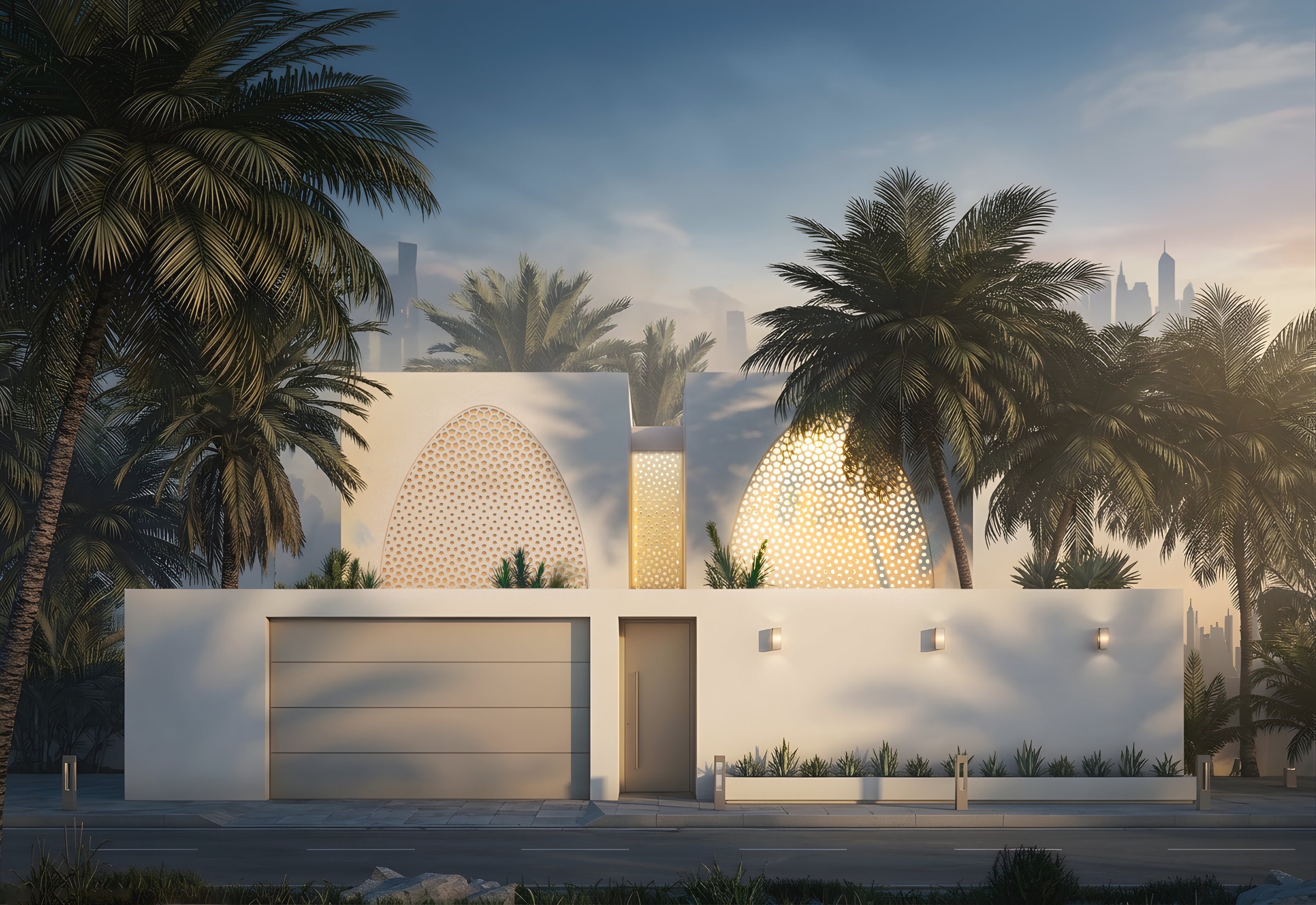
New Roots – Residences with bioclimatic design in the Arabian Gulf
A residential project that reinterprets the elements of traditional Gulf architecture (compact forms, shading surfaces, and the integration of water and greenery) through a contemporary bioclimatic lens.
2024 · Dubai, United Arab Emirates · Residential buildings (’House of the Future’ competition) · Sustainable Design
New roots in an extreme climate
New Roots was conceived as a design response to a radical climatic challenge: building comfortable homes in a desert environment, where extreme temperatures demand a fundamental rethinking of how we live. The project, developed by a team comprising Maurizio Barberio, Micaela Colella and Angelo Figliola, is based on a clear principle: the most effective cooling solutions do not come from mechanical engineering, but from local building traditions. Over the centuries, architecture in the Arabian Gulf has developed sophisticated spatial devices (compact forms, courtyards, shading surfaces, the integration of water and shade) which the project reinterprets using contemporary tools.
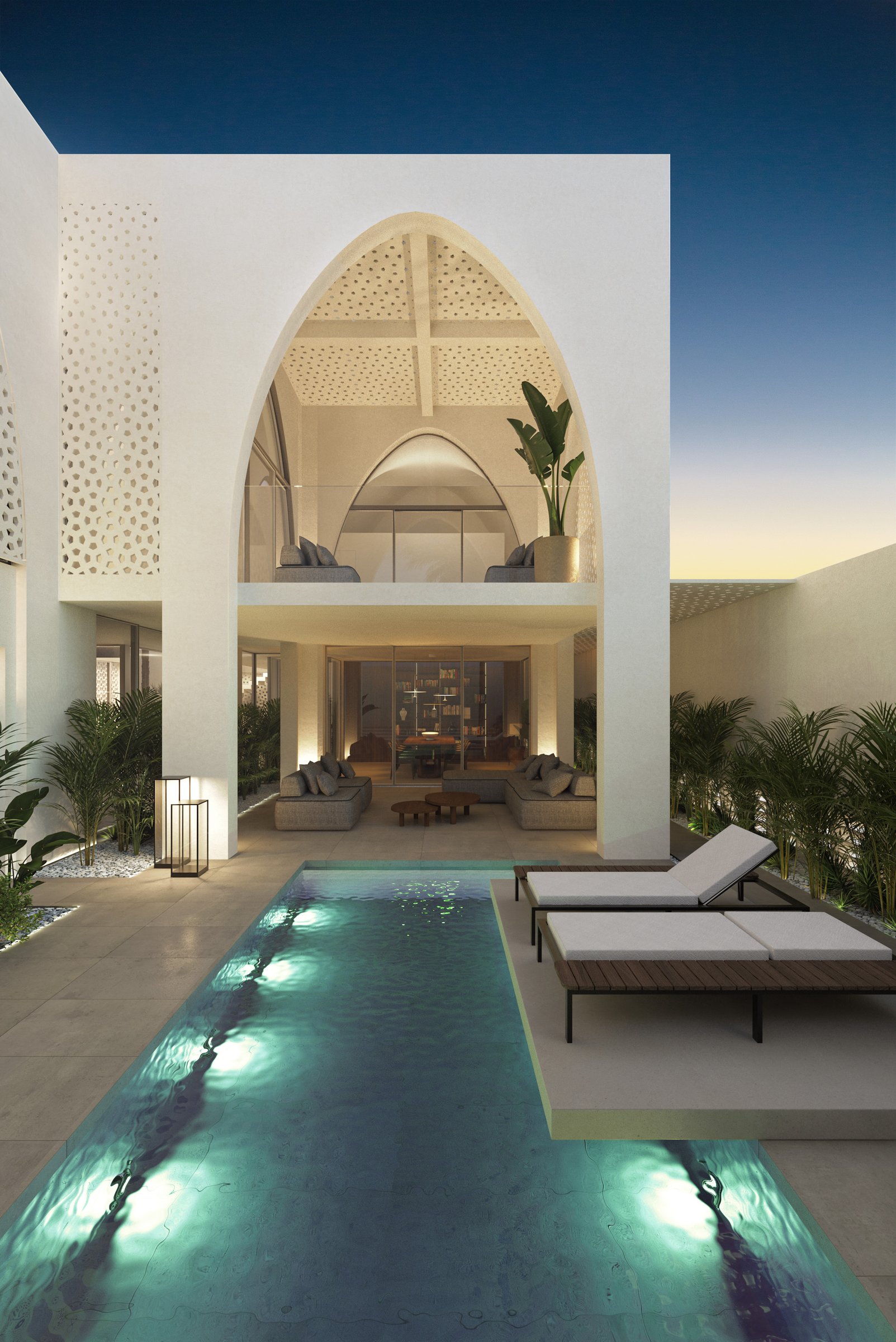
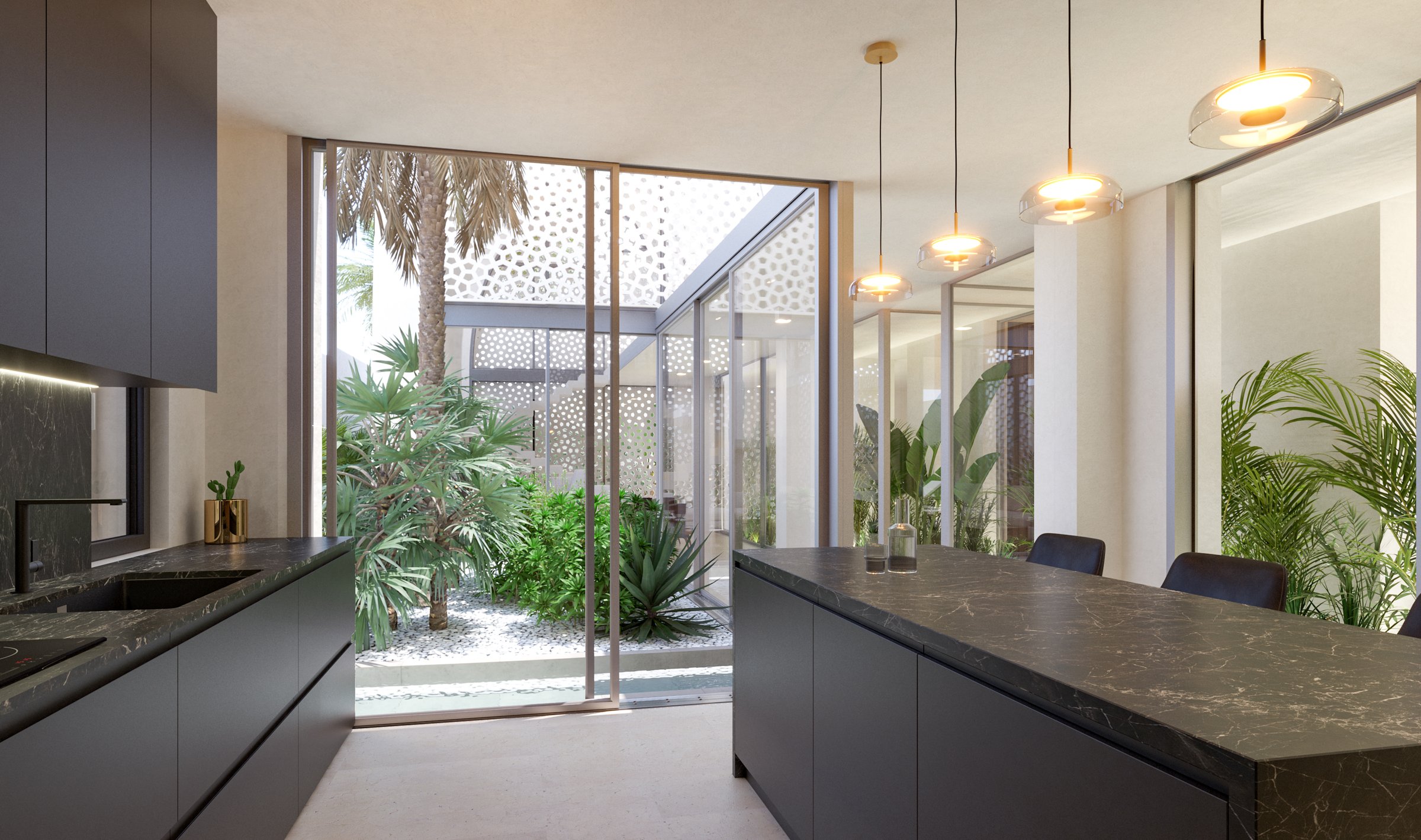
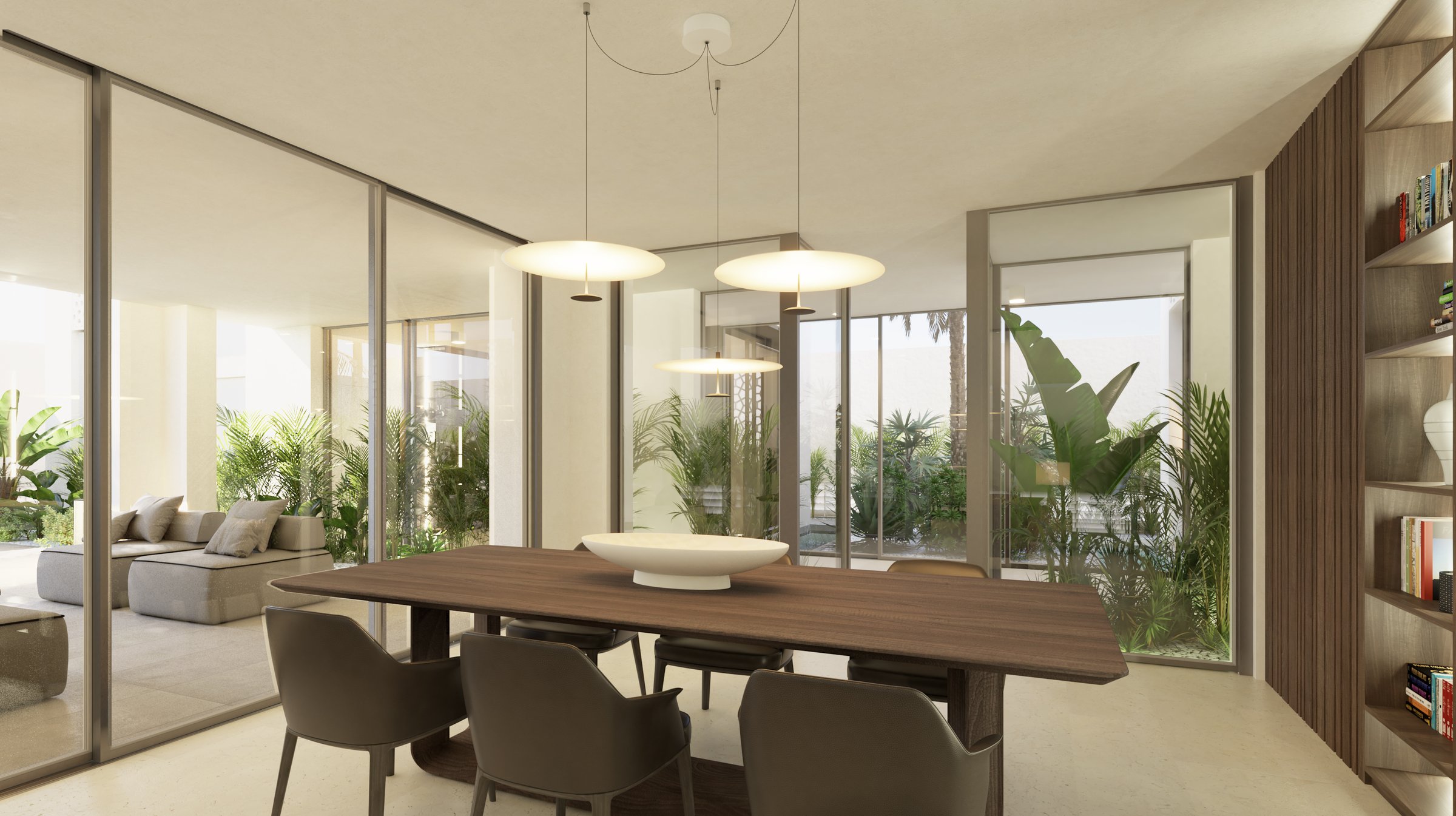
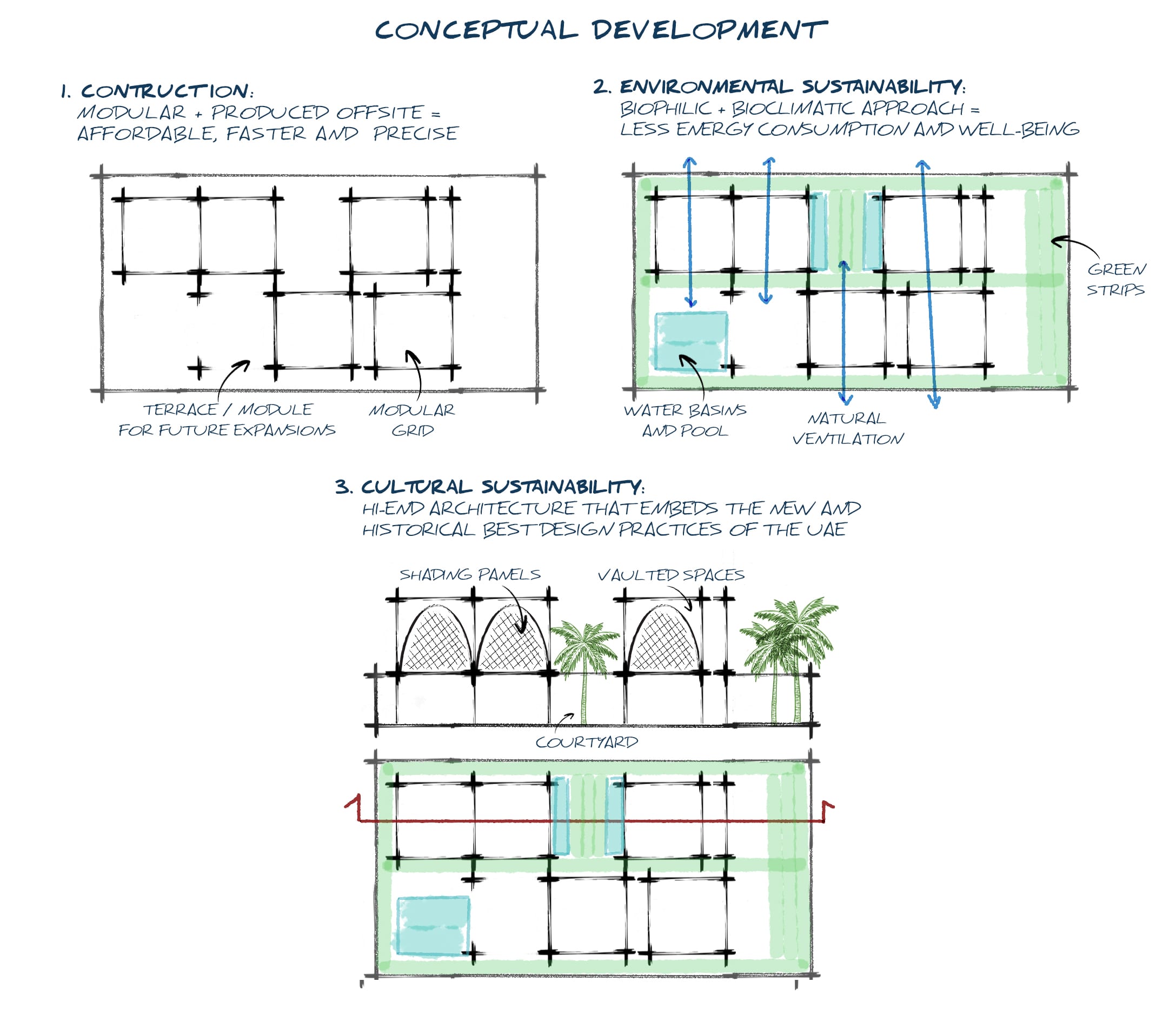
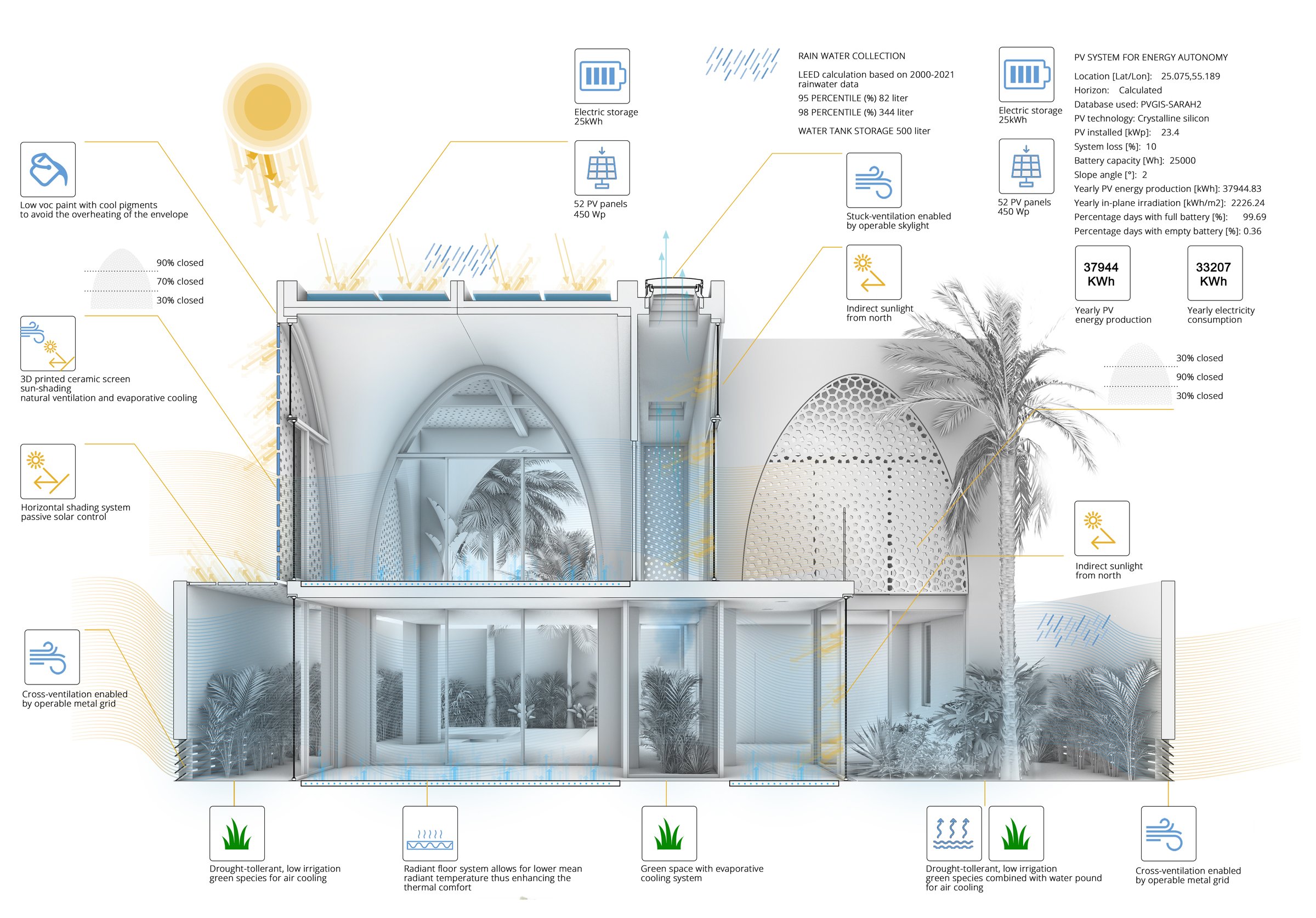
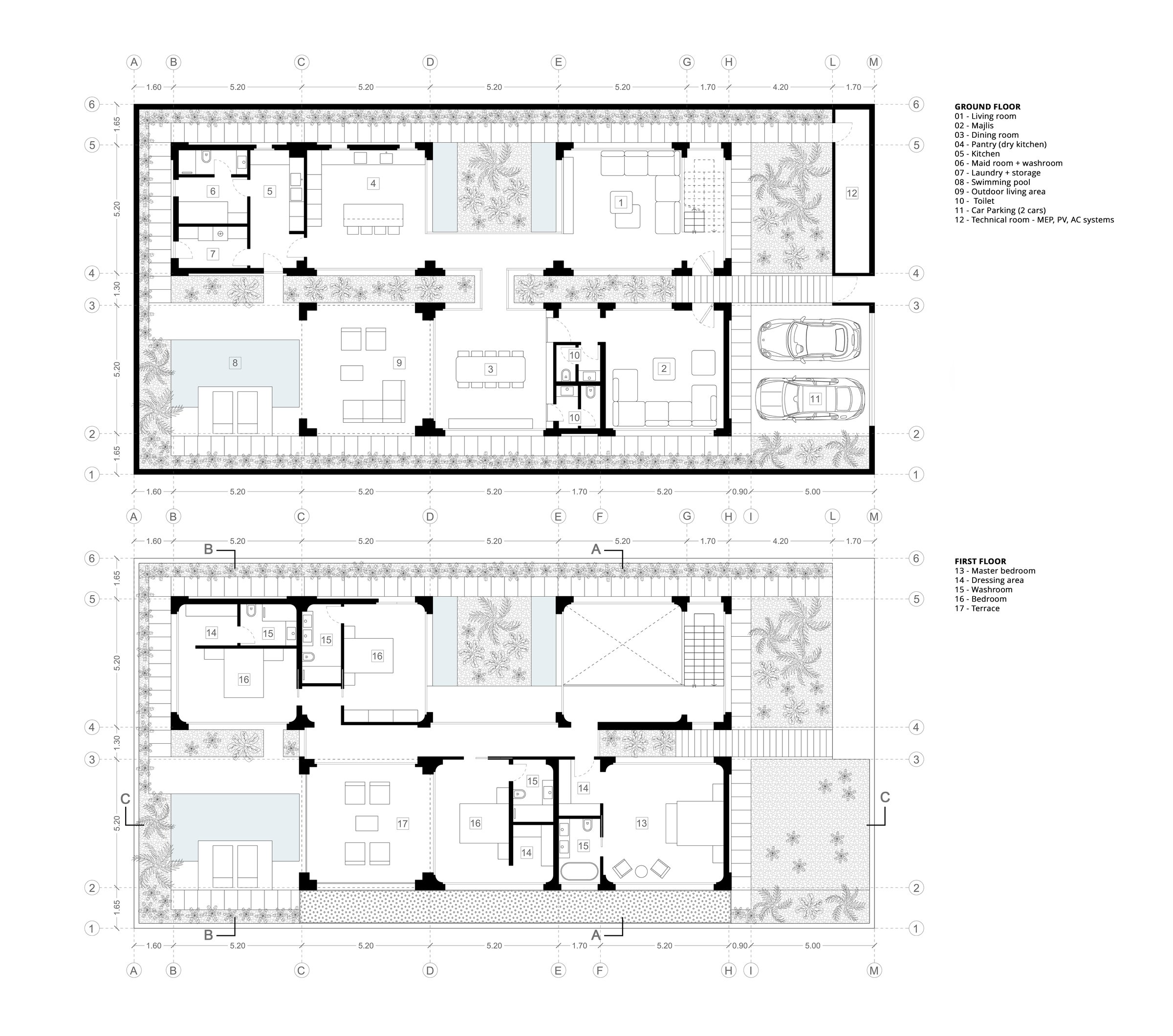
The defining element of the project is the ‘lama’: a strip of vegetation running lengthways through the residential volumes, creating a spatial separation that facilitates cross ventilation. Air flows through this blade and, in combination with water misting systems, contributes to the passive cooling of the spaces. On the first floor, the green blade transforms into a technological strip that channels the mechanical cooling and ventilation systems, also functioning as a stack ventilation element thanks to movable openings and screens on the roof. The transition from a natural element to a technical one is seamless: the same bioclimatic design governs both levels.
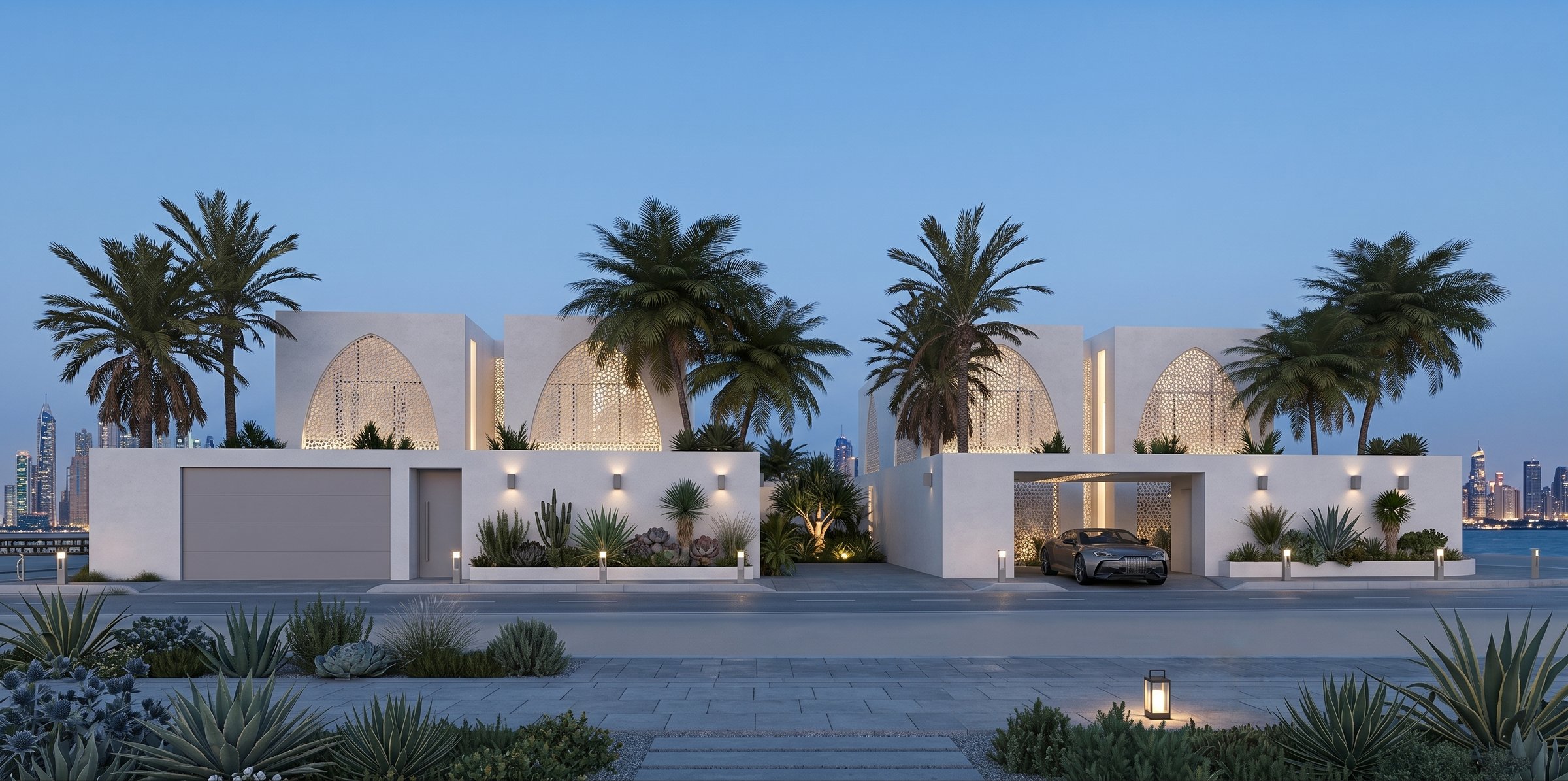
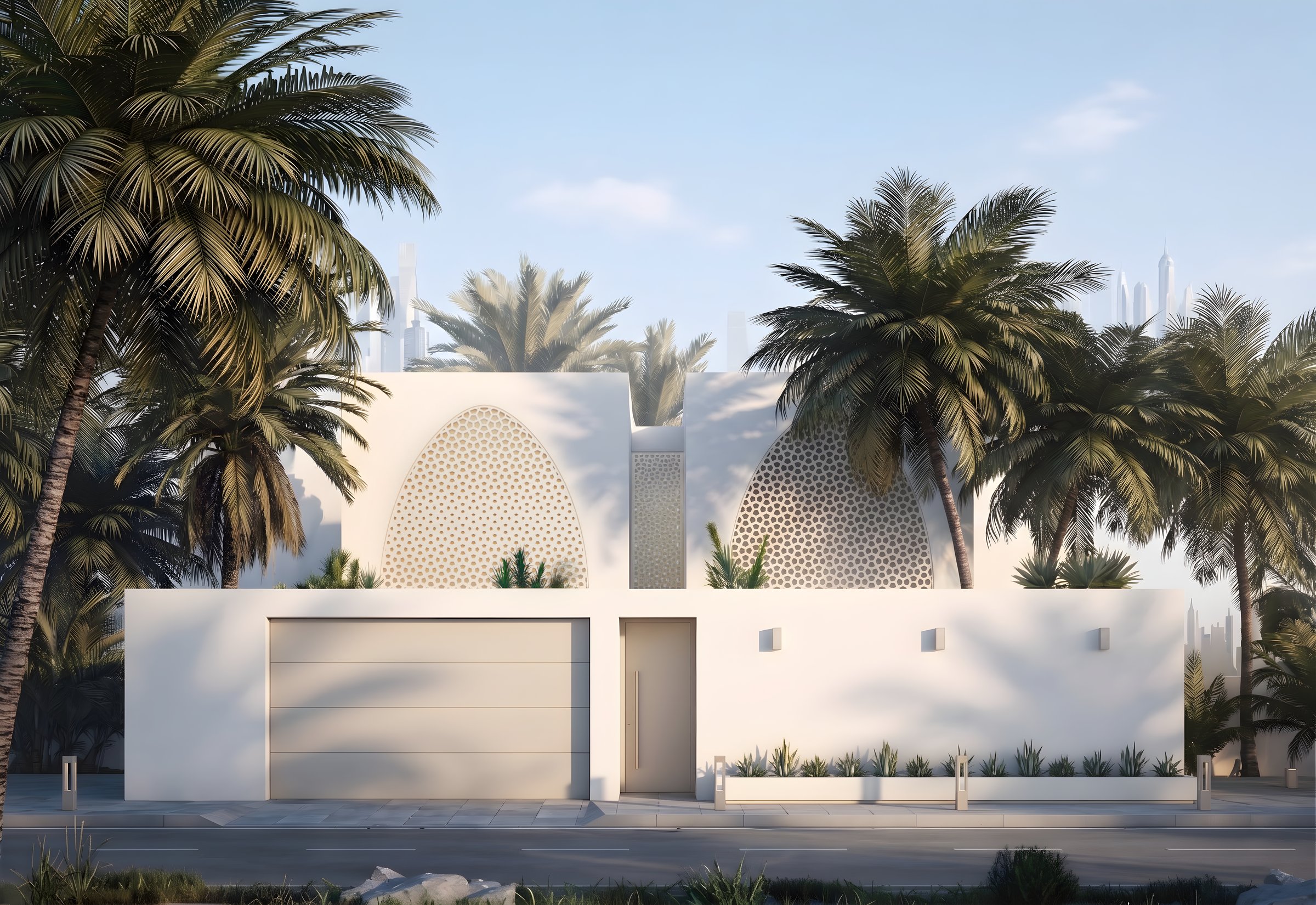
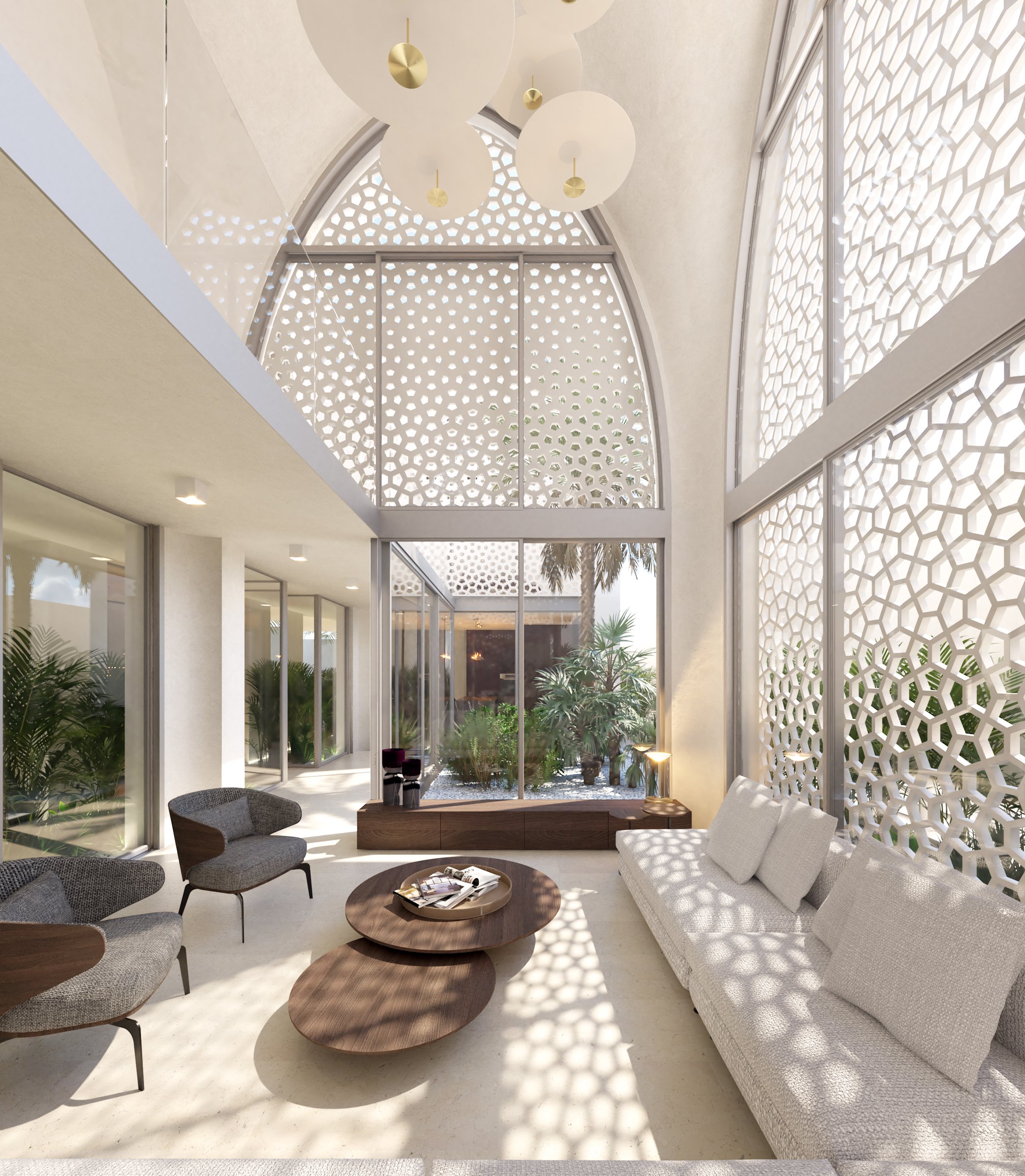
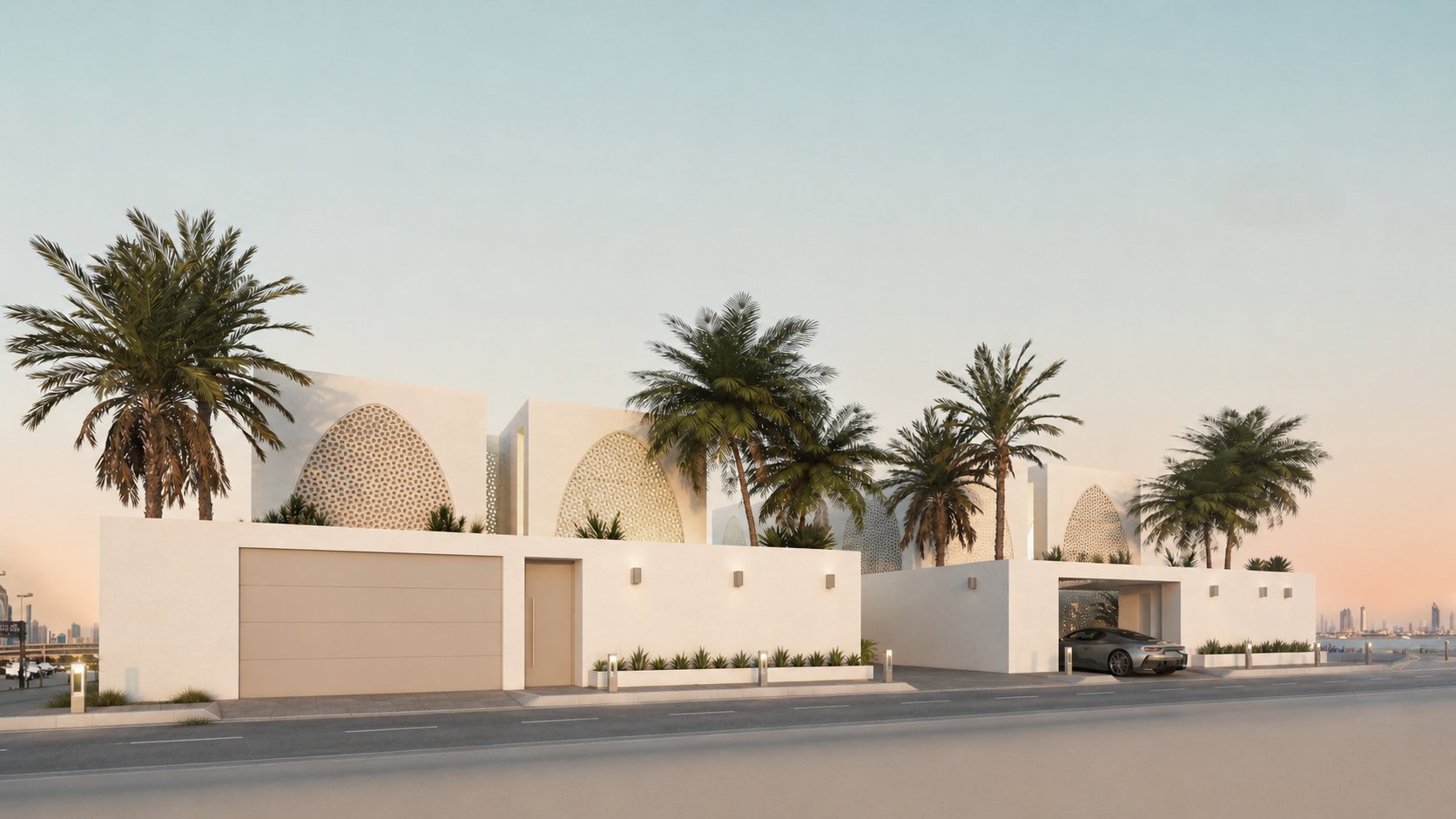
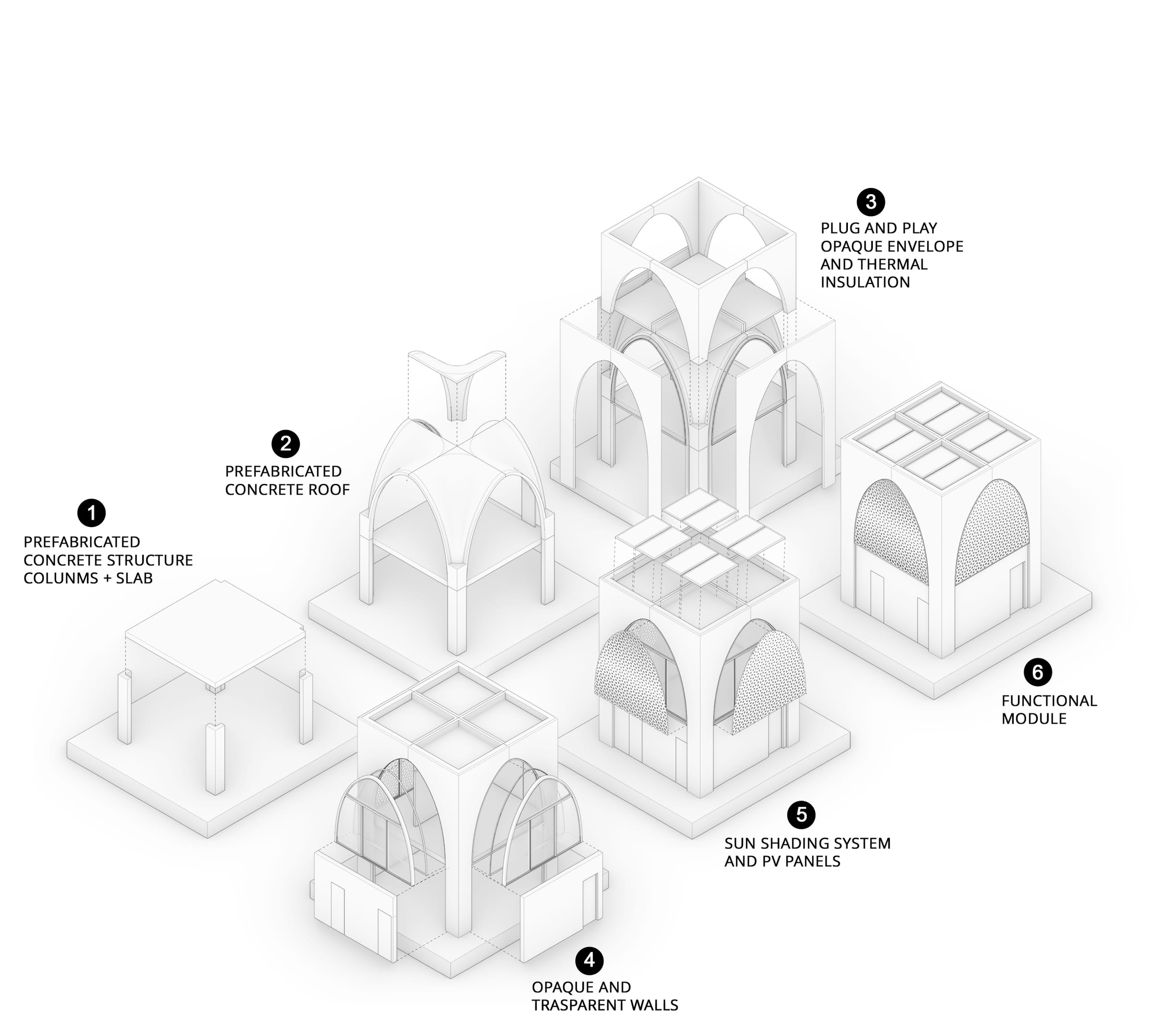
The facades are treated as active bioclimatic devices. The transparent surfaces, where not shaded by other elements of the design, are fitted with screens featuring customised patterns, designed to allow air to pass through whilst simultaneously filtering solar radiation according to the orientation of each facade. The fragmentation of the volumes into multiple functional units is not merely a compositional gesture: it increases the number of heat-dissipating surfaces and allows the living space to be expanded or contracted as required. Each module is a small bioclimatic machine that interacts with the adjacent units.
New Roots is an international competition entry developed by Barberio Colella Architetti in collaboration with Angelo Figliola. The practice, founded by two PhD-qualified architects based in Bari, operates on the conviction that the homogenisation of architectural production is one of the causes of the climate-related problems in contemporary construction, as it undermines the site-specific and climate-based practices developed by local building cultures. New Roots is a manifesto of this approach: it does not impose a Western model on the Gulf, but instead grows new roots from the local tradition.
Renders & Photos
Technical specifications
- Location
- Dubai (UAE)
- Year
- 2024
- Client
- "House of the Future" architectural competition, Buildner (Bee Breeders) in partnership with the Government of Dubai, UAE (Mohammed bin Rashid Housing Establishment + Mohammed bin Rashid Centre for Government Innovation)
- Typology
- Bioclimatic homes
- Status
- Concept, competition entry
- Designers
- Maurizio Barberio (project leader), Micaela Colella, Angelo Figliola
- Main materials
- vegetation (longitudinal green blade), water misting and water basins, screens with customised patterns for ventilation and variable shading depending on orientation. Specific construction materials to be defined in later stages of the project.
Technical drawings
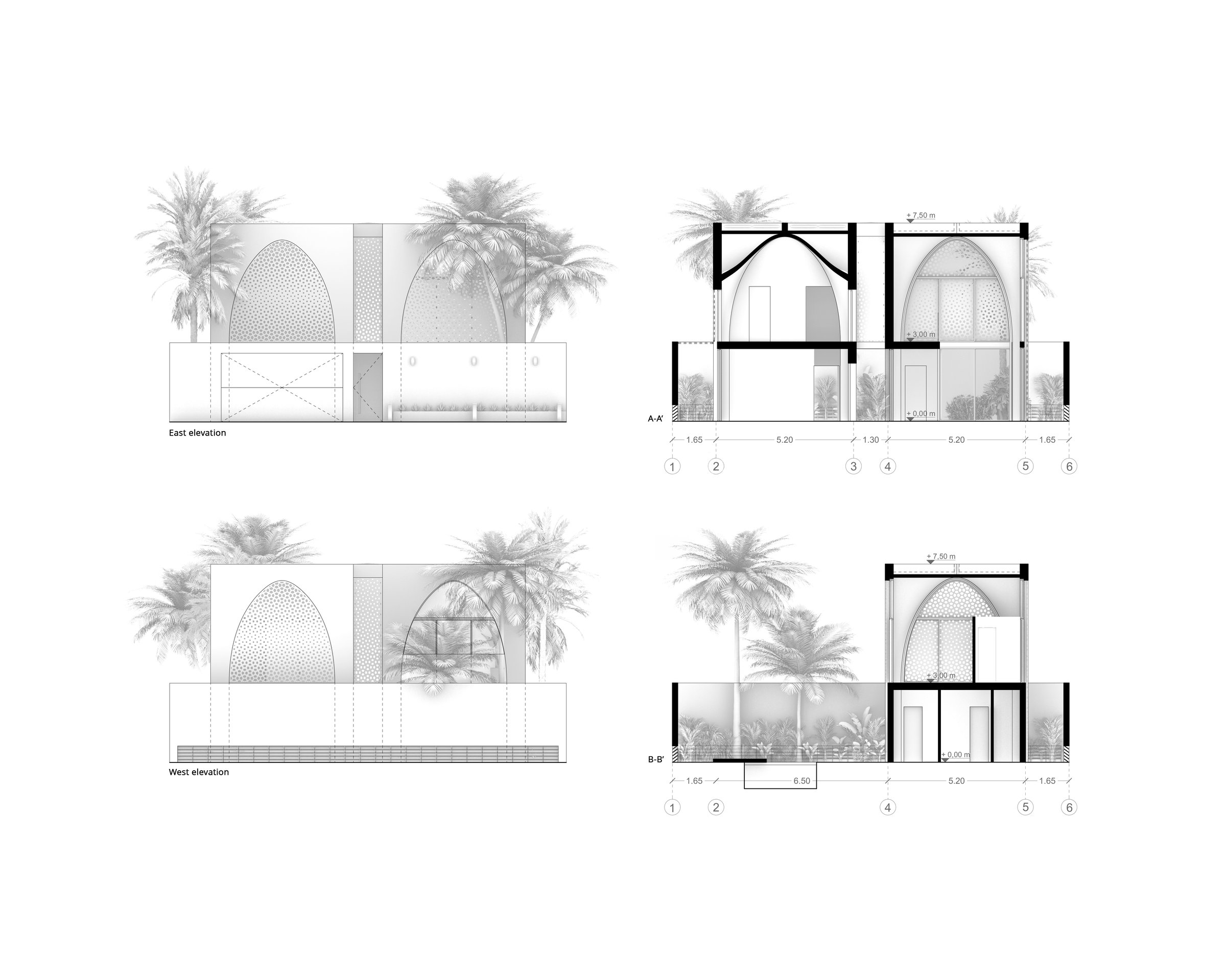
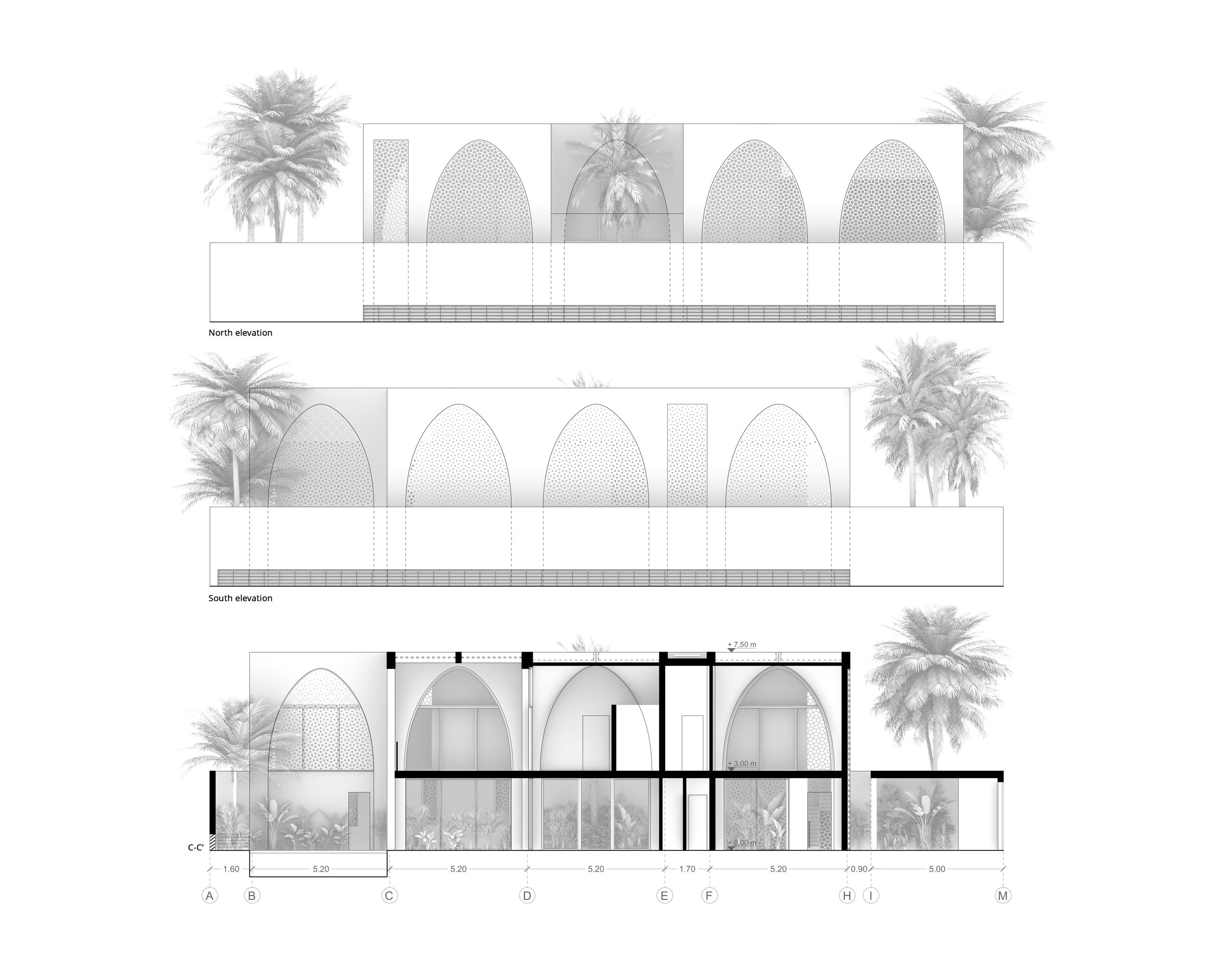
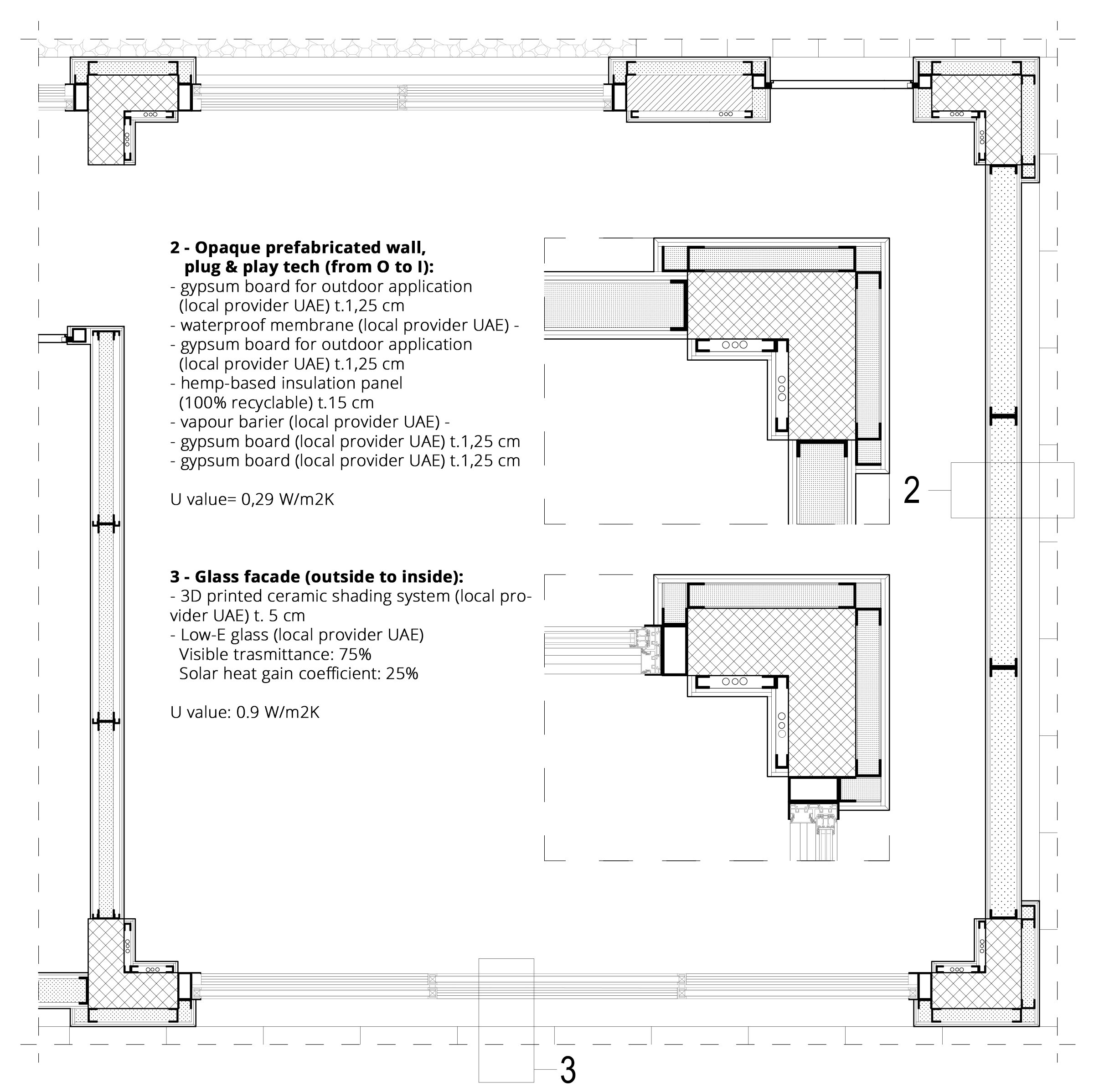
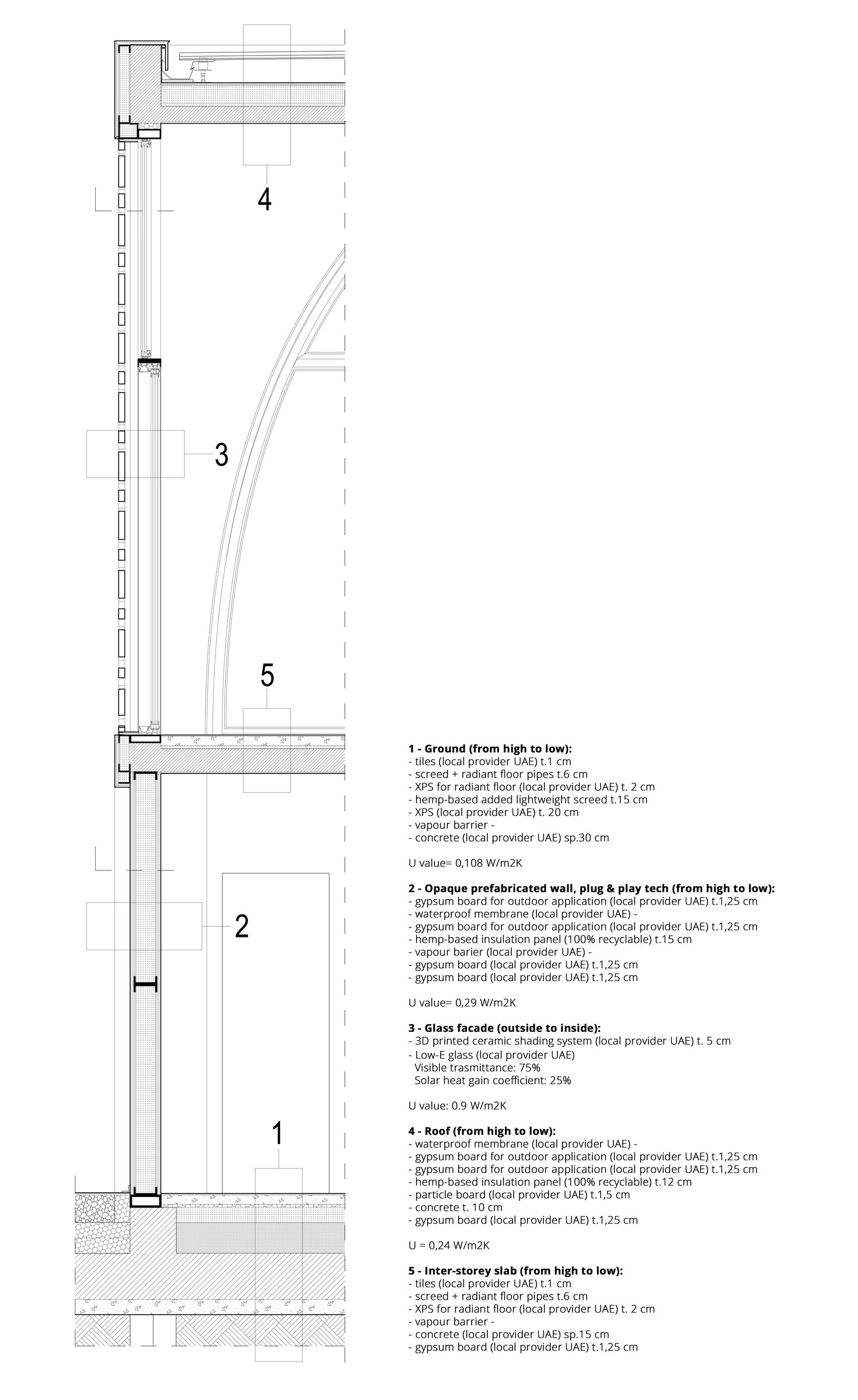
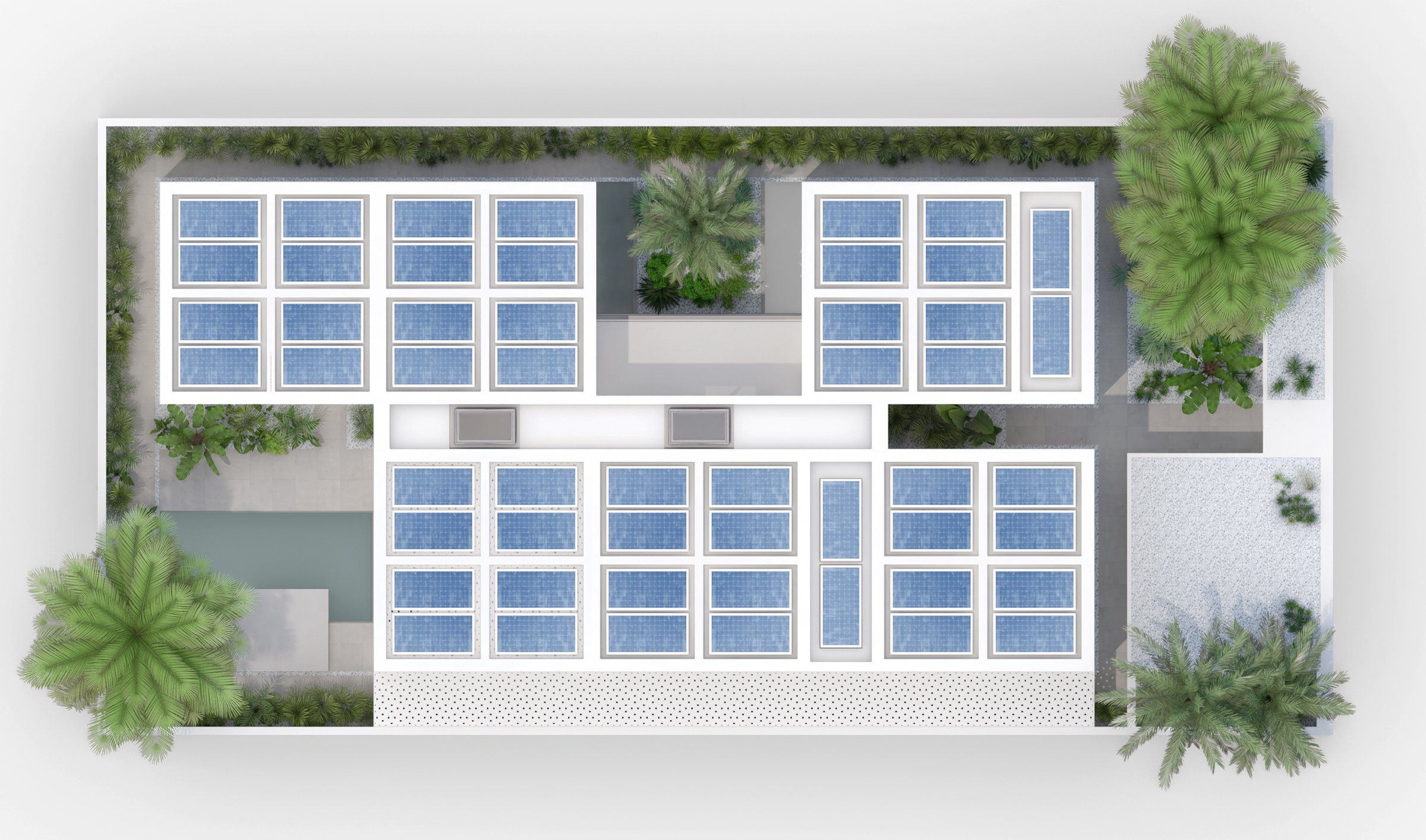
How does one design for residential comfort in a desert climate without relying entirely on active climate control?
In the extreme climates of the Arabian Gulf, the standard response is intensive mechanical air conditioning: sealed buildings, oversized systems, and extremely high energy consumption. This approach ignores centuries of local building knowledge, shaded courtyards, wind towers, and the use of water and vegetation as cooling tools. New Roots demonstrates that a site-specific bioclimatic design can drastically reduce dependence on mechanical systems, using volumetric fragmentation, cross ventilation, calibrated shading, and the integration of greenery and water misting as primary bioclimatic devices. The result is a residence that breathes with its climate, rather than fighting it.
Frequently Asked Questions
Do you have a residential project in a challenging climate?
If you are designing a home in a hot climate (in the Mediterranean, the Gulf or other regions where cooling is the real challenge) we can help you develop a bioclimatic design that starts with the architecture, not the systems.
Let’s talk about your projectRelated projects
Sustainable Design
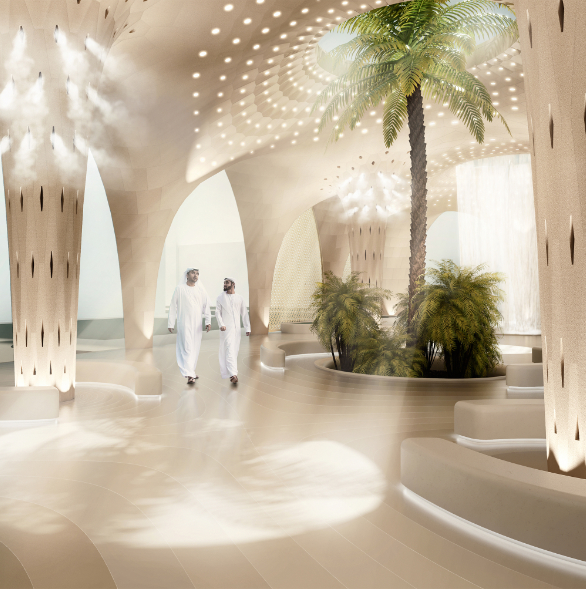
URBAN DUNES
A 3D-printed desert sand structure that transforms a public space into a passively air-conditioned urban oasis.
Sustainable Design
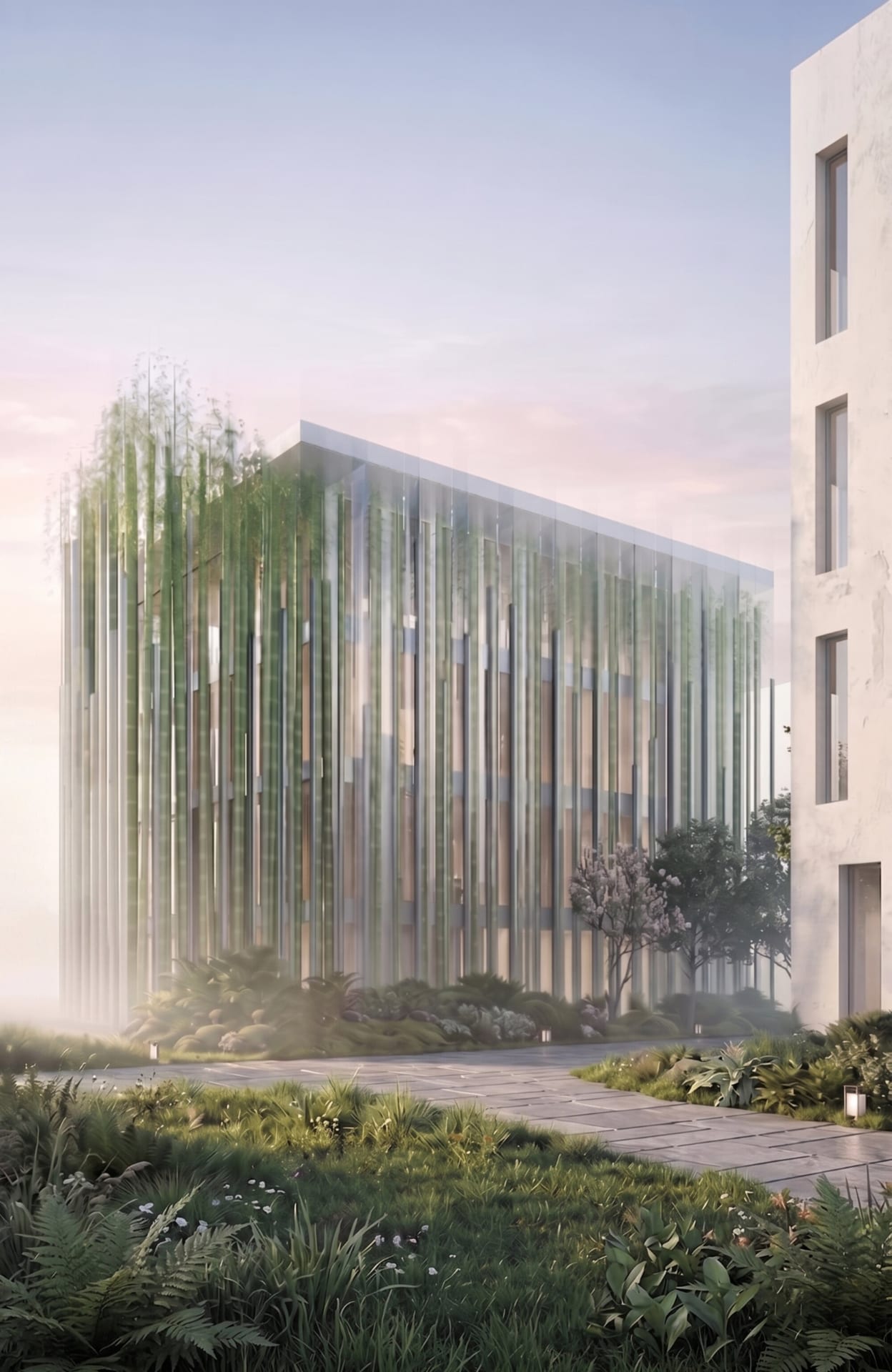
BAMBOO OFFICE
A building where the facade serves as the primary climate control system: a fifteen-metre-high bamboo forest that filters light, heat and wind.
Sustainable Design
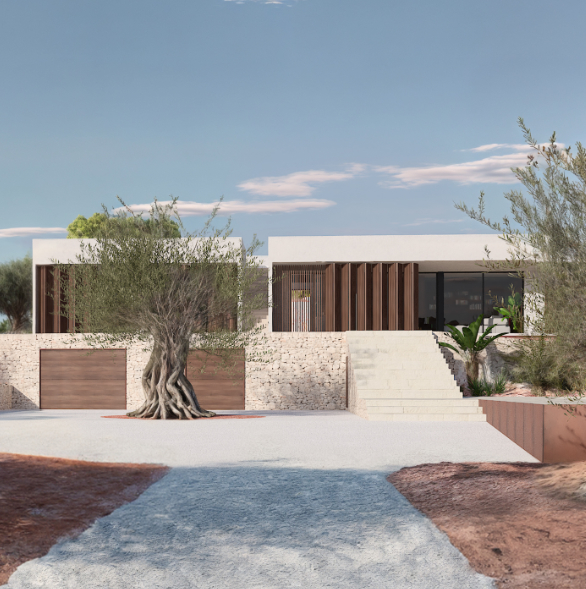
VILLA IN CAROVIGNO
A house on a podium that transforms the constraints of the Apulian agricultural landscape into the guiding principles of the design.