School in Aosta — Bioclimatic Design Arts and Music High School in the Aosta Valley
A regenerative school building that goes beyond the NZEB approach energy logic, transforming the sunspace into a civic element open to the community of Aosta.
2024 · Aosta · School architecture · Public & Commercial Architecture · Sustainable design
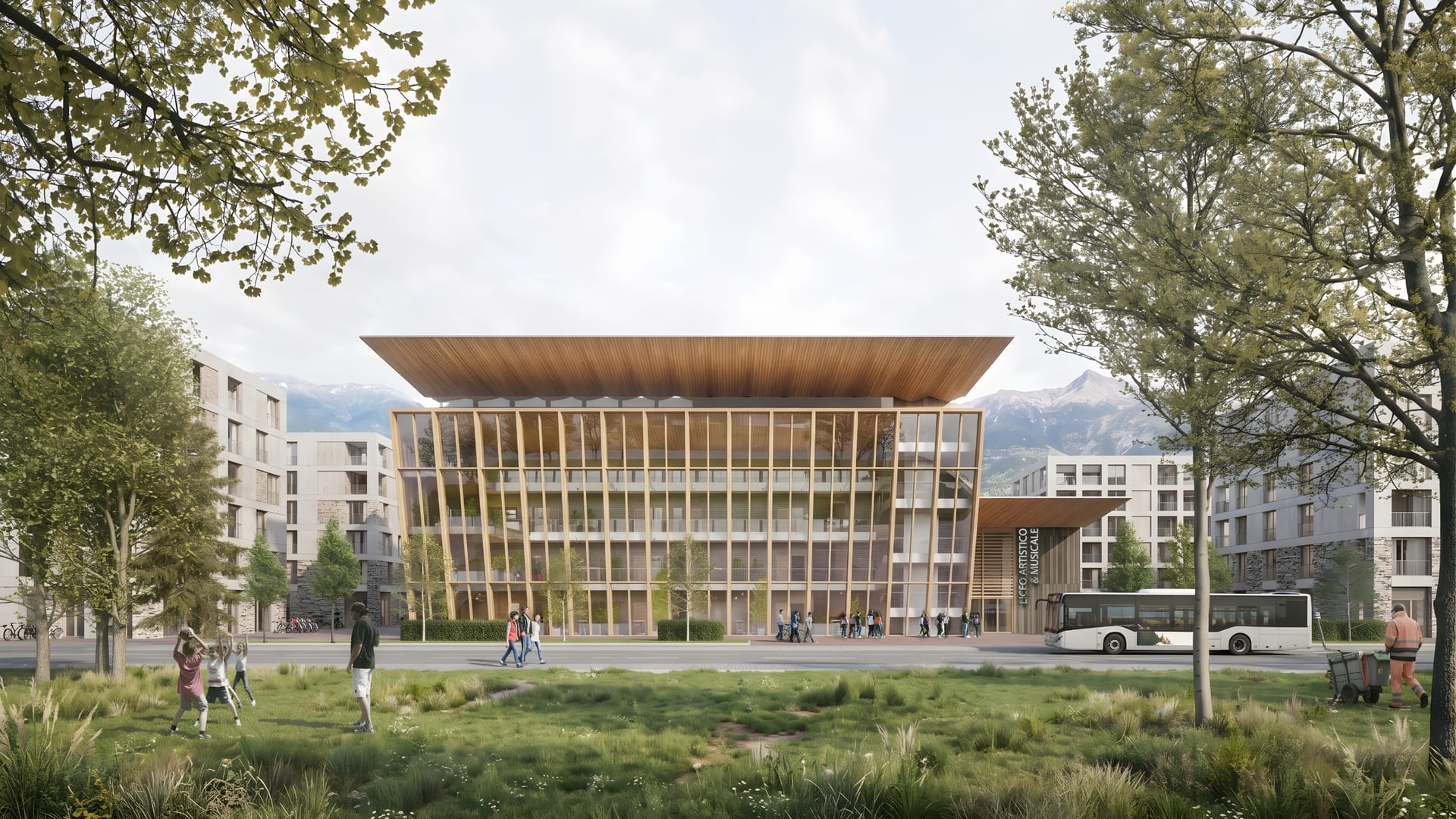
A school as a civic element: bioclimatic greenhouse and alpine landscape
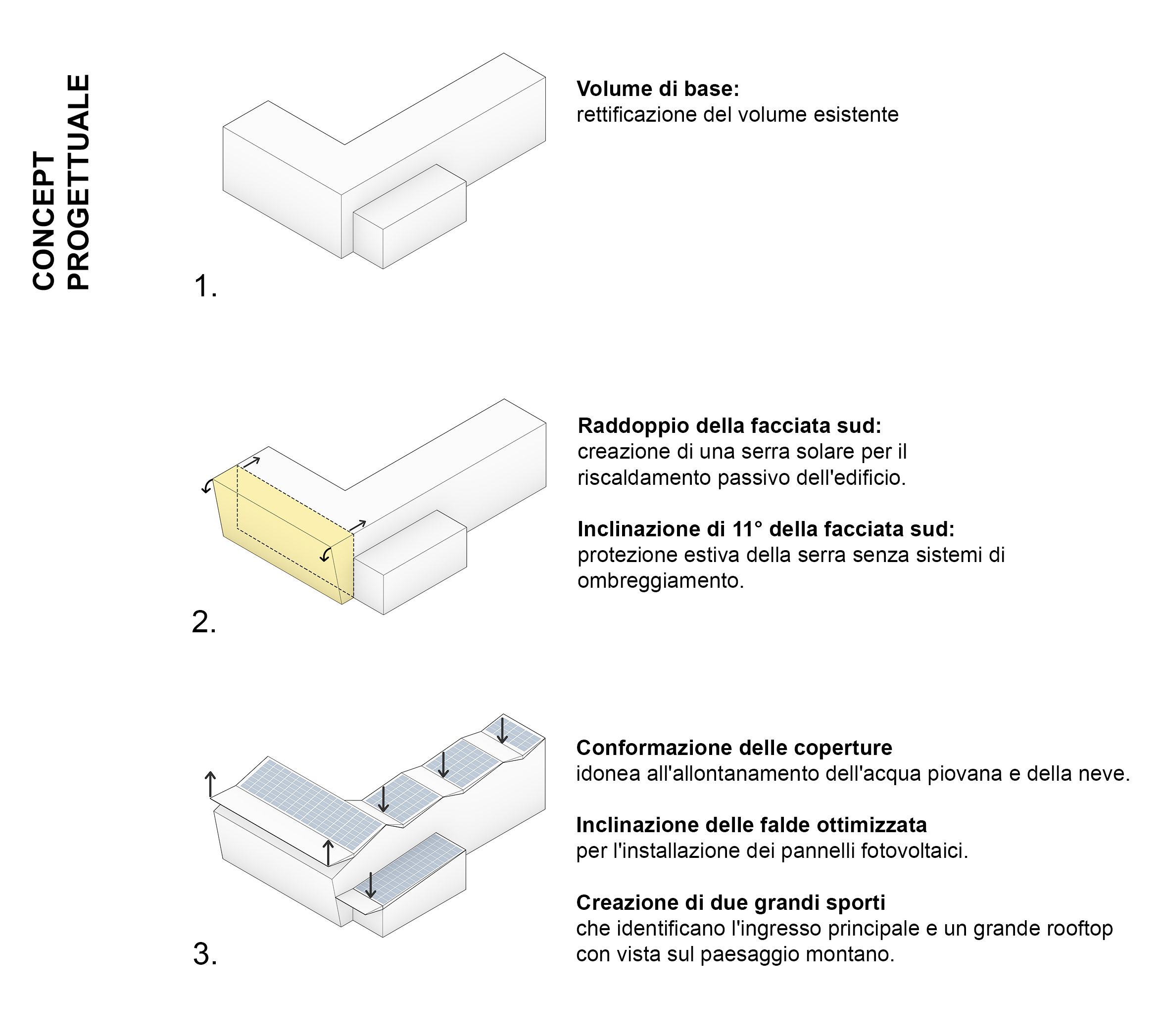
The project for the renovation of the Arts and Music High School in Via Torino, Aosta, stems from the desire to give the city not only a high-performance school building, but a genuine civic element capable of intertwining education and community life. An analysis of the urban, climatic and regulatory context has guided every decision: from the preservation of the existing building’s layout — a choice based on a careful study of the relationship between volume and the local microclimate — to the simplification of the building’s form with an increase in volume, whilst respecting the limits of the building renovation.
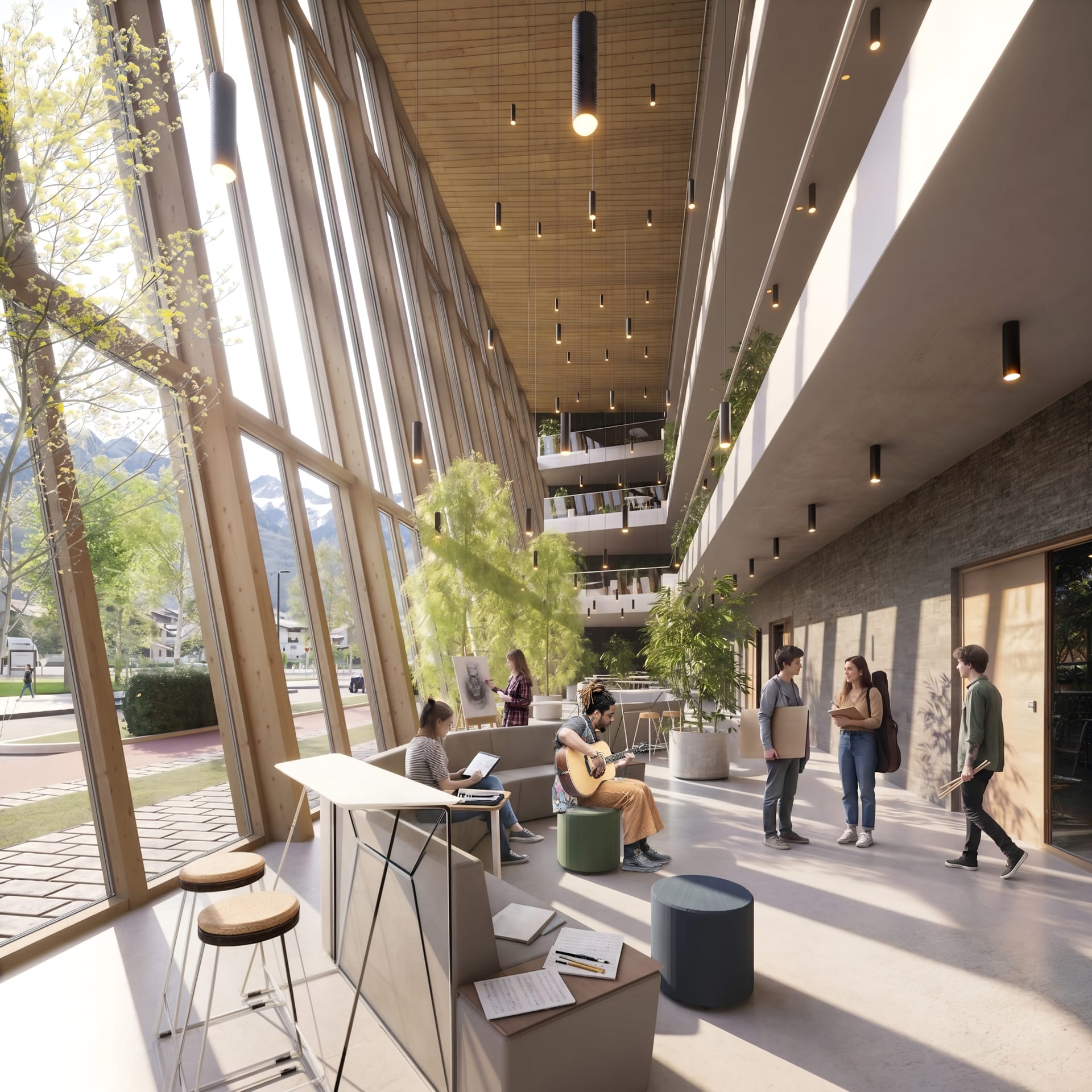
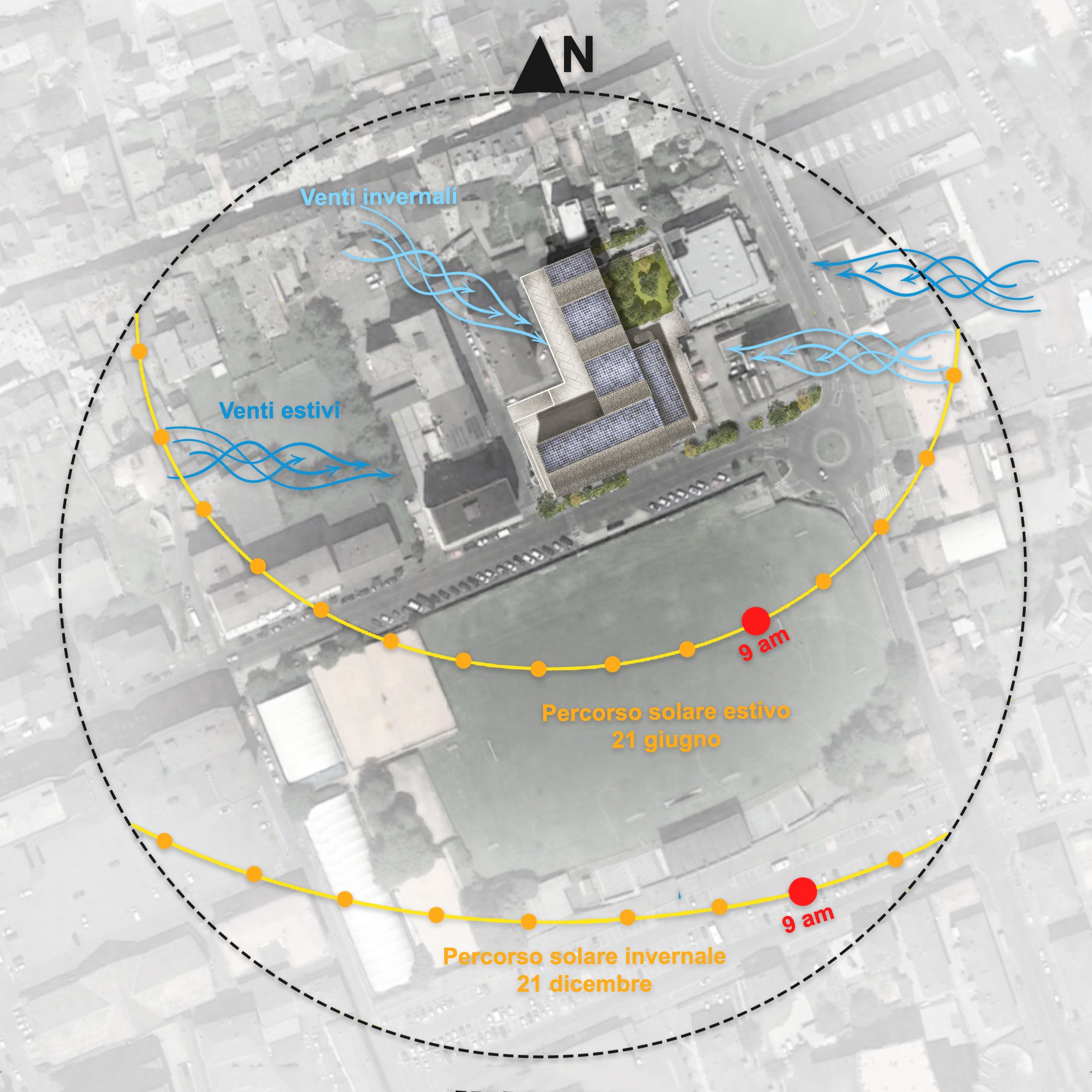
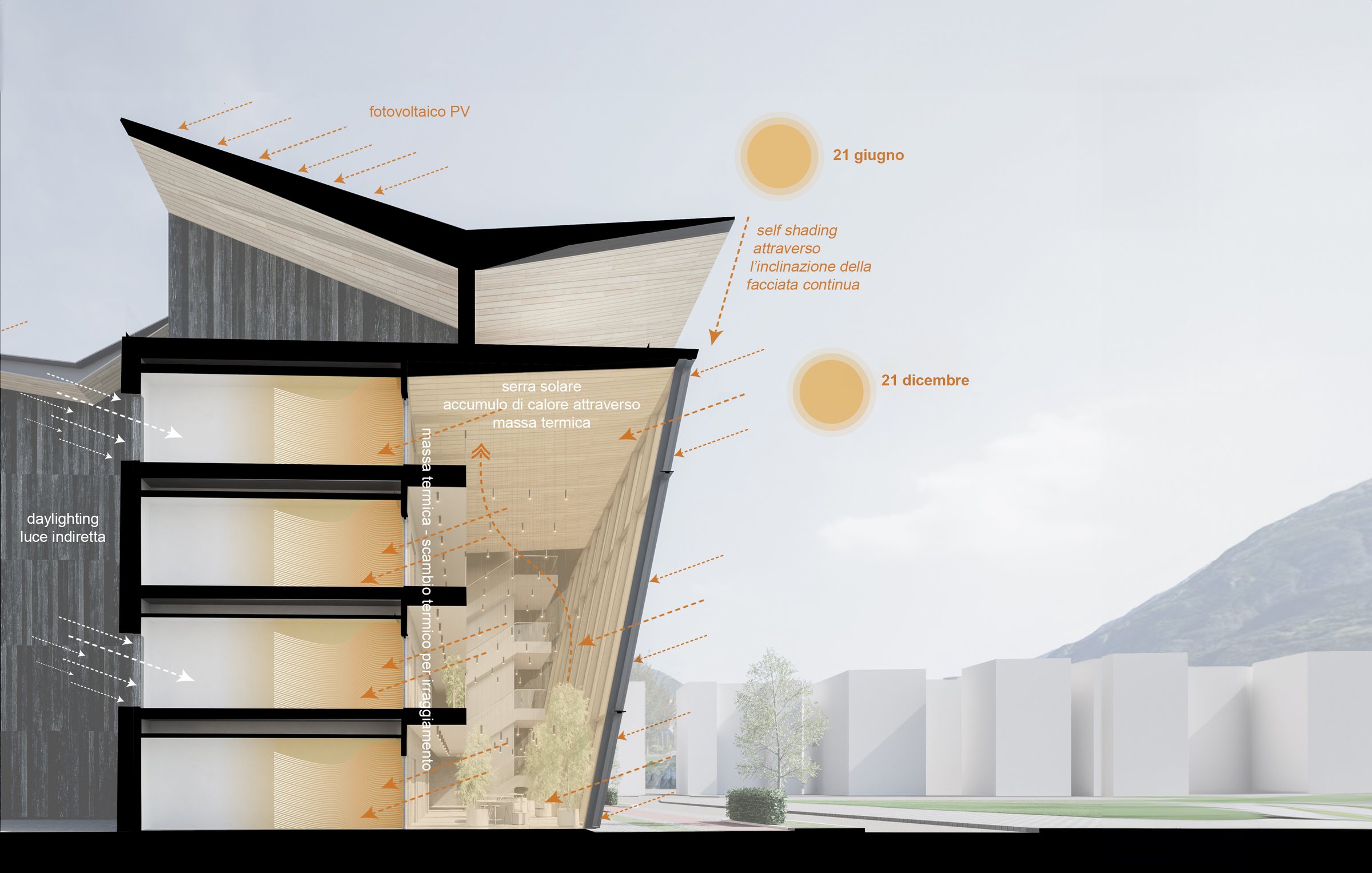
At the heart of the project is the sunspace situated on the south facade: a large glazed surface with a timber structure enclosing a triple-height space, designed both as a bioclimatic device — passive heat storage in winter, natural ventilation in summer thanks to carefully calibrated openings and an angle of inclination calculated according to the sun’s path — and as a place fostering connections between the school and the community. Inside the greenhouse, areas for individual study, debating and cooperative learning extend the learning spaces, whilst large plants on the ground floor create a biophilic filter between the interior and exterior, stimulating the students’ physical and mental wellbeing.
The integrated design has made it possible to go beyond the NZEB approach energy logic by adopting a regenerative strategy: analysis of the psychometric chart has identified passive strategies — passive solar heating combined with thermal mass in winter, shading and natural ventilation in summer — calibrated to climate scenarios projected for 2050. The structure is entirely prefabricated in XLAM, clad in wood treated using the Japanese Yakisugi technique (surface charring to increase durability), with triple glazing and a roof optimised for photovoltaic panels integrated into the south-facing slopes. The rainwater harvesting system and connection to the urban district heating network complete the energy strategy.
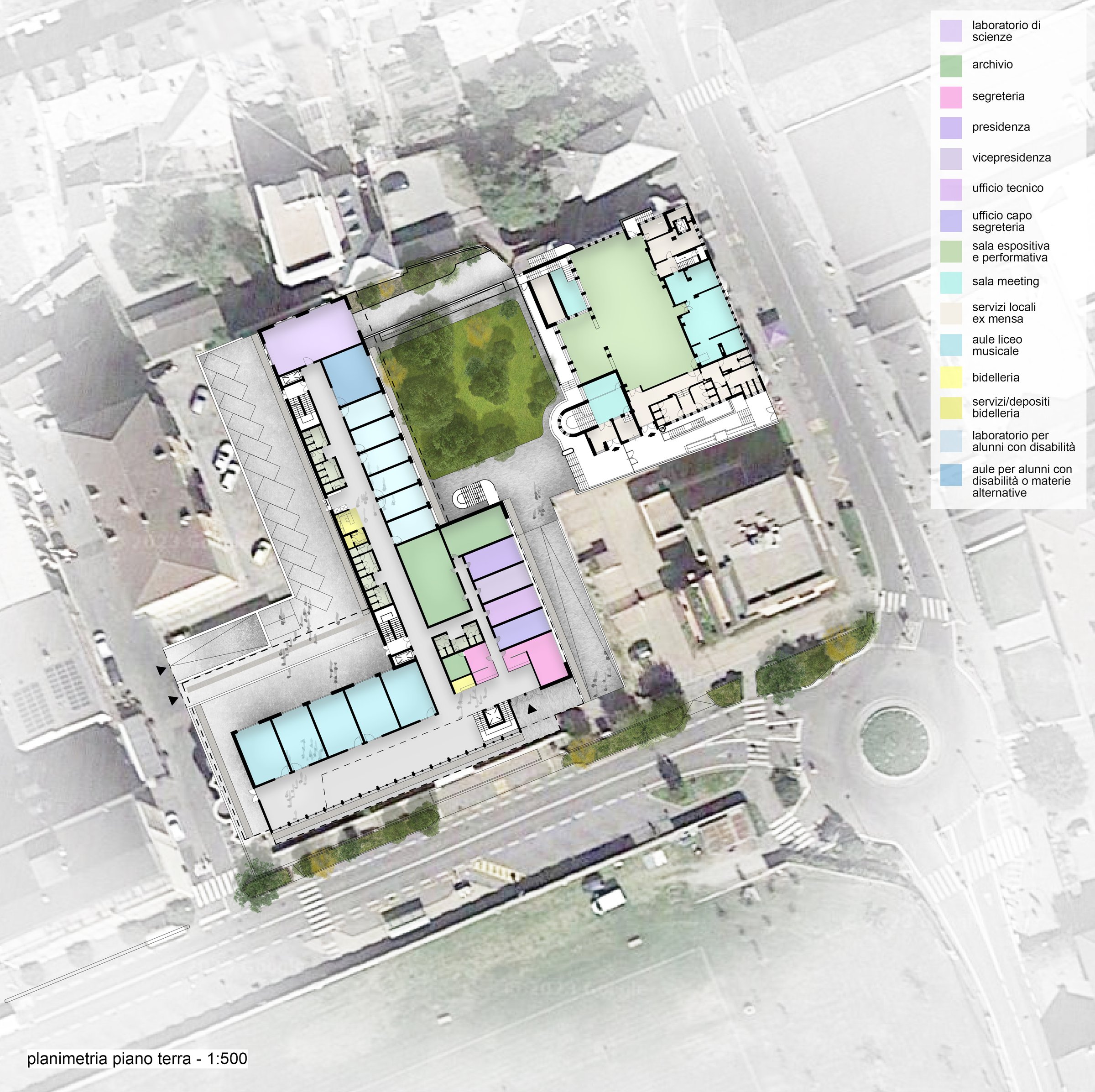
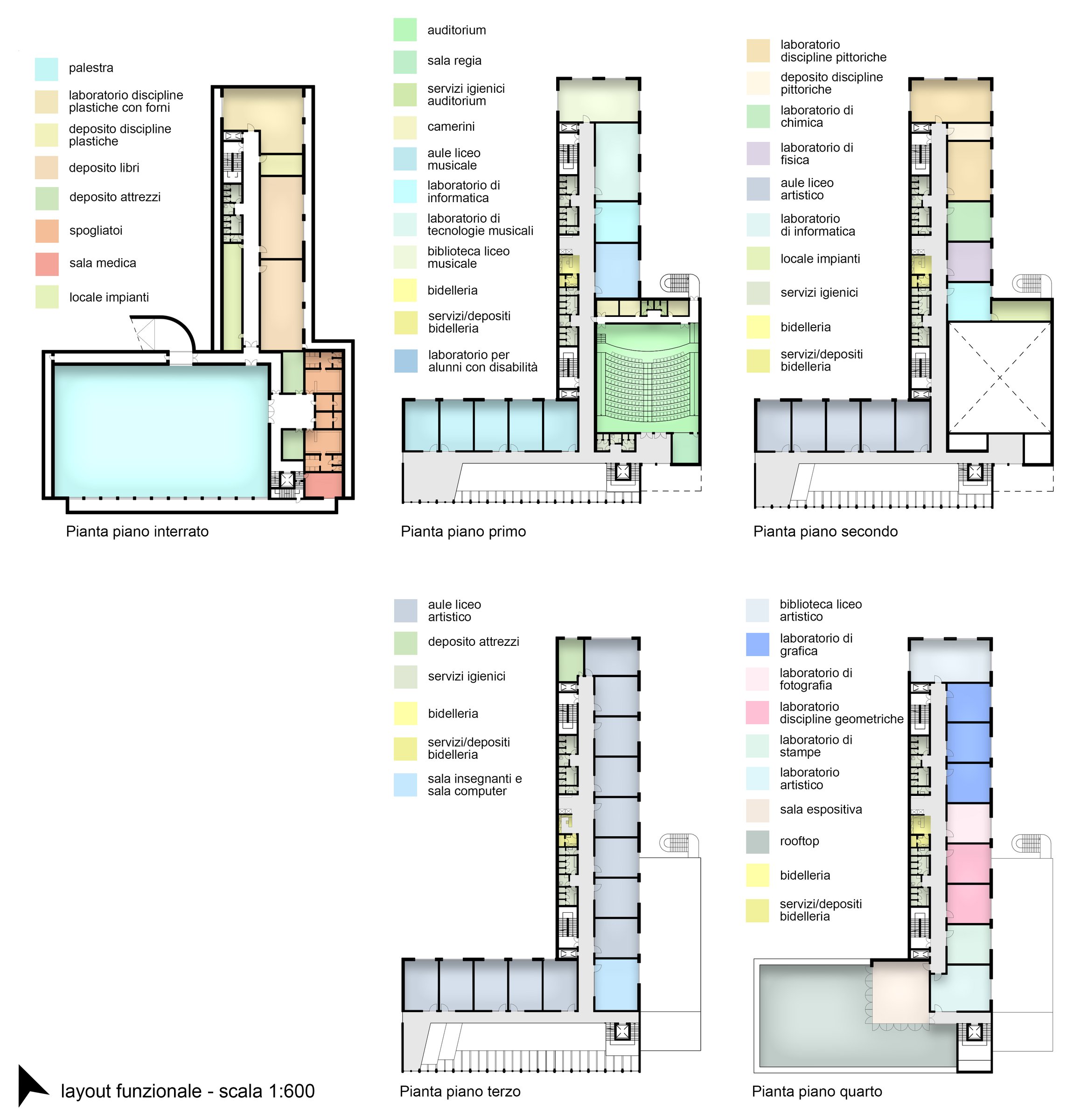
The profile of the segmented roof echoes the skyline of the mountain ranges on the southern slope, creating a mimicry of the Alpine landscape that is both an architectural feature and a functional solution. The spaces are arranged with a clear hierarchy: administration and classrooms for students with disabilities on the ground floor, the Music School between the ground floor and the first floor, and the arts high school from the second to the fourth floors, with workshops, an exhibition hall and a panoramic rooftop terrace also accessible during after-school hours. The school thus becomes an open civic centre, a porous network of relationships set against the backdrop of Aosta’s natural landscape.
Renders & Photos
Technical specifications
- Location
- Aosta, Aosta Valley
- Year
- 2024
- Client
- Municipality of Aosta
- Typology
- School architecture — Arts and Music High School
- Status
- Design competition
- Designers
- Micaela Colella (group leader), Maurizio Barberio, Angelo Figliola
- Contributors
- Andrea Sgherza, Italo Boccuto, Giuseppe Tota
Technical drawings
How do you design a school that truly works from both a climatic and educational perspective, without relying solely on mechanical systems?
Italian school architecture has seen decades of projects where environmental quality was entirely delegated to mechanical systems, resulting in high energy costs and comfort conditions that were often inadequate for students and teachers. In a climate such as that of the Aosta Alps, with harsh winters and a marked thermal temperature range, the challenge is to design a building envelope that functions passively — storing solar heat in winter and protecting against overheating in summer — thereby drastically reducing dependence on active systems. The project for the secondary school on Via Torino demonstrates that it is possible to go beyond the NZEB approach with a regenerative strategy, where the bioclimatic greenhouse is not an accessory but the generative principle of the architecture, and where the flexibility of the learning spaces and openness to the community transform the school into an active civic element. ### How does the sunspace work in an alpine climate such as that of Aosta? The sunspace is designed as a dual-function bioclimatic device. In winter, the large glazed surface with a timber structure captures solar radiation and transmits it to the solid wall behind, which has high thermal inertia, accumulating heat and gradually releasing it into the learning spaces. In summer, the angle of the facade is calibrated to the solar path to ensure shading, whilst openings at the top and bottom facilitate natural ventilation. The analysis was conducted using climate projections for 2050 to ensure the system’s effectiveness even in the face of ongoing climate change. ### Why was XLAM timber and the Yakisugi technique chosen for a school? The XLAM structure (cross-laminated timber panels) meets three requirements: modularity and prefabrication to reduce construction time and environmental impact, high seismic performance, and consistency with the local architectural culture, where timber is a traditional material. The external cladding uses the Japanese Yakisugi technique, which involves the controlled surface charring of timber planks to create a protective carbonised layer. This treatment increases the timber’s durability without the need for paint or chemical treatments, and is particularly suited to the Alpine climate with its wide thermal variations and frequent rainfall. ### Is the school accessible to the community outside school hours? The design features a flexible layout of spaces that allows independent access after-school hours time to the gym (basement), auditorium, exhibition hall and panoramic rooftop. These spaces can be accessed from the main entrance on Via Torino via a system of REI doors and alarms that ensure safety by separating public routes from school routes. The school thus becomes an active community centre for the neighbourhood, with multi-purpose spaces overlooking the panorama of the surrounding mountain ranges. ### How are the spaces organised for the two streams (Art and Music)? The Music School occupies the ground floor and first floor (UK) of the north-south wing, whilst the Arts High School extends from the second to the fourth floor. The top floor houses the art studios, flowing seamlessly into the exhibition hall and the rooftop. Despite the vertical separation, the layout remains open and connected thanks to the circulation spaces and the triple-height atrium, which link the floors fluidly, encouraging socialising and collaborative study. The classrooms in the north-south wing face north to benefit from diffused light and minimise glare, whilst those on the south side are connected to the atrium space. ### What energy strategies enable the pursuit of self-sufficiency? The strategy combines passive and active elements. On the passive front: a sunspace for pre-heating and pre-cooling the air, a high-performance building envelope with triple glazing, thermal mass in the internal walls, and calibrated natural ventilation. On the active side: photovoltaic panels integrated into the south-facing roof slopes (whose segmented shape is optimised to maximise yield), an energy storage system, connection to Aosta’s urban district heating network, and rainwater harvesting with a filtration and re-use system for non-potable uses. ### How much does it cost to build a school using this bioclimatic approach compared to a traditional one? The integrated design process — where the bioclimatic strategy guides the building’s form right from the concept stage — allows the additional costs of the high-performance building envelope to be offset by the reduction in the mechanical systems required. The sunspace, for example, lowers the performance required of the active heating and cooling system. In terms of the life cycle (LCA), operating costs are drastically lower thanks to energy self-sufficiency and the reduced maintenance required for the prefabricated timber building. ### Does the project take future climate change into account? Climate analyses were conducted using statistical projections up to 2050, not just historical data. This has allowed us to scale passive strategies — shading, ventilation, thermal mass — for conditions hotter than those currently experienced, ensuring that the building maintains optimal comfort conditions even with the rising temperatures and heatwaves predicted by IPCC models for the Alpine region.
Are you planning a school that will truly be a high-quality environment for pupils and the local community?
Every school building has the potential to become an active civic element — a place where the quality of the environment enhances learning and fosters links with the local community. If you are taking part in a competition or tender for school architecture and are looking for an approach that combines bioclimatic design, educational flexibility and openness to the community, we can work on it together.
Let’s talk about your projectRelated projects
Public & Commercial Architecture
TRANI SCHOOL
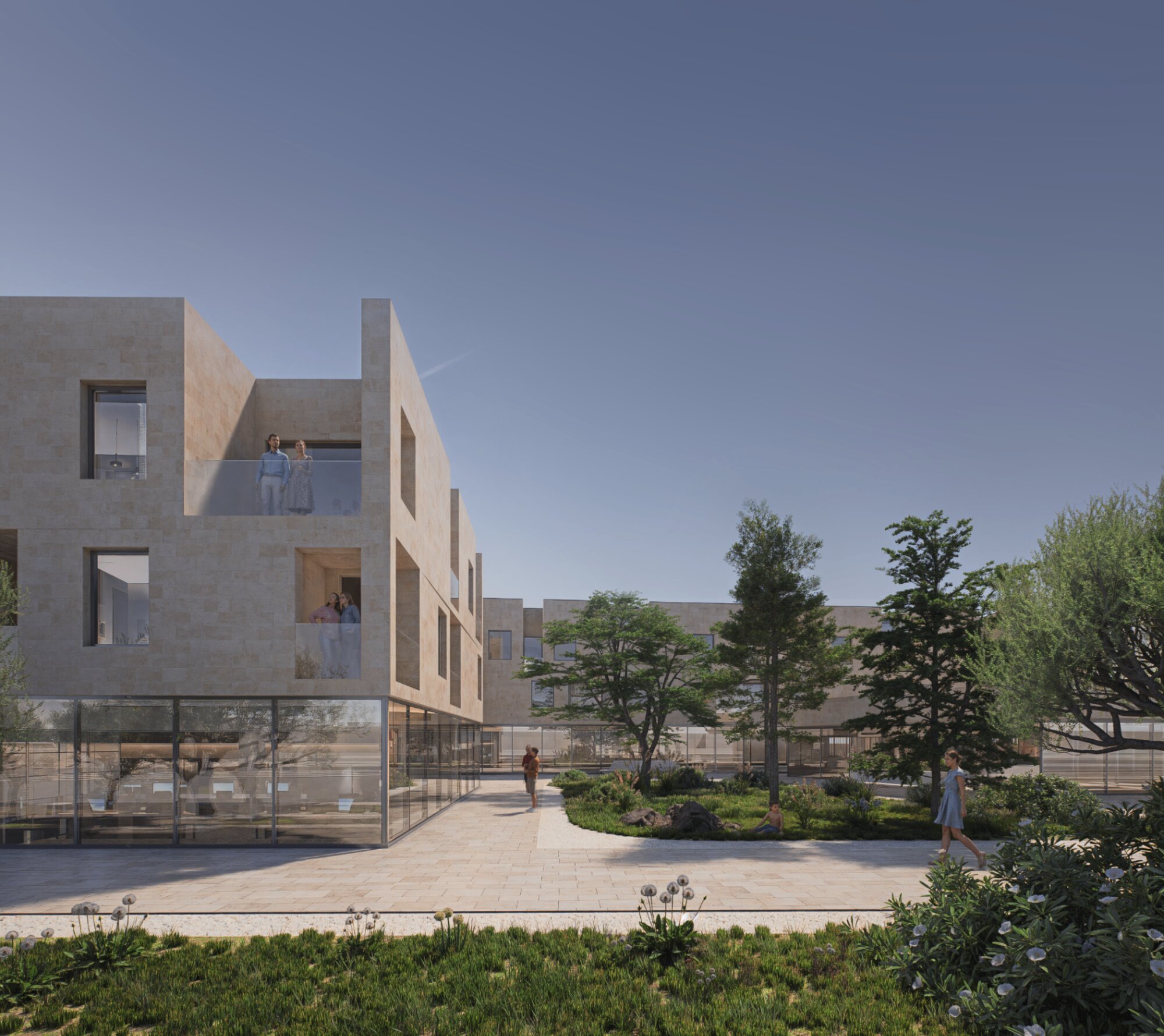
A new nursery and primary school complex that transforms a derelict area of Trani into an educational urban park, featuring a civic square and a regenerative approach that goes beyond the NZEB approach energy logic.
Sustainable Design
POLYMNIA FUTURA
An urban regeneration proposal for Polignano a Mare that combines sustainable mobility, public spaces and new residential neighborhoods: Special Mention at the Europan 18 European competition.
Sustainable Design
BAMBOO OFFICE
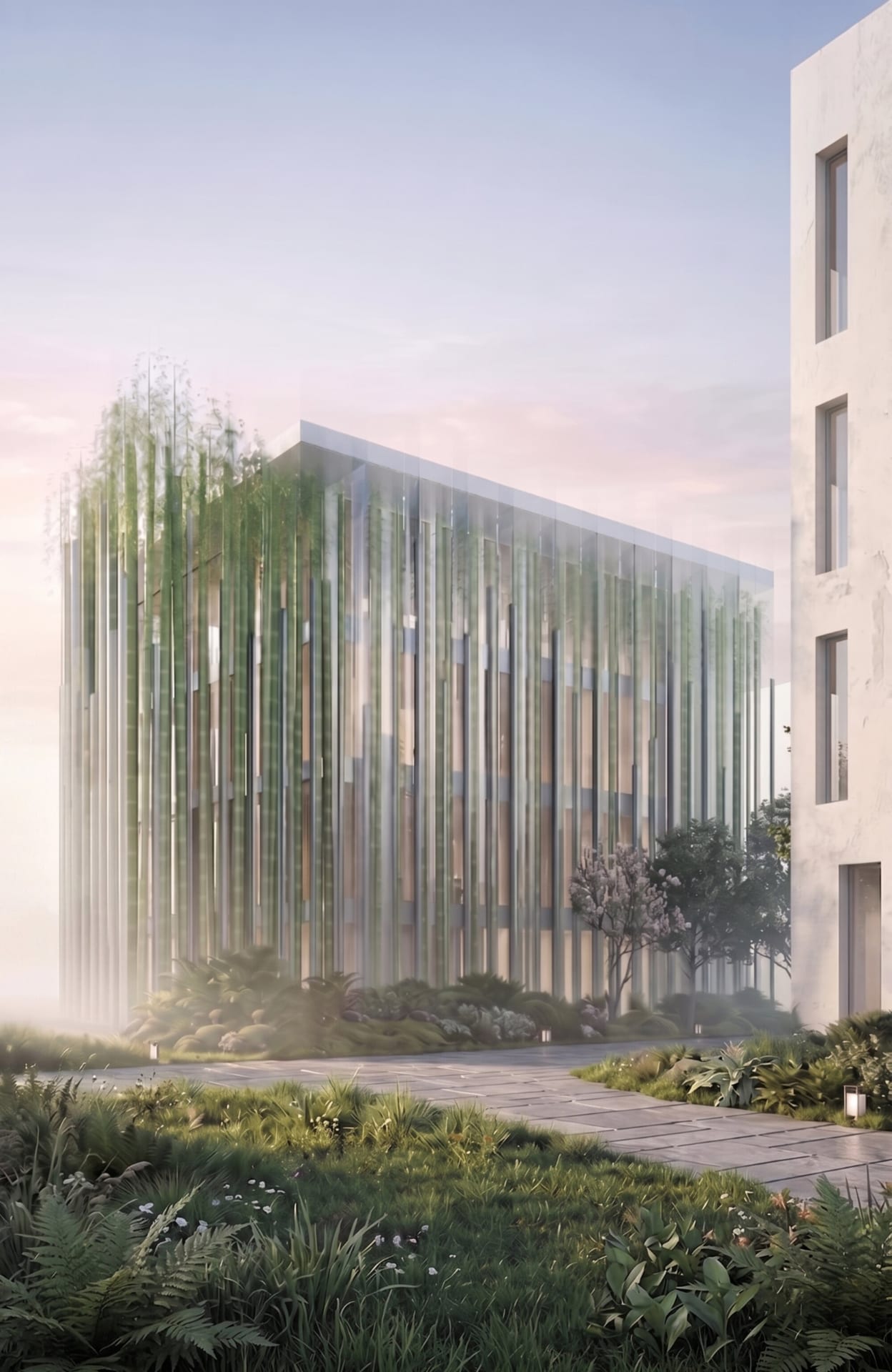
A building where the facade serves as the primary climate control system: a fifteen-metre-high bamboo forest that filters light, heat and wind.