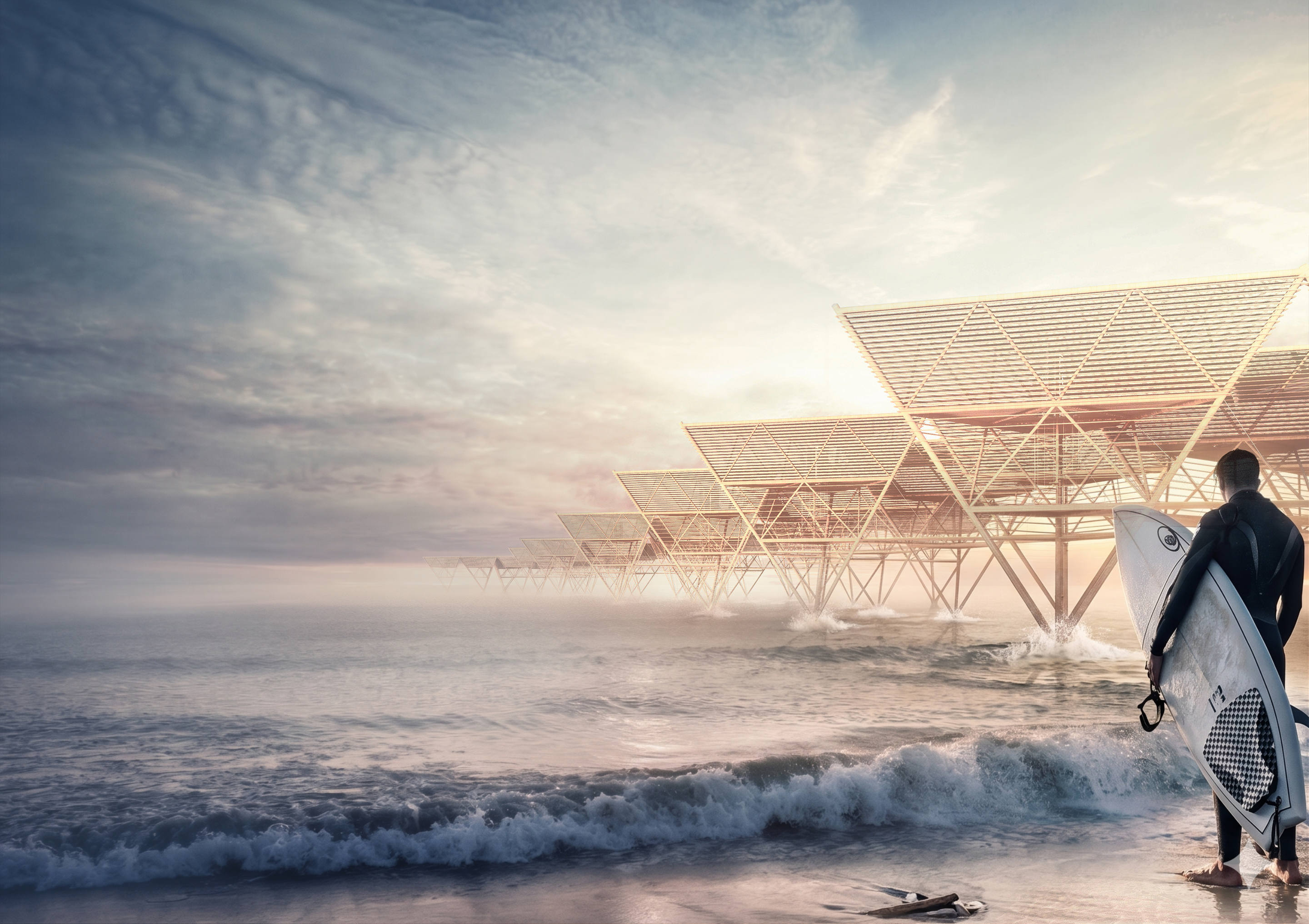
Lanterns Sea Village – Sustainable temporary accommodation for surfers in Tarifa
One hundred bamboo tetrahedrons suspended over the sea: a reversible village that leaves no trace on one of the Mediterranean’s most fragile coastal landscapes.
2014 · Tarifa, Spain · Temporary residences · Sustainable Design
When architecture hovers over the sea
Playa de Los Lances, in Tarifa, is one of the most popular stretches of coastline for surfers across Europe. A landscape of wind, sand and light that attracts thousands of sports enthusiasts every year in search of waves and a place to stay. The problem is well known: traditional temporary accommodation solutions (campervans, shipping containers, prefabricated structures placed on the beach) leave a permanent mark on a fragile ecosystem. The challenge for Lanterns Sea Village was to design a settlement comprising 100 housing units that could house the surfing community without leaving a trace on the landscape once dismantled.
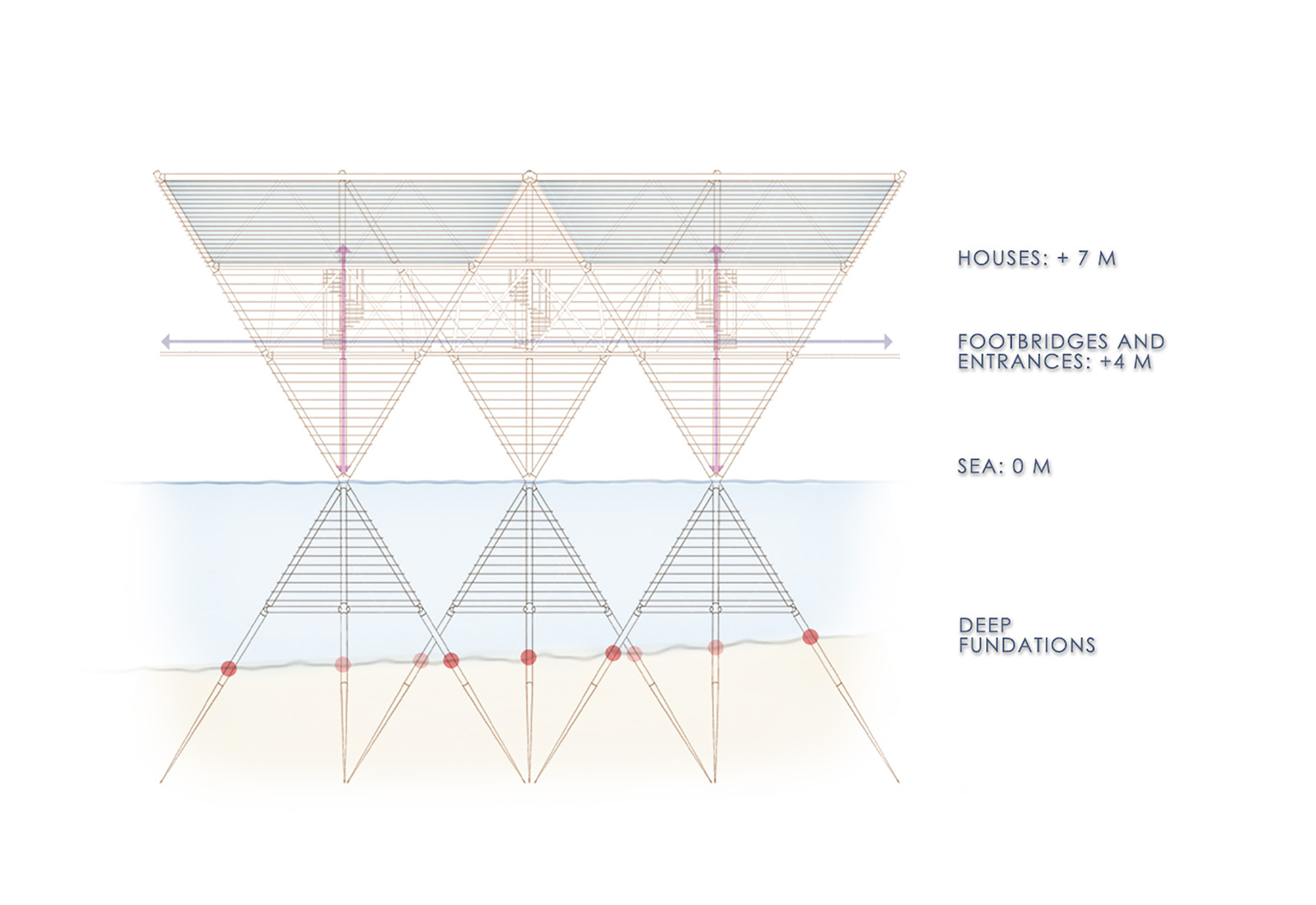
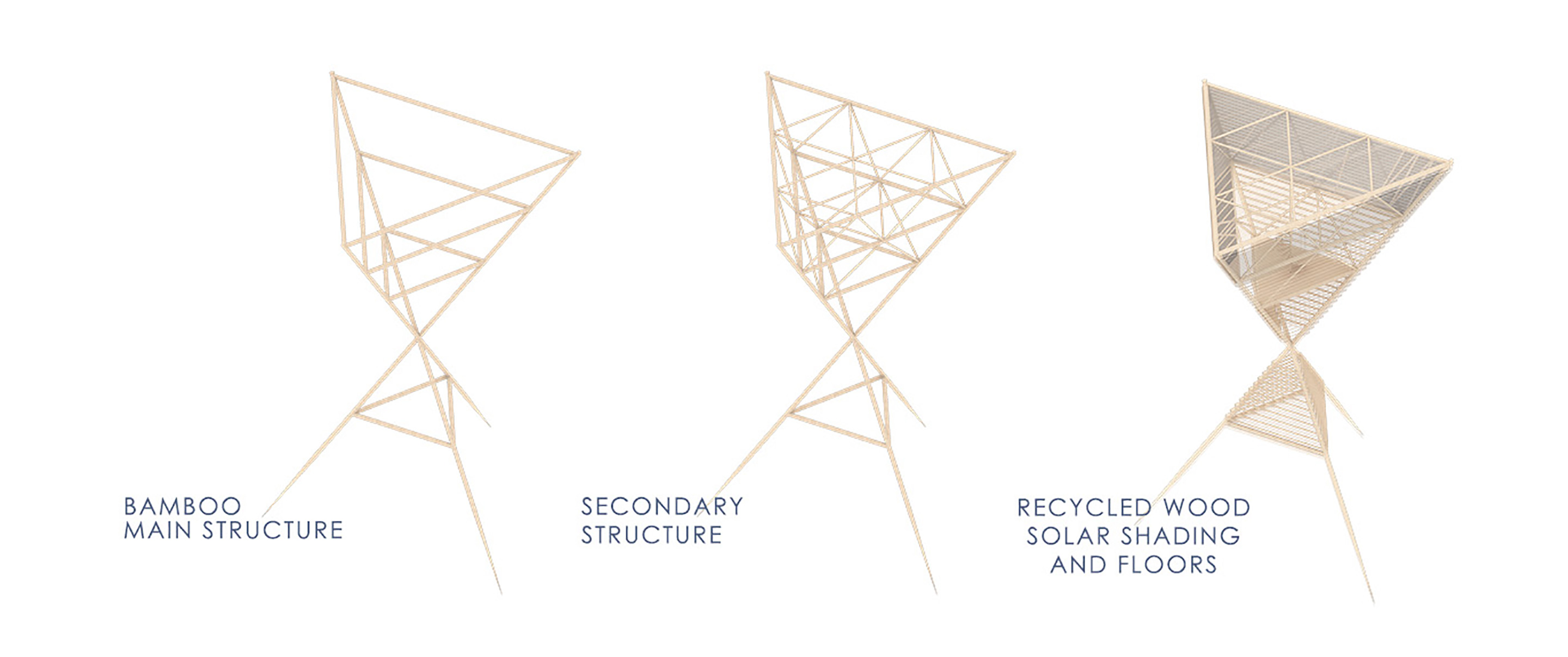
Barberio Colella Architetti’s response stems from a precise vision: lightweight tetrahedral structures rising from sea level, suspended in place like lanterns. This is not an arbitrary formal gesture, but a structural and environmental choice: the triangular geometry is the most rigid of all, and the grouping of three tetrahedrons generates a mutual static equilibrium that minimises the number of ground supports. The foundations are reduced to deep piles in the sand, eliminating any need for excavation or concrete casting.
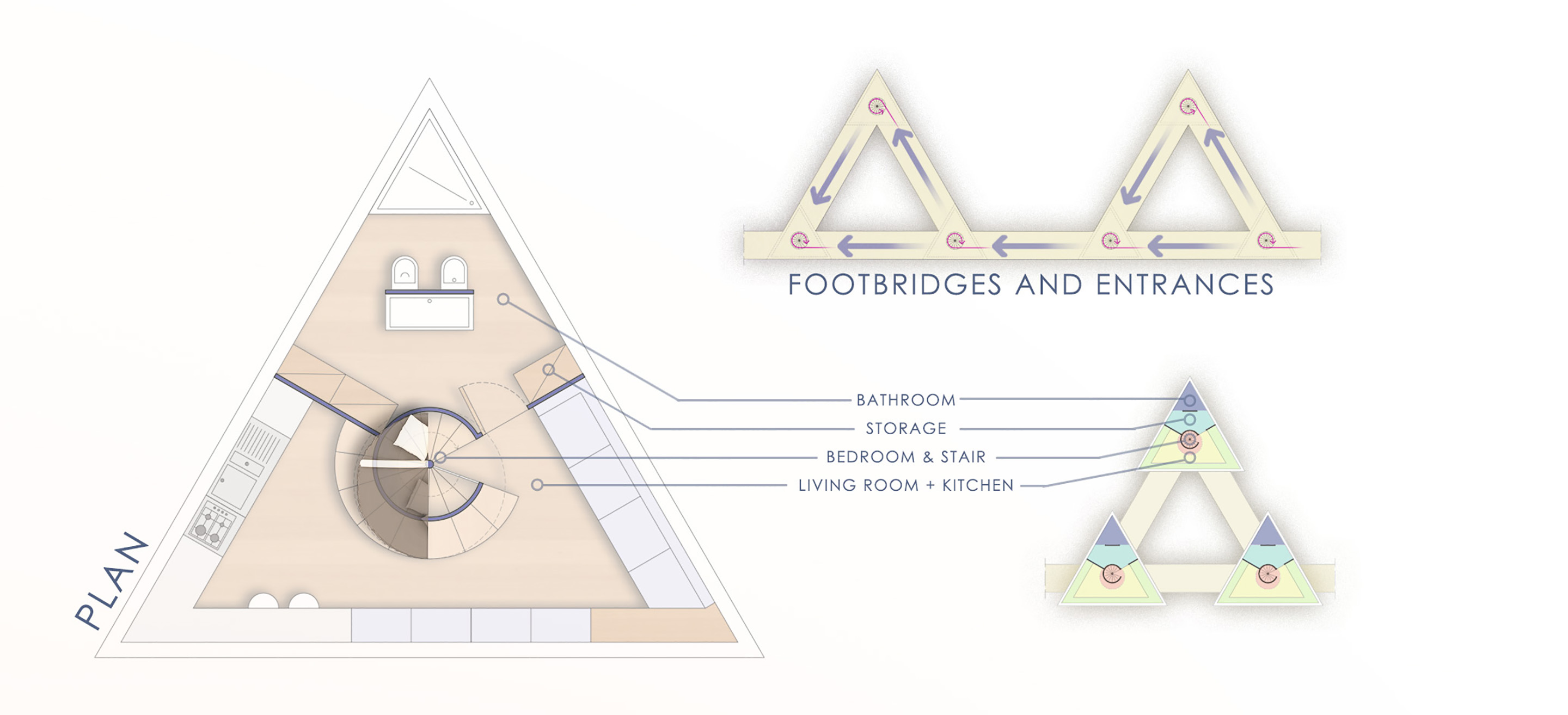
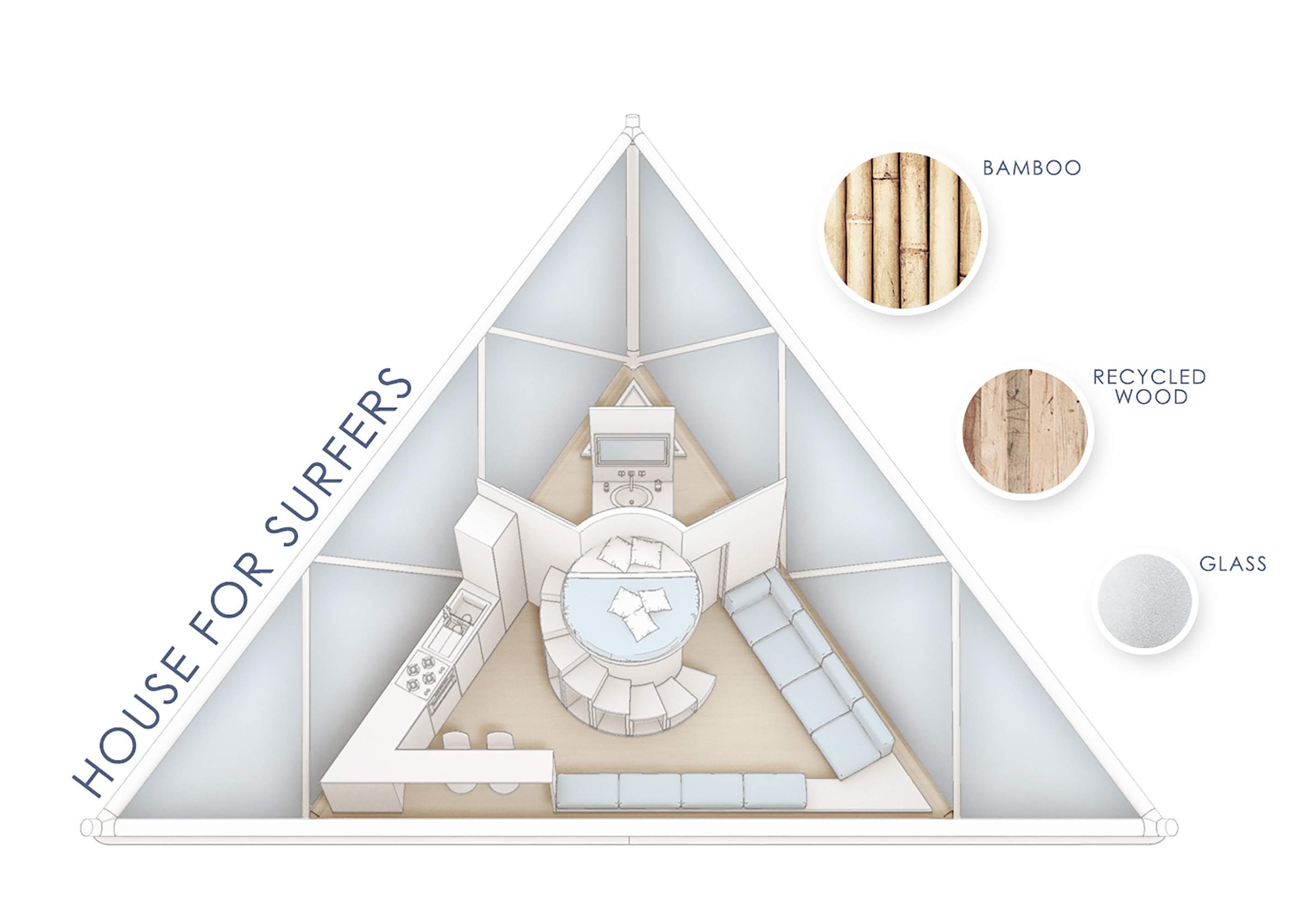
The load-bearing material is bamboo, chosen for its structural properties, sustainability and lightness. The floors are made of recycled timber, whilst the sunshades are crafted from old surfboards (shaped and glued) transforming an object symbolic of the local culture into a functional architectural component. Each housing unit, measuring approximately 30 square metres, comprises a kitchen, bathroom and bedroom, arranged over two levels: on the lower level, four metres above sea level, run the access walkways; on the upper level are the actual residences.
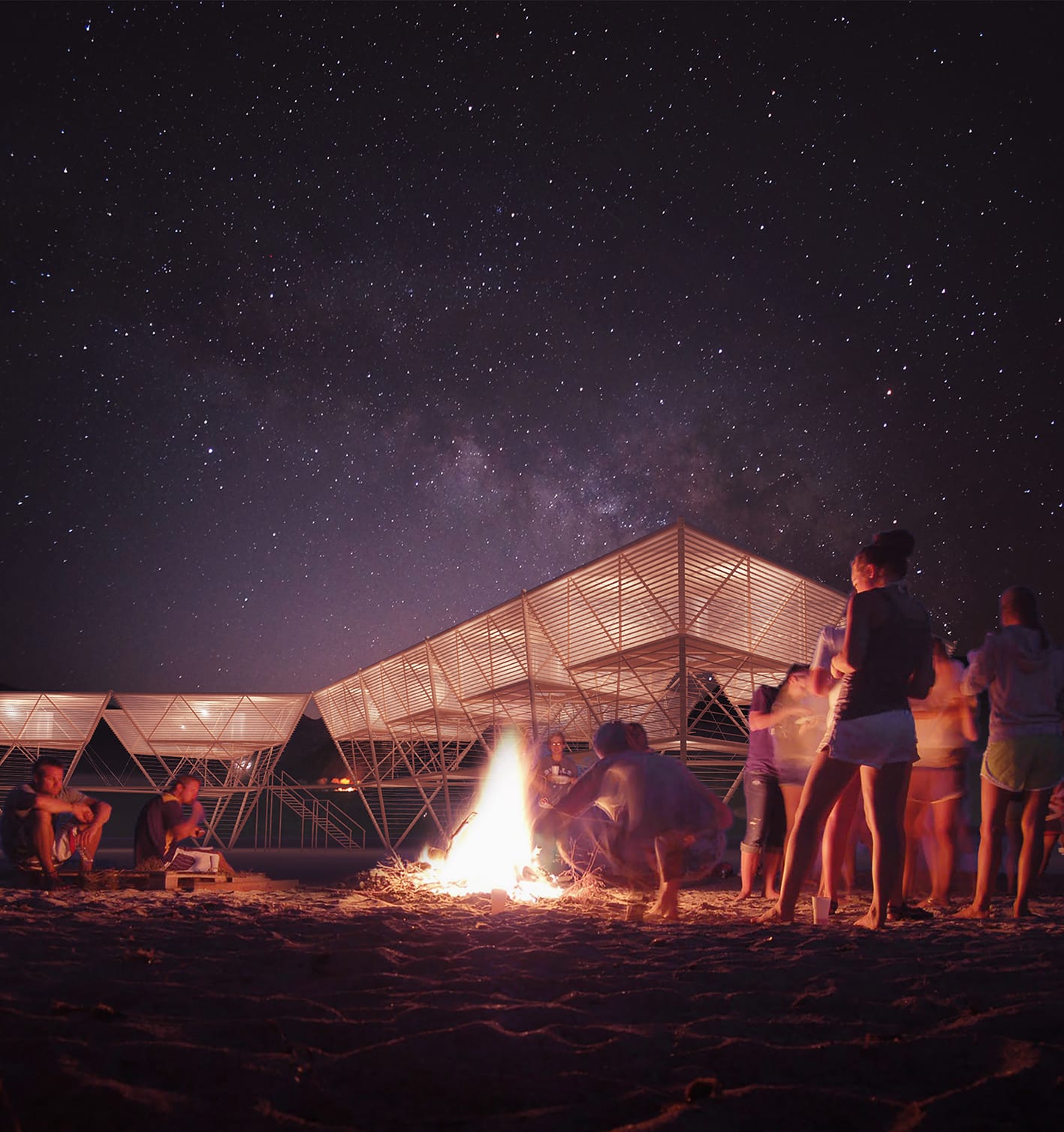
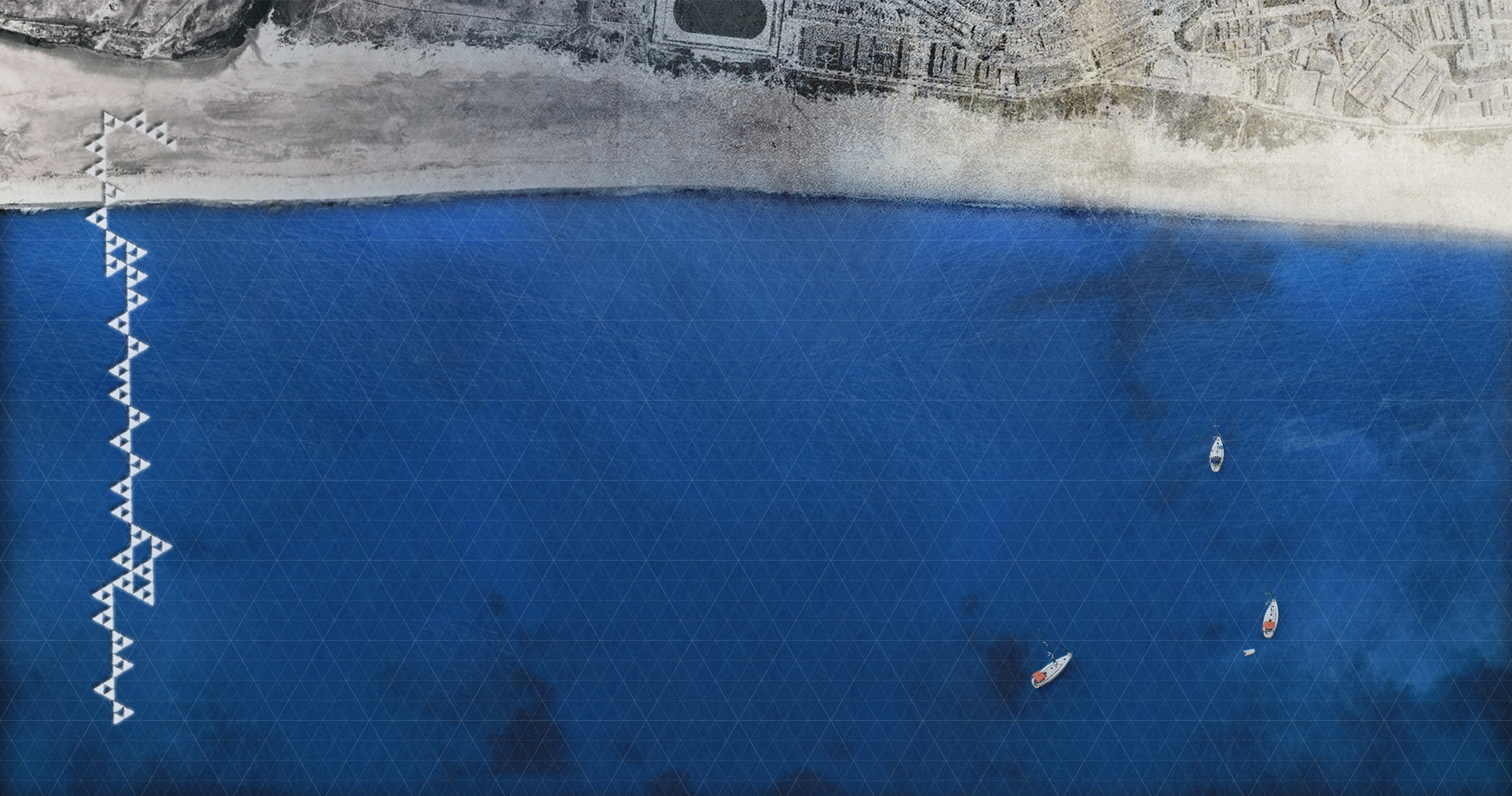
The cluster of 100 modules stretches linearly out to sea and converges in a semi-square on the beach, creating a communal living space. The entire village is energy self-sufficient thanks to mini marine turbines, mini wind turbines and amorphous photovoltaic panels integrated into the extensive roof surfaces. The project is fully reversible: every component can be dismantled and recycled, restoring the landscape to its original state. Lanterns Sea Village was featured on ArchDaily in 2015.
Renders & Photos
Technical specifications
- Location
- Playa de Los Lances, Tarifa, Andalusia, Spain
- Year
- 2014
- Typology
- Temporary accommodation
- Area
- 4,200 m² (residential)
- Status
- Concept
- Designers
- Maurizio Barberio, Micaela Colella
- Publications
- ArchDaily (2015)
Technical drawings
How do you build a temporary settlement on the coast without damaging the landscape?
Anyone managing accommodation or residential facilities in protected coastal areas is familiar with the dilemma: every foundation, every concrete slab, every excavation permanently alters a fragile ecosystem. Conventional temporary solutions (containers, lightweight prefabricated units, modular structures on plinths) reduce the impact but do not eliminate it. In Tarifa, where the dune and marine landscape is the main economic and environmental asset, a radically different approach was needed: architecture that could be dismantled without leaving a trace, built with renewable materials, and capable of operating with energy self-sufficiency. Lanterns Sea Village demonstrates that it is possible to design a settlement comprising one hundred housing units with foundations reduced to bamboo poles in the sand, a fully recyclable bamboo structure, and sunshades made from recycled materials.
Frequently Asked Questions
Are you planning a temporary accommodation facility or one with a low environmental impact?
Lanterns Sea Village demonstrates that sustainable and reversible settlements are buildable in fragile landscapes. If you have a similar project (temporary accommodation, eco-resorts, coastal facilities) we can discuss the design approach best suited to your site and budget.
Let’s talk about your projectRelated projects
Sustainable Design
BAMBOO OFFICE
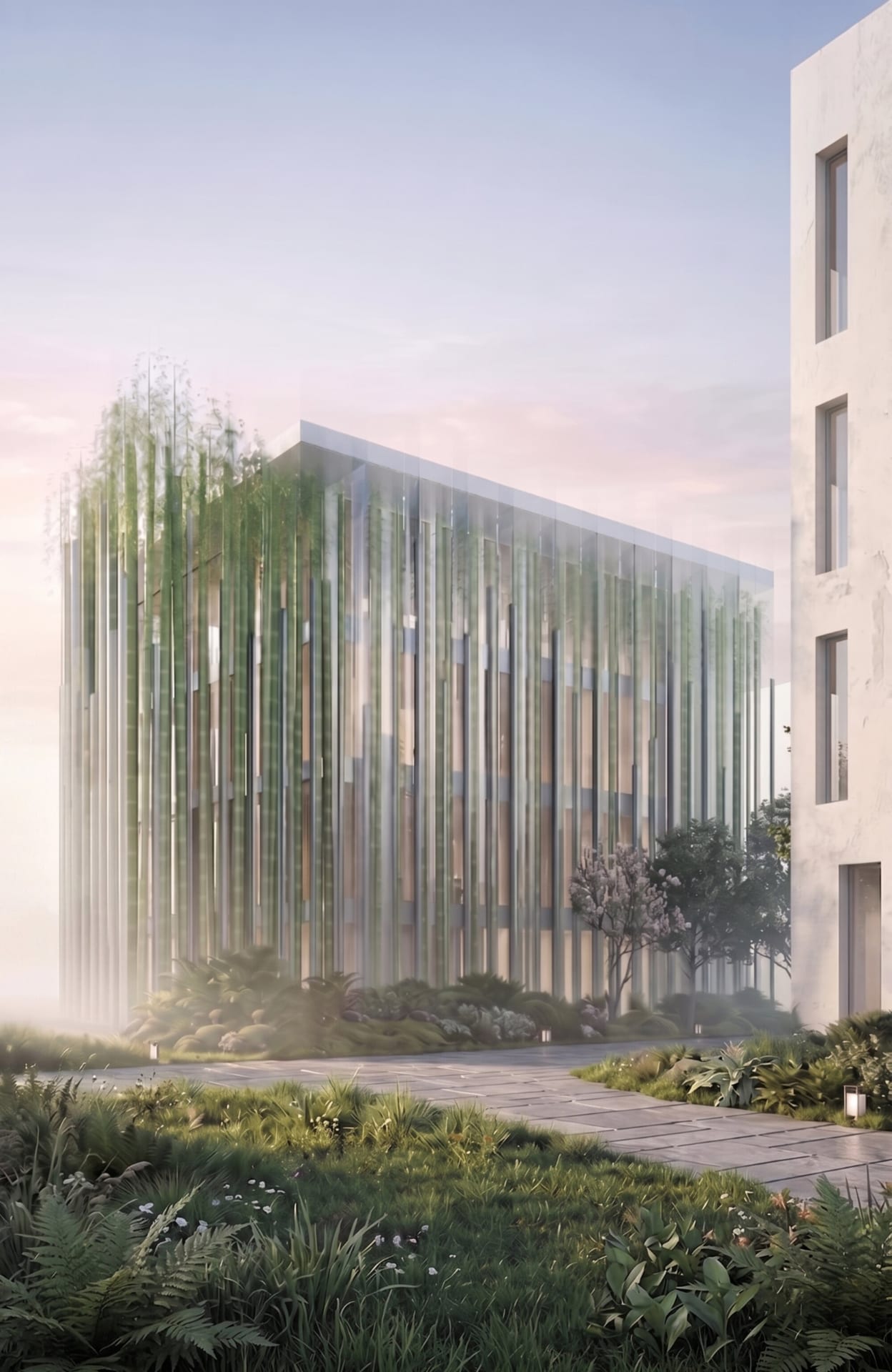
A building where the facade serves as the primary climate control system: a fifteen-metre-high bamboo forest that filters light, heat and wind.
Sustainable Design
UNBOXED
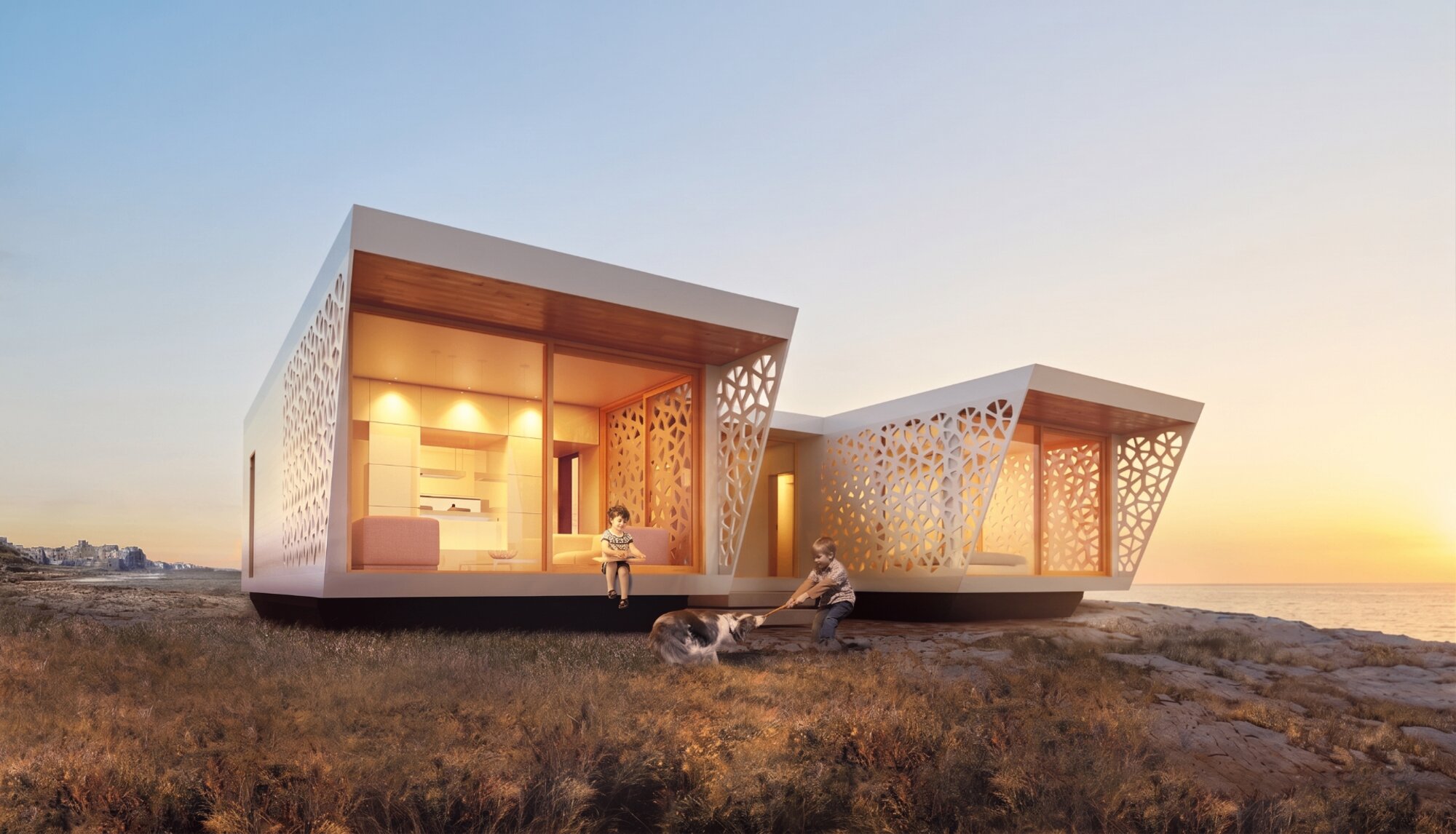
A fully prefabricated, demountable and 100% recyclable X-lam house, designed to demonstrate that timber construction is a viable alternative to brick and mortar in southern Italy.
Sustainable Design
POLYMNIA FUTURA
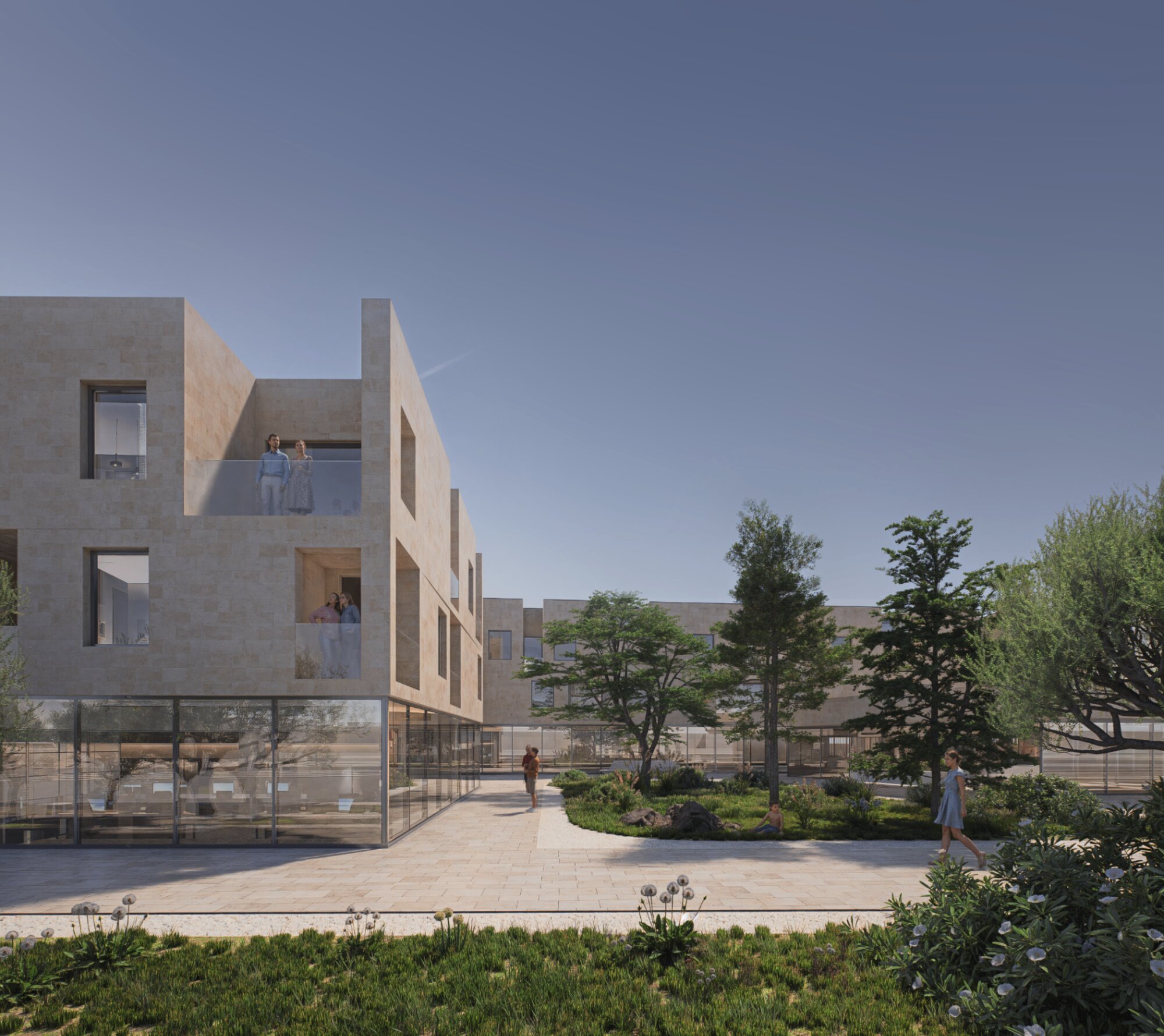
An urban regeneration proposal for Polignano a Mare that combines sustainable mobility, public spaces and new residential neighbourhoods: Special Mention at the Europan 18 European competition.