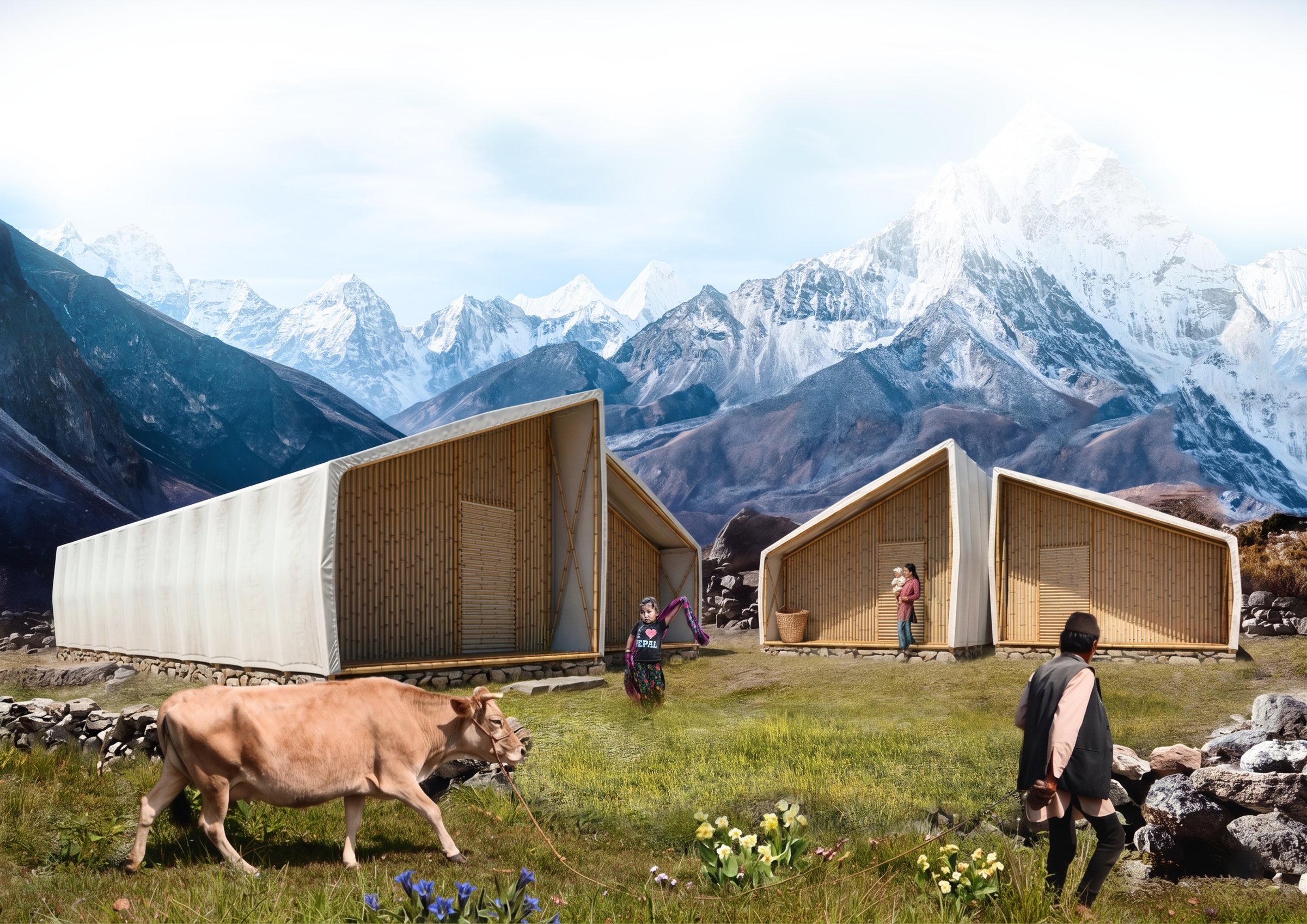
Just a Minute – A deployable bamboo emergency shelter for the Nepal earthquake
A temporary shelter that can be set up in just a few minutes (made from bamboo, jute and recycled wool from donated clothing) which can be assembled by just a few volunteers to help rebuild the community in the wake of the earthquake.
2015 · Nepal · Temporary emergency housing · Sustainable Design
A house that unfolds in just a few minutes
On 25 April 2015, a magnitude 7.8 earthquake devastated Nepal: nearly 9,000 victims, over 600,000 homes destroyed, entire rural communities forced to live in tents for months. It is against this backdrop that Just a Minute was conceived, a project by Barberio Colella Architetti for an emergency home designed to be quick to assemble, economical, durable and, above all, capable of meeting the real needs of Nepalese families: space for four to ten people, local or regional materials, energy self-sufficiency and adaptability to the country’s diverse climates, from the Terai plains to the Himalayan highlands.
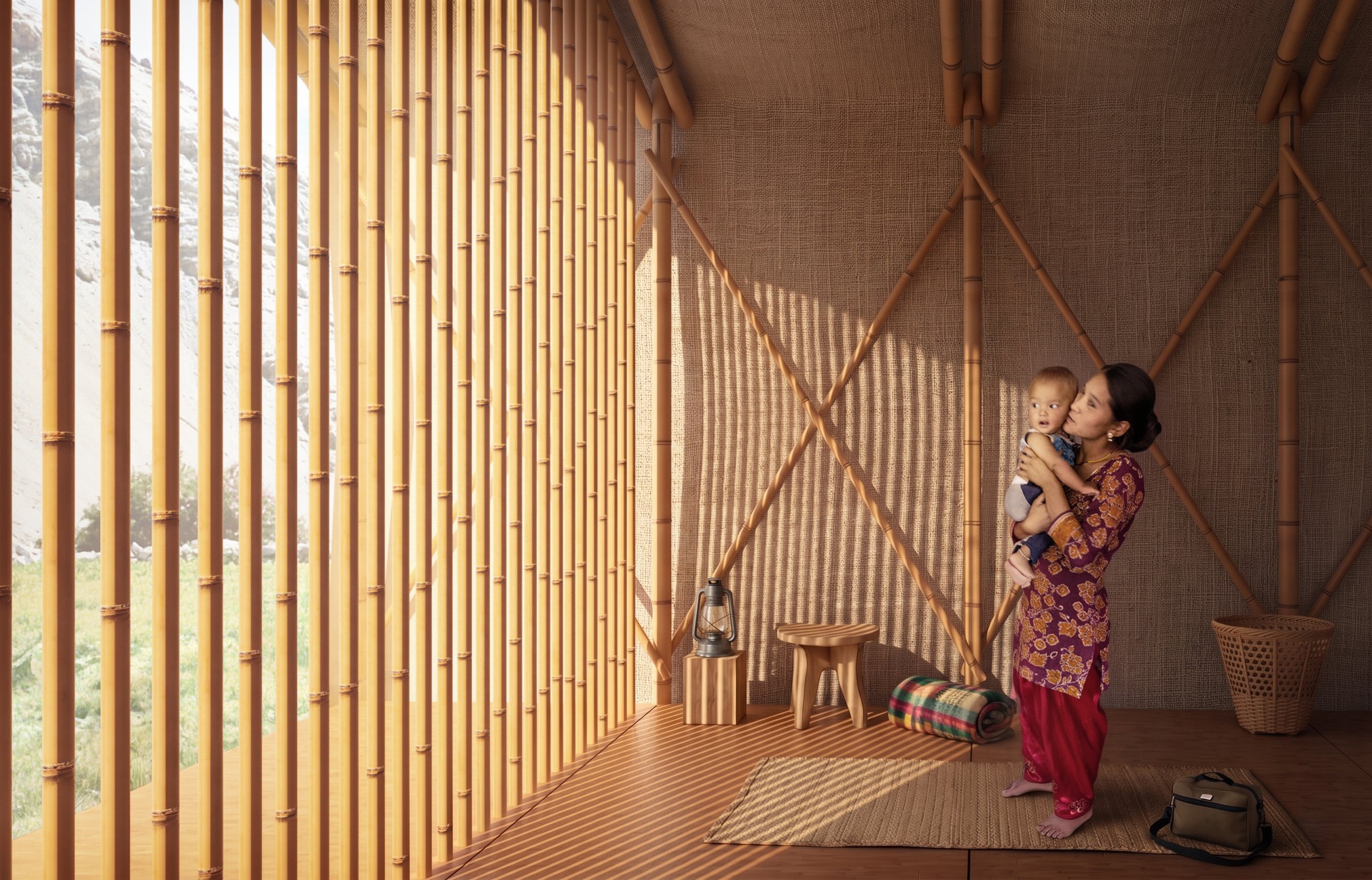
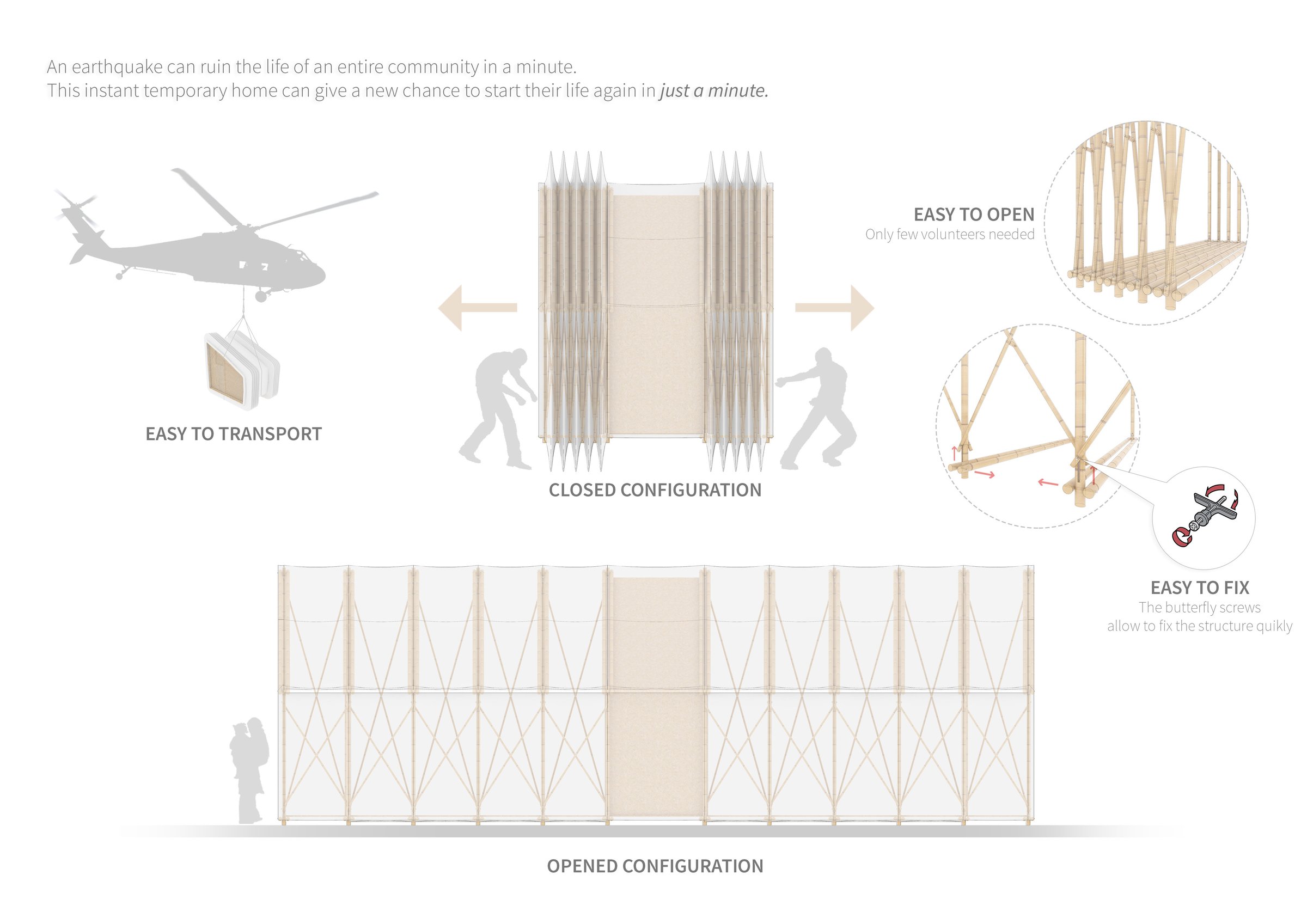
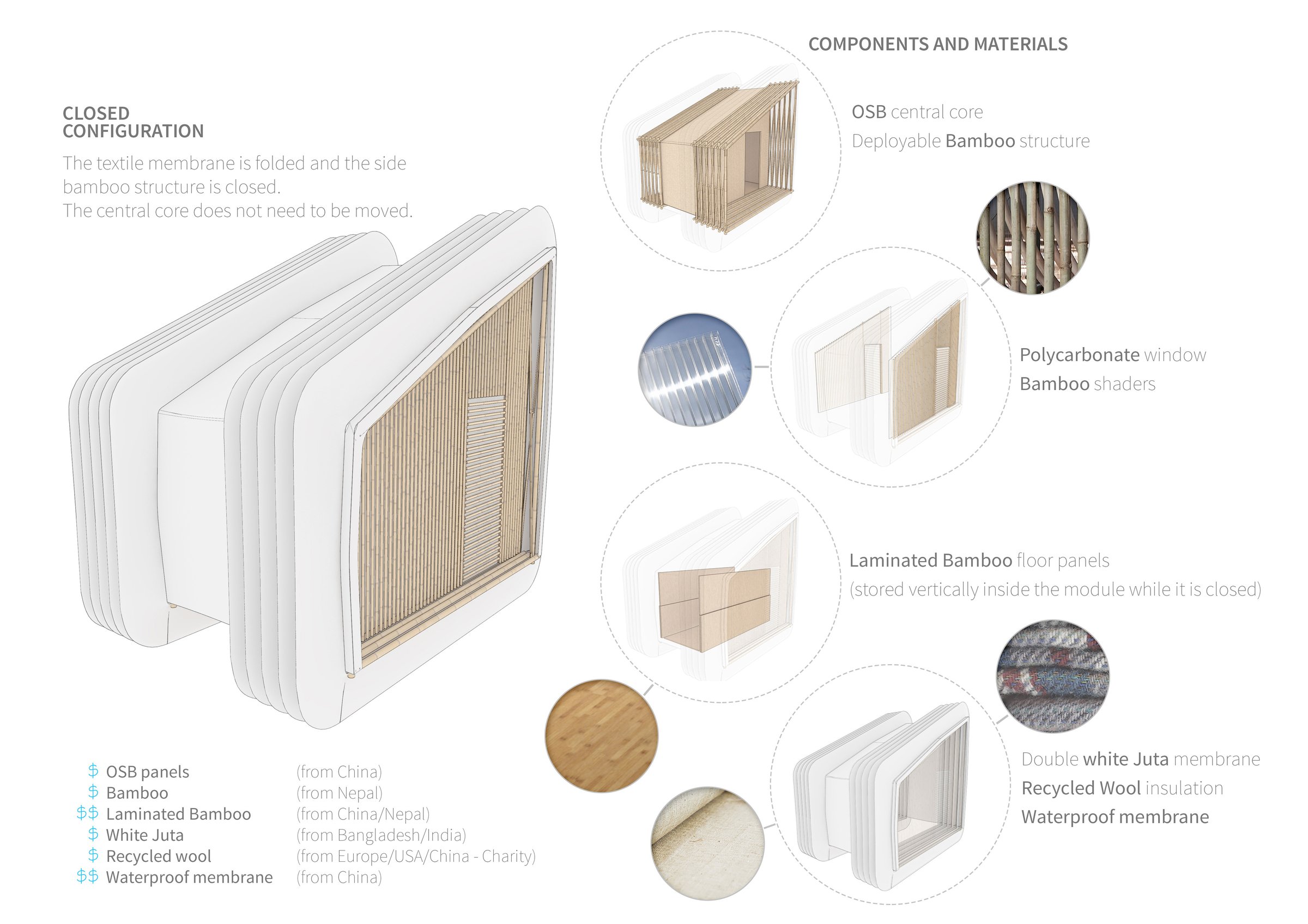
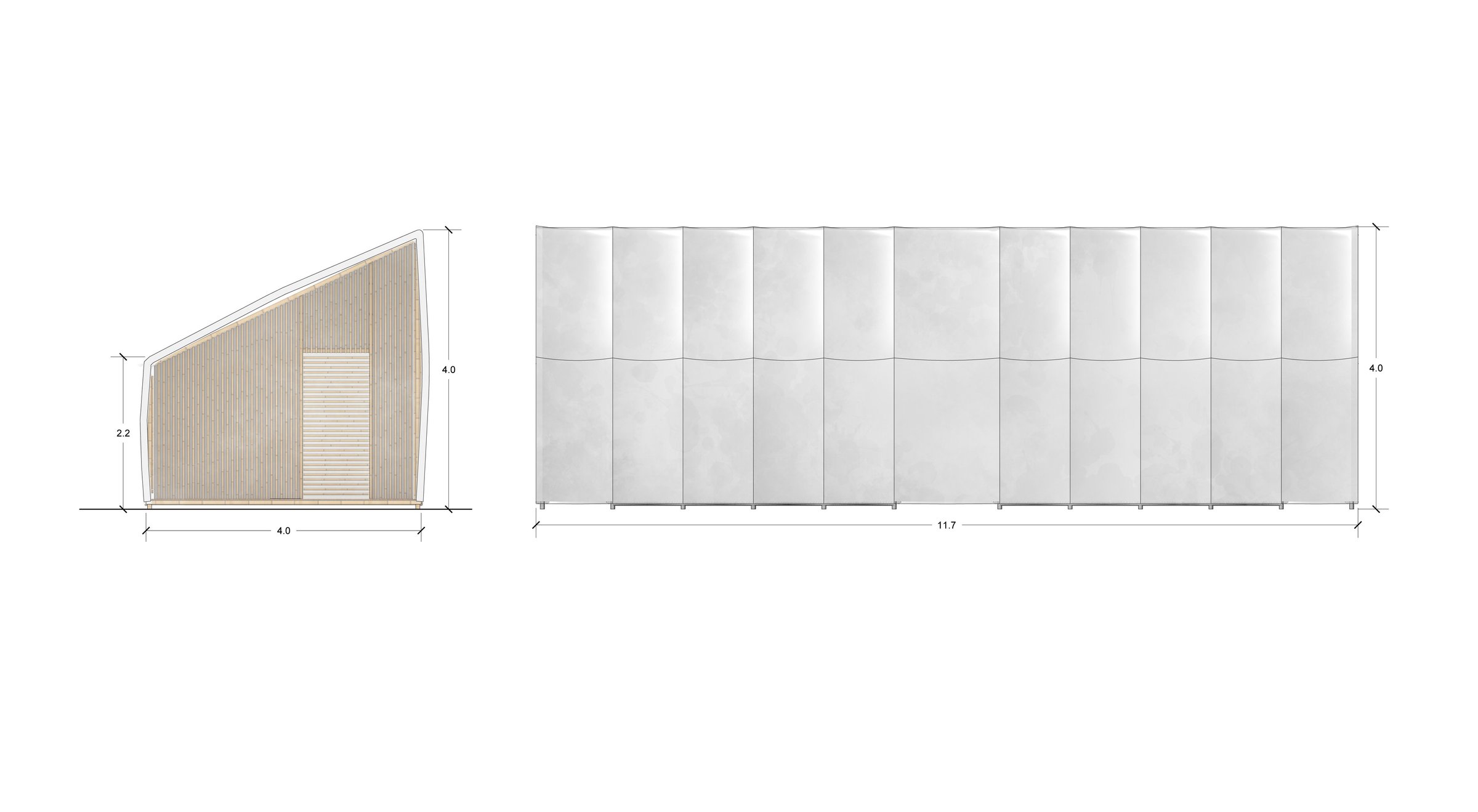
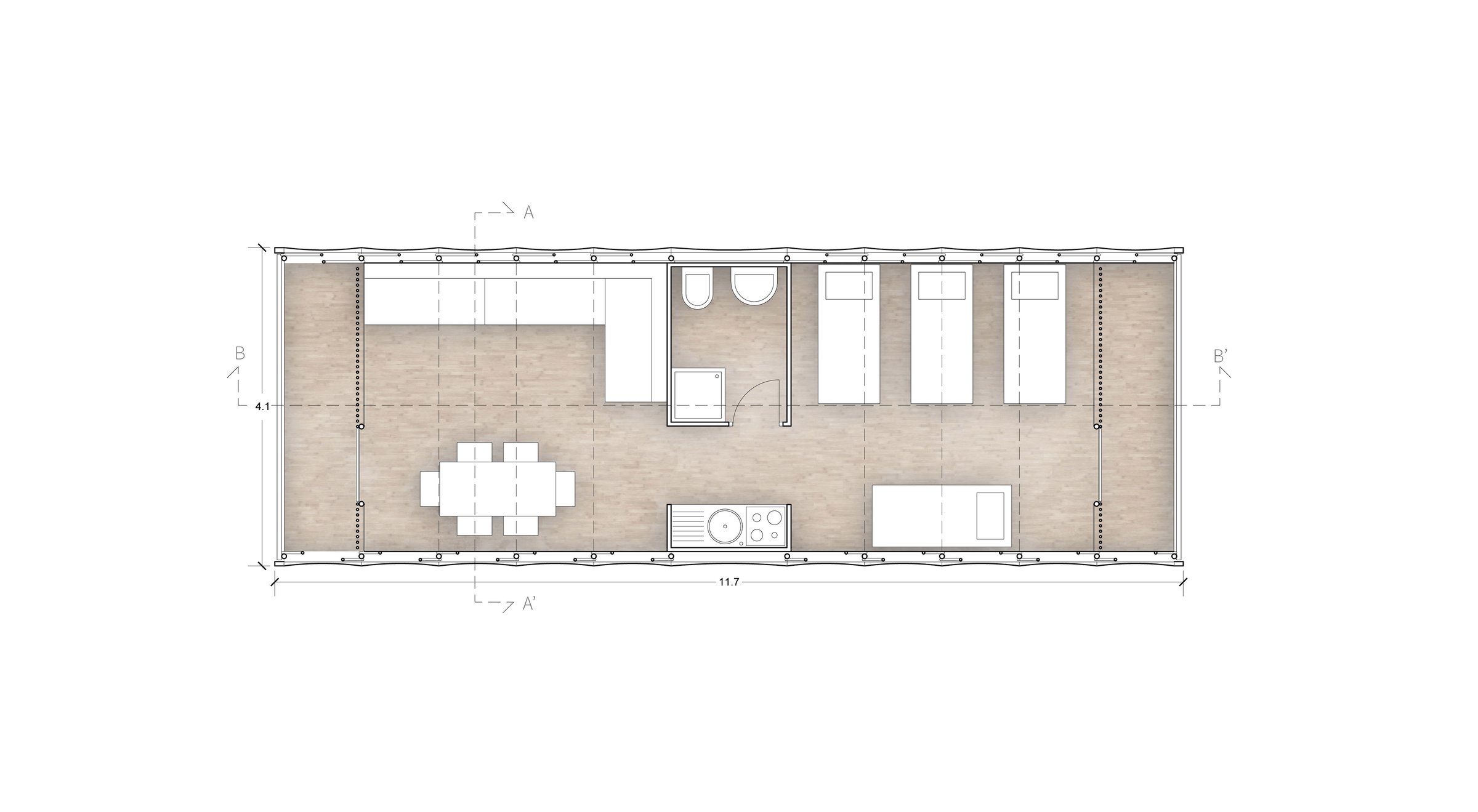
The core concept is a fold-out structure. When closed, the house occupies an area of 2.5×4 metres, compact enough to be transported on a standard vehicle to the destination site. Once on site, the building envelope unfolds around a permanent core made of OSB panels (1.5×4 metres), which houses the facilities: a bathroom with a chemical toilet, shower, aluminium washbasin, electric hob and a 30-litre water tank. The structure thus measures 4×7.11 metres, with two side rooms (a living area and a sleeping area) and a small covered outdoor area measuring 1×4 metres.
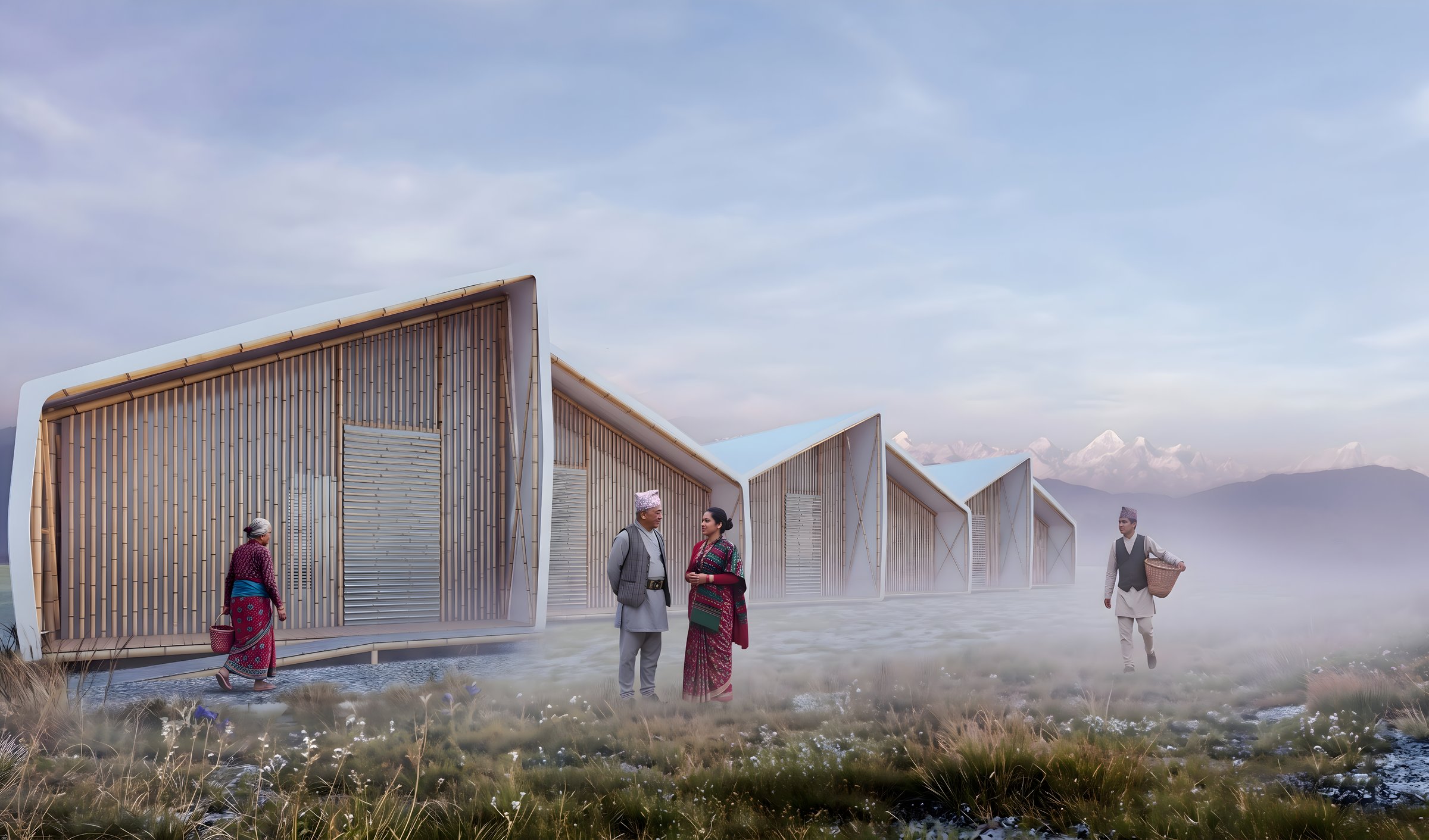
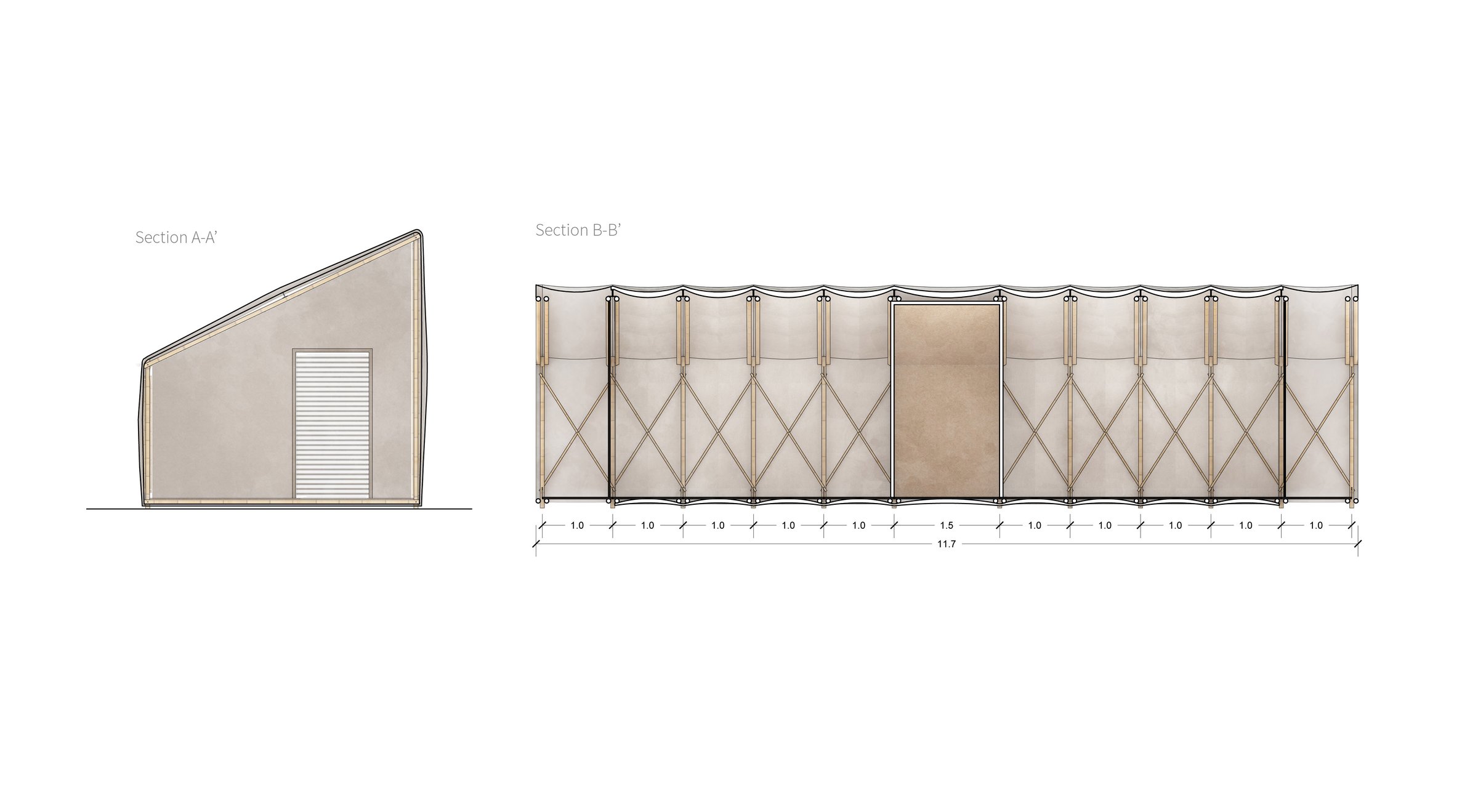
The load‑bearing structure consists of 60 mm diameter bamboo poles (uprights, cross-beams and roof beams), braced with 30 mm diameter bamboo poles arranged in St Andrew’s crosses. The poles are drilled in the centre and at the ends to allow the frame to unfold; once open, the system is secured with wing nuts. The building envelope consists of a double-layer jute canvas with a layer of recycled wool padding in between (made from clothes and jumpers donated through charity campaigns) which provides thermal insulation against both heat and cold. An external waterproof membrane, stretched away from the jute using spacers, protects against rain and snow whilst allowing the interior spaces to breathe. The short facades are made of polycarbonate mounted on a bamboo frame, with small additional panels of bamboo canes that function as reversible solar shading devices (removable in winter, repositionable in summer).
The single-pitch roof is designed to accommodate solar and photovoltaic panels, making the unit energy self-sufficient. Rainwater is collected from the roof and channelled into the central core for reuse. The true value of the project, however, lies in its social dimension: the units are designed to be grouped together (twin houses, four-unit houses, small villages) recreating the community fabric shattered by the earthquake. Fabrication requires neither complex technologies nor skilled labour: the process can be organised like an assembly line (one team prepares the bamboo modules, another the OSB core, another the textile building envelope), and parts of the components can be prefabricated off-site to further speed up assembly. Just a Minute is not designer architecture: it is an infrastructure for community reconstruction.
Renders & Photos
Technical specifications
- Location
- Nepal, destination: areas affected by the earthquake of 25 April 2015
- Year
- 2015
- Client
- Project developed in response to the post-earthquake humanitarian emergency
- Typology
- Temporary emergency housing, a modular, expandable housing unit
- Dimensions – closed (for transport)
- 2.5 × 4 m
- Dimensions – open
- 4 × 7.11 m (including 1 × 4 m of covered outdoor space)
- Capacity
- 4–10 people (with use of the living room for sleeping and bunk beds in the sleeping area)
- Status
- Emergency design concept
- Designers
- Maurizio Barberio, Micaela Colella (Barberio Colella Architects)
- Materials – structure
- Bamboo poles Ø 60 mm (uprights, cross-braces, roof) + Ø 30 mm poles for cross-bracing; wing nuts for quick assembly
- Materials – building envelope
- Double-layer jute canvas + recycled wool filling (from donated garments/jumpers) + waterproof outer membrane stretched with spacers (for breathability)
- Materials – short facades
- Polycarbonate panels (20 mm) mounted on a bamboo frame; small bamboo canes used as reversible solar shading devices
- Materials – central core (1.5×4 m)
- 50 mm OSB panels; interior fittings: chemical toilet, shower, aluminium washbasin, electric hob, 30-litre water tank
- Flooring
- 30 mm OSB panels + laminated bamboo flooring
- Roof
- Single-slope roof, designed for solar and photovoltaic panels; drainage system to collect rainwater and direct it to the central tank
- Aggregability
- A single unit that can be combined to form semi-detached, four-unit or small villages
Technical drawings
How can we provide decent, rapid and durable housing for communities affected by a disaster?
The standard responses to post-disaster housing emergencies are well known: tent cities, shipping containers, prefabricated buildings. All have severe limitations: inadequate thermal comfort, limited lifespan, inability to adapt to different climates, and high cost relative to the quality they offer. Above all, they rarely take into account the community aspect of reconstruction: a family affected by an earthquake needs not only shelter, but to return to living within their own community. Just a Minute tackles these limitations with a clear concept: a temporary home that can be set up in minutes, built using local and regional materials (bamboo, jute, recycled wool), which can be joined together to rebuild small villages, and is energy self-sufficient thanks to PV on the roof. Fabrication requires neither complex technology nor skilled labour: the house is designed to be assembled by volunteers following simple instructions.
Frequently Asked Questions
Do you work with communities affected by disasters or facing housing insecurity?
If you are developing temporary housing projects in contexts of humanitarian emergencies, post-disaster reconstruction or housing insecurity, we can discuss an approach based on local materials, deployable systems and community-led scalability. BCA designs everything from the initial concept through to construction details that can be adapted to different contexts.
Let’s talk about your projectWe’ll get back to you within 48 hours. No obligation.
Related projects
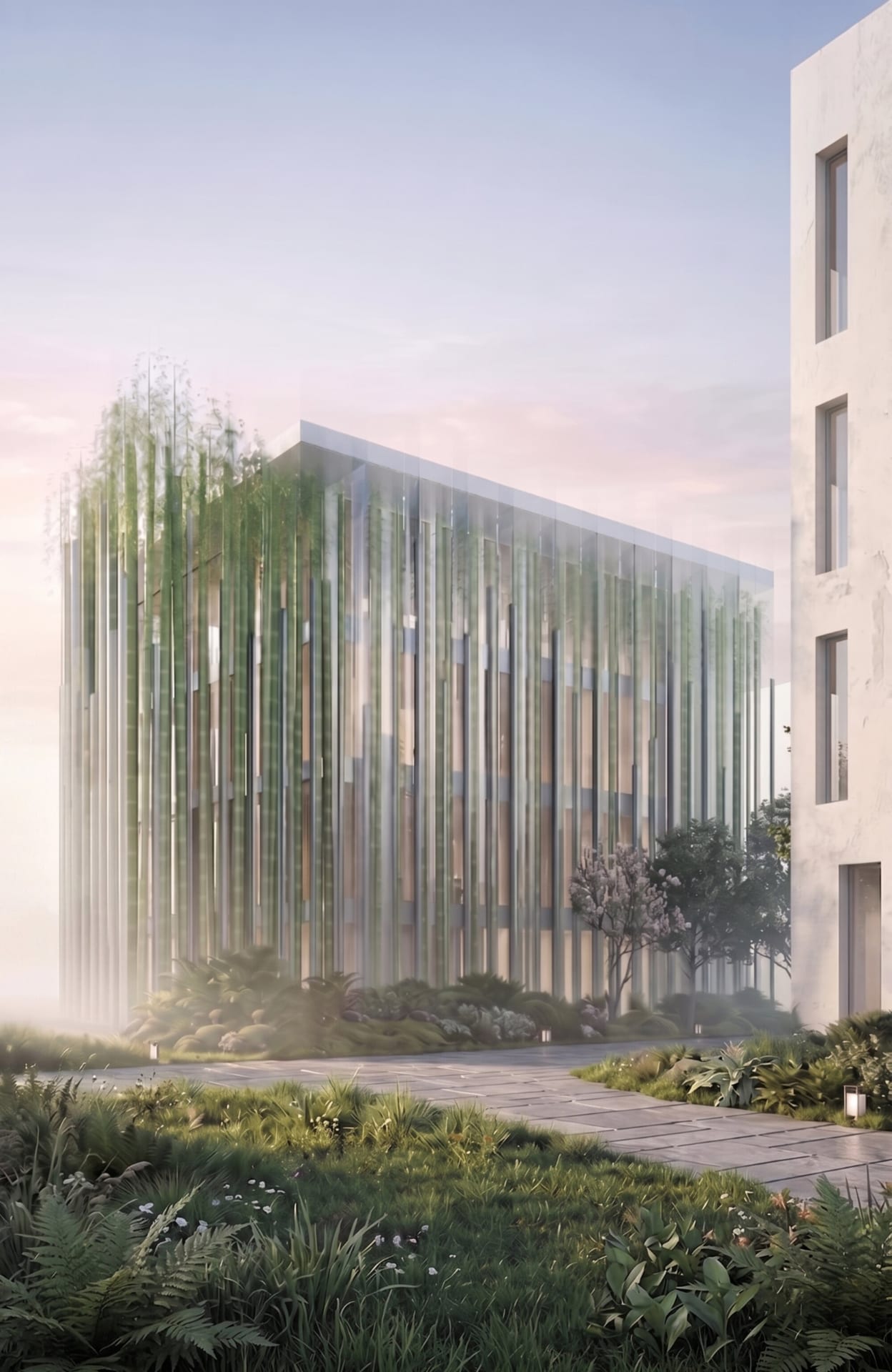
Sustainable Design
BAMBOO OFFICE
A building where the facade serves as the primary climate control system: a fifteen-metre-high bamboo forest that filters light, heat and wind.
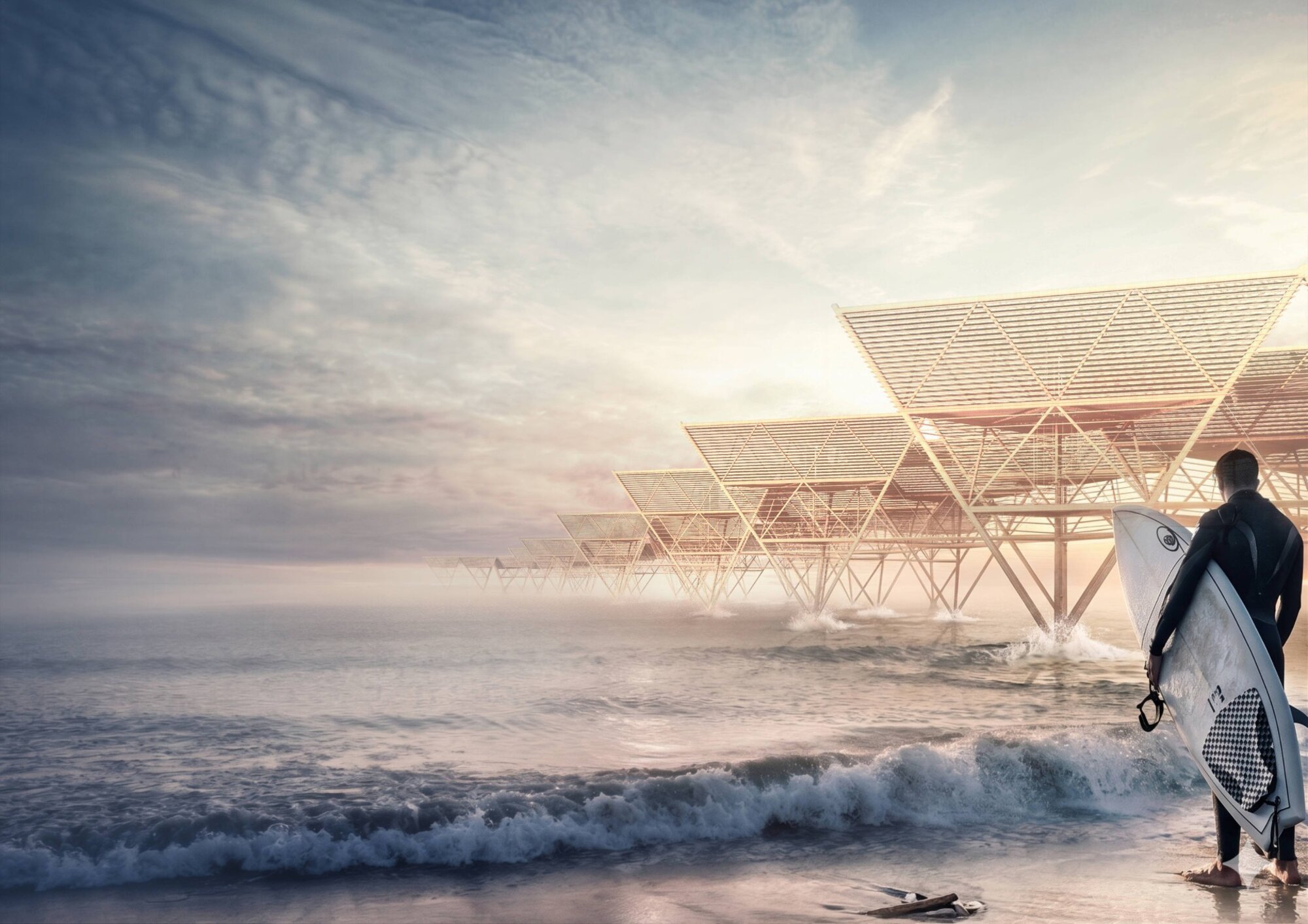
Sustainable Design
LANTERNS SEA VILLAGE
One hundred bamboo tetrahedrons suspended over the sea: a reversible village that leaves no trace on one of the Mediterranean’s most fragile coastal landscapes.
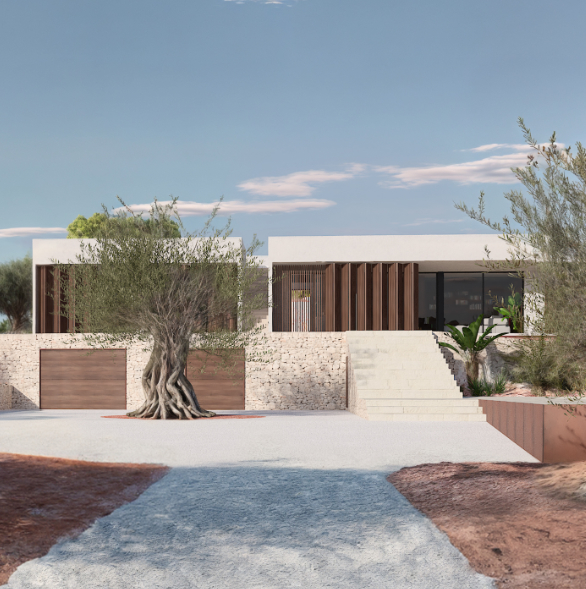
Sustainable Design
VILLA IN CAROVIGNO
A house on a podium that transforms the constraints of the Apulian agricultural landscape into the guiding principles of the design.