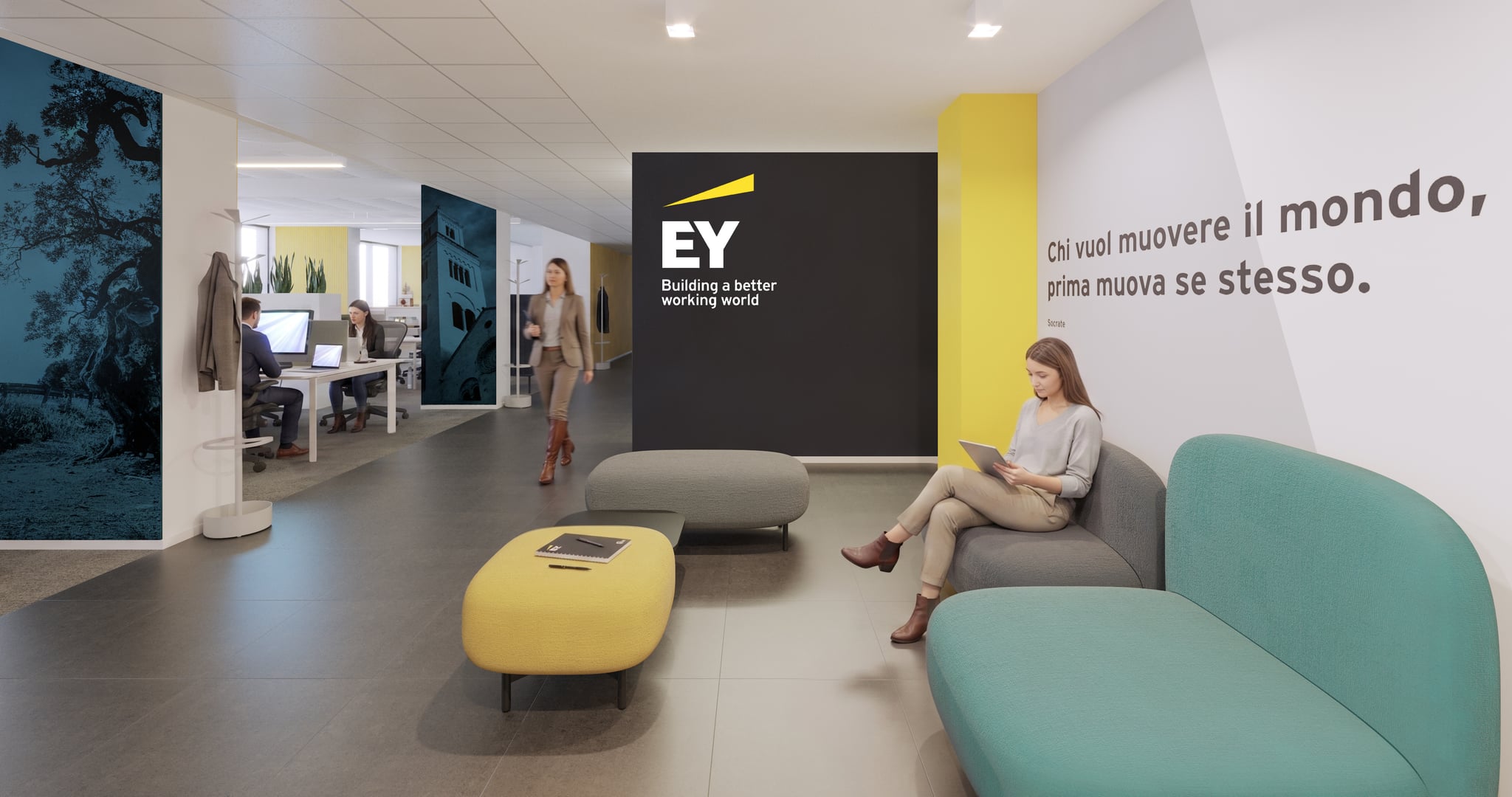
EY Bari — Refurbishment and interior design of the Ernst & Young offices in Bari
The comprehensive refurbishment of three floors, featuring a new dedicated entrance onto the street, transforms an office building into flexible workspaces that reflect the identity of a global brand.
2022 · Bari · Corporate offices · High-End Interiors
Stripping the floors back to the structure to rebuild a way of working
EY – Ernst & Young, one of the world’s leading consultancy firms, has experienced rapid growth in Bari in recent years. The office, at Via Oberdan 40U, already occupied the fourth and fifth floors, which had recently been refurbished; the expansion of the Apulian team made it necessary to extend the offices to the first and second floors, refurbish the third floor and create a new entrance dedicated to visitors on the ground floor. CBRE Italia managed the design-and-build tender on behalf of EY, from which Barberio Colella Architetti – in a consortium with the general contractor Sigma Sud and Rinnova I.C. for the building services – emerged as the successful bidder, taking charge of the architectural and interior design. The brief was not simply to ‘furnish’ the new floors: a complete refurbishment was required.
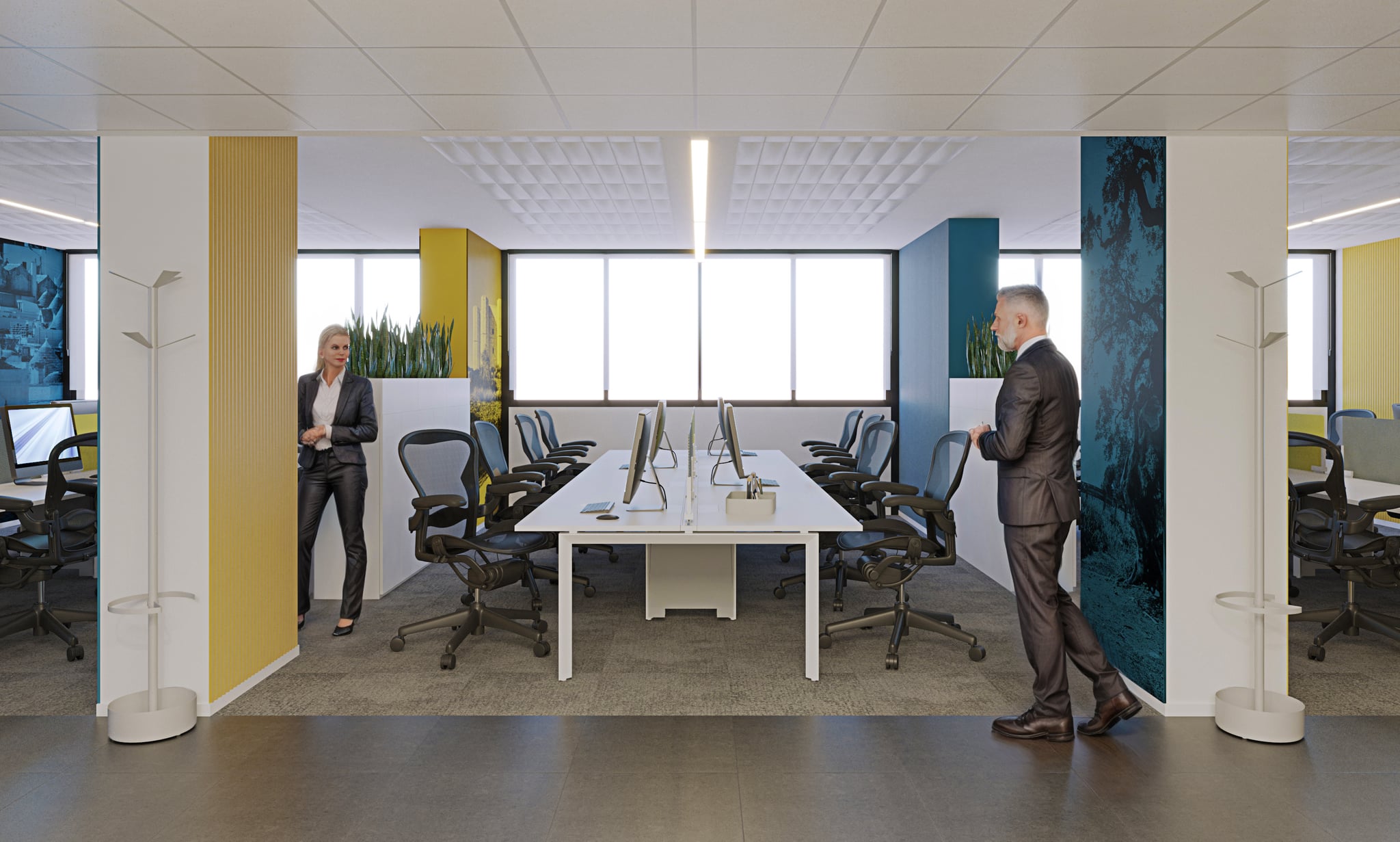
The three floors have been stripped back to their bare state. All non-structural elements – partitions, suspended ceilings, finishes and services – have been removed (strip-out), exposing the building’s structure, with its columns and walls, and a starting point with no raised floor or suspended ceiling. Against this blank canvas, BCA redesigned the interiors from scratch – layout, partitions, services, lighting, acoustics, finishes and furnishings – using the already refurbished fourth and fifth floors as a reference point, to ensure consistency in materials and design solutions throughout the premises.
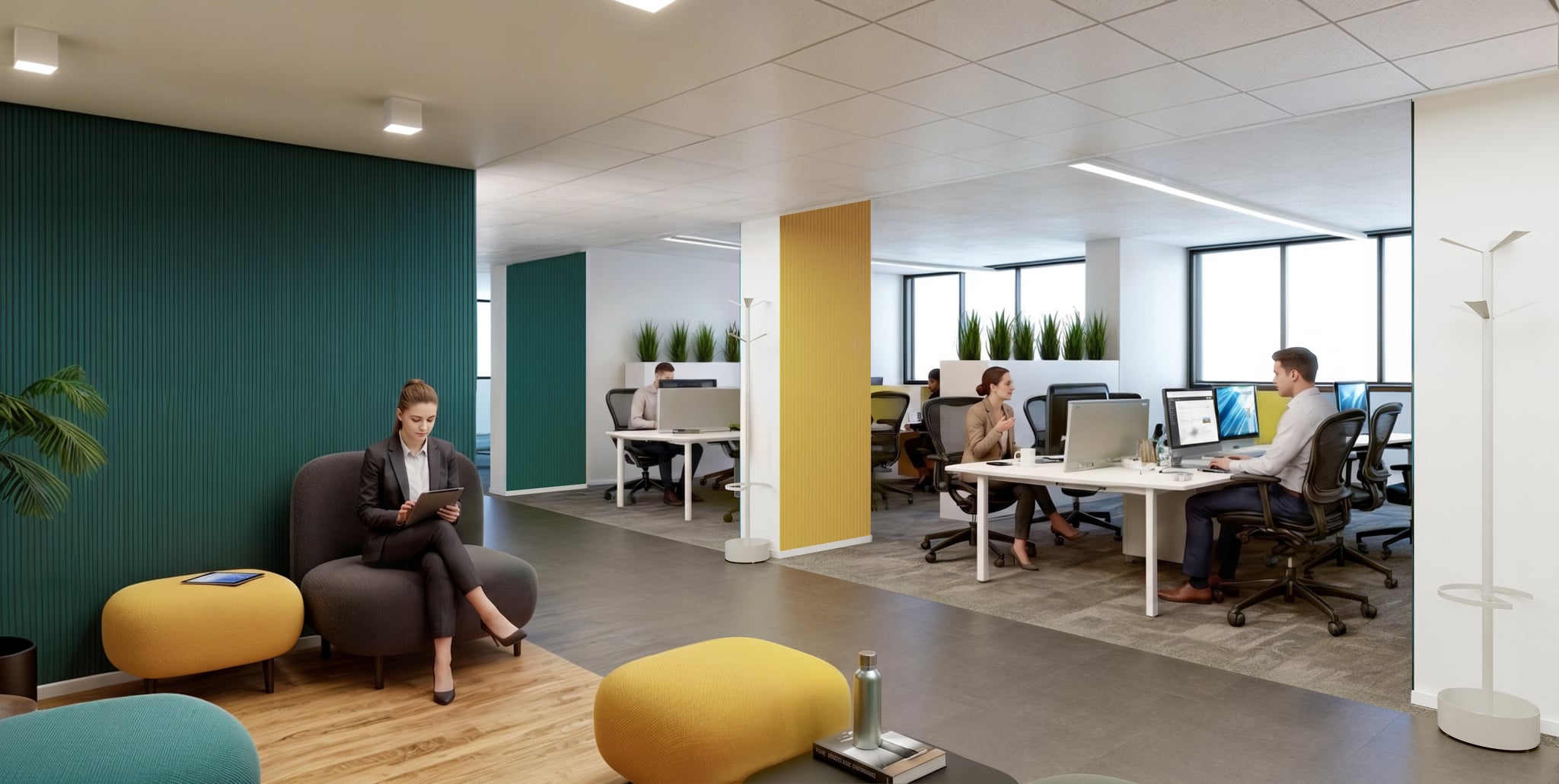
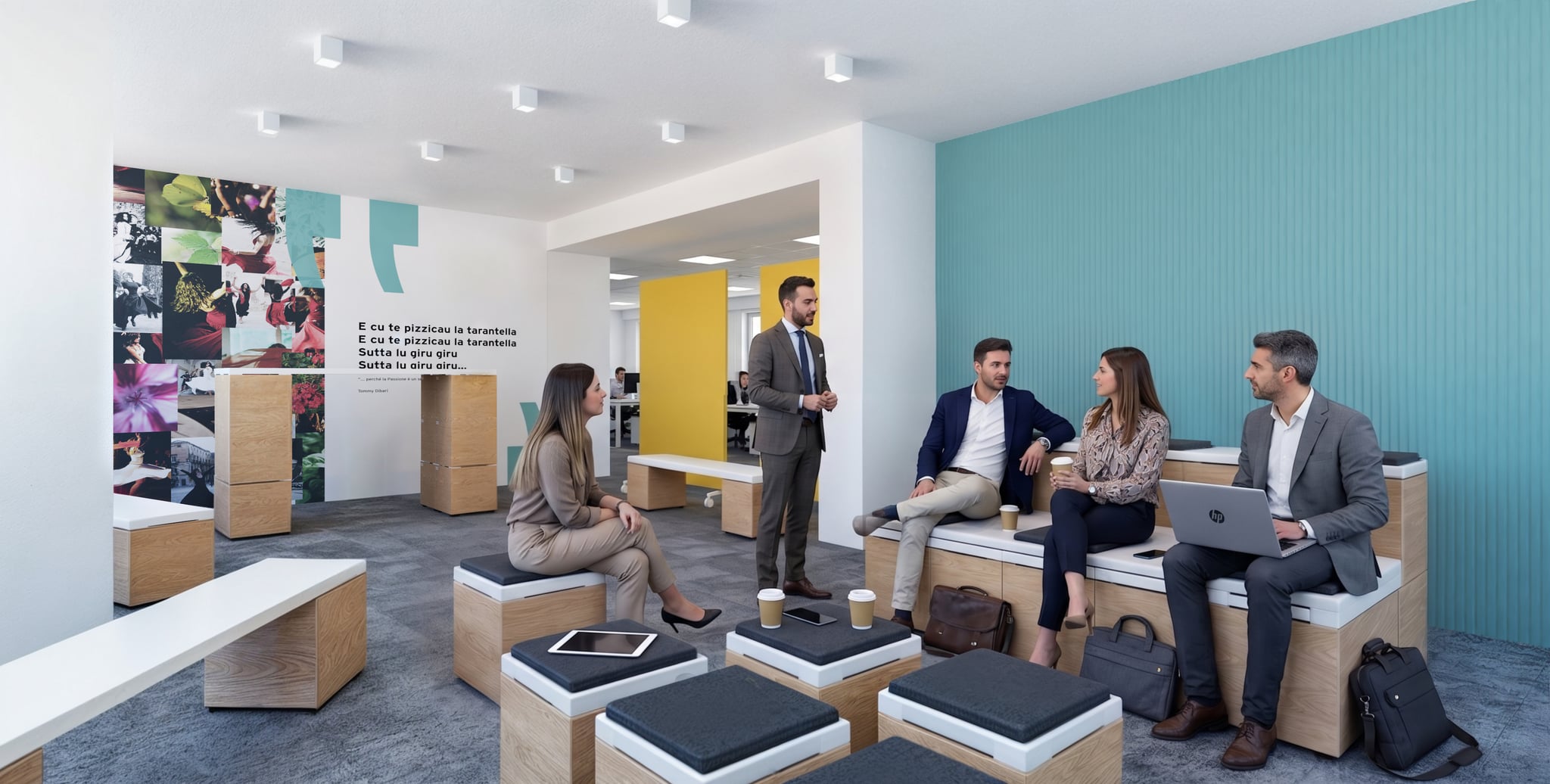
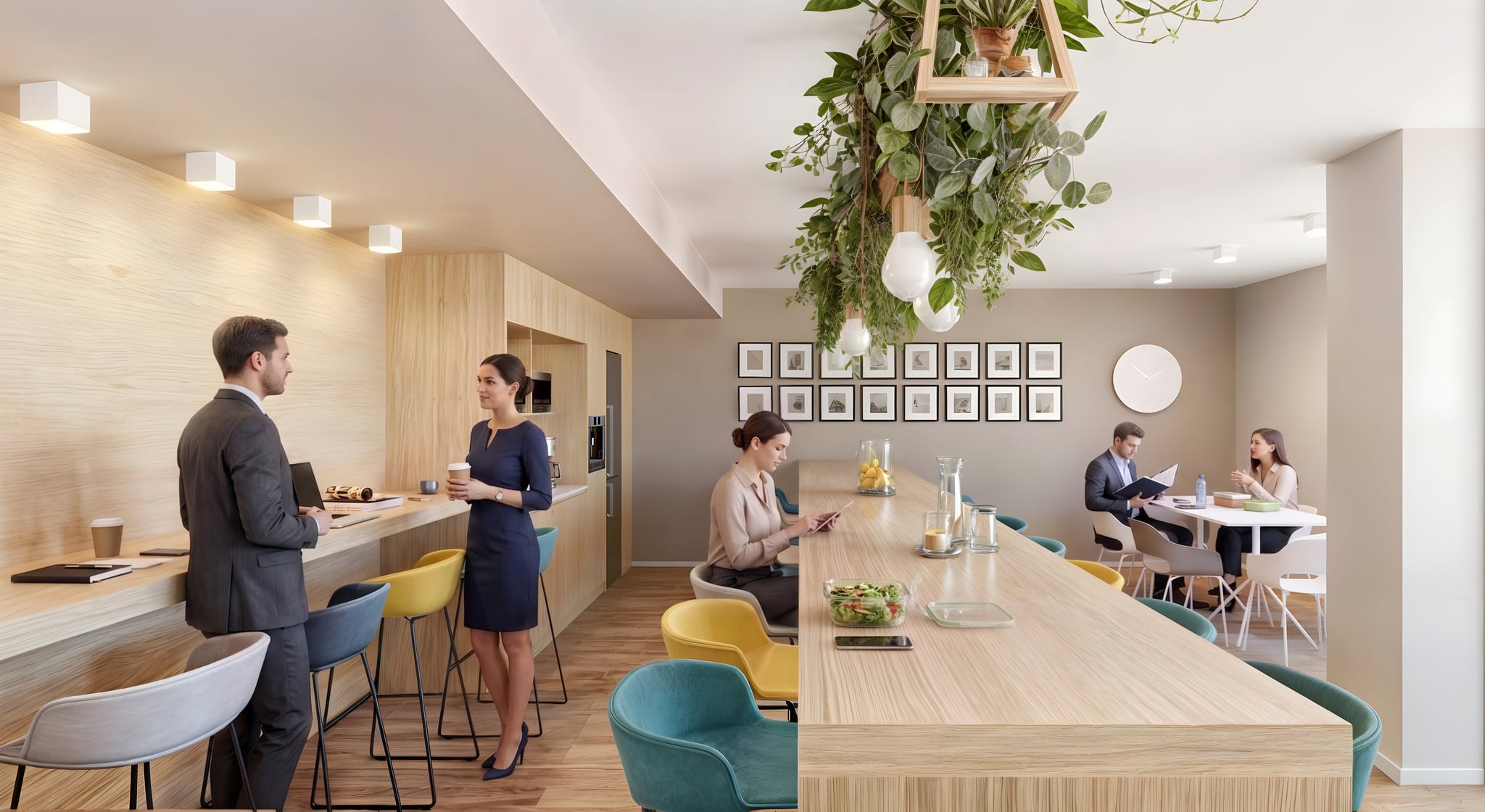
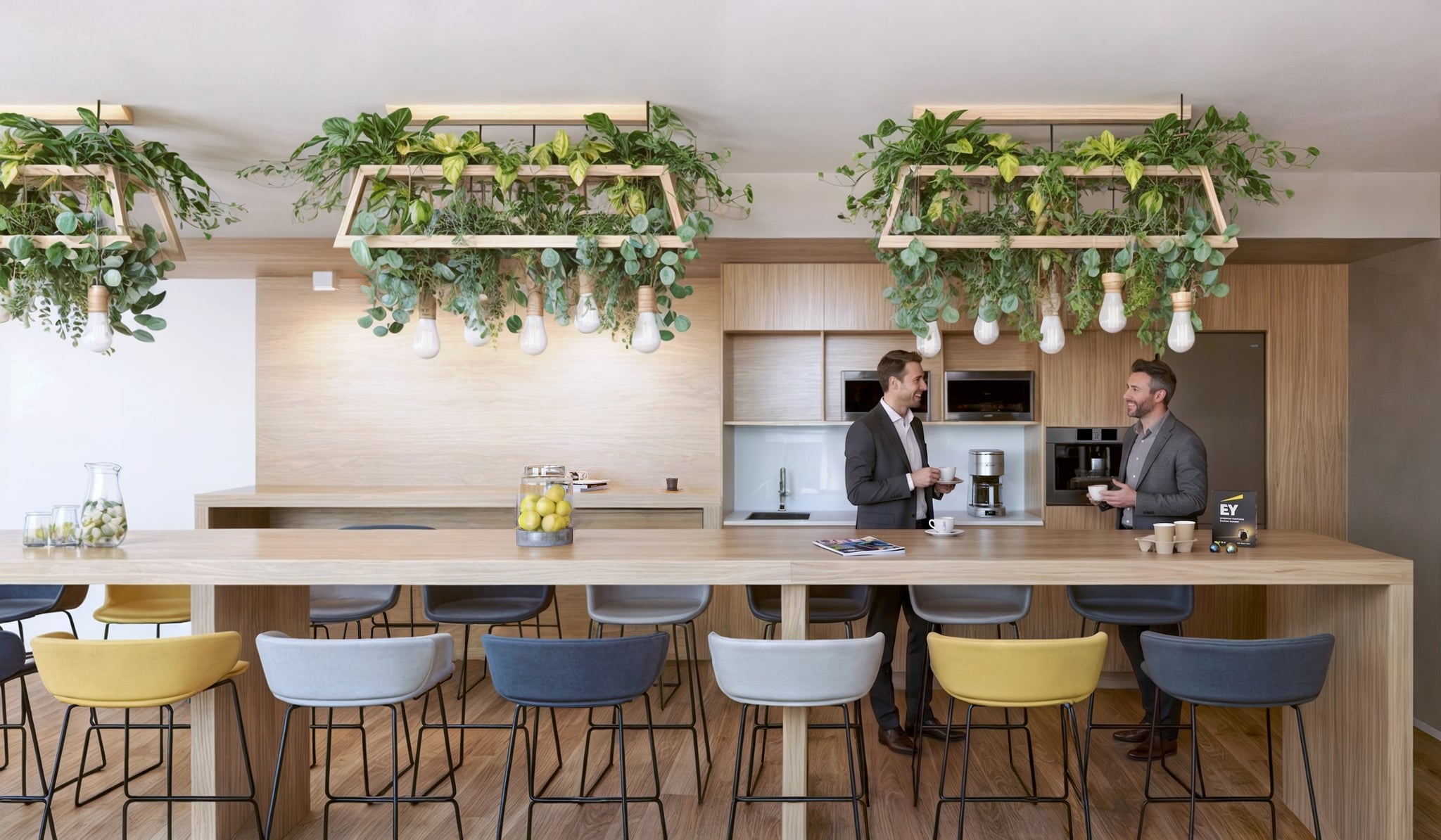
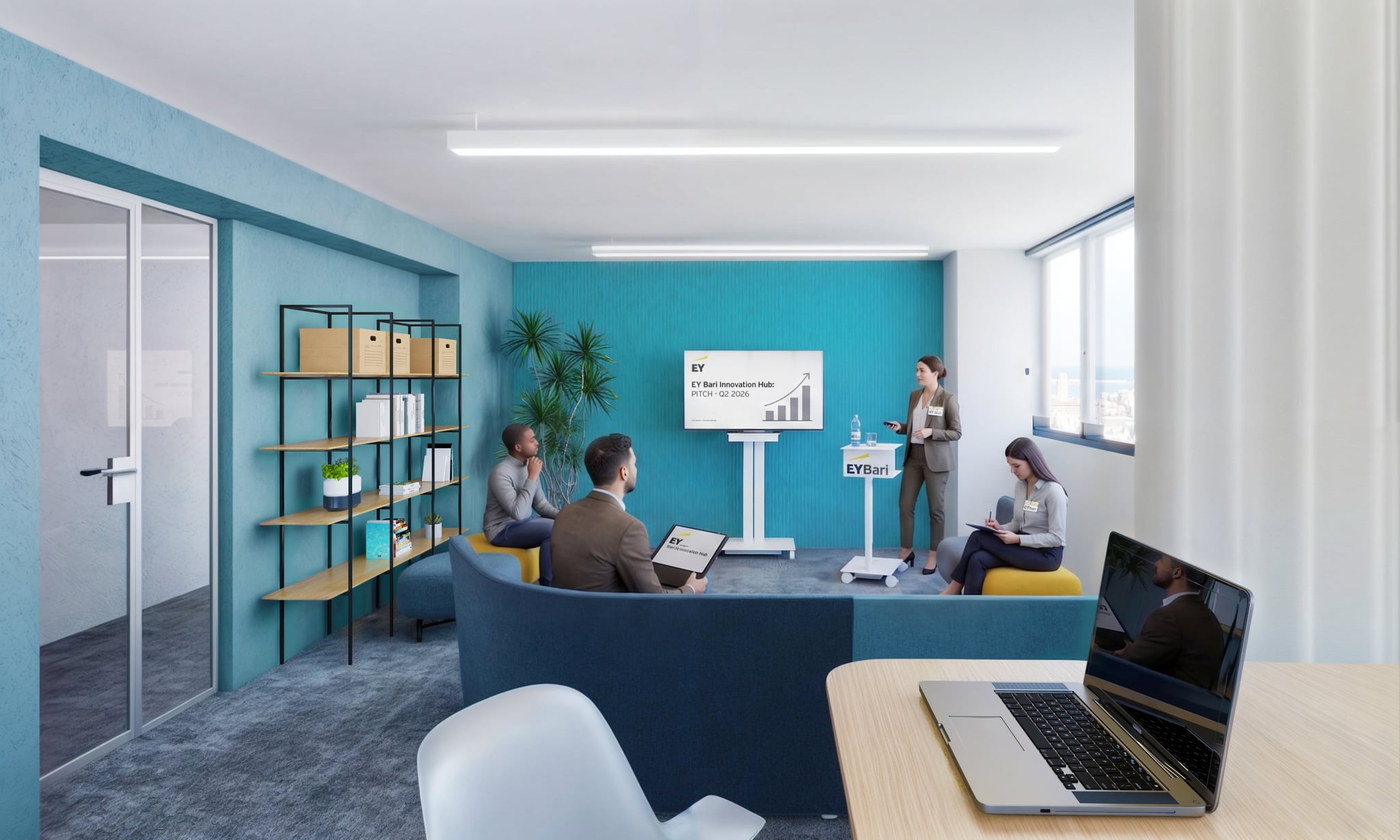
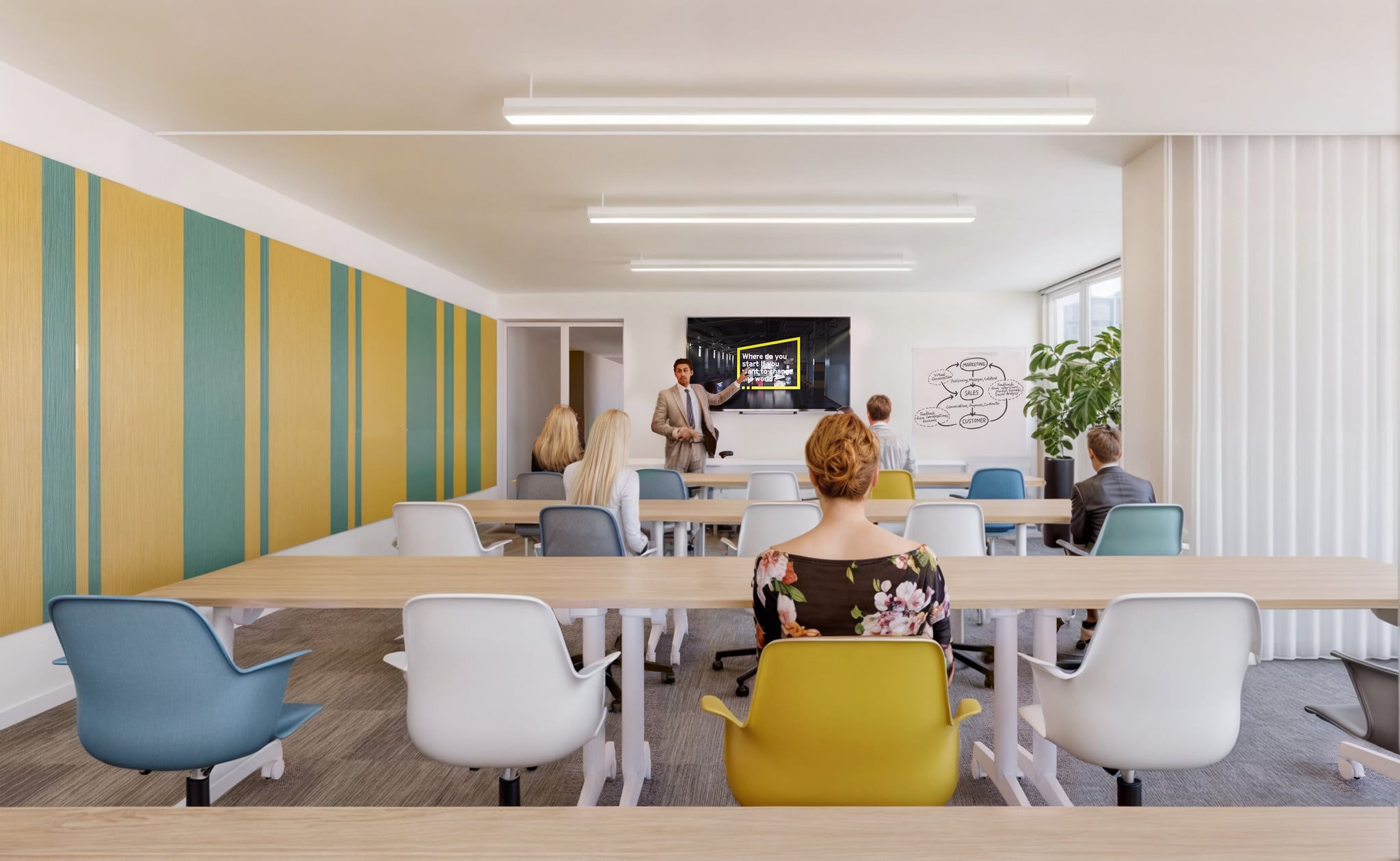
The strategy begins with the functional programme: how many and what types of workstations are needed, and how they are allocated between individual work, collaboration and training. The brief set a target of around 350 workstations across the entire five-storey premises – understood not only as traditional desks, but also as workbenches, high tables and shared seating. Instead of rows of identical desks, each floor is organised as a unified and flexible system that alternates between individual workstations, hybrid spaces – meeting rooms of various capacities, touch-down areas and phone booths – and social spaces such as lounges, coffee hubs and training rooms. This is the activity-based working approach: the space does not assign a specific chair to each person, but offers the right environment for every activity throughout the day. Each floor has its own break area and coffee hub; one level is dedicated to collaborative and reconfigurable spaces, featuring meeting rooms and a training room for up to 30 people.
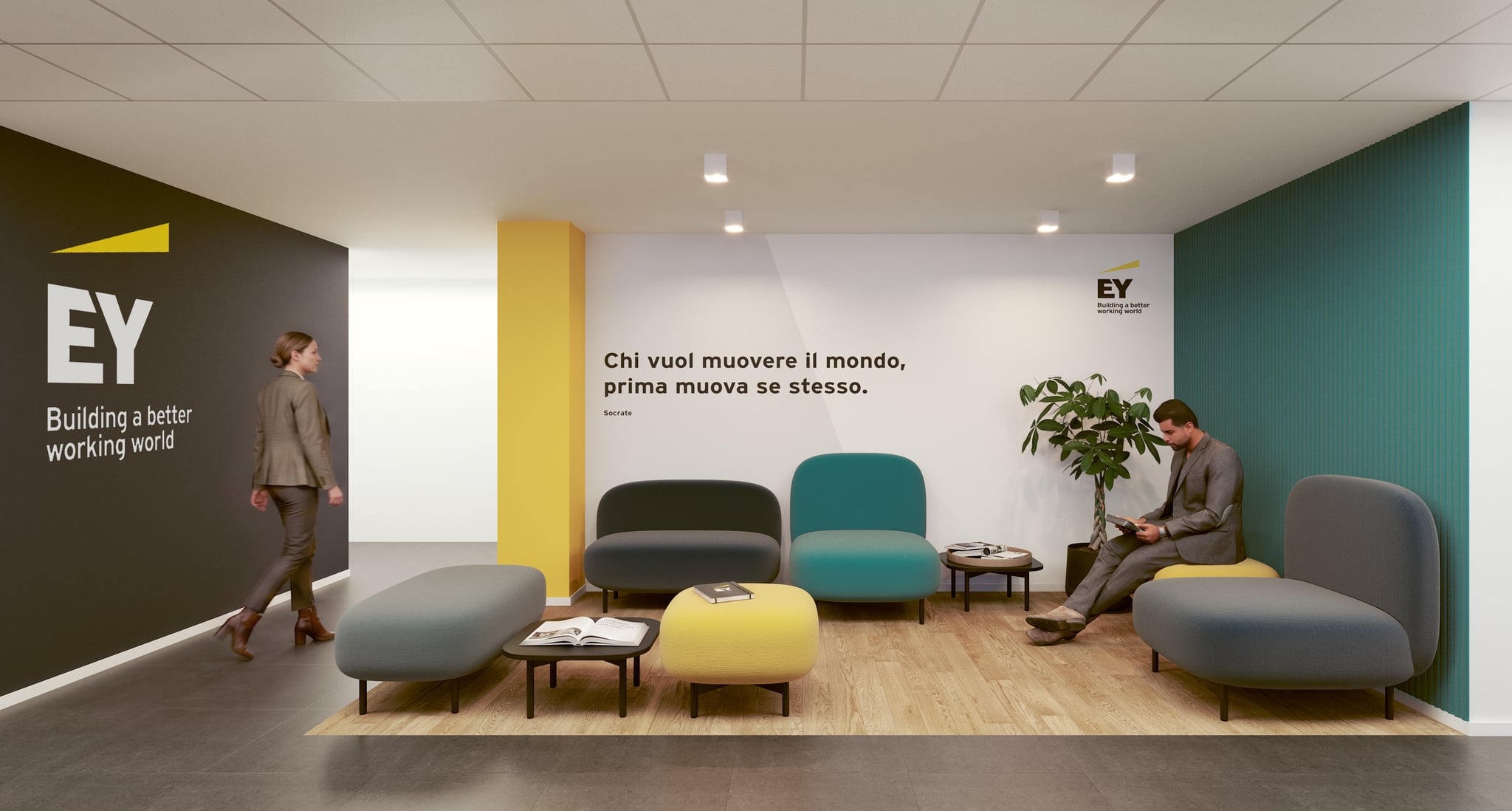
The EY brand identity is incorporated into the interiors without becoming mere decoration. The brand’s colour palette – EY yellow, anthracite grey, and teal and blue accents – informs the finishes, furnishings and branded walls, on which the company’s slogans such as “Building a better working world” appear. The partition walls are entirely glazed, to bring natural light into the heart of the floors and maintain the transparency typical of a consultancy environment; acoustic comfort is ensured by sound-absorbing panels of different typologies depending on the space in which they are installed. Greenery – hanging plants in the coffee hub, potted plants in the workspaces – introduces a biophilic element that softens the austere feel of the open-plan space. One detail sums up the approach perfectly: the training room is a reconfigurable space, with folding tables and stackable chairs on castors that allow it to be transformed from a classroom into an events venue in just a few minutes.
On the ground floor, a new entrance for visitors and staff – in addition to the existing central reception area – has been created, with modifications to the street-facing façade, making it the company’s calling card. The entire project was carried out in accordance with EY’s internal sustainability standards, ensuring the quality of the space and the wellbeing of staff and workers right from the start of the design concept.
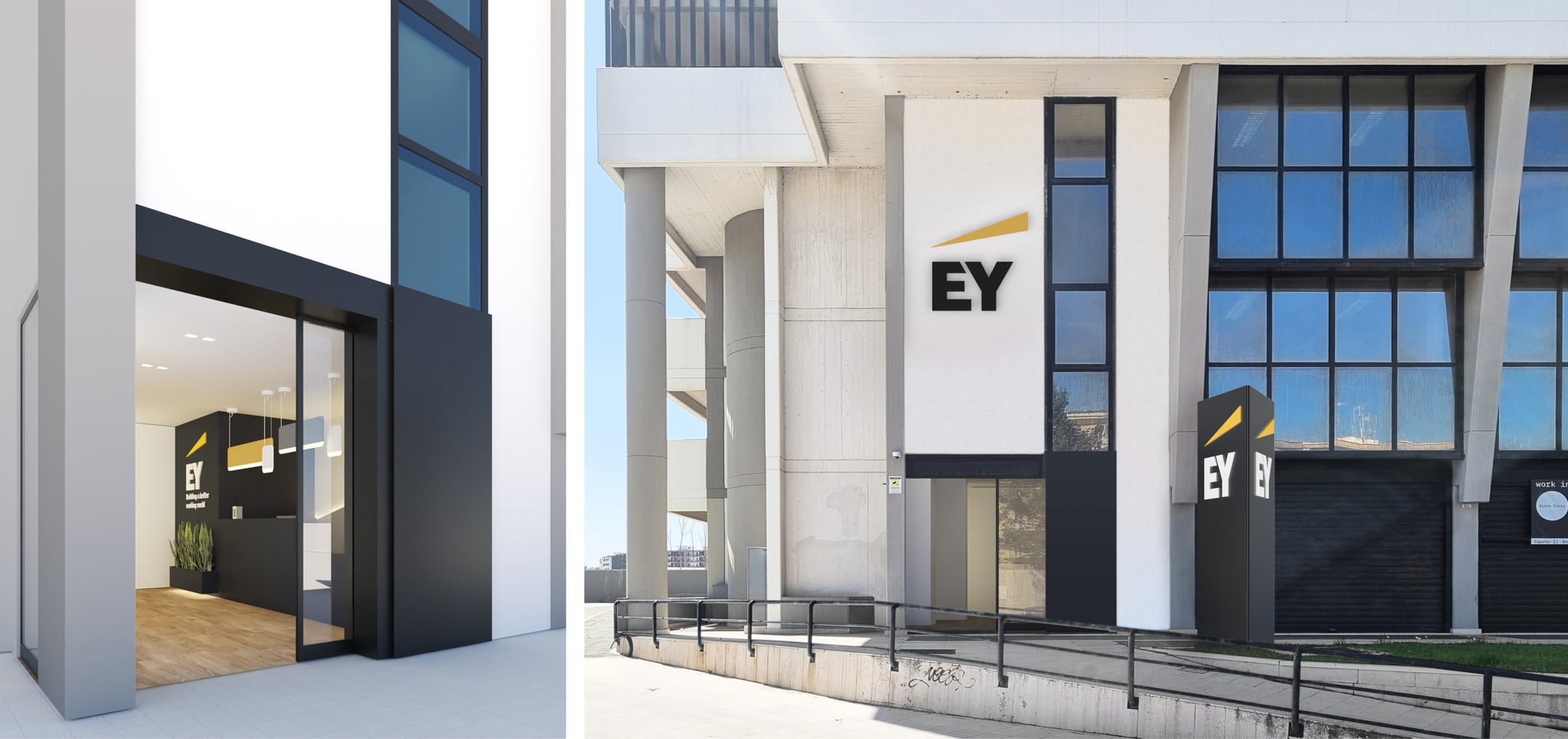
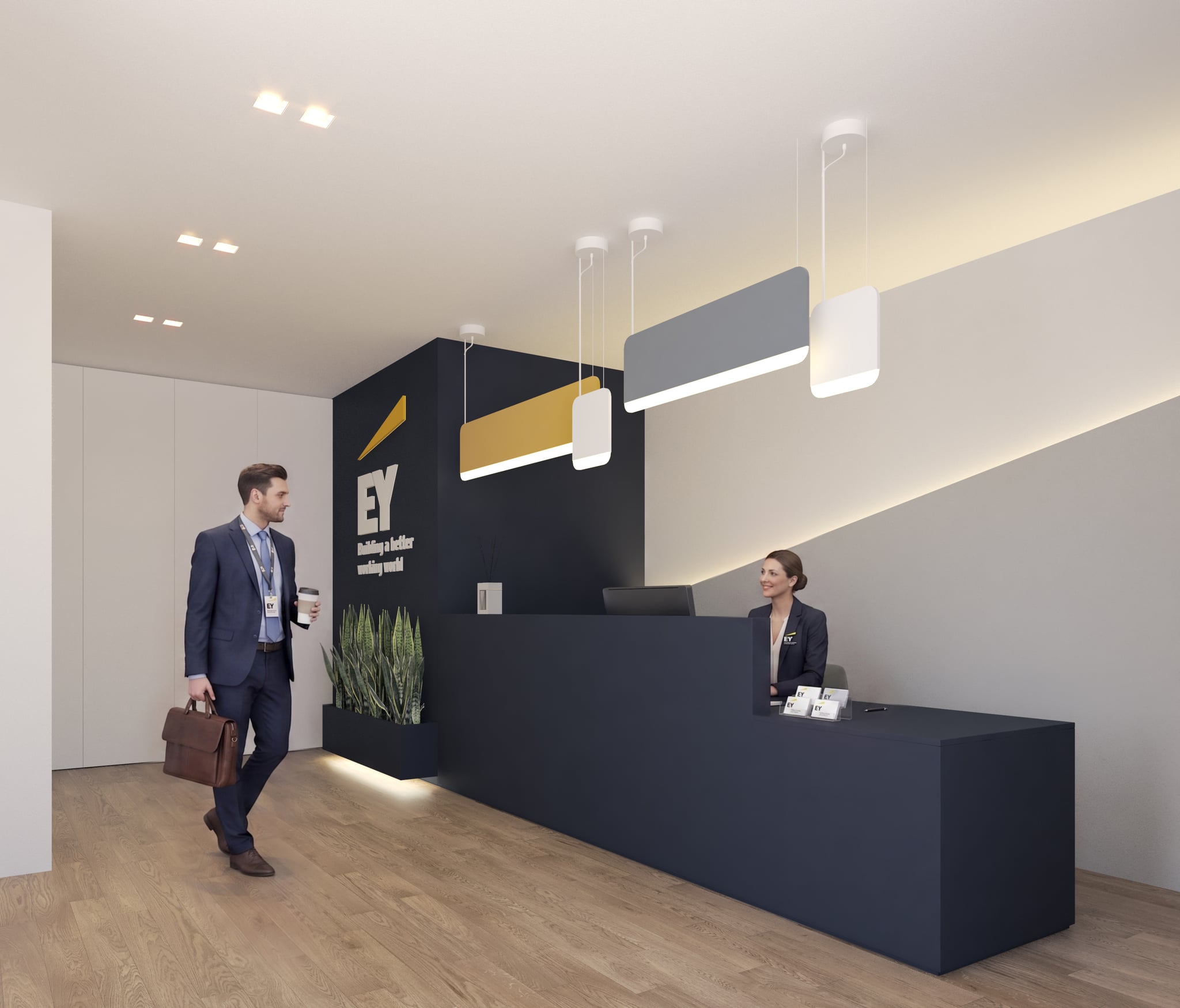
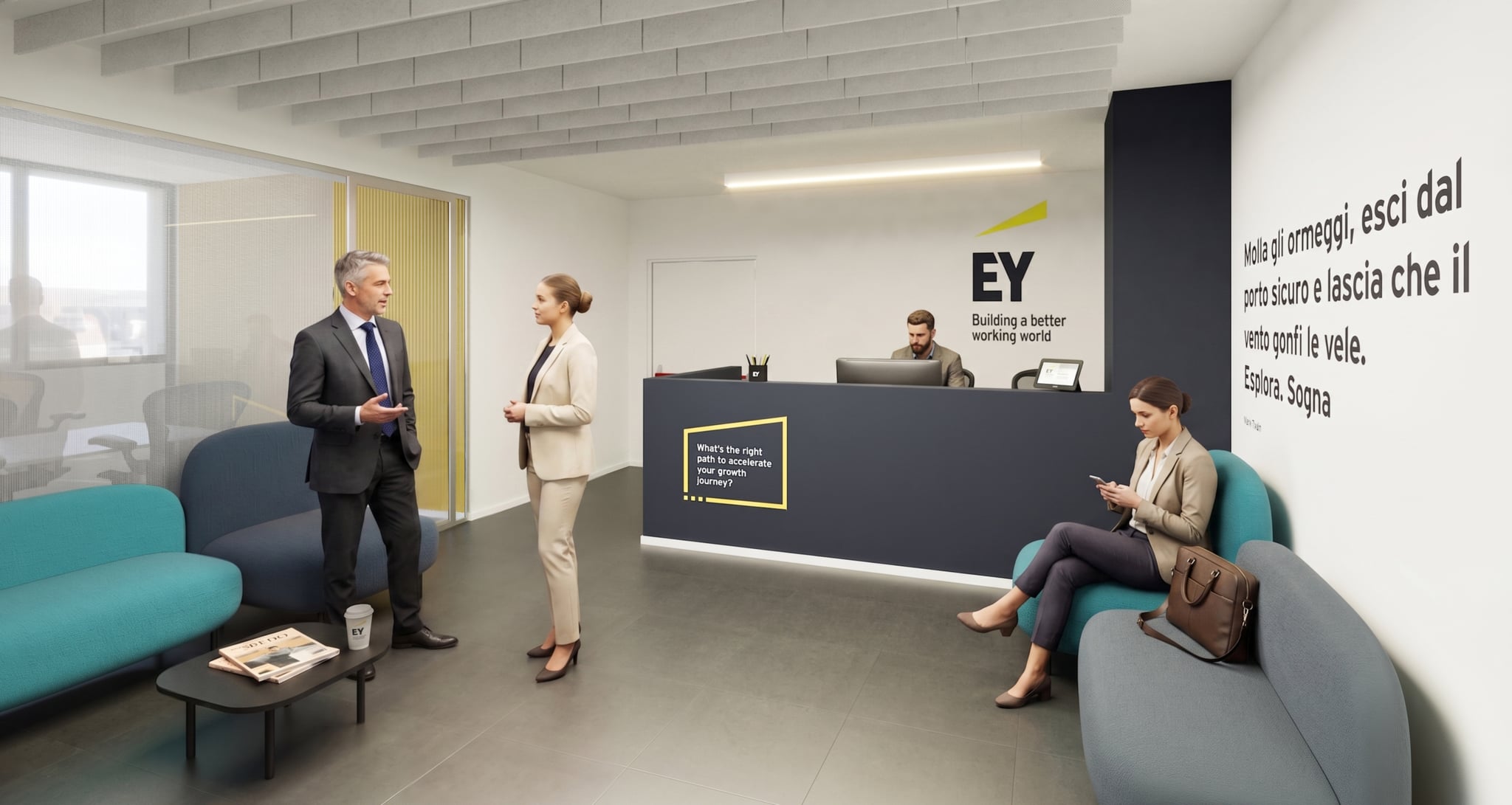
Technical specifications
- Year
- 2022
- Client
- EY – Ernst & Young
- Typology
- Corporate offices — complete refurbishment and interior extension (strip-out + fit-out), design & build
- Area
- ~1980 m²
- Status
- completed (design-and-build contract)
- Designers
- Arch. Maurizio Barberio, Arch. Micaela Colella (Barberio Colella Architetti)
- Contributors
- Sigma Sud Srl (general contractor); Rinnova I.C. Srl (MEP systems and refurbishment)
- Process
- design-and-build contract; selection process managed by CBRE Italia; contract awarded to BCA as part of a consortium (Sigma Sud, Rinnova I.C.)
- BCA vertical
- High-End Interiors
‘EY’ and the EY logo are registered trademarks of EY (Ernst & Young Global Limited) and/or its affiliated entities. Barberio Colella Architetti is not affiliated with EY, nor is it sponsored or endorsed by EY. Project images are published for illustrative purposes and as part of our professional portfolio.
How do you transform an office into a space that truly reflects a company’s identity, rather than simply giving the furnishings a makeover?
Anyone leading the expansion of a company’s premises finds themselves at a crossroads. On the one hand, there are interior designers, who present catalogues and finishes but do not redesign the space; on the other, there are generalist firms, which handle the technical aspects but deliver anonymous interiors that are disconnected from the brand’s identity. For a company like EY, the challenge is twofold: the space must reflect the values of an international brand whilst, at the same time, supporting new ways of working – hybrid, collaborative and constantly evolving. Moreover, in this case, it was not simply a matter of refurbishing existing spaces: the floors had to be stripped back to the bare structure and rebuilt. What is needed is interior architecture, not mere decoration: a project that starts from the functional brief and the relationship with the building, not from a palette of trends. This is precisely where a corporate brief meets the craft of The Firm.
Frequently Asked Questions
Are you rethinking your premises or workspace?
If your company needs to expand, refurbish or relocate its offices and is looking for a design that reflects your brand identity and supports modern ways of working, let’s have a chat. An initial video call is all it takes to assess your requirements, timelines and feasibility together.
Let’s talk about your projectWe’ll get back to you within 48 hours. No obligation.
Related projects
Sustainable Design
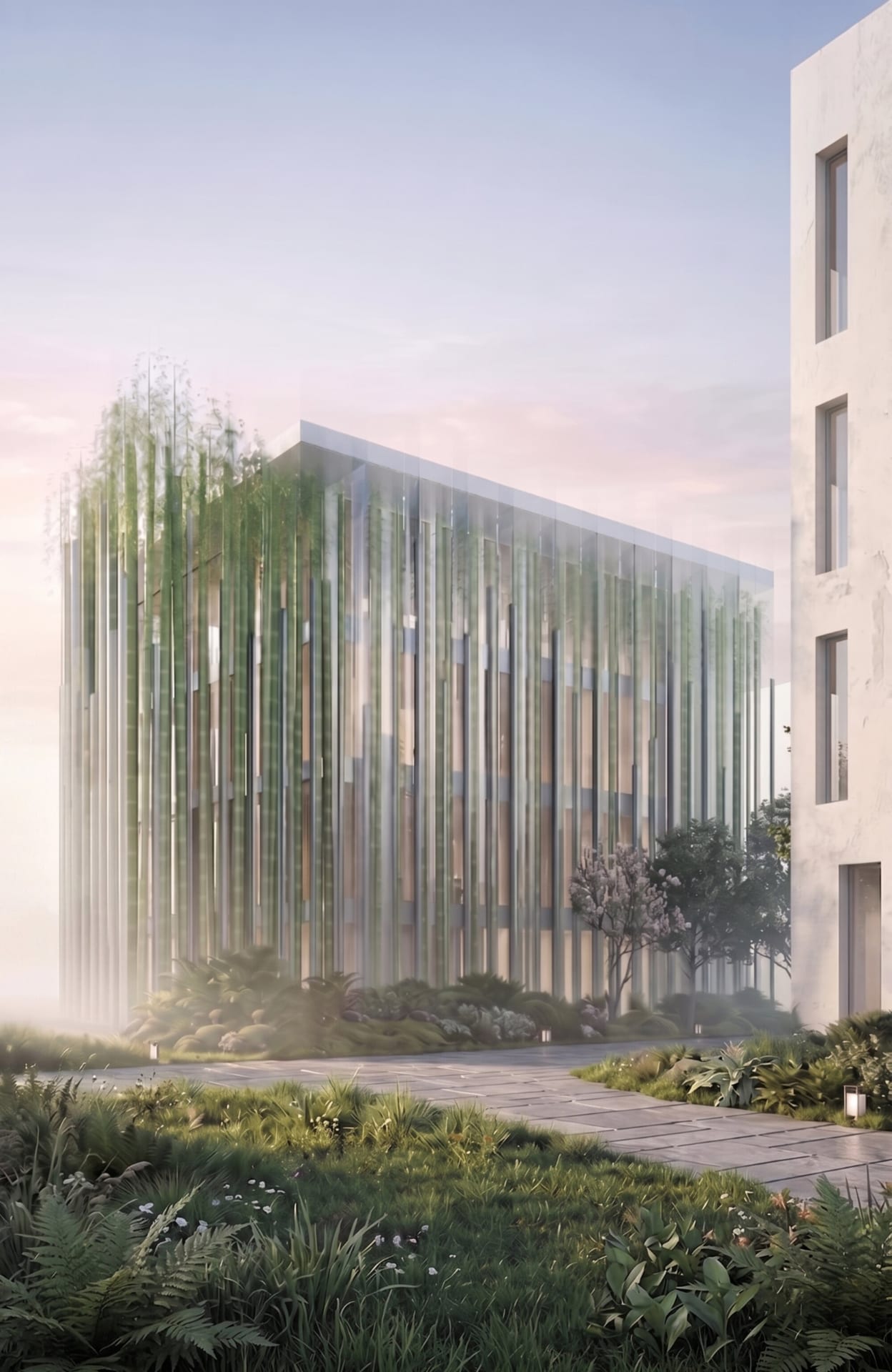
BAMBOO OFFICE
A building where the facade serves as the primary climate control system: a fifteen-metre-high bamboo forest that filters light, heat and wind.
Sustainable Design
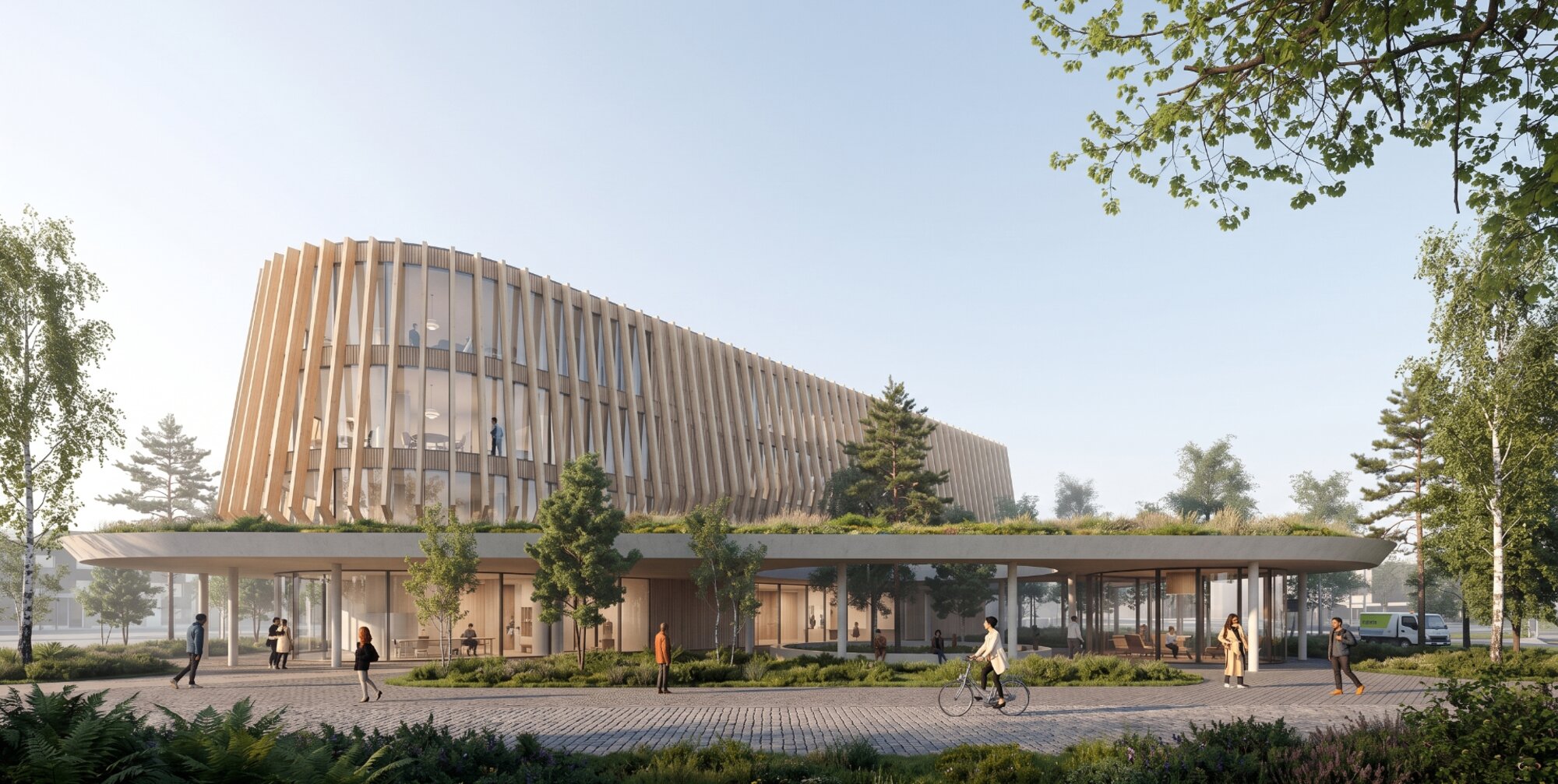
KURIKKA-TALO
A triangular building with a floor-to-ceiling glazed courtyard and facades clad in larch panels, a proposal for the public competition for the new Kurikka Town Hall.
Public & Commercial Architecture
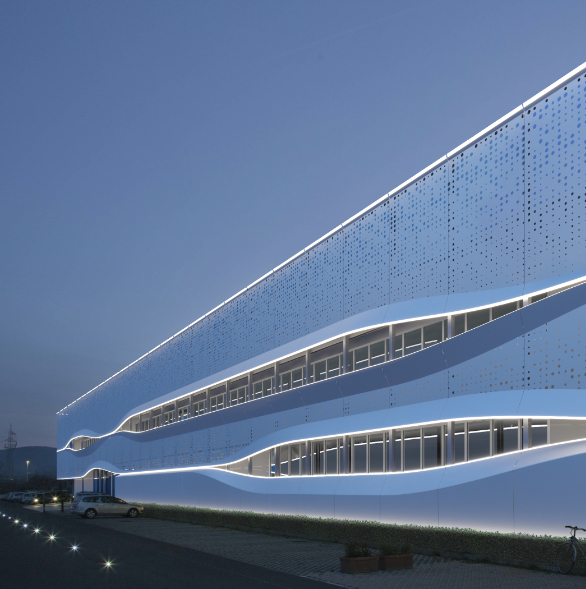
BRACCIALINI HQ
A perforated aluminium screen envelops the Florentine brand’s headquarters: high-performance solar shading, natural ventilation and a contemporary identity for a production facility that has become a landmark.