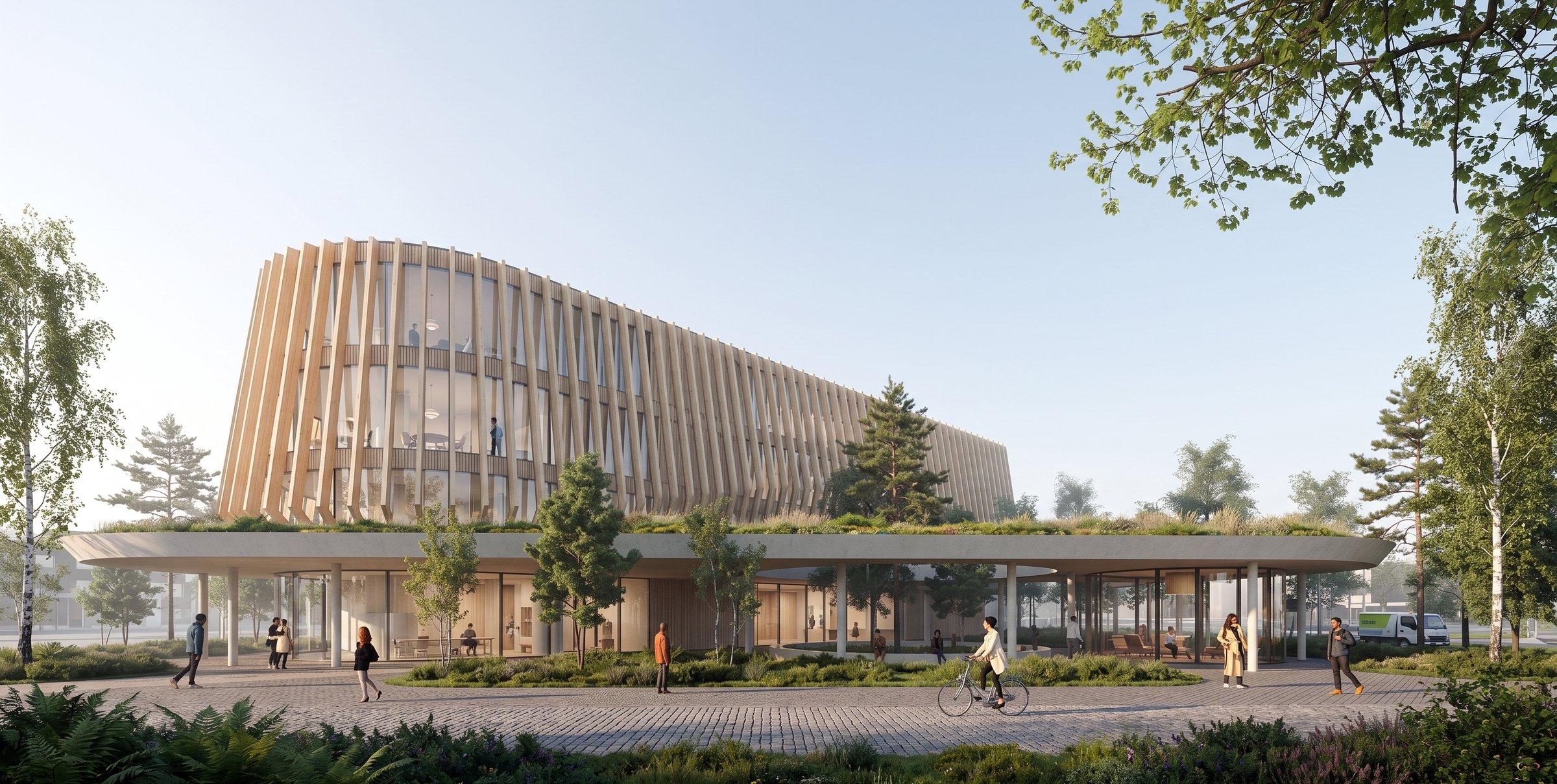
KURIKKA-TALO – The new town hall of the town of Kurikka, Finland
A triangular building with a floor-to-ceiling glazed courtyard and facades clad in larch panels, a proposal for the public competition for the new Kurikka Town Hall.
2024 · Kurikka, Finland · Town Hall (municipal headquarters) · Public & Commercial Architecture + Sustainable Design
A triangle that opens up the town
Kurikka is a town of around 21,000 inhabitants in southern Ostrobothnia, Finland, a rural and industrious region on the country’s west coast. The KURIKKATALON YLEINEN ARKKITEHTUURIKILPAILU, the open architectural competition for the new Town Hall, called for a building capable of functioning as an institutional headquarters and, at the same time, as a local civic space: a Town Hall that is not merely a block of offices, but a place where the community can find services, events and opportunities to meet. Maurizio Barberio and Micaela Colella’s proposal stems from a simple observation: Kurikka lacks a public infrastructure capable of encompassing these two dimensions within a single, legible building.
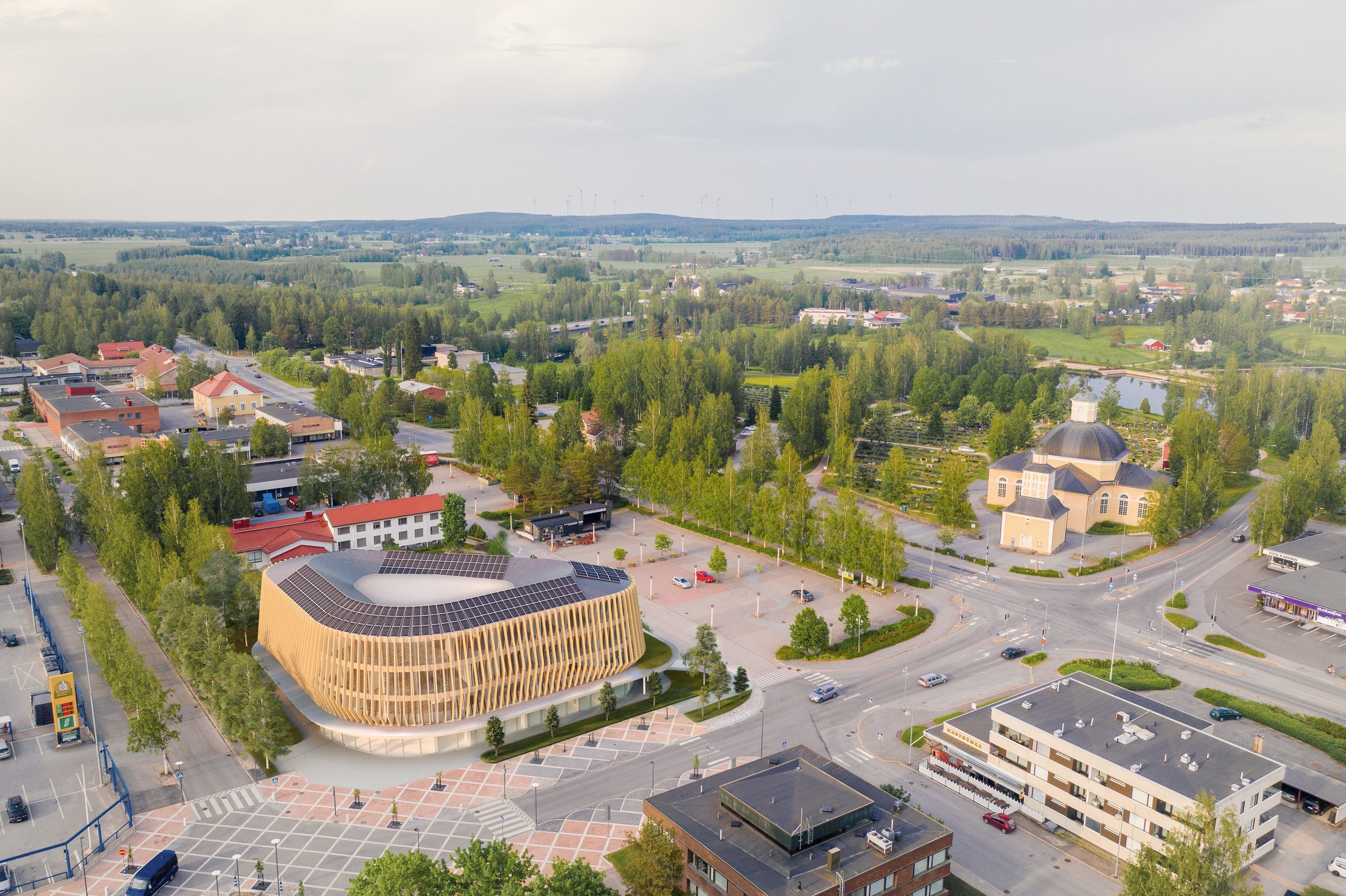
The design solution is a triangular volume with rounded corners. The two main facades are aligned with Asematie and Keskuspuistikko, the two streets that frame the site, whilst the main entrance is situated at the corner between them, in continuity with the existing urban fabric. The third side of the triangle runs diagonally across the site and opens onto a new public green space, sheltered by a continuous roof (green above) pierced by two large round oculus windows that allow light to filter downwards. Beneath the roof are benches, bicycle racks and a heated shelter for the bus stop: a small landscape of amenities for daily life that the City Council makes available to the neighbourhood even before one enters the building’s interior spaces. A pedestrian and cycling network crosses the green space; four car parks and the secondary entrances complete the facade.
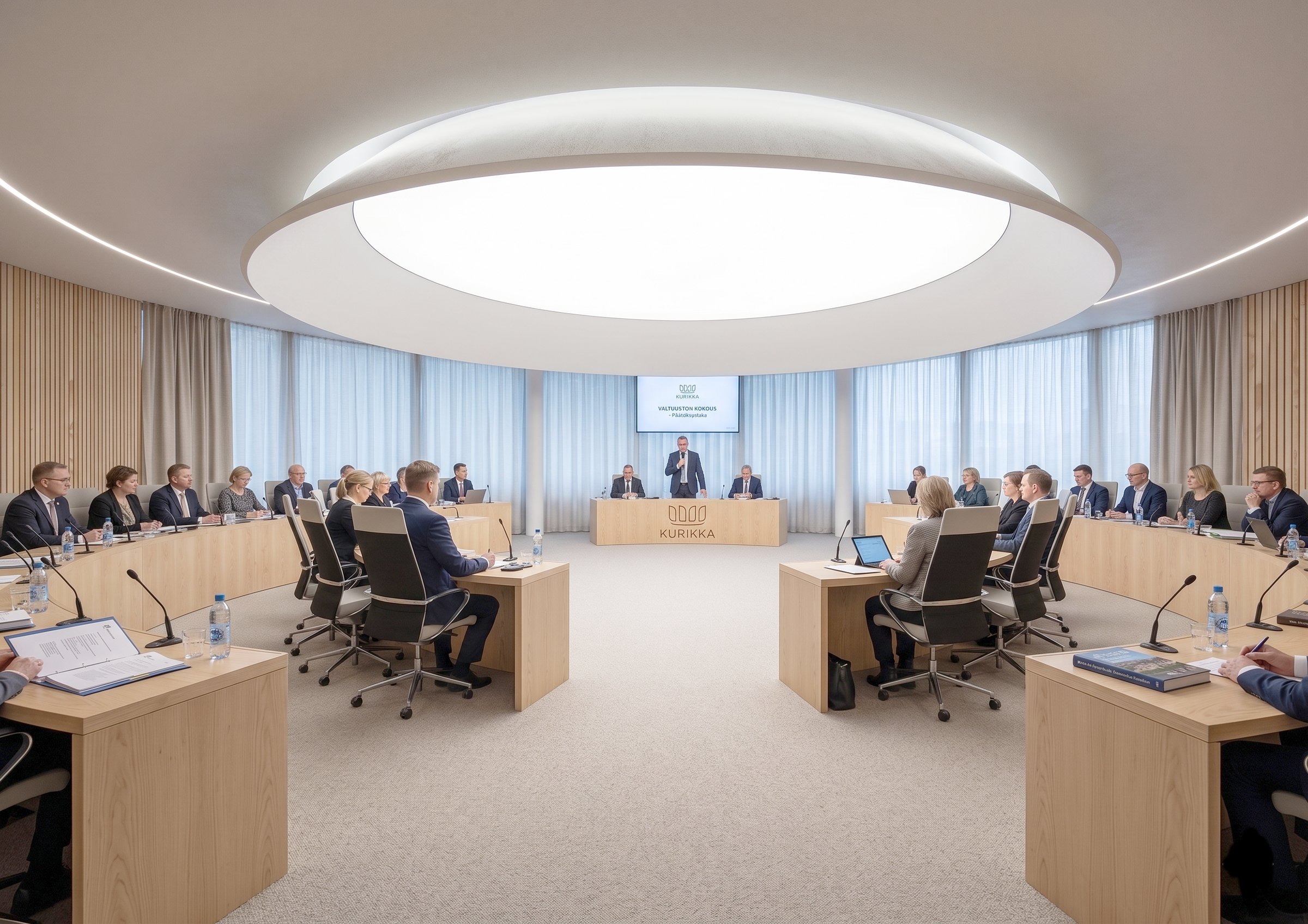
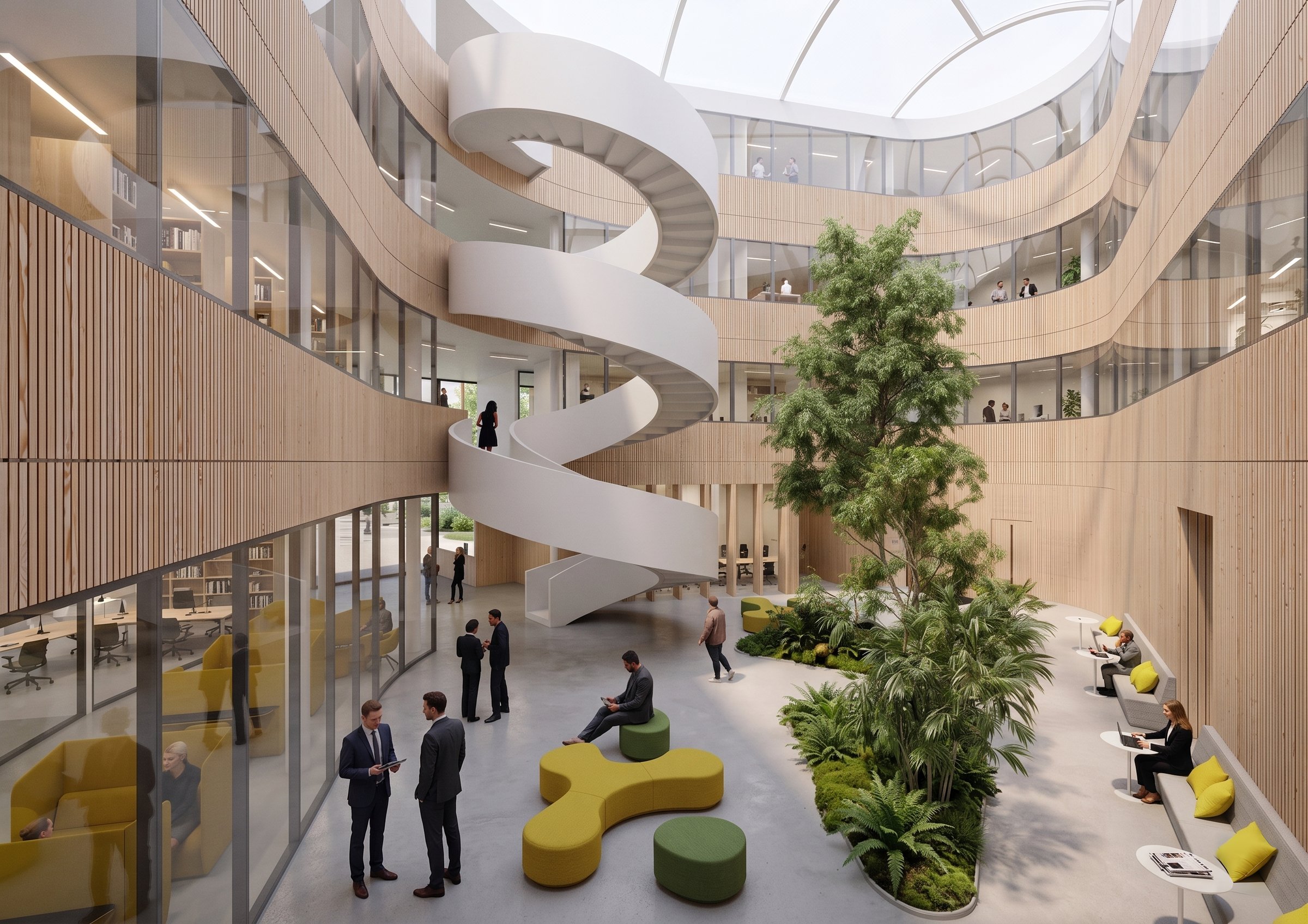
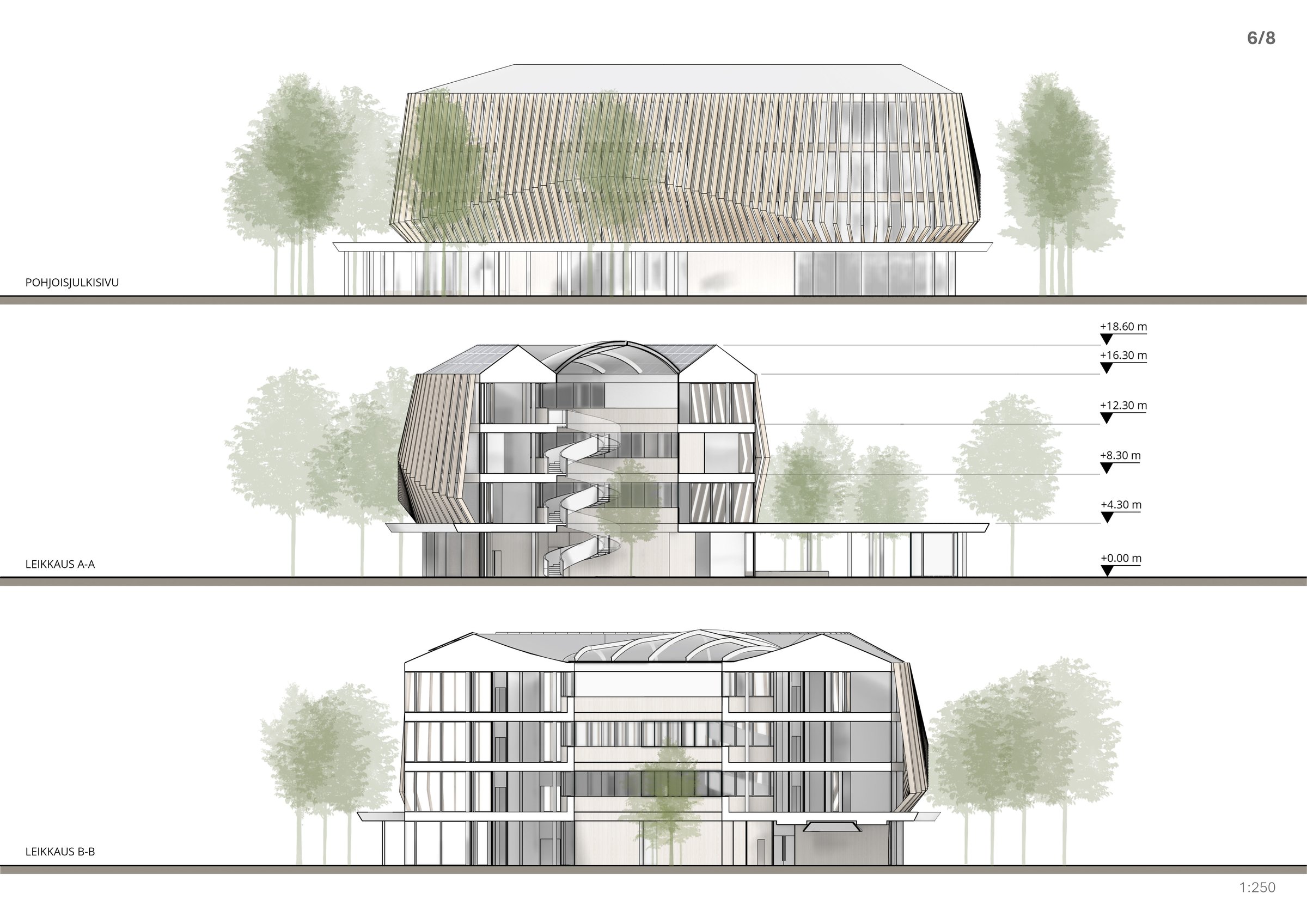
The heart of the building is the large glazed internal courtyard, a full-height glass-covered courtyard that brings natural light to the offices arranged along the three sides of the triangle. On the ground floor, the courtyard houses public functions and becomes the beating heart of the Town Hall, open to the flow of citizens and services for the public. A spiral staircase at the centre of the courtyard connects the four floors with a striking architectural gesture; two service staircases and their associated lifts complete the vertical circulation. The building’s most representative and flexible spaces are concentrated at the three vertices of the triangle: on the ground floor, the entrance with lobby and information point, the large circular council chamber of 147 m² (the valtuustosali) and the canteen with café; on the upper floors, the offices of the departments requiring spacious areas that can be adapted using modular furniture and lightweight partitions.
The structure is a steel frame (teräskehikkojärjestelmä) resting on a floating caisson foundation, the typology of foundation best suited to the ground in Kurikka. The external glazed building envelope uses high-performance triple glazing, screened by a series of larch (lehtikuusi) panels that create a variable facade and serve a dual purpose: protecting against cold winter winds and mitigating summer solar radiation, preventing glare in the workspaces. The roof, clad in aluminium sheet, houses 255 photovoltaic panels that significantly reduce the building’s energy consumption; the heating is connected to Kurikka’s district heating network (kaukolämpö), which uses locally produced renewable energy. Inside, a minimalist material palette, timber on the walls, glass in the partitions, a dominant white with splashes of colour introduced by chairs and pouffes, is complemented by dedicated acoustic solutions (carpets in large spaces such as the council chamber and meeting room, sound-absorbing panels and suspended ceilings).
Renders & Photos
Technical specifications
- Location
- Kurikka, Southern Ostrobothnia (Etelä-Pohjanmaa), Finland, the corner of Asematie and Keskuspuistikko
- Year
- 2024
- Client
- Kurikka Town Council, public competition for the new Town Hall (kaupungintalo)
- Typology
- Public building, Town hall (municipal headquarters) with offices, a council chamber, a canteen, an archive and facilities for the public
- Status
- Concept, proposal for a public competition
- Designers
- Maurizio Barberio and Micaela Colella, Barberio Colella Architects
- Shape and geometry
- Triangular plan with rounded corners; two main facades facing Asematie and Keskuspuistikko; main entrance at the corner where the two streets meet; third side running diagonally across the site towards the public green space
- Number of floors
- 4 storeys above ground
- Outdoor public space
- A green area under a continuous roof (green roof) featuring two large, light-filled round skylights; benches, bicycle racks, a heated bus shelter; a pedestrian and cycling network; 4 parking spaces; secondary entrances
- Indoor public space
- A large, full-height internal courtyard enclosed by glass; a spiral staircase in the centre; at the three corners of the triangle: entrance + lobby + information point, a circular council chamber (147 m²), and a canteen with a café
- Building envelope
- High-performance triple glazing screened by larch (lehtikuusi) panels that create a dynamic facade, serving a dual purpose: protection from cold winter winds and mitigation of summer solar radiation and glare
- Roof
- Aluminium sheet with 255 photovoltaic panels
- Energy
- Connection to the district heating network (kaukolämpö) in Kurikka, powered by locally generated renewable energy
- Interior
- Key materials: timber on the walls, glass in the internal partitions, a predominantly white colour scheme with colour accents provided by chairs and pouffes; specialist acoustic treatment (carpets in large spaces such as the council chamber and meeting rooms, sound-absorbing panels and suspended ceilings)
Technical drawings
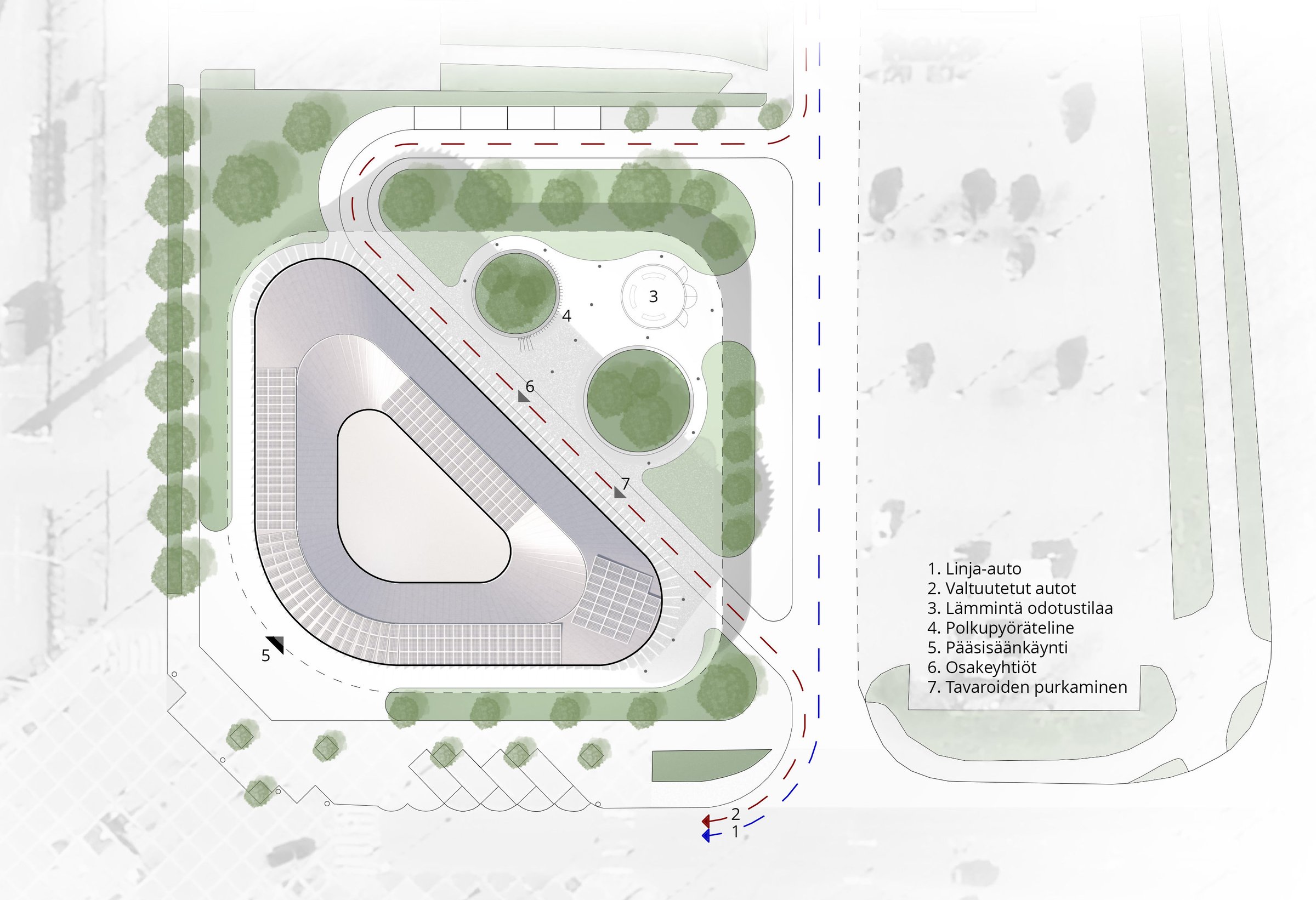
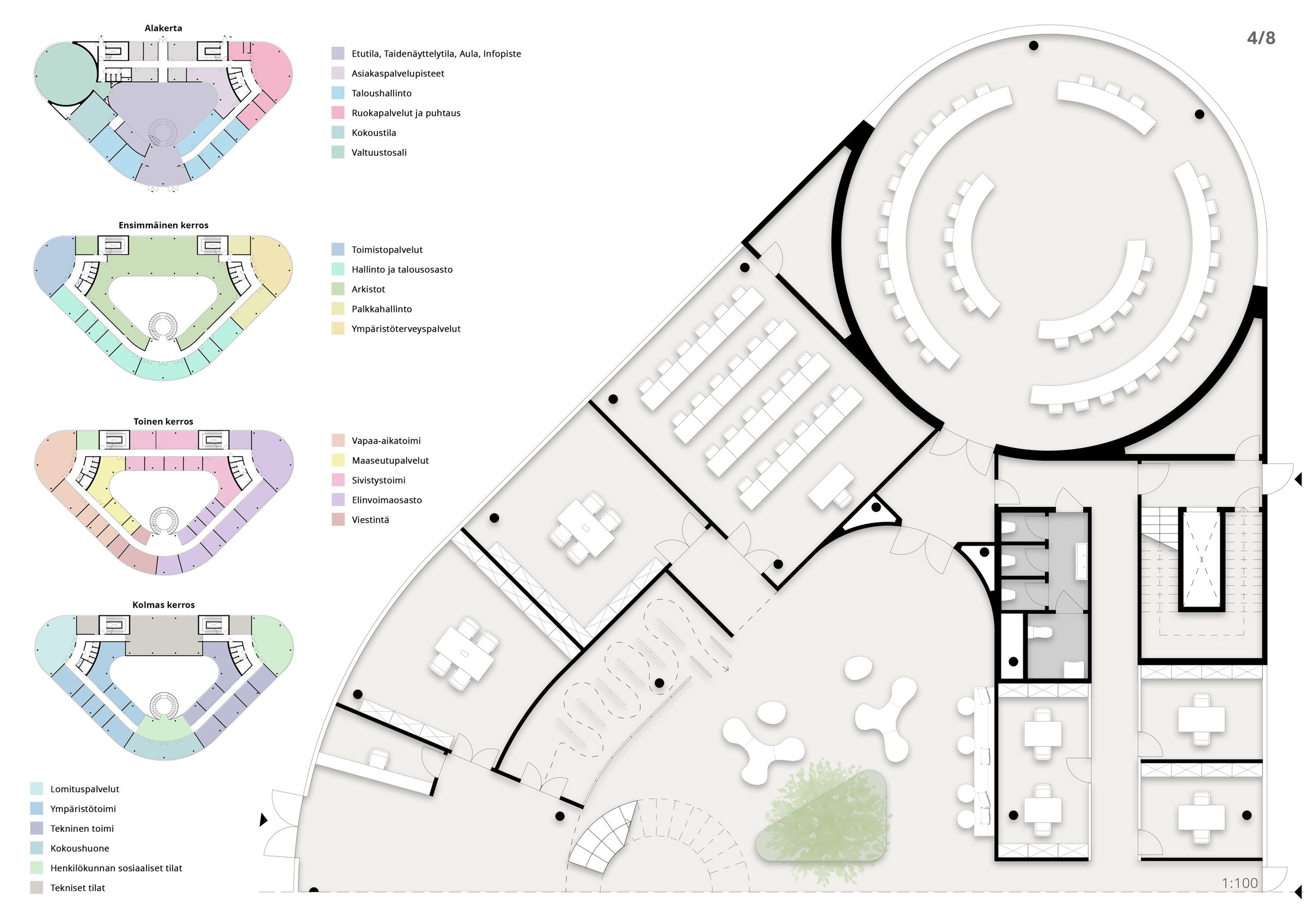
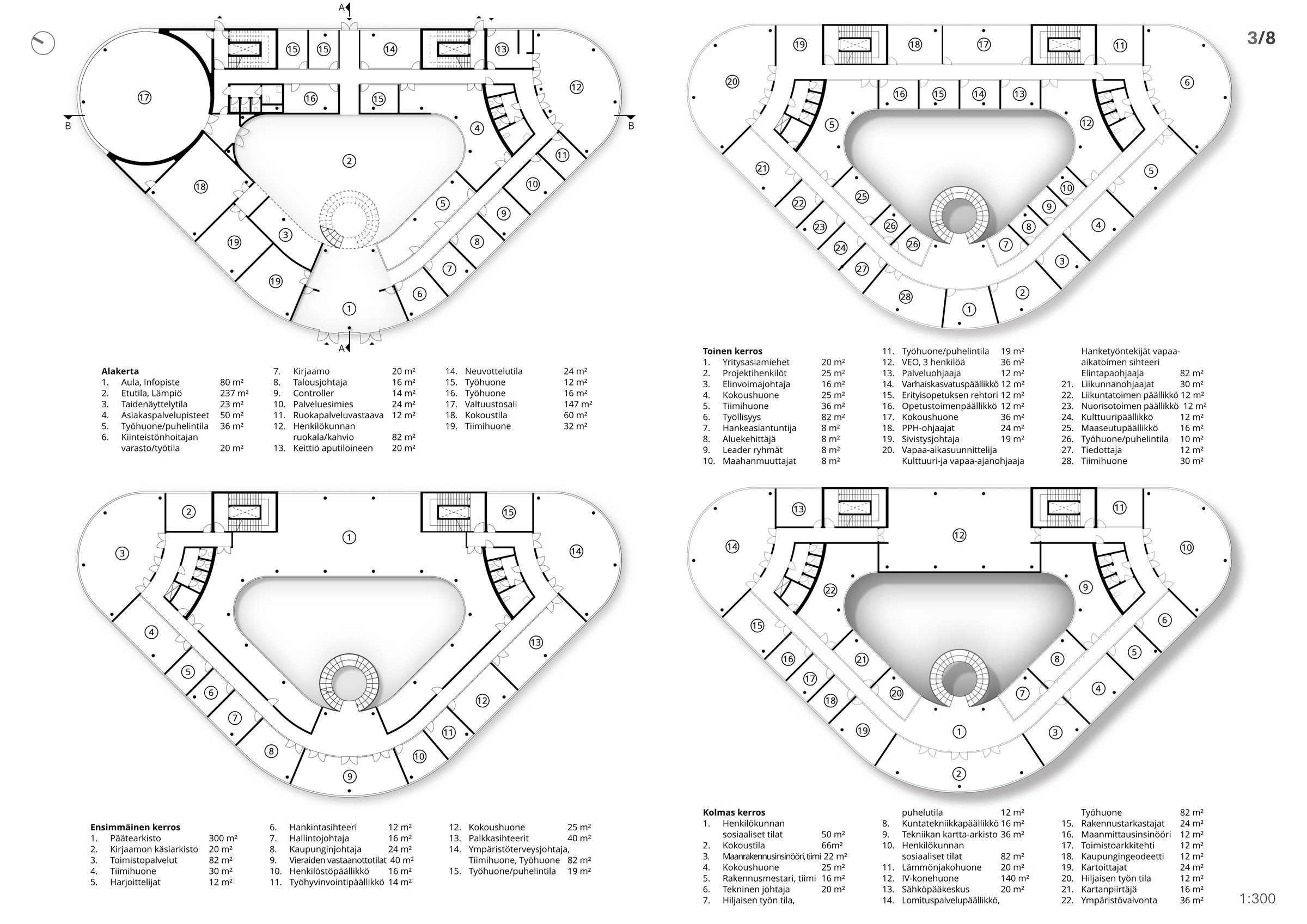
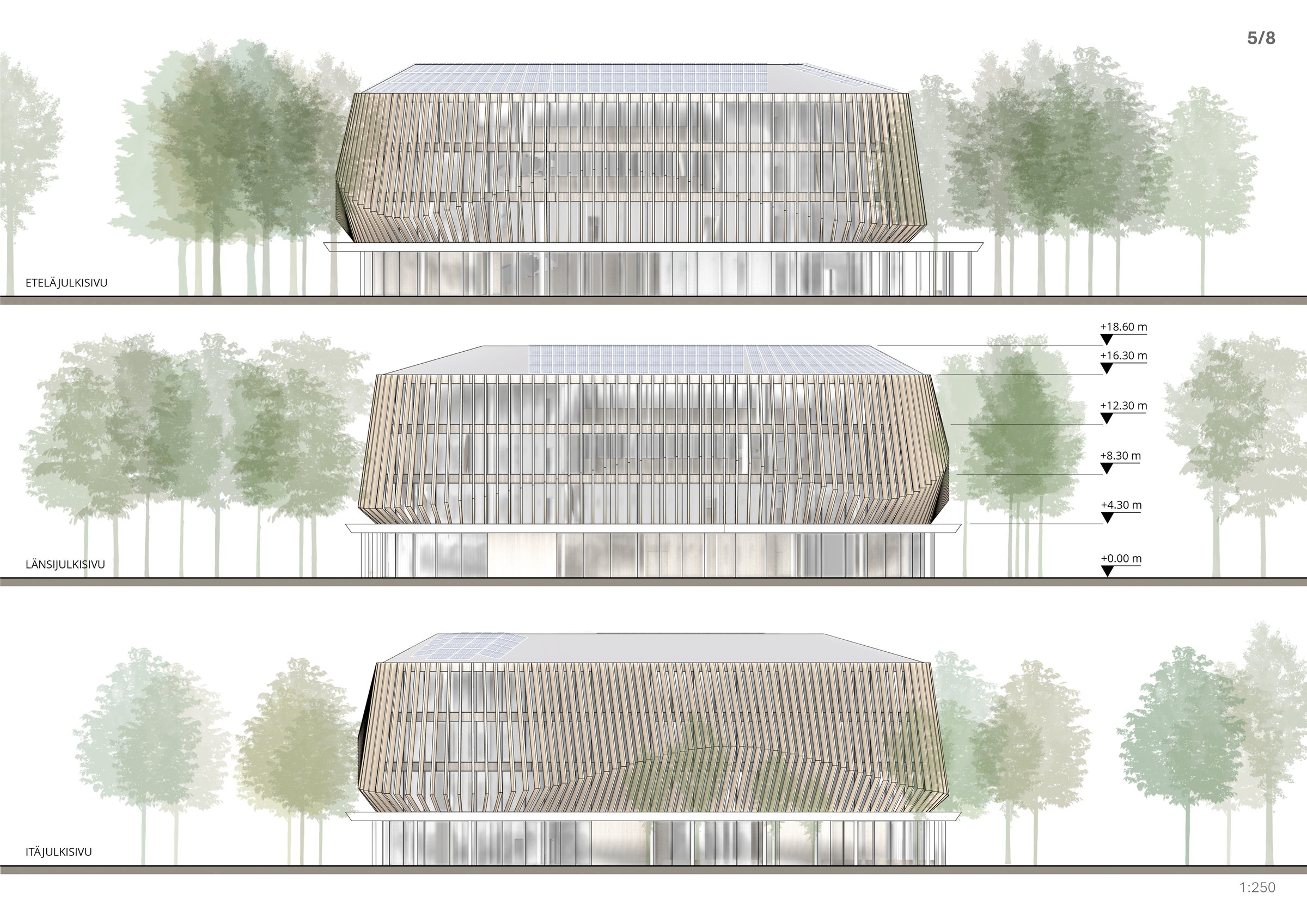
How does one design a Town Hall that functions as a civic space, and not merely as a block of administrative offices?
Town Halls in small and medium-sized towns, in Italy as in Northern Europe, are often closed and unwelcoming buildings: blocks of offices where citizens enter only for bureaucratic procedures, carefully separated from the surrounding urban fabric. The result is a twofold loss: the community does not experience its Town Hall, and the administration loses daily contact with the people it serves. The proposal for Kurikka-talo addresses precisely this gap. The triangular plan distributes the offices along three sides, but leaves a large, full-height internal courtyard at the centre, glazed and accessible to the public. The third side opens onto a new public green space (with benches, bike racks and a heated bus stop) which the Town Hall makes available to the neighbourhood. The 147 m² circular council chamber and the canteen are designed as spaces that can host community events, not just town council meetings. The result is an administrative infrastructure that is also a part of the city.
Frequently Asked Questions
Are you planning or managing the construction of a new public building or civic centre?
If your local council, organisation or practice is taking part in a public architecture competition, either in Italy or abroad, we can work with you as an integrated design partner on civic buildings, administrative premises, school architecture and public spaces. BCA covers the entire process from concept to final/detailed design, with a particular focus on ensuring a balance between architectural quality, energy performance and civic values.
Let’s talk about your projectWe’ll get back to you within 48 hours. No obligation.
Related projects
Public & Commercial Architecture
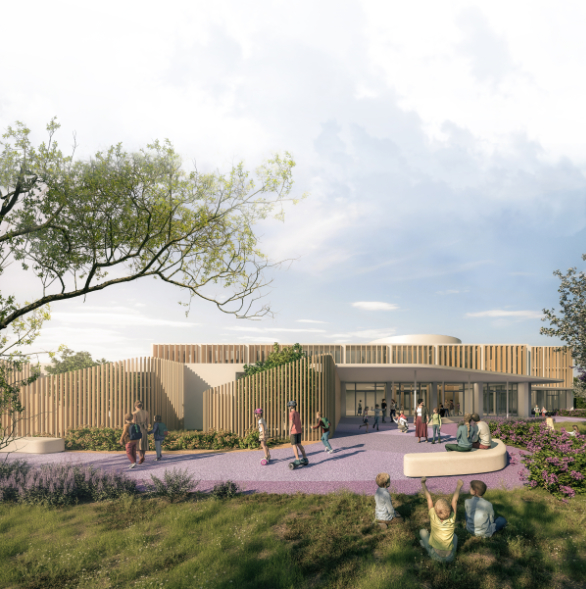
TRANI SCHOOL
A new nursery and primary school complex that transforms a derelict area of Trani into an educational urban park, featuring a civic square and a regenerative approach that goes beyond the NZEB logic.
Public & Commercial Architecture
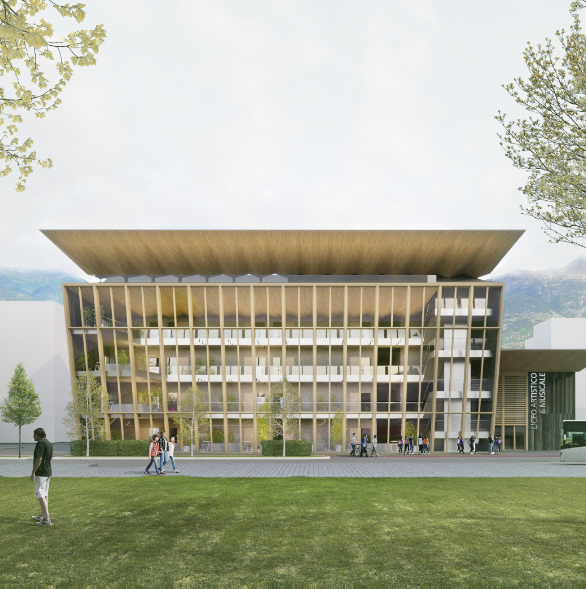
SCHOOL IN AOSTA
A regenerative school building that goes beyond the NZEB logic, transforming the sunspace into a civic element open to the community of Aosta.
Sustainable Design
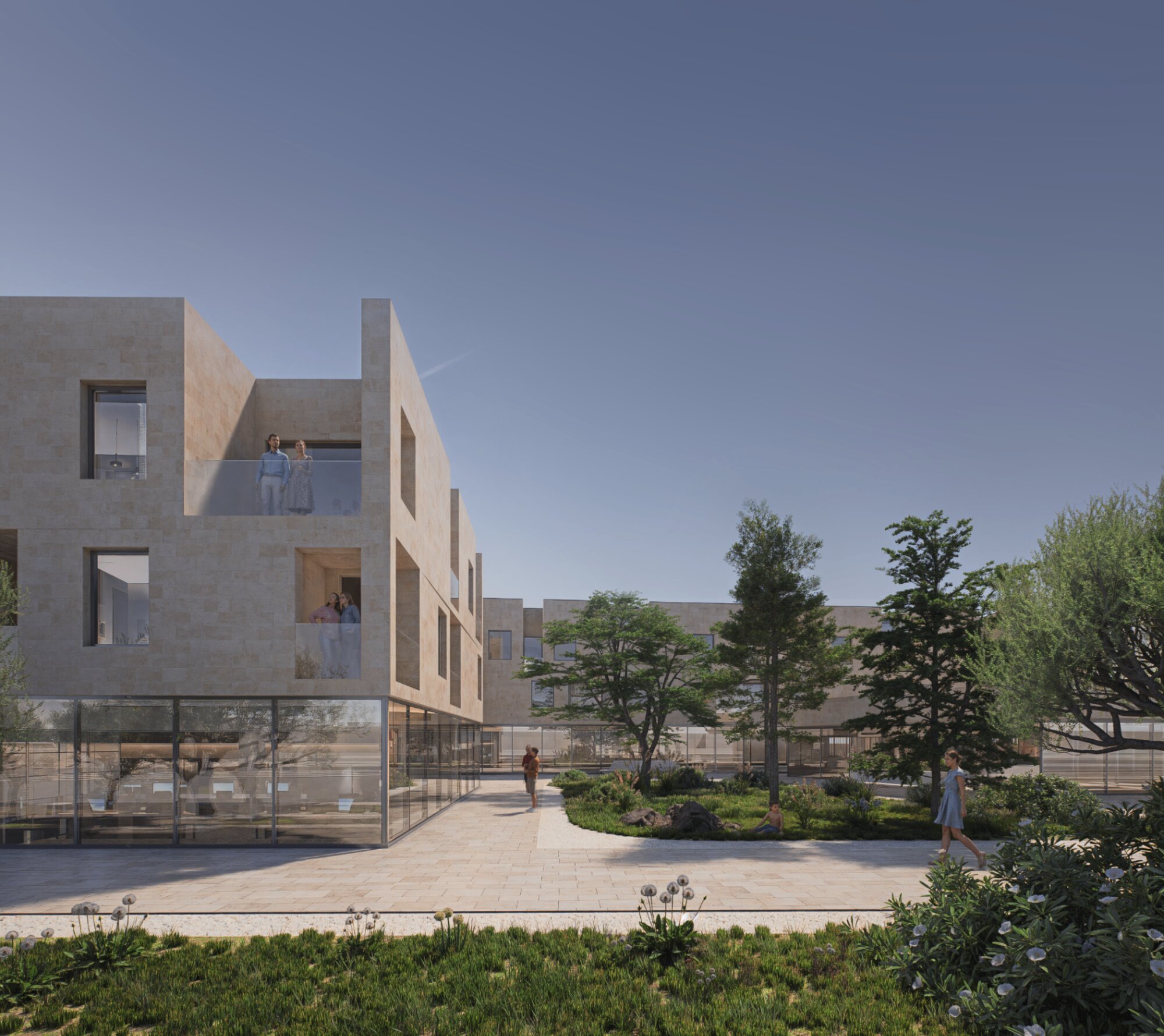
POLYMNIA FUTURA
An urban regeneration proposal for Polignano a Mare that combines sustainable mobility, public spaces and new residential neighbourhoods: Special Mention at the Europan 18 European competition.