Food & Wellness Club – Bioclimatic wellness centre in Bologna
A building-organism dedicated to wellness in the heart of Bologna’s FICO agri-food hub: a parametric building envelope inspired by plant cells, a courtyard for passive ventilation, and timber interiors that evoke the city’s brickwork.
2016 · Bologna, Italy · Wellness · Public & Commercial Architecture · Digital & Parametric Design
When water shapes form
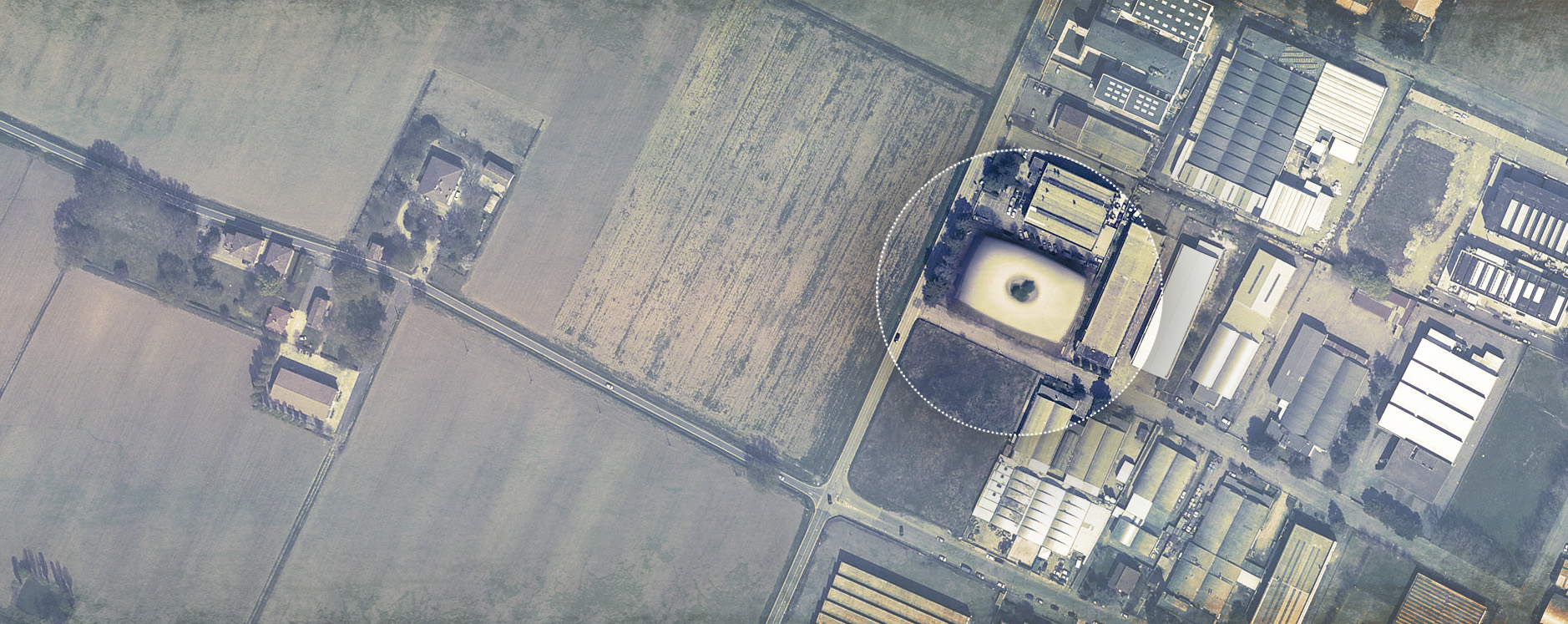
FICO Eataly World, the 80,000 m² agri-food park inaugurated in Bologna within the CAAB complex, is a place where Italian food and food culture become an experience. In this context, the FICO Wellness Club by Barberio Colella Architetti (competition proposal) offers a space where body care intertwines with the very philosophy of the place: natural ingredients, quality materials, and total sensory attention. The brief called for a comprehensive wellness centre (swimming pools, spa, meditation area, gym, spa suites, restaurant) capable of attracting visitors from the high-end segment and offering an immersive experience that engages all the senses.
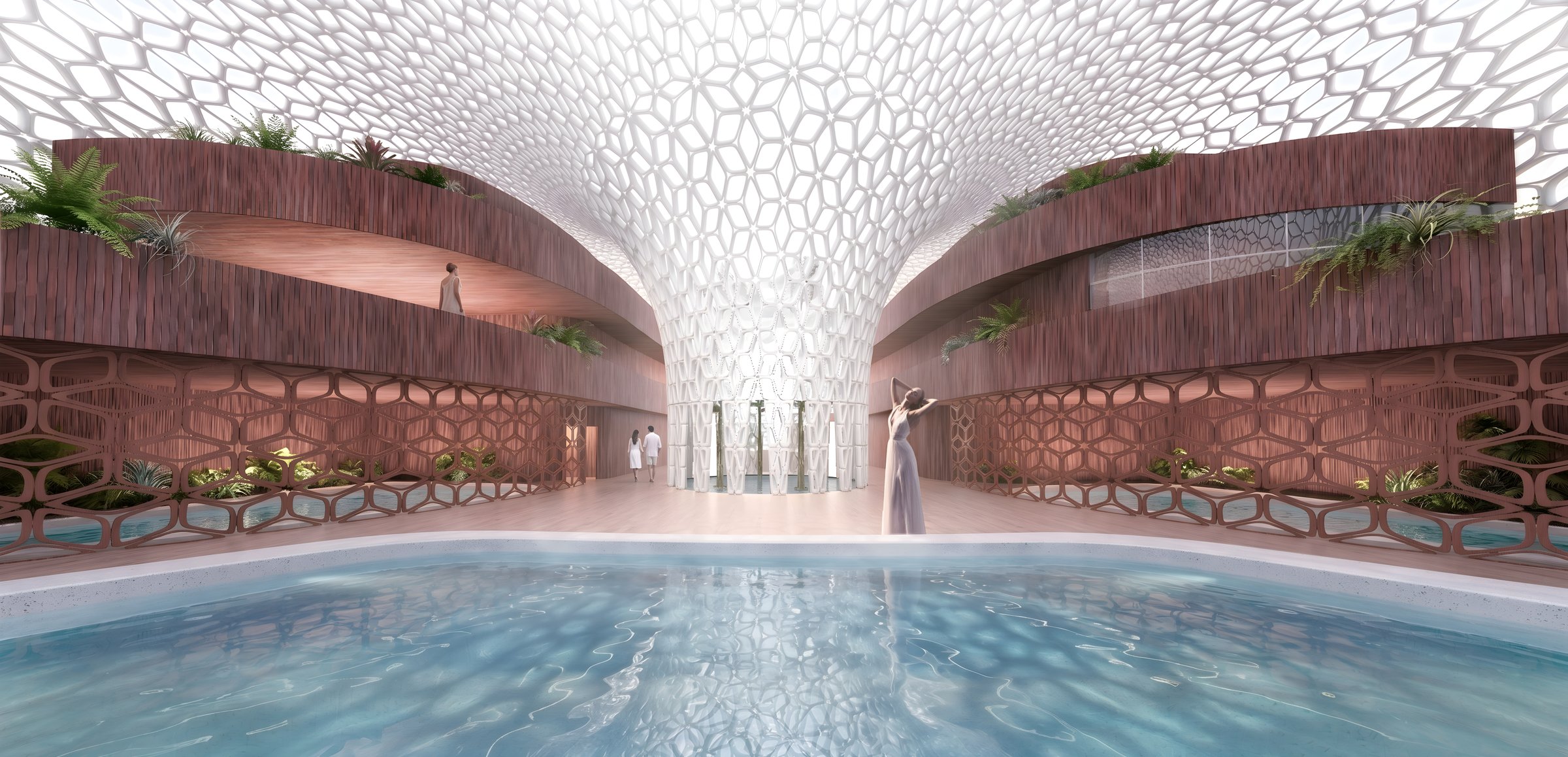
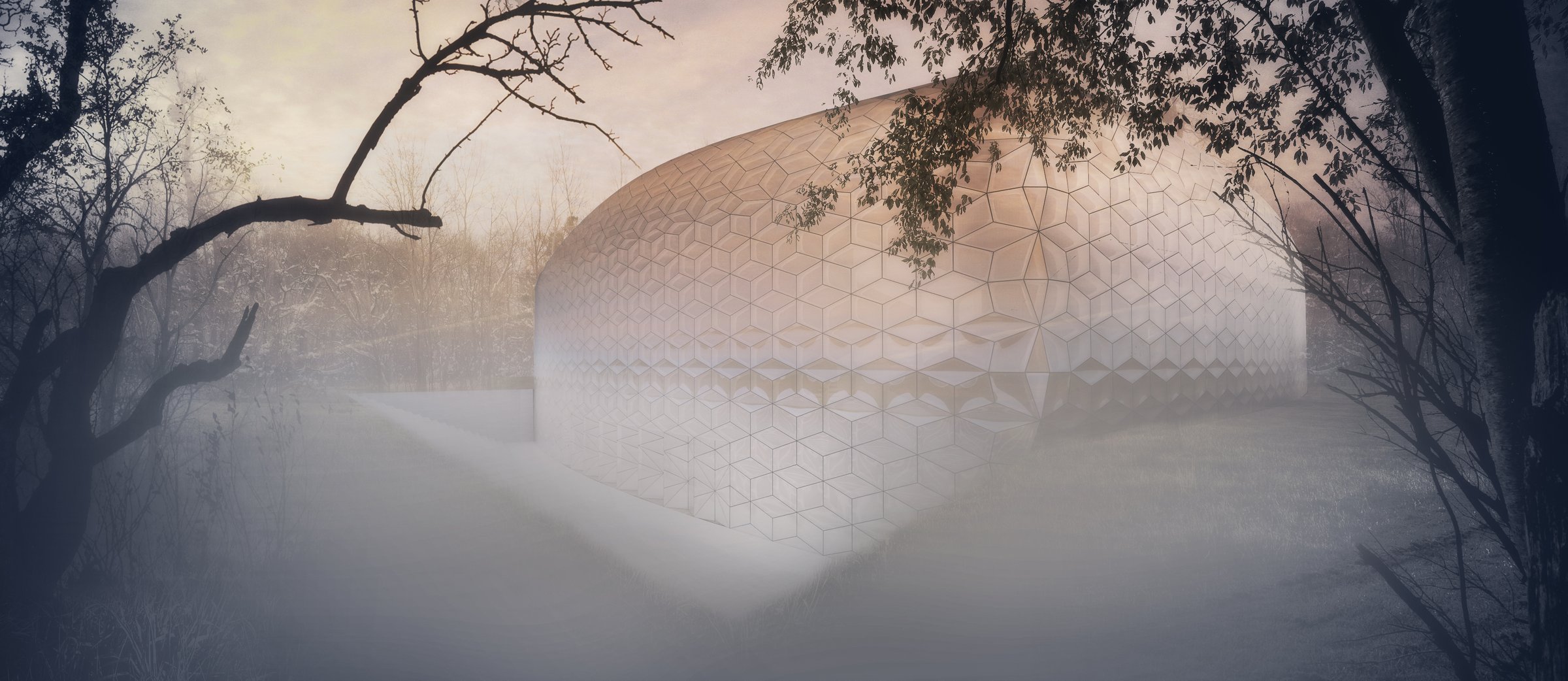
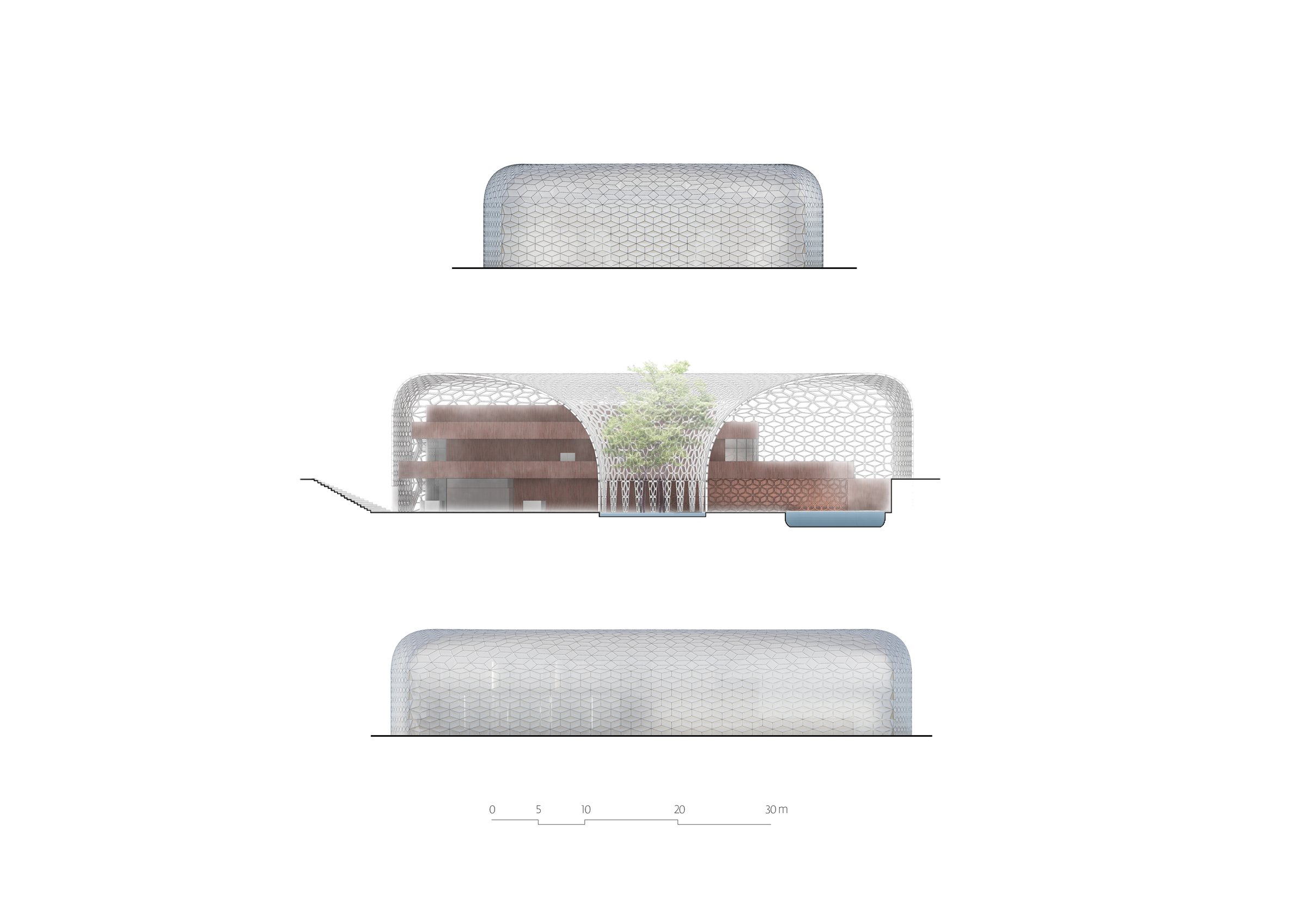
Two themes guide the entire project: water and timber. Water is the most precious element for human life and gives rise to timber, one of the most valuable materials for civilisation. This relationship is reflected in the building’s form: viewed from the outside, the volume and its translucent polycarbonate building envelope evoke a drop of dew on a leaf. The interior is dominated by the warm tones of timber, a chromatic echo of the bricks from which Bologna is built. The system of balconies on the side pavilions recalls the city’s famous porticoes, creating a dialogue between Bologna’s historic typology and the project’s contemporary language.
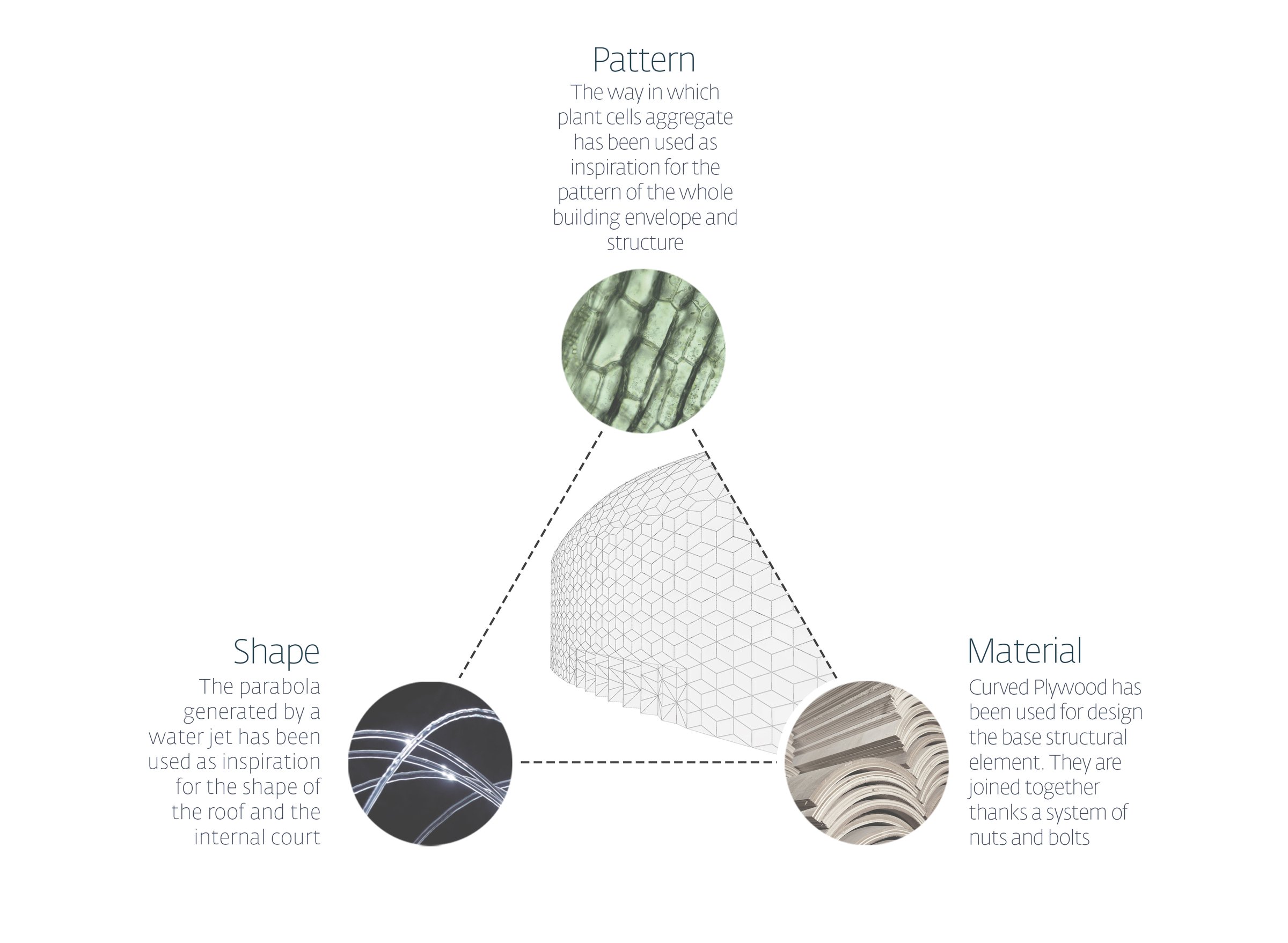
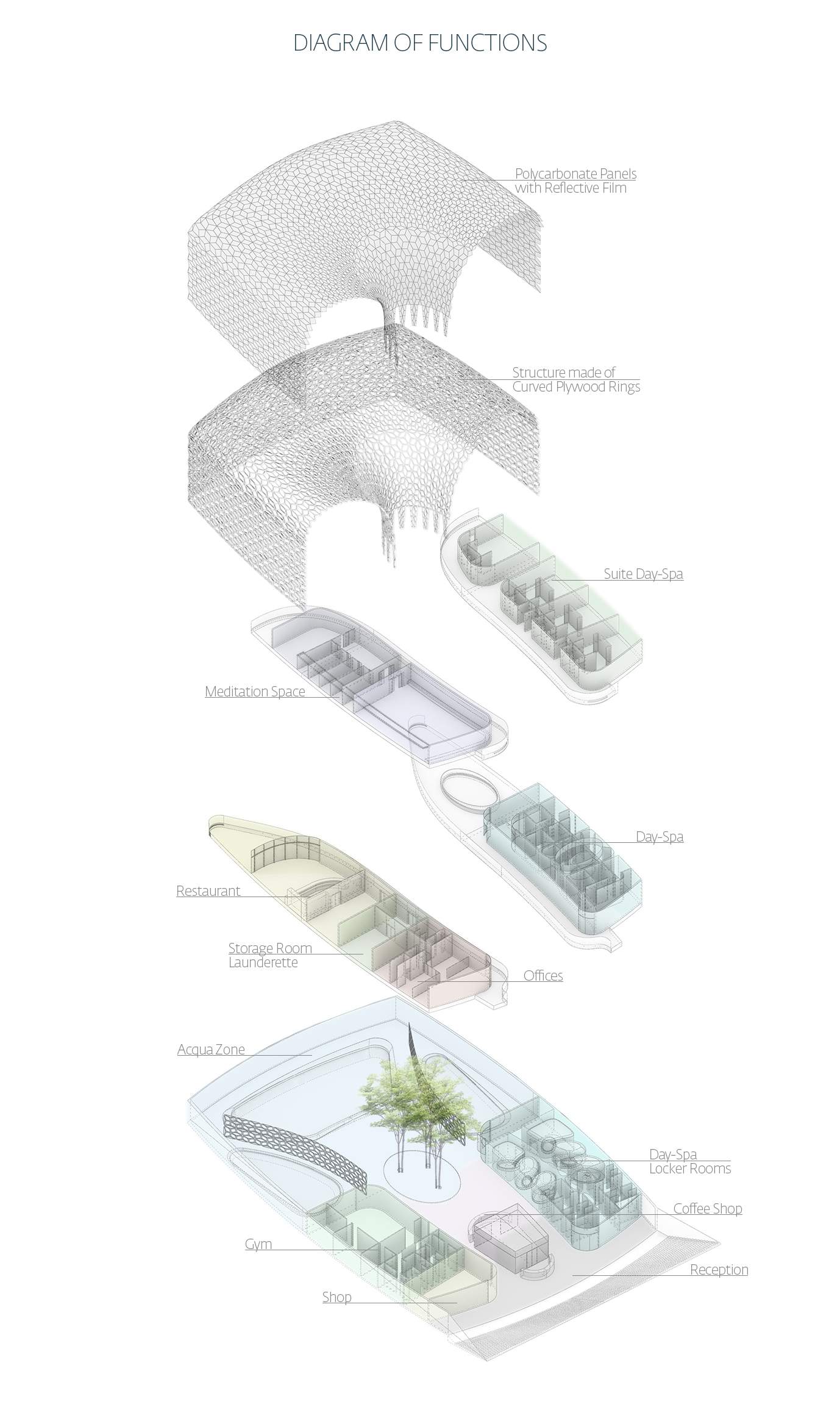
The building envelope and the structure are born from the same principle: the aggregation of plant cells. The pattern defining the facade and the building’s load‑bearing structure is generated parametrically from the geometry of plant cells, a direct reference to timber in its most elementary form of internal organisation. The structure is made of curved plywood cells, connected to one another using a nut-and-bolt system. A reflective film applied to the building envelope reflects up to 83% of solar heat in summer and retains internal heat in winter. The courtyard, the heart of the project, functions as a passive ventilation system in both winter and summer.
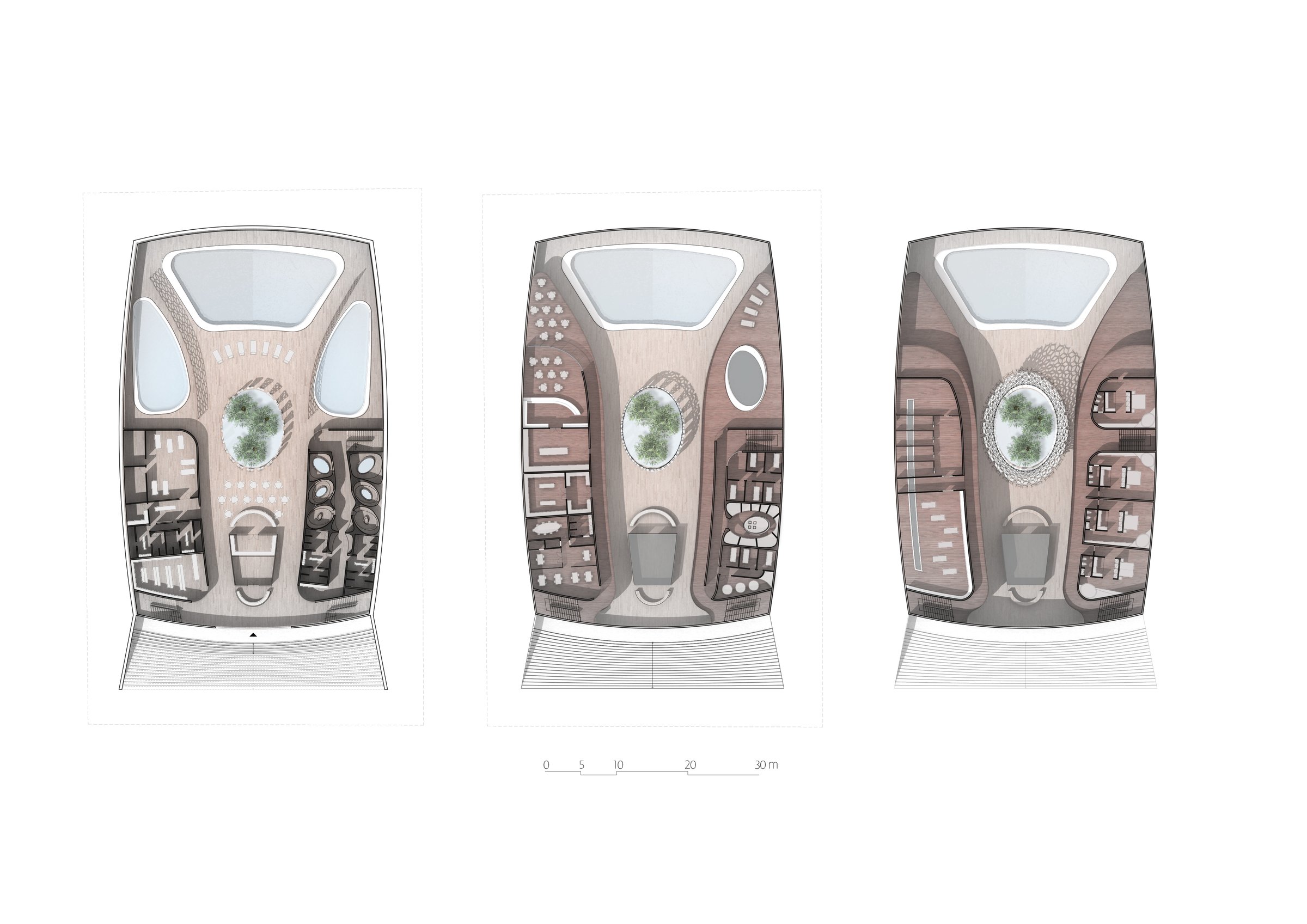
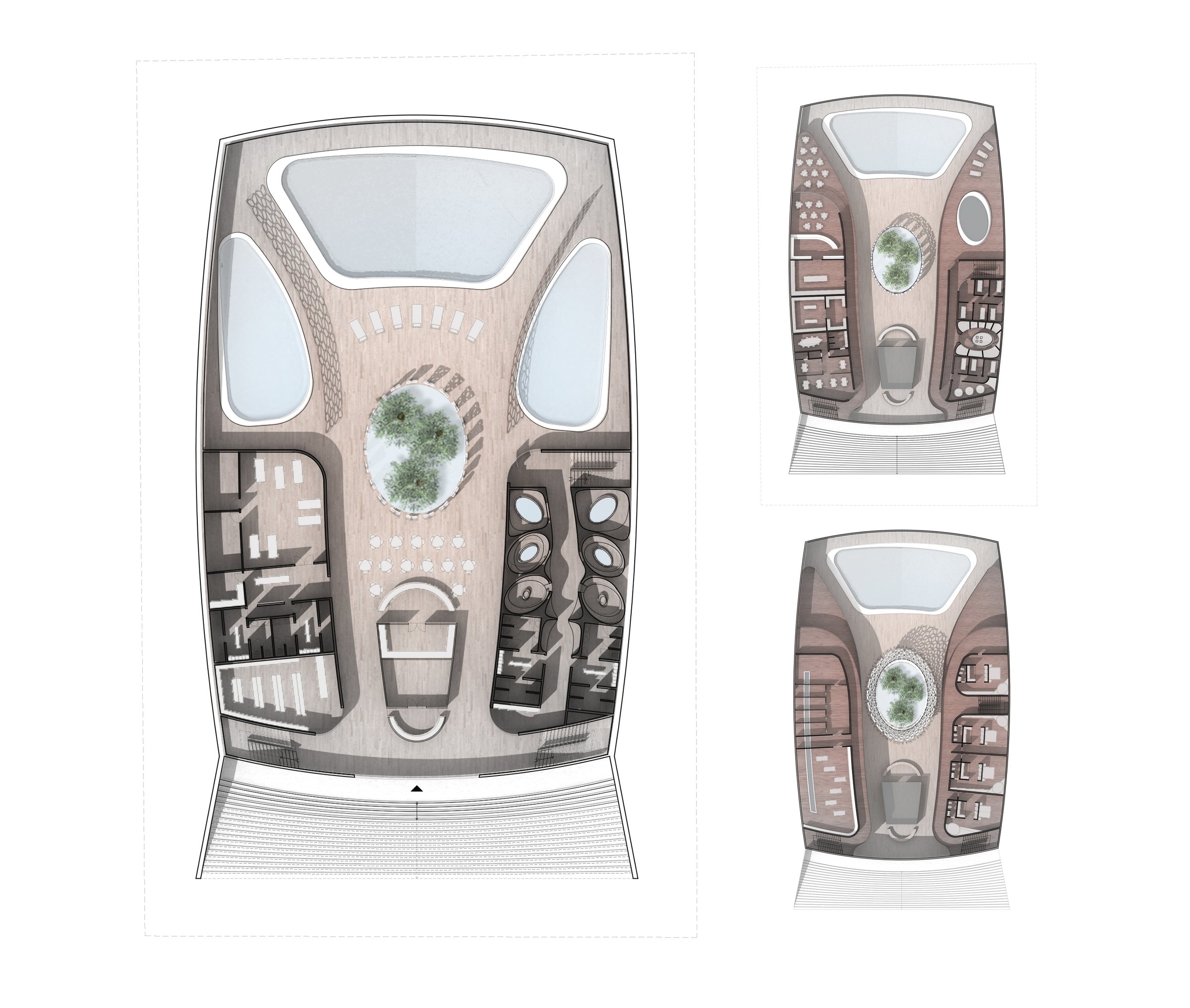
The 1,000 m² Acqua Zone is the heart of the project: a fluid space with pools of varying sizes, two on the ground floor and one on the upper level. The club also includes a 600 m² spa (Turkish bath, sauna, solarium, massage area, individual treatment pools and sensory showers), four spa suites of 50 m² each, an 80 m² meditation area, a gym, an organic restaurant and a coffee shop. The project was featured in Rethinking The Future.
Renders & Photos



Technical specifications
- Location
- Bologna, Emilia-Romagna, Italy (CAAB World complex)
- Year
- 2016
- Typology
- Wellness centre
- Area
- Over 2,300 m²
- Status
- Concept
- Designers
- Maurizio Barberio, Micaela Colella
- Publications
- Rethinking the Future
Technical drawings
How do you design a wellness centre that is an architectural experience and not just a collection of pools and saunas?
Many wellness centres are designed as a sum of functional components (swimming pool, sauna, gym) without a unified architectural vision. The result is spaces that are technically sound but sensorially flat, where the building envelope is a problem to be solved and the interiors are delegated to a furniture supplier. A client investing in a high-end segment wellness centre needs a designer who conceives the wellness experience as architecture: natural light, ventilation, materiality, and the relationship between interior and exterior. The FICO Wellness Club demonstrates this approach: structure, building envelope and identity are generated by the same principle, and every choice (from the internal courtyard to the timber used in the interiors) is a design decision, not a decorative one.
Frequently Asked Questions
Are you planning a wellness centre, a hotel or a venue in the high-end segment?
The FICO Wellness Club demonstrates that the quality of a wellness space stems from integrated design, the building envelope, interior spaces and environmental performance conceived as a single system. If your project requires a comprehensive architectural approach, we can discuss the most suitable strategy together.
Let’s talk about your projectRelated projects
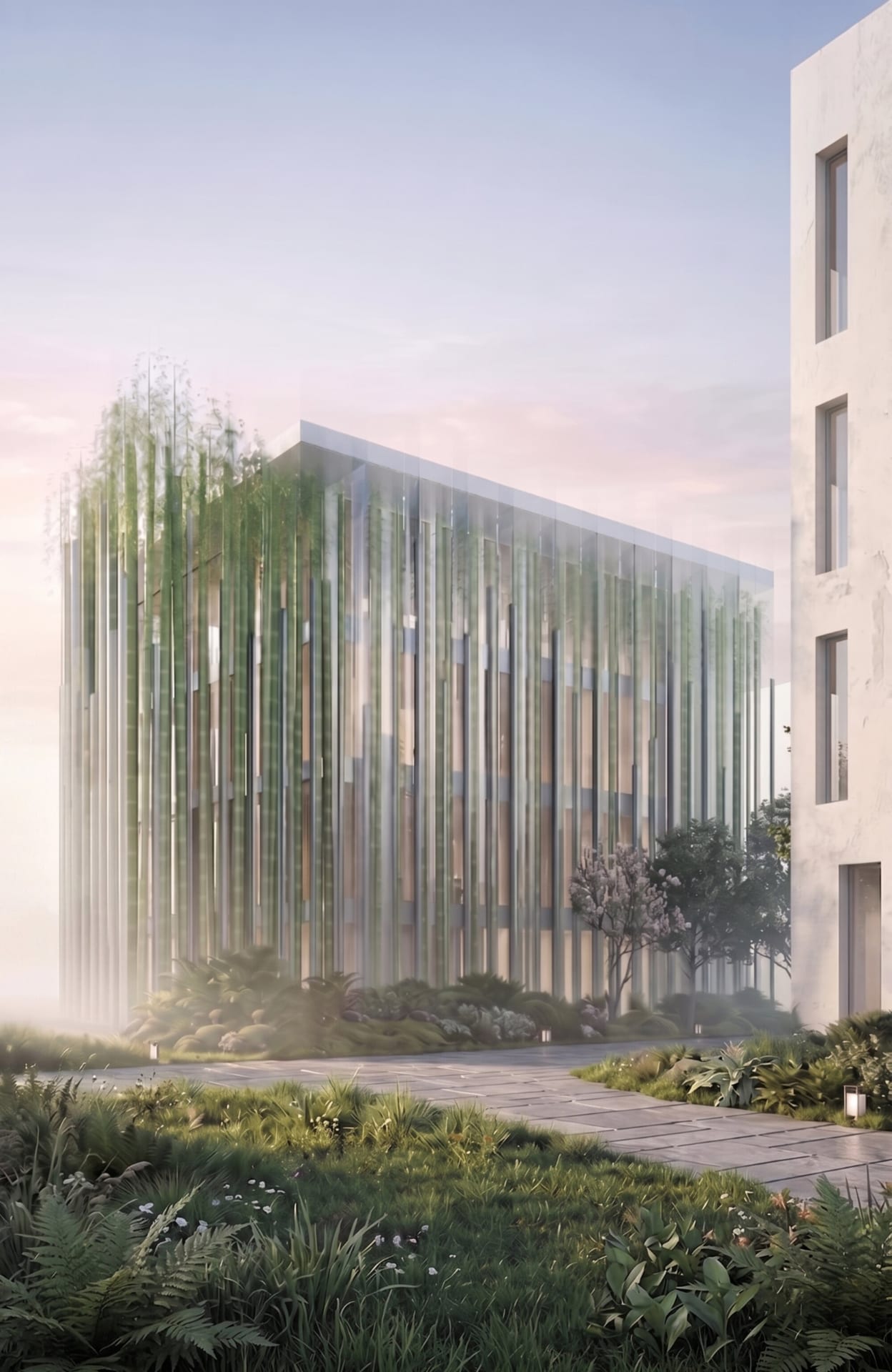
Sustainable Design
BAMBOO OFFICE
A building where the facade serves as the primary climate control system: a fifteen-metre-high bamboo forest that filters light, heat and wind.
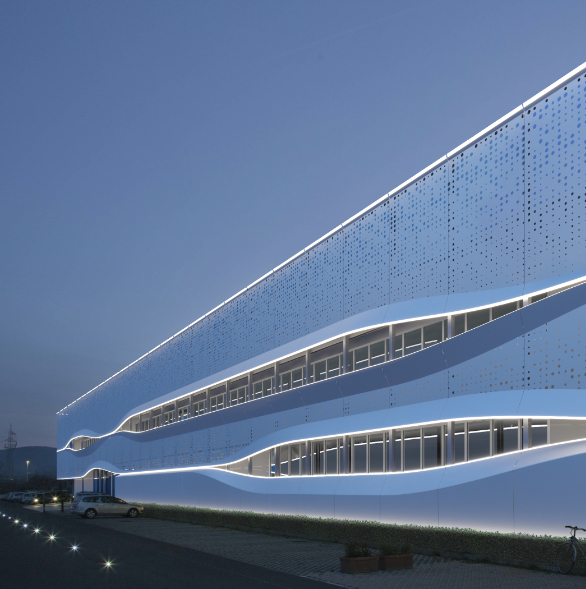
Public & Commercial Architecture
BRACCIALINI HQ
A perforated aluminium screen envelops the Florentine brand’s headquarters: high-performance solar shading, natural ventilation and a contemporary identity for a production facility that has become a landmark.