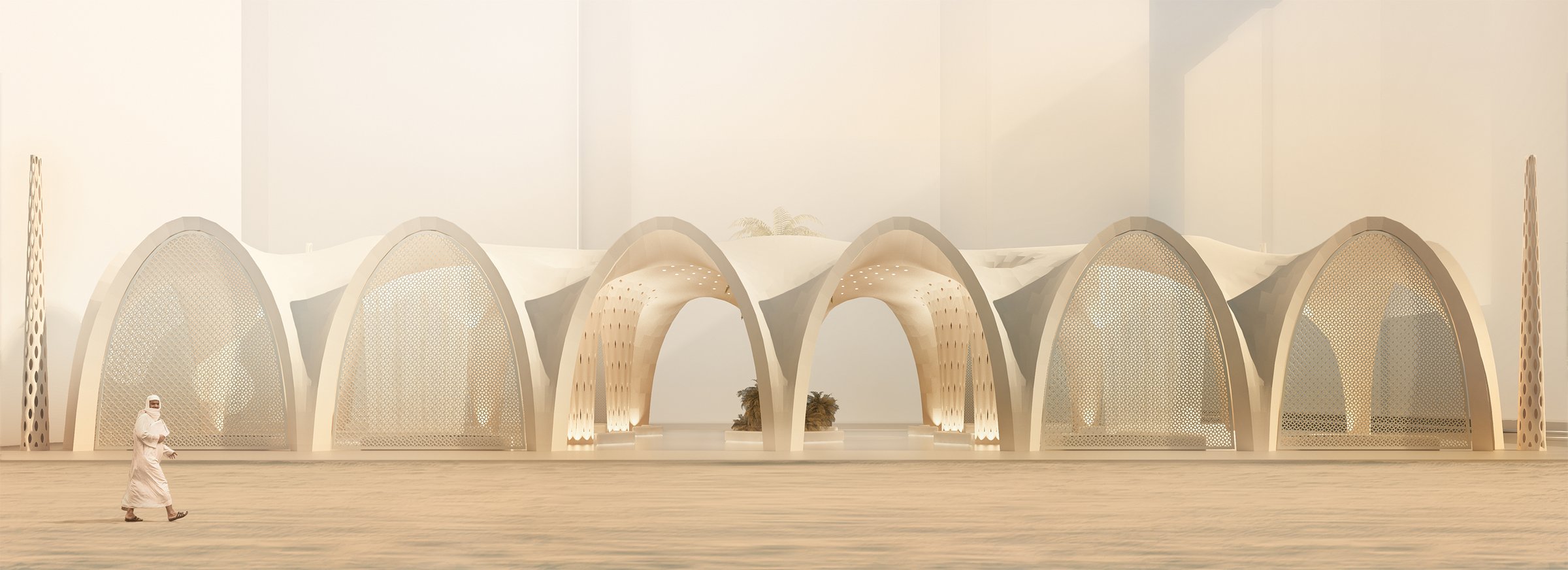
Urban Dunes – 3D-printed bioclimatic design roof in Abu Dhabi
A 3D-printed desert sand structure that transforms a public space into a passively air-conditioned urban oasis.
2020 · Abu Dhabi, United Arab Emirates · Public space · 3D-printed design + sustainable design
Lifting desert sand to create an urban oasis
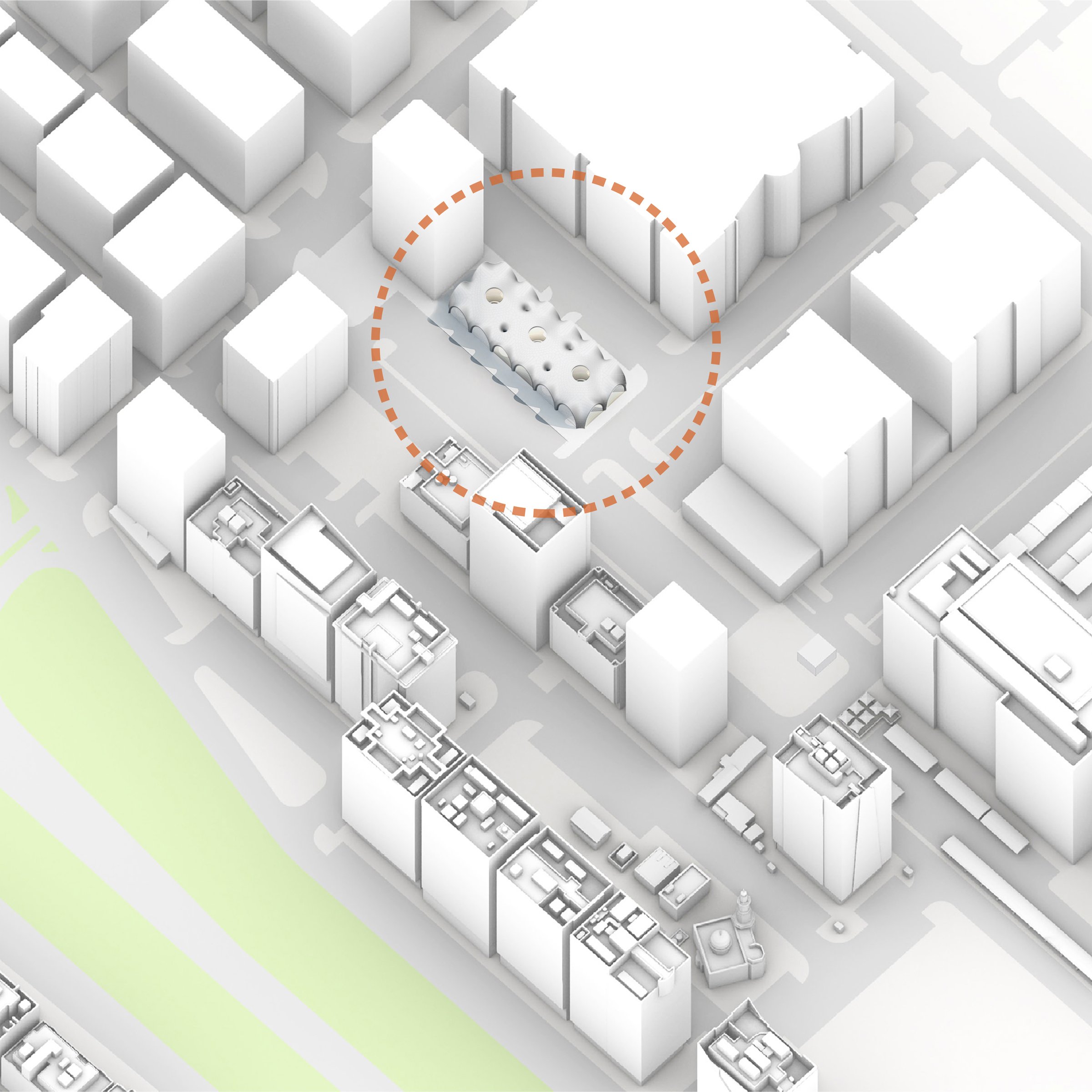
In Abu Dhabi, extreme temperatures render outdoor public spaces unusable for much of the year. The city’s Department of Transport launched the Cool Abu Dhabi Challenge, a global competition to design urban roofs capable of mitigating the heat island effect. Barberio Colella Architetti, in collaboration with Angelo Figliola, responded with Urban Dunes: a project that does not add technology to the urban space, but rediscovers the principles of traditional architecture from the Arab world and reinvents them through digital fabrication.
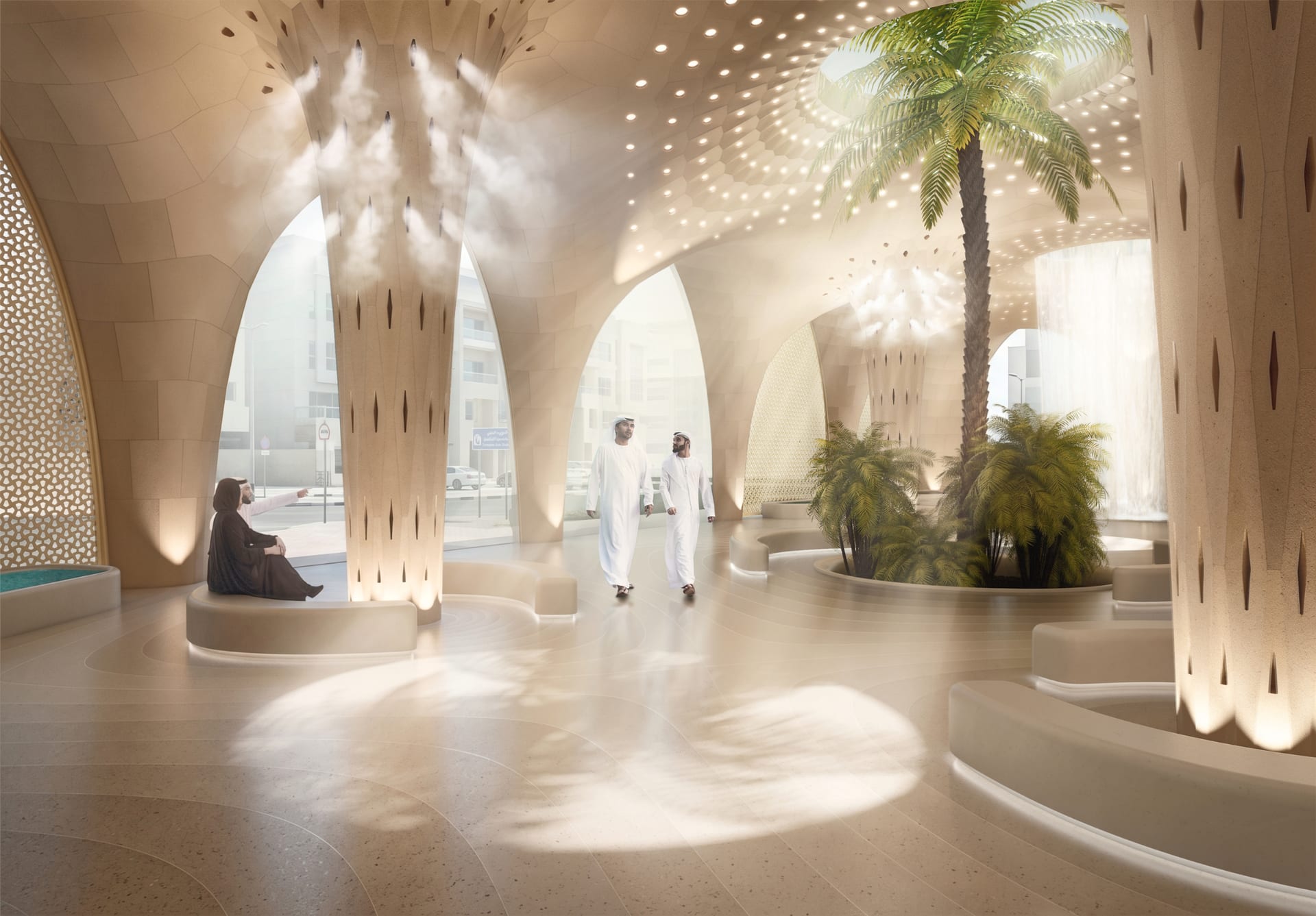
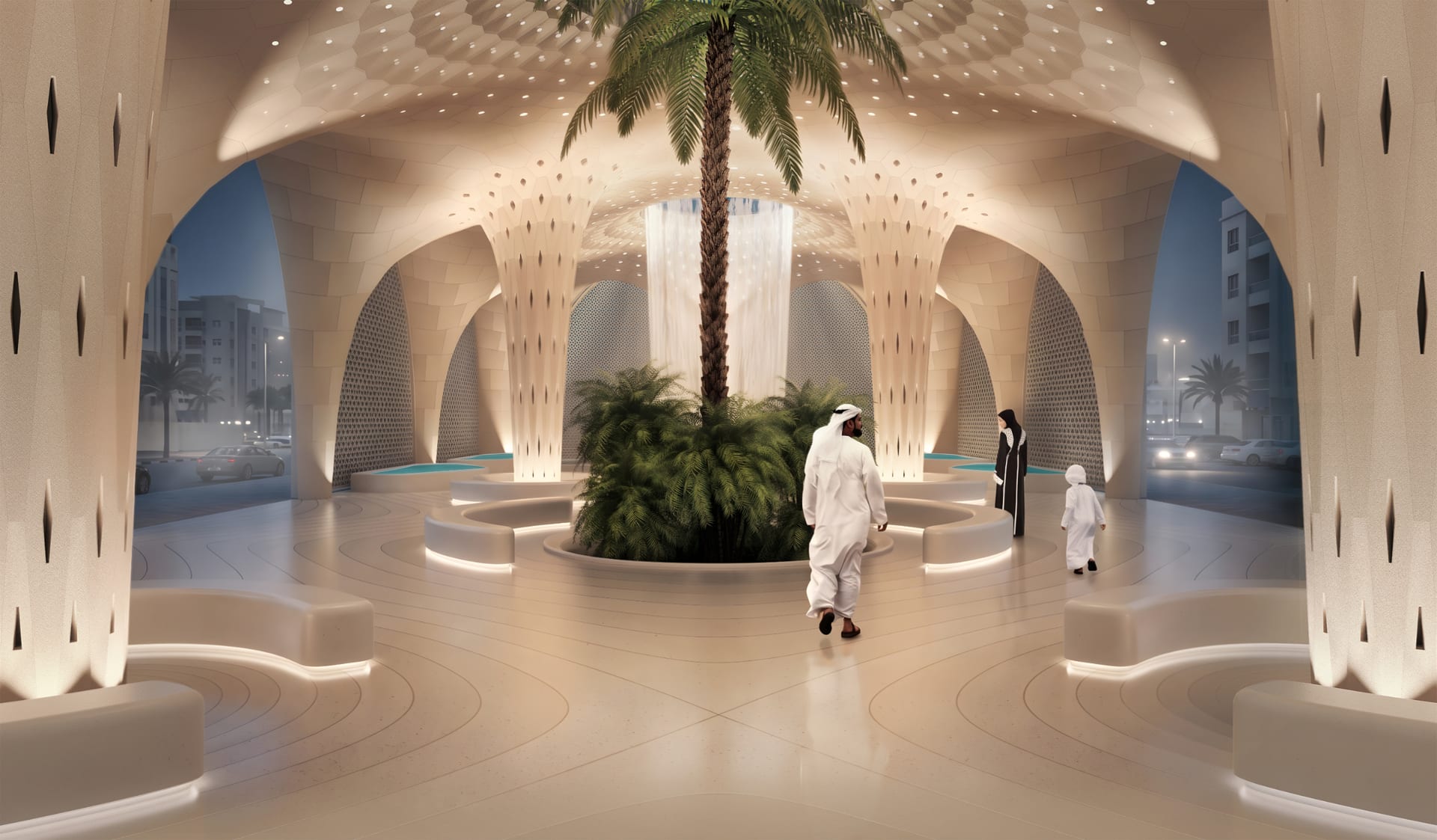
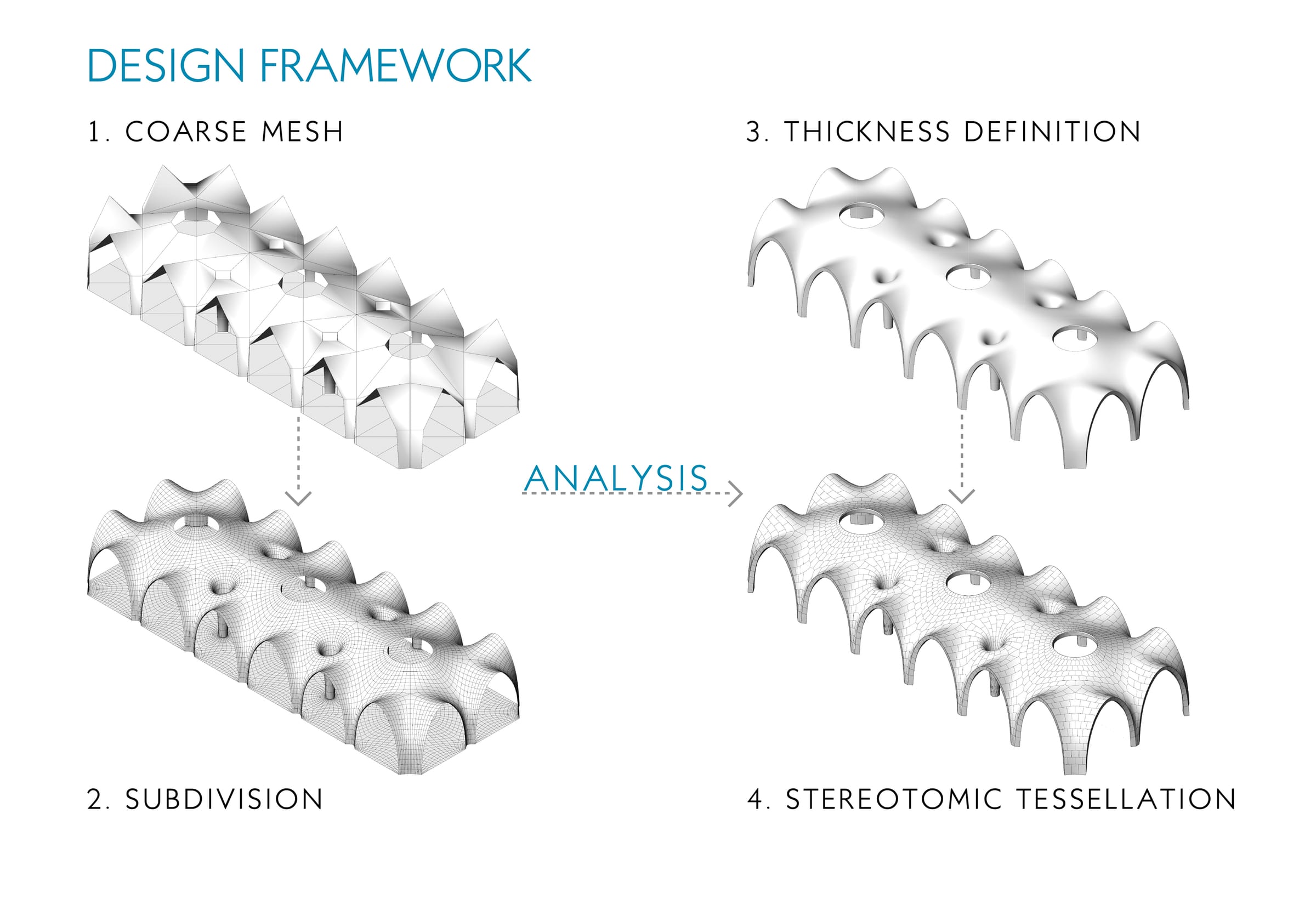
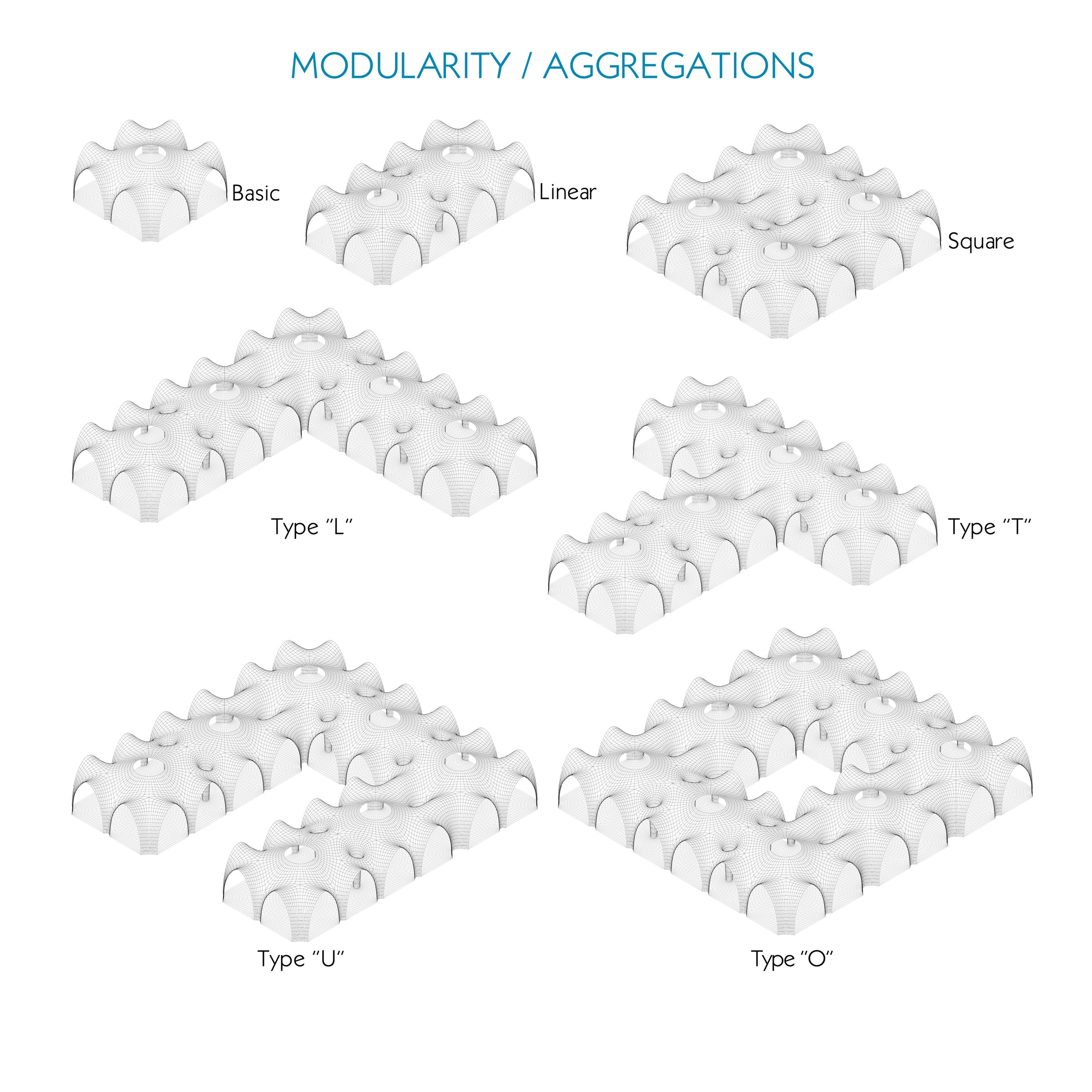
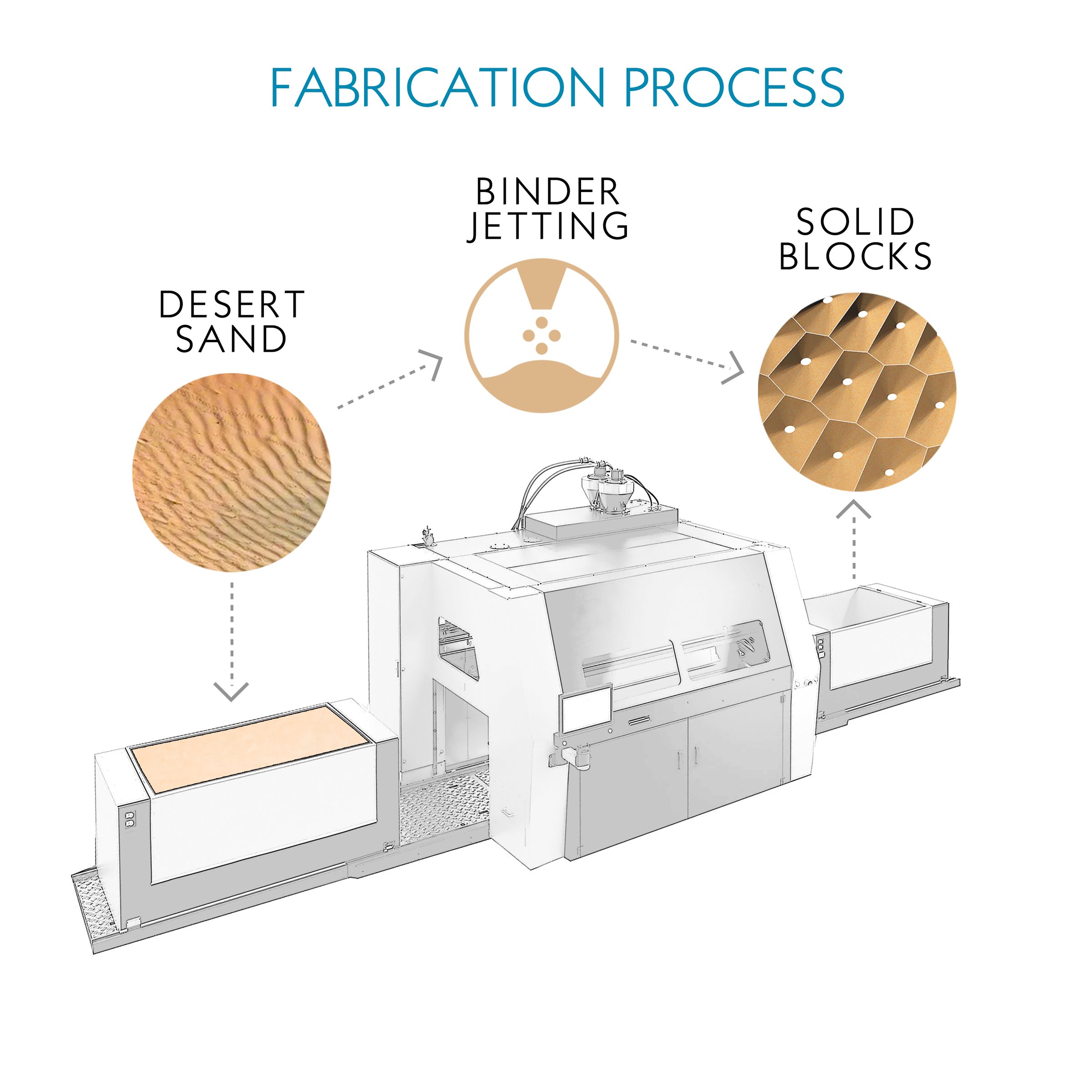
The underlying idea is straightforward: to lift, as it were, a thick layer of sand to create artificial dunes beneath which an urban oasis takes shape. The roof is a complex vault (arches, central columns, three large oculi) composed of stereotomic blocks 3D-printed using binder jetting technology, which solidifies local desert sand with a binder. The 55-centimetre thickness gives the vault high thermal inertia: the mass slows the transfer of heat from the outer to the inner surface by hours, keeping the space below cool even on the hottest days.
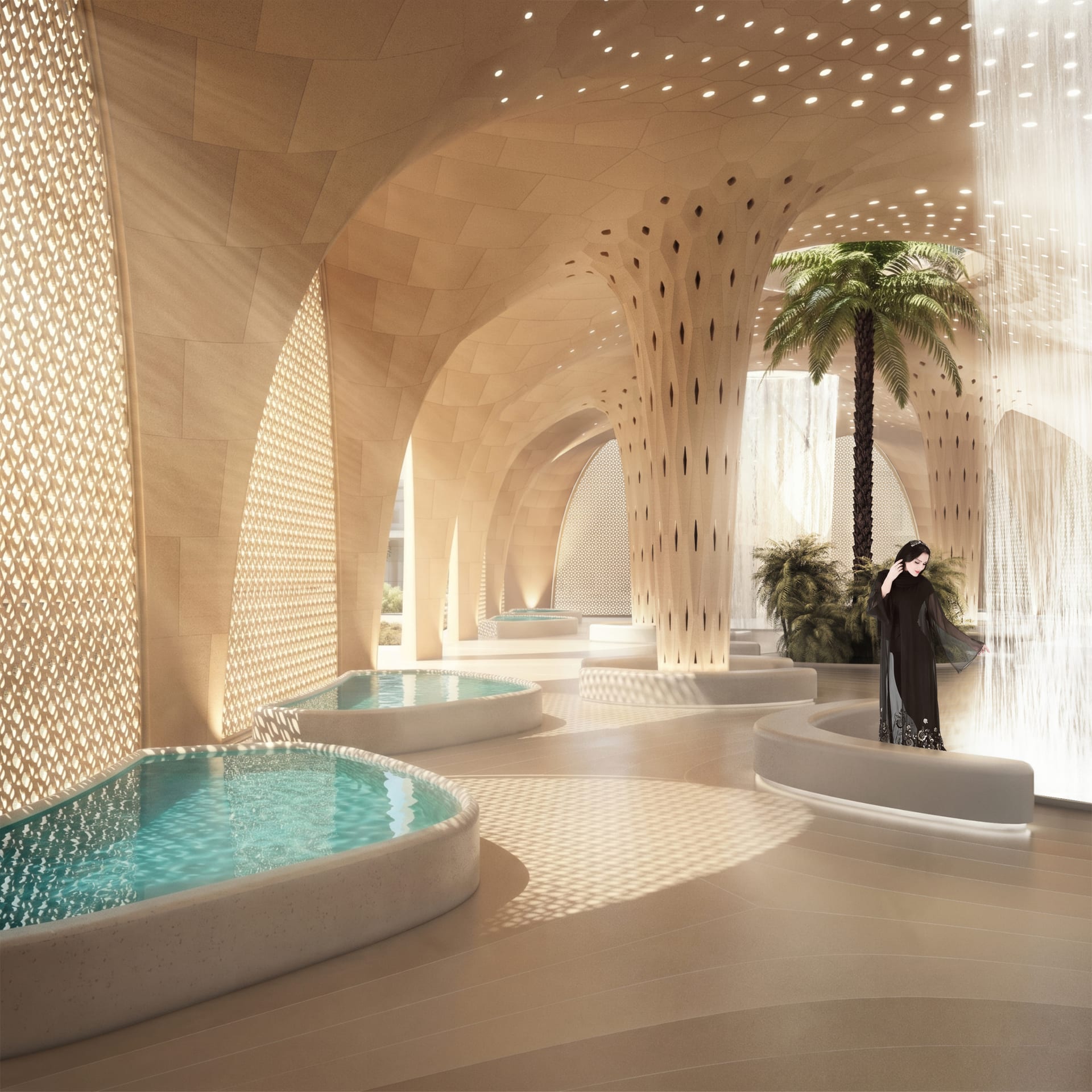
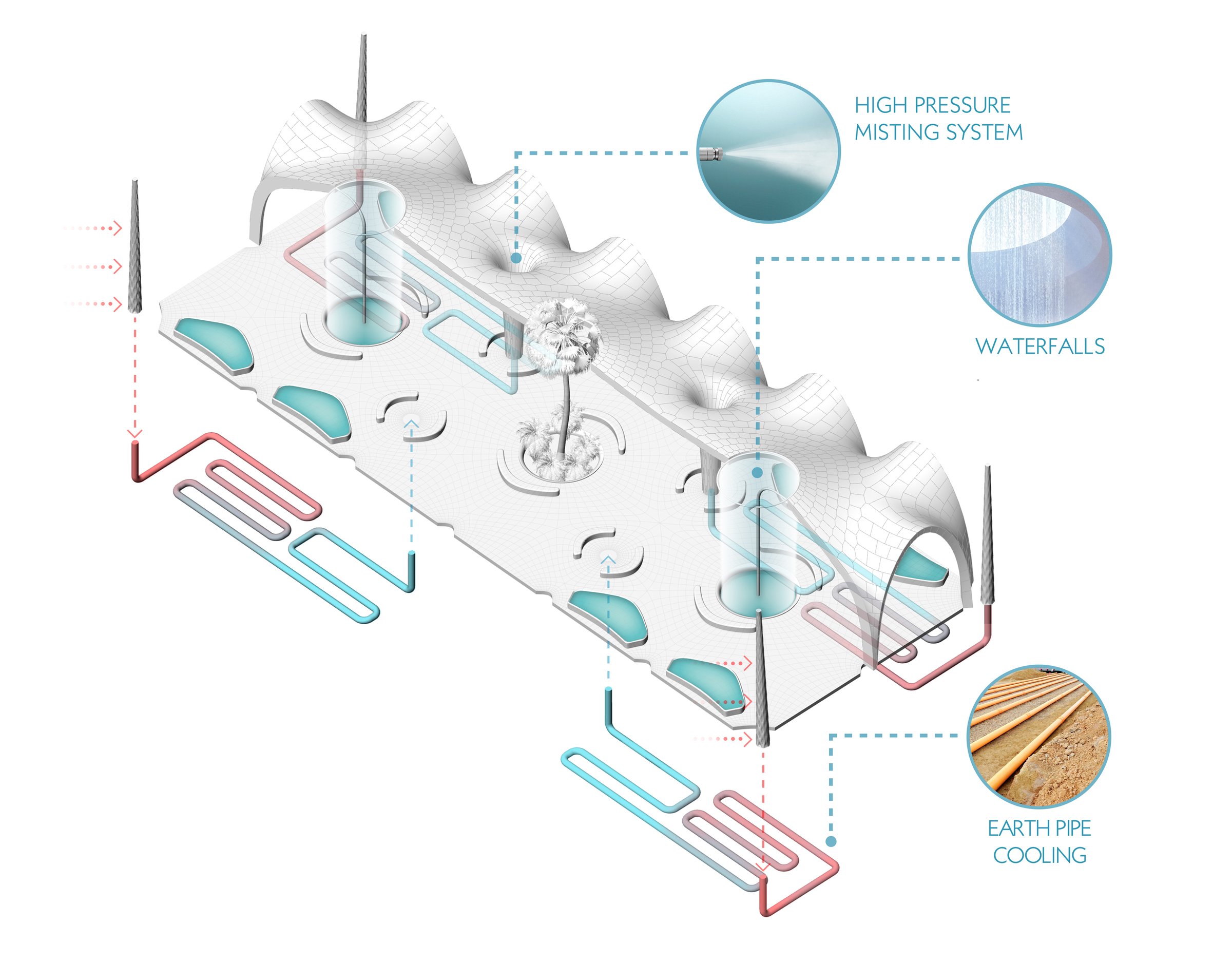
Beneath the vault, an integrated passive cooling system amplifies the roof’s effect. Geometric grilles inspired by traditional mashrabiyya accelerate the flow of incoming winds via the Venturi effect and direct them over water basins filled with cool water. Four towers capture the prevailing winds and channel them into earth-pipe heat exchangers buried three metres deep, where the air releases heat to the ground before rising back up through the central perforated columns. Two cascading fountains and a group of palm trees (free to grow through the central oculus until they rise above the dome) complete the microclimate with evaporative cooling. The only active system is a high-pressure misting system that lowers the perceived temperature by up to 20°C.
The result, measured using UTCI simulations, is a 1,000 m² public space that reaches a perceived temperature of 26°C in August, comfortable for an outdoor environment in Abu Dhabi’s desert climate. The project received an honorable mention at the Cool Abu Dhabi Challenge, out of over 300 entries from 62 countries, and has been featured on various specialist websites, including 3D Printing Industry, 3DNative and Parametric Architecture.
Renders & Photos
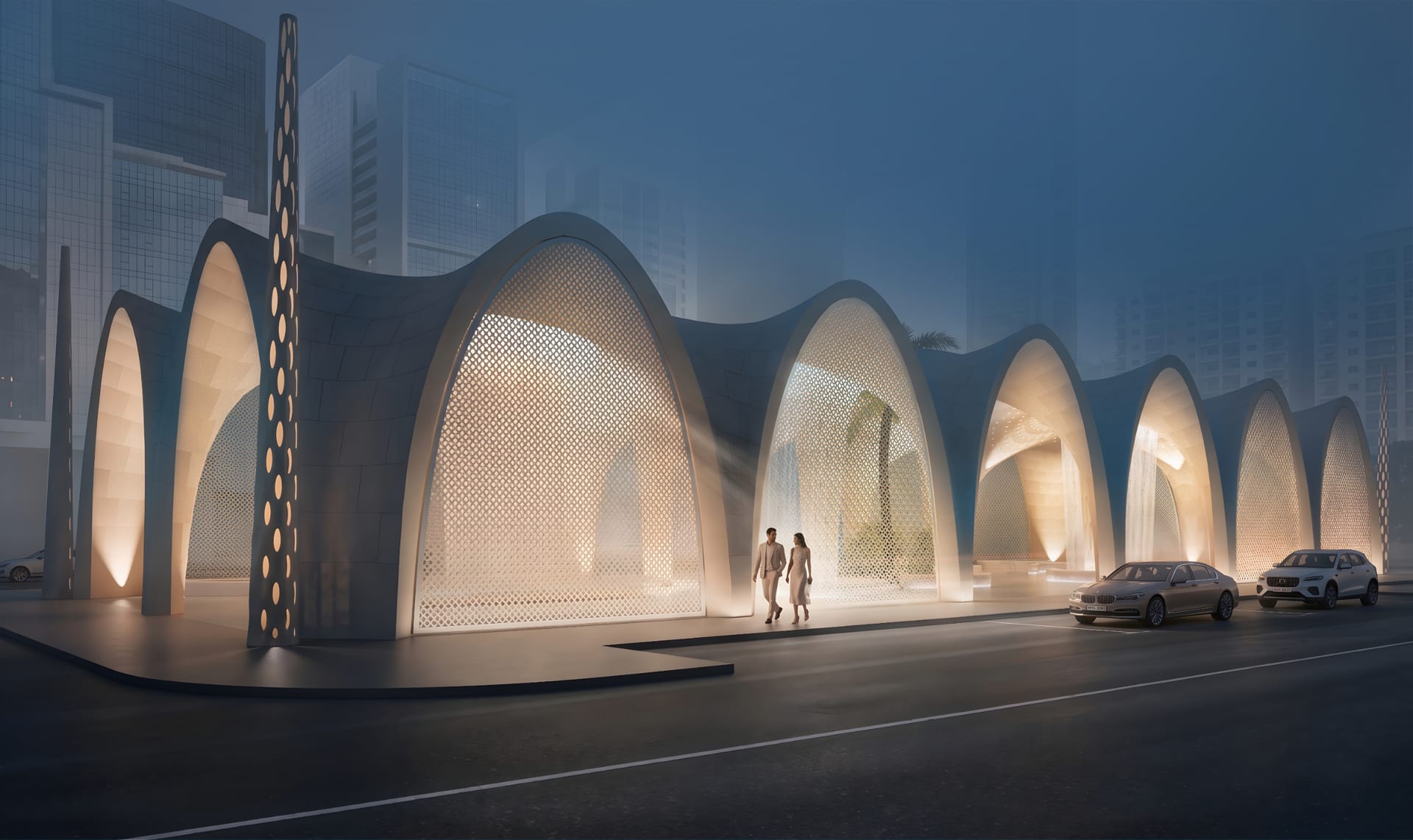
Technical specifications
- Location
- Abu Dhabi, United Arab Emirates
- Year
- 2020
- Client
- Department of Municipalities and Transport, Abu Dhabi
- Typology
- Urban coverage
- Area
- 1,000 m²
- Status
- Award-winning concept, Honorable Mention
- Designers
- Maurizio Barberio, Micaela Colella (Barberio Colella Architetti) with Angelo Figliola (design and environmental analysis)
- Awards
- Honorable Mention, Cool Abu Dhabi Challenge. Golden Trezzini Awards, Special Mention (2021)
- Publications
- 3D Printing Industry, 3DNative, Parametric Architecture
- Main materials
- 3D-printed desert sand (binder jetting), heat-reflective cool pigments, water
Technical drawings
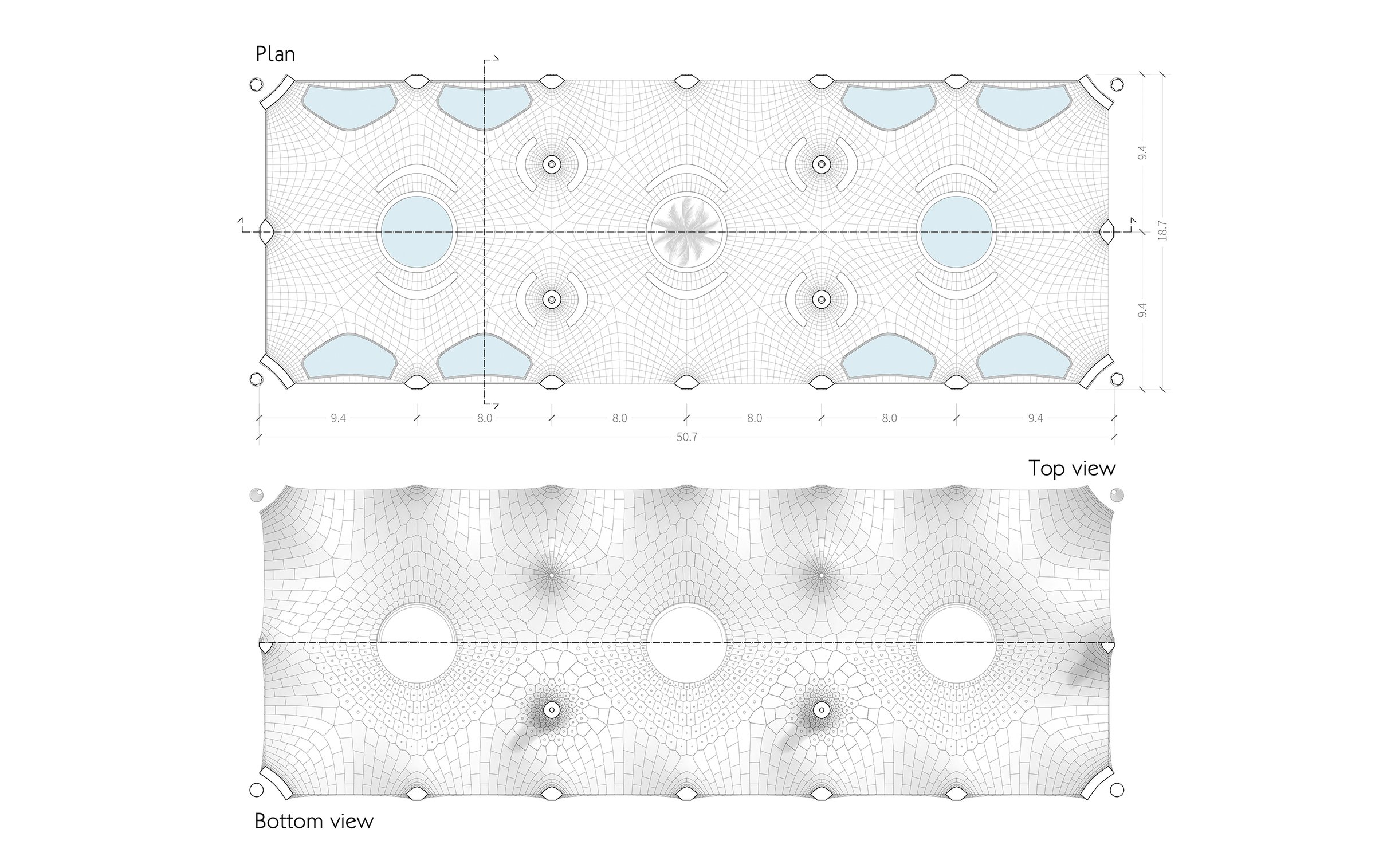
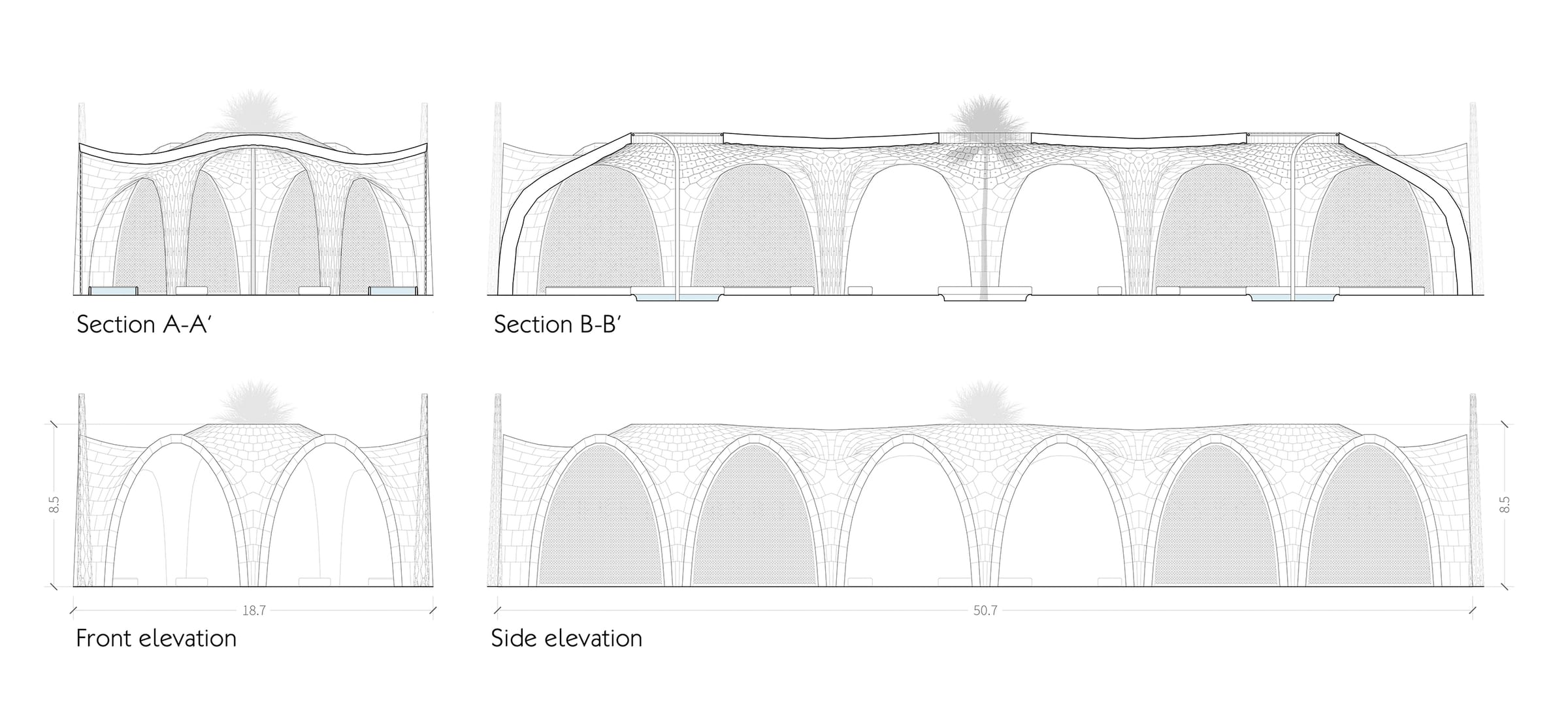
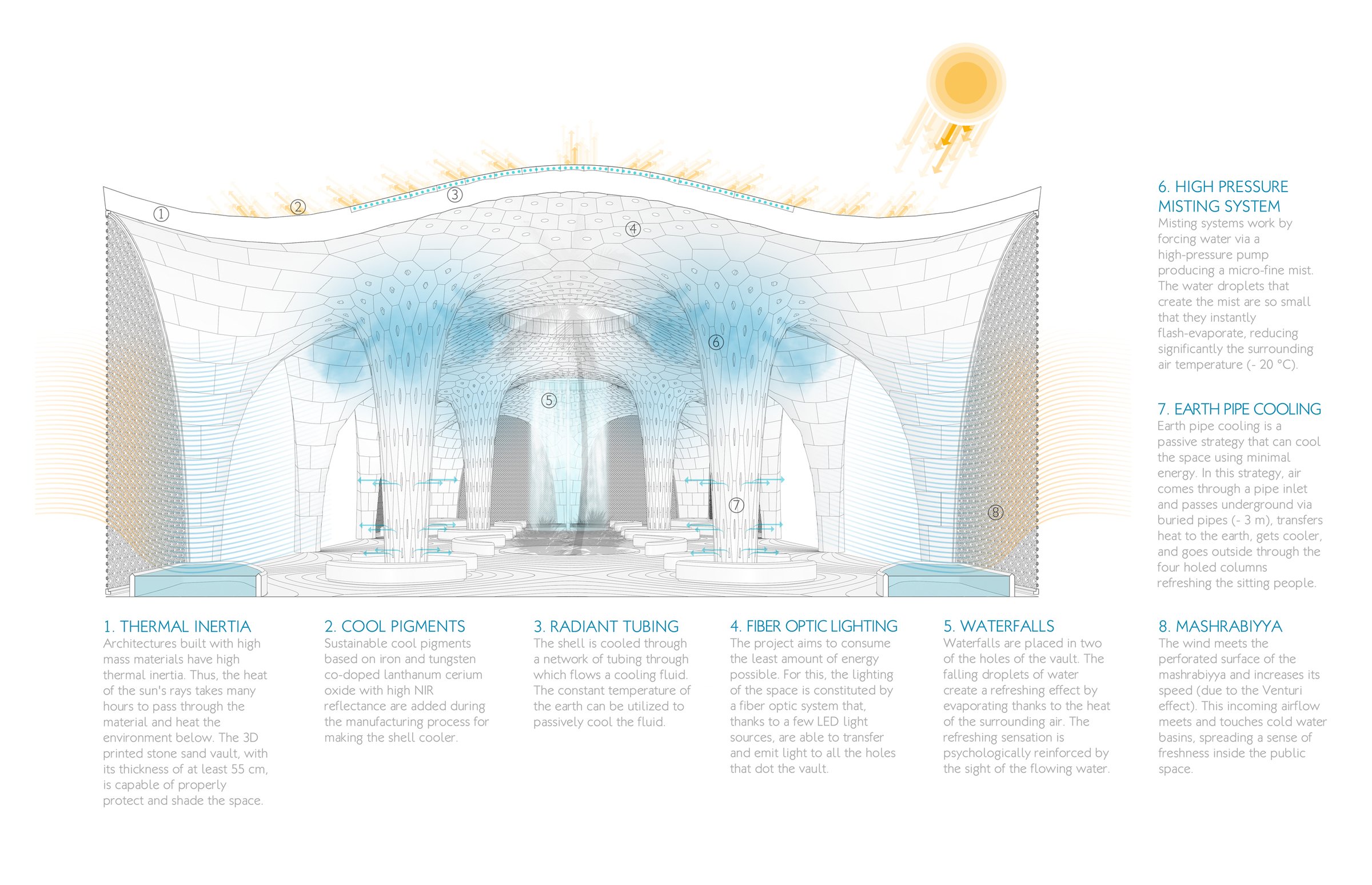
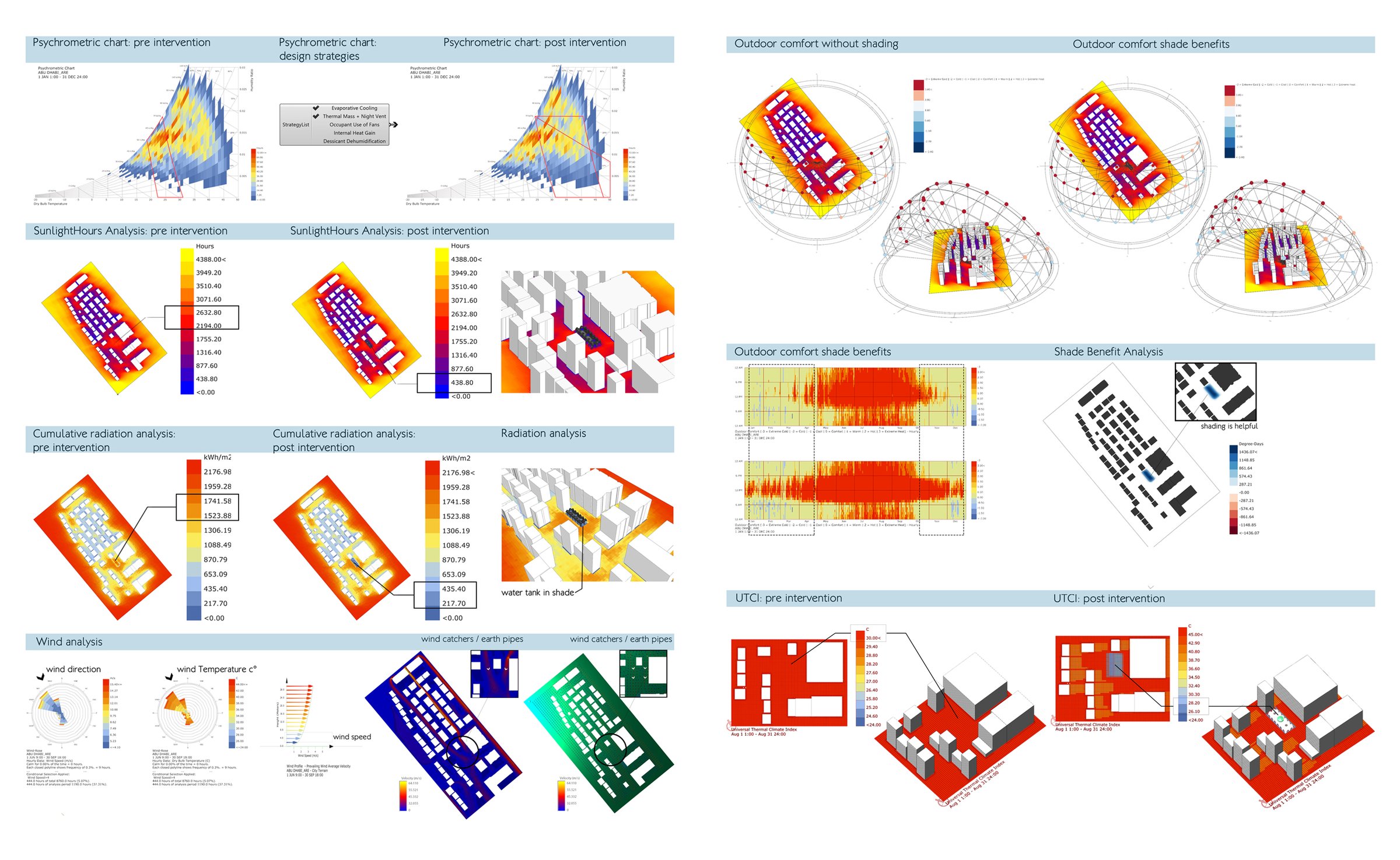
How can a public space be cooled in an extreme climate without relying on active climate control?
In desert climates such as Abu Dhabi, summer temperatures regularly exceed 45°C, rendering public spaces unusable for much of the year. Conventional solutions (active climate control running at full capacity) are energy-intensive and unsustainable on a large scale. Urban Dunes demonstrates an alternative approach: reinterpreting traditional Arab architectural elements (massive vaults, mashrabiyya, water basins, wind towers) through digital fabrication and 3D printing, creating a roof that harnesses the thermal mass of the sand, natural ventilation and evaporative cooling to achieve comfortable outdoor conditions with minimal energy consumption.
Frequently Asked Questions
Do you have a project that involves additive manufacturing and computational design?
If you are exploring 3D printing for architectural components or complex structures, we can assess the feasibility together. BCA has the research background and design expertise to translate a parametric concept into a viable design.
Send us your brief[Send your brief]
Related projects
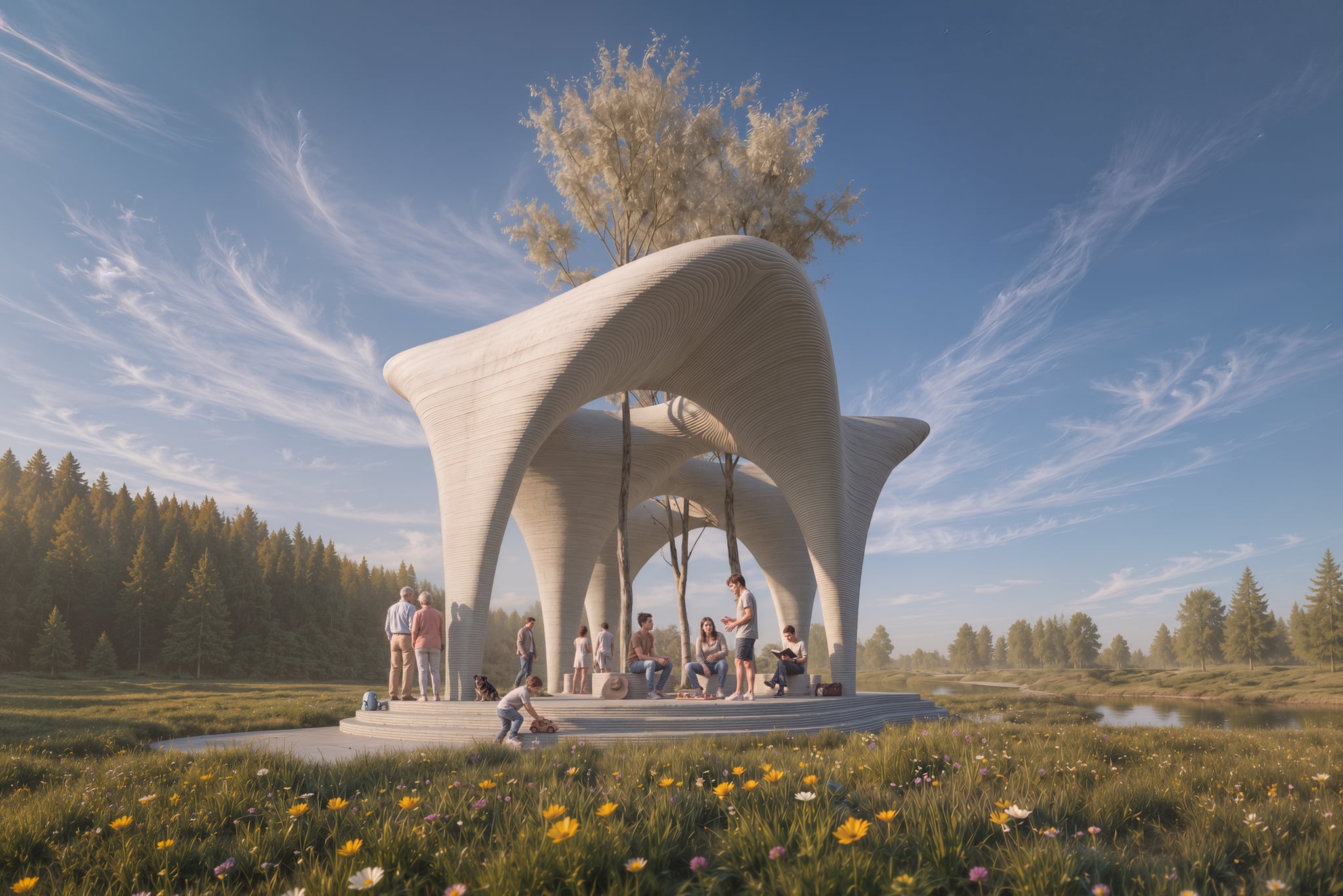
3D Printed Design
AETHERIUS
An organic structure in which additive manufacturing transforms waste from the stone industry into architecture for the city.
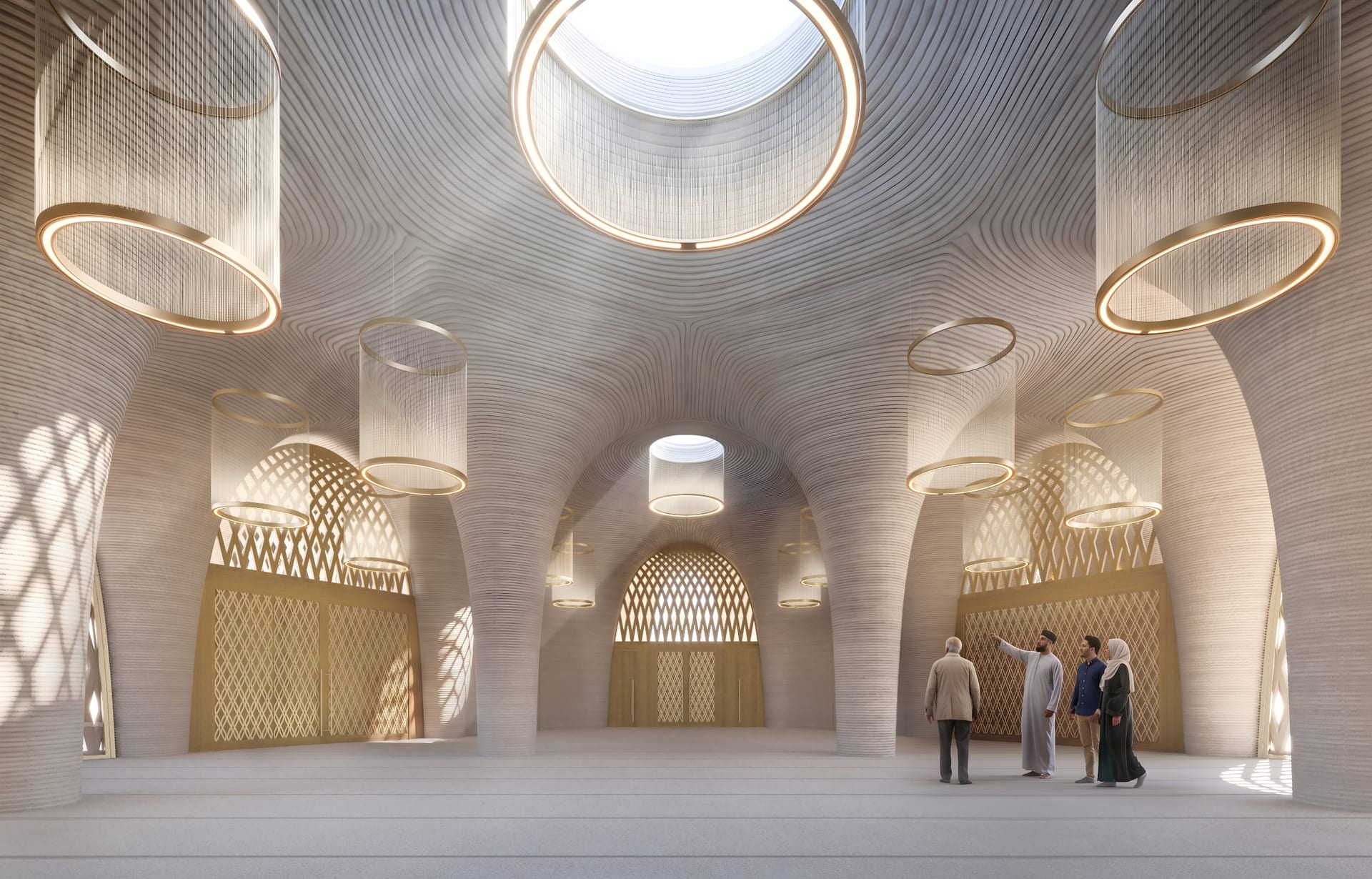
Sustainable Design
3D-PRINTED MOSQUE
A place of worship where additive manufacturing makes it possible to create complex vaulted surfaces at a sustainable cost, reinterpreting Islamic architecture using contemporary techniques

3D Printed Design
ADDITIVE STEREOTOMY
A new construction system that combines traditional stereotomy with additive manufacturing to create optimised vaulted spaces.