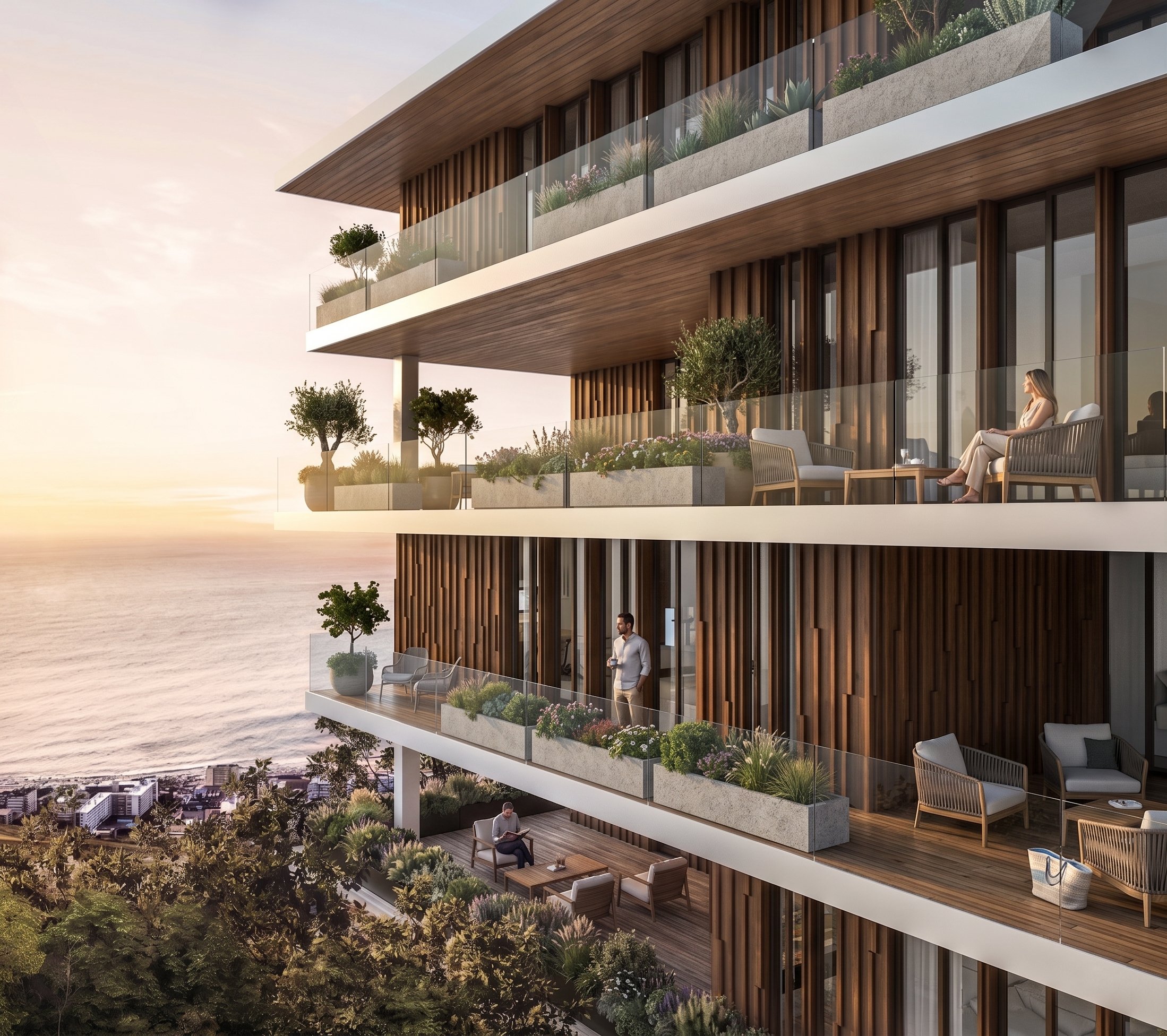
Unit 27 – Prefabricated luxury micro-flats for the cities of the future
A 27-square-metre modular housing system that frees up outdoor space and re-establishes direct contact with the urban and natural landscape.
2018 · Modular housing · Sustainable Design
Living in 27 square metres without compromising on quality: a modular unit for the cities of tomorrow
Over the next hundred years, cities will become increasingly dense, leading to two converging problems: homes will become ever smaller and open space (both private and public) will shrink until it disappears. Unit 27 was created to provide a design solution to both issues, overturning the logic of compact living: not squeezing life into fewer square metres, but radically rethinking what is needed inside and what can remain outside, restoring space to the landscape and to human relationships.
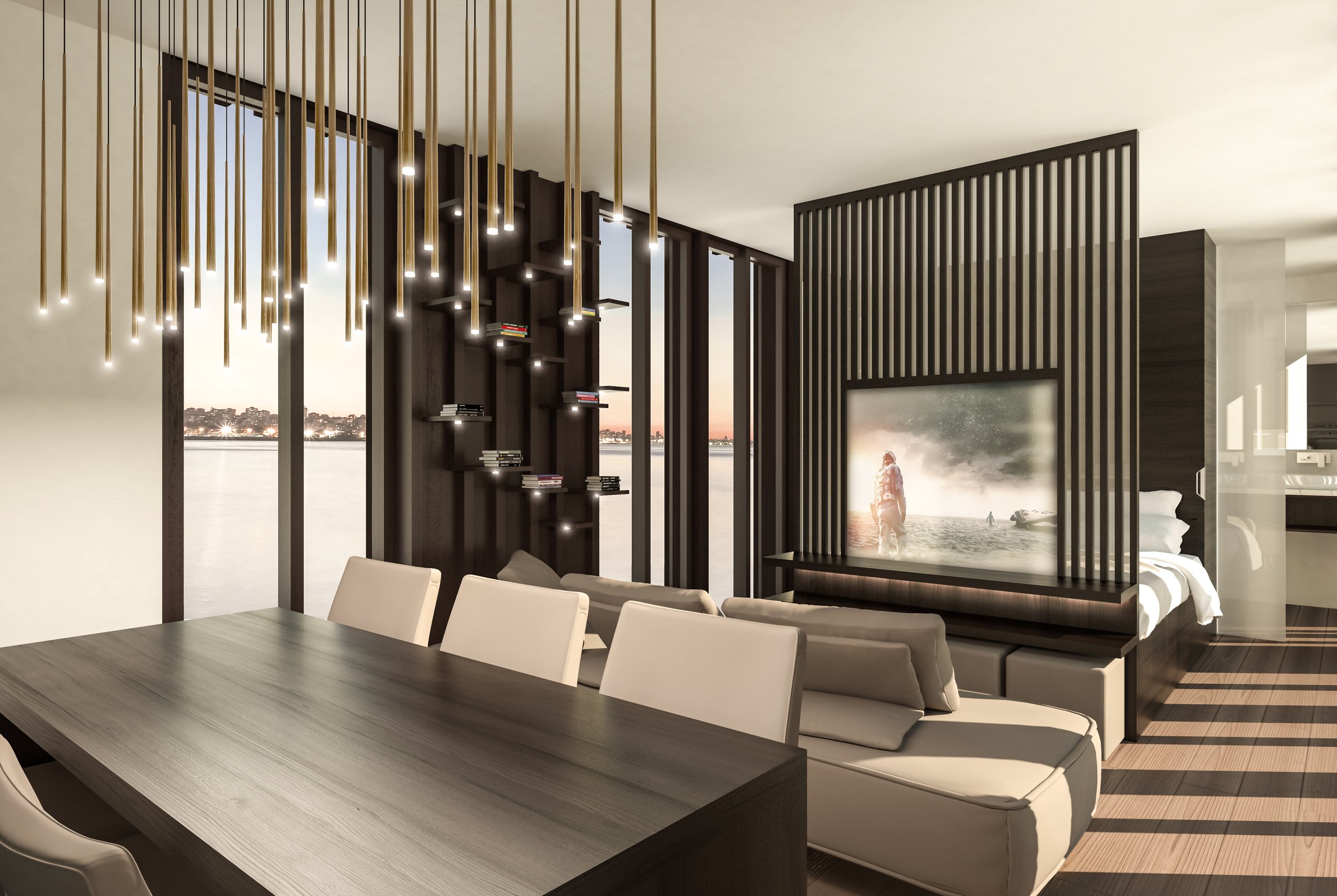
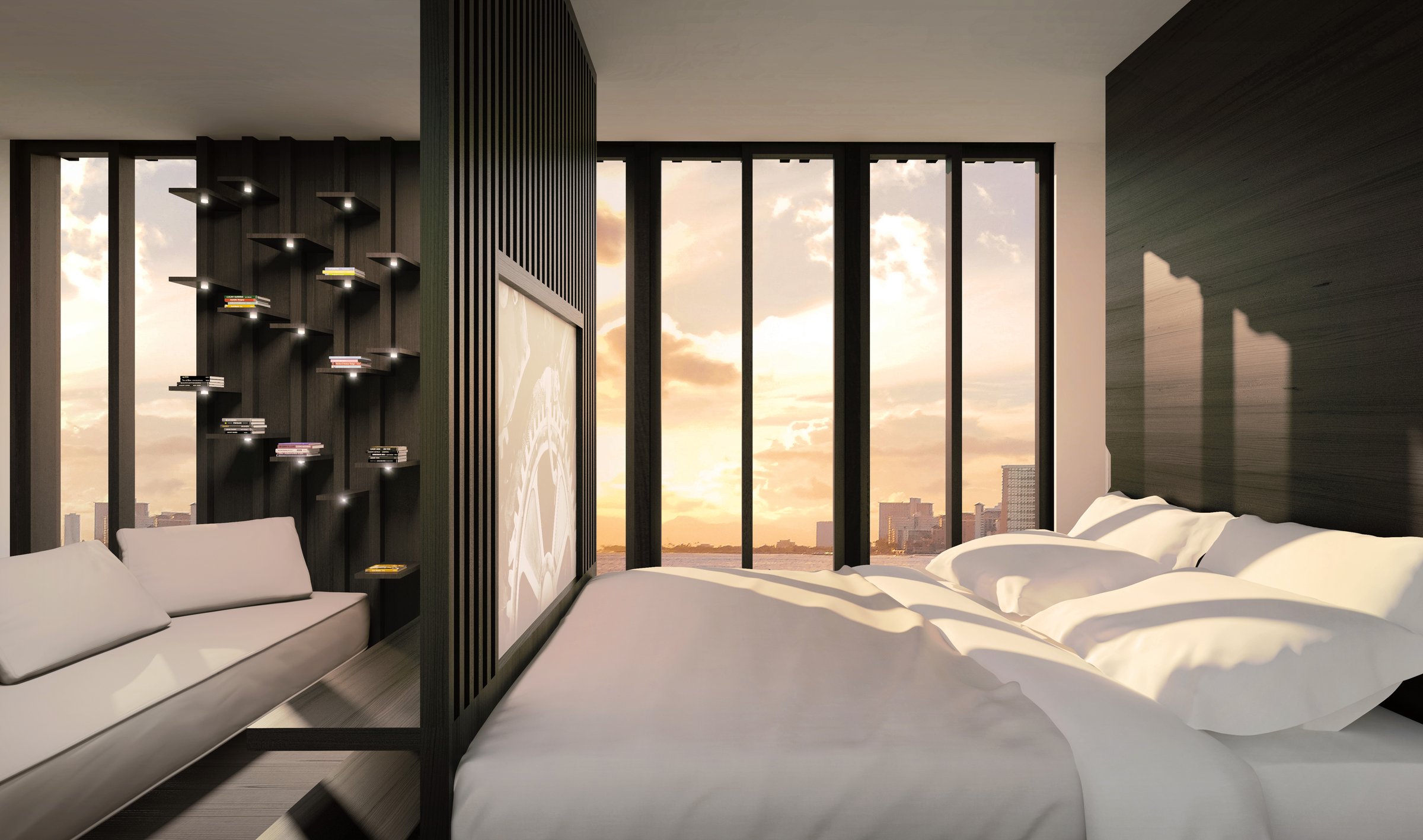
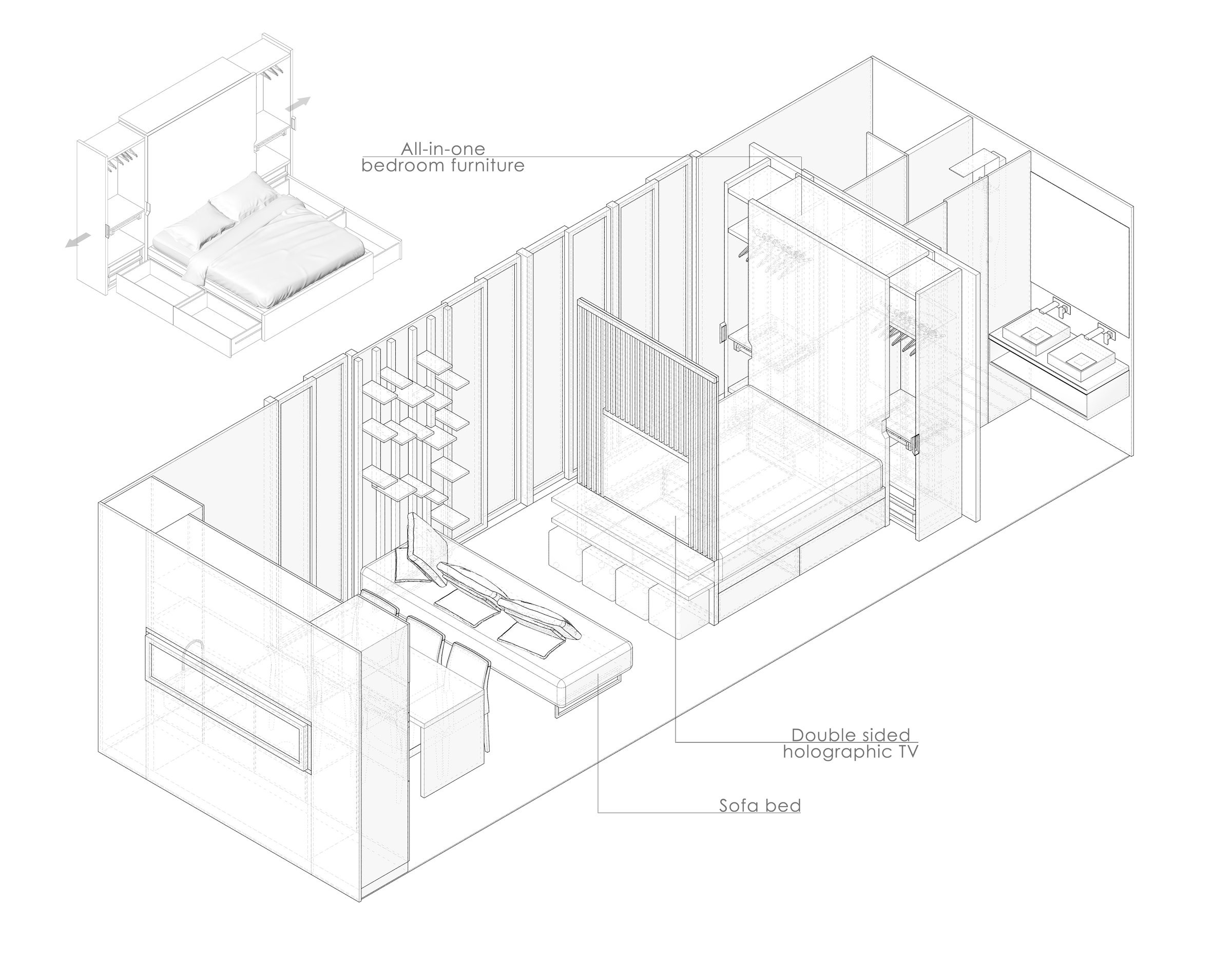
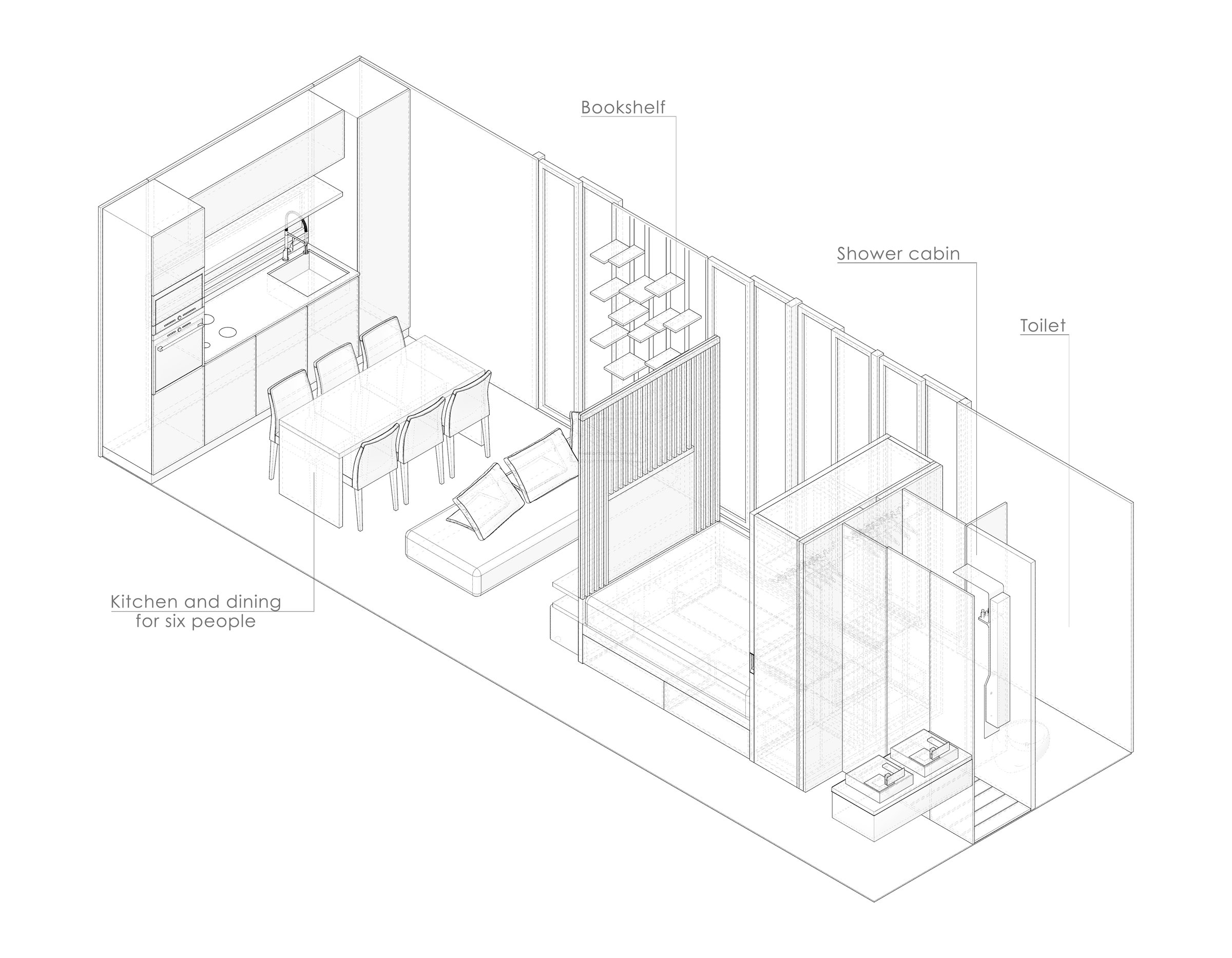
The housing unit measures 27 square metres and contains everything necessary for a full daily life: a kitchen with a dining table for six people, a multifunctional sofa-bed, a bedroom with an all-in-one unit featuring four large drawers under the bed and a pull-out side wardrobe concealed within the headboard, and a full bathroom with a separate toilet and double shower. The separation between the living and sleeping areas is provided by a screen wall that incorporates a double-sided holographic television, visible from both sides of the home. The space does not feel cramped thanks to two specific design choices: the open-plan layout without rigid partitions and the large windows that open up the view of the surrounding landscape.
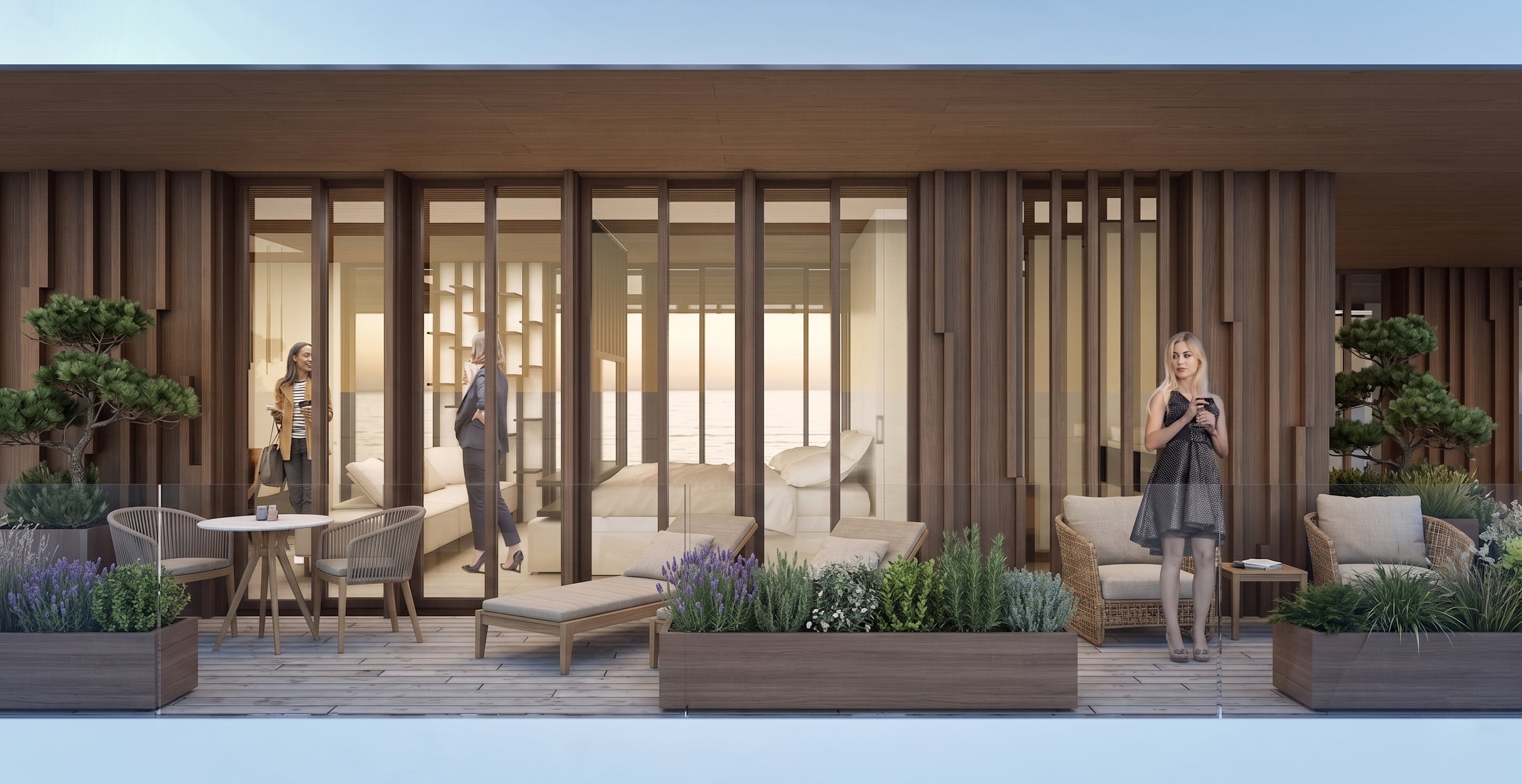
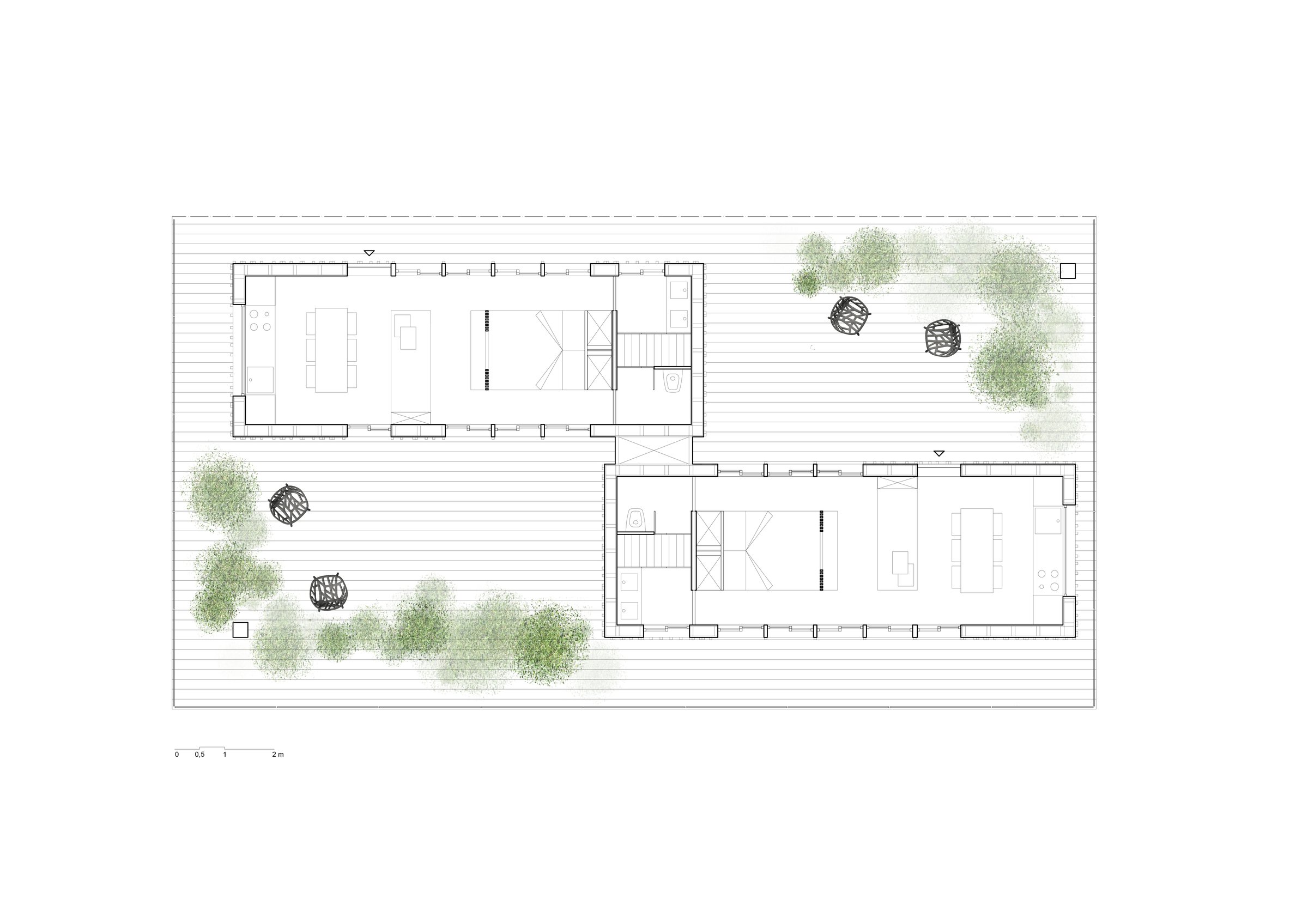
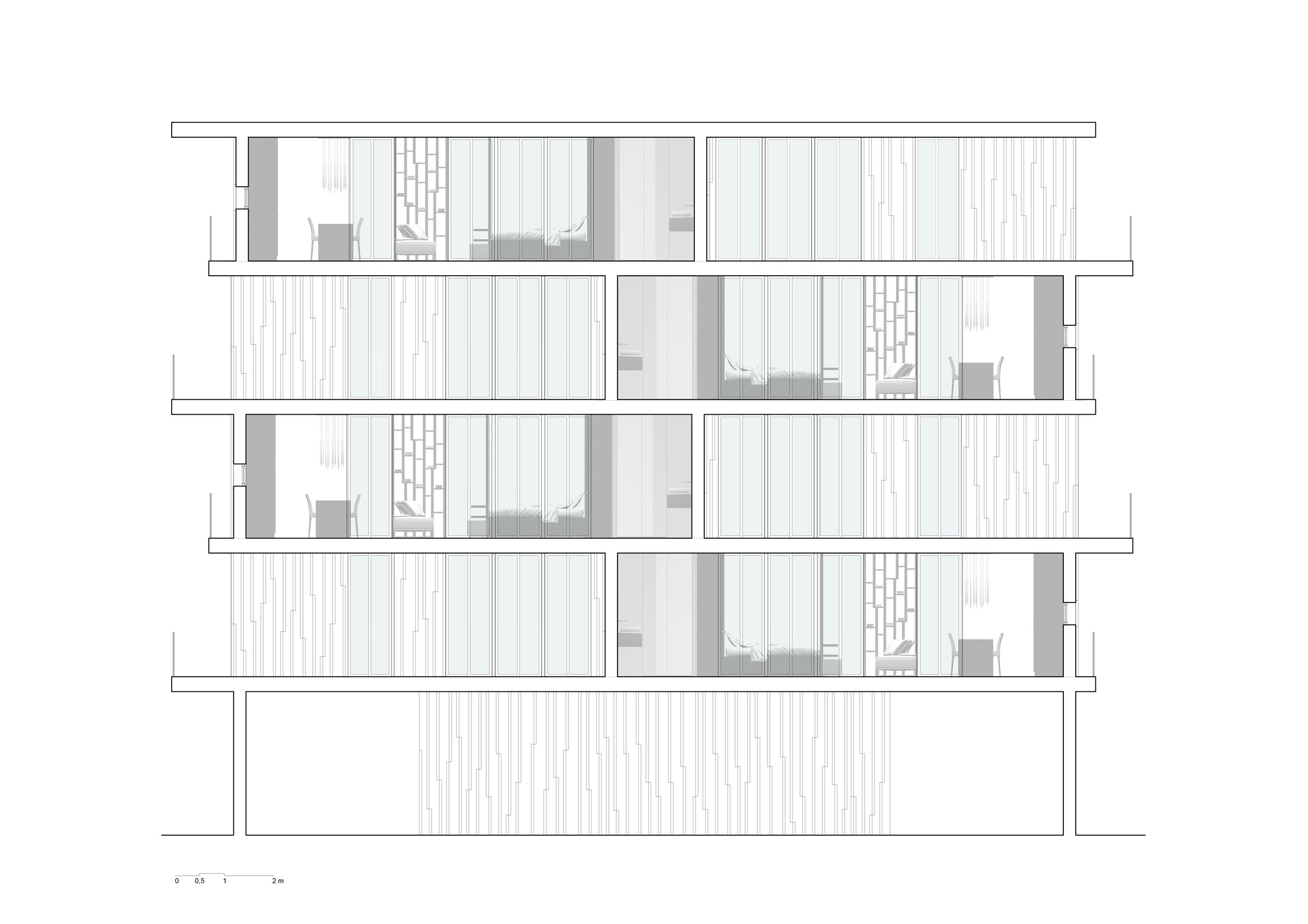
The single module is designed to be freely stacked vertically within a steel frame structure, featuring large balconies and terraces. The outdoor space (both private and communal) can be freely organised by residents with vegetation and furnishings, to facilitate social interaction and reconnect with nature and the urban landscape in temperate climates. Thanks to its small footprint, Unit 27 can be installed in residual spaces within urban areas; larger clusters create built ecosystems where compact, well-organised dwellings, pleasant outdoor spaces and vegetation strike a balance.
The ideal users are young couples or singles who cannot afford larger, more expensive accommodation but do not wish to compromise on high-quality living space in an urban context. The prefabrication of the module allows for reduced construction times and rigorous quality control of components, whilst the system’s modularity enables the project to be scaled from a single unit to a garden block of flats. Unit 27 is not a compromise on the quality of space: it is a design gamble on the idea that living in fewer square metres can mean living better, if the design frees up space for the landscape and relationships.
Renders & Photos
Technical specifications
- Year
- 2018
- Client
- Project research
- Typology
- Modular housing, prefabricated micro-flats
- Area
- 27 square metres per unit
- Status
- Concept – design research
- Designers
- Barberio Colella Architects
- Publications
- Rethinking The Future, re-thinkingthefuture.com/landscape/6305-unit-27-by-barberio-colella-architetti
Technical drawings
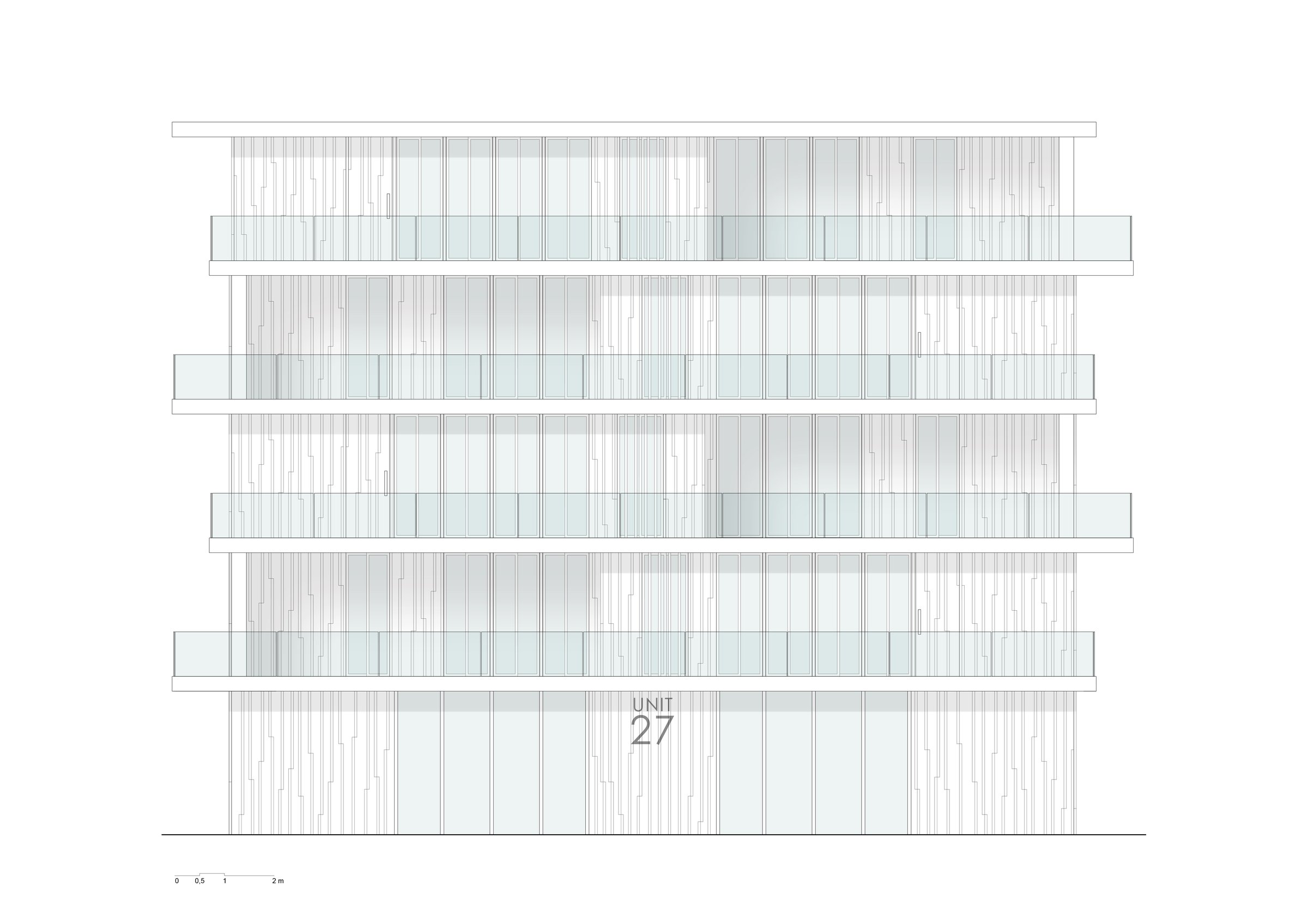
How do you design a sustainable housing unit when space is limited and urban density is increasing?
Urban growth demands ever-increasing density, but the current response (mini-flats assembled without any environmental strategy) results in housing with energy consumption disproportionate to its floor area, no effective natural ventilation and zero connection to the outside world. The problem is not merely aesthetic: it is climatic and social. Unit 27 demonstrates that modular prefabrication and bioclimatic design can coexist even within 27 square metres. The open-plan layout with large windows maximises passive ventilation and natural light, the green terraces act as a thermal buffer and a space for socialising, and the steel frame allows for the disassembly and reuse of components. Here, sustainability is not just a label: it is the principle that shapes the design.
Frequently Asked Questions
Are you considering a sustainable residential project on a modular or neighbourhood scale?
Unit 27 demonstrates that sustainability and quality of living can coexist even in compact spaces. If your project requires an integrated approach (prefabrication, bioclimatic design, smart densification) we can work together to find the most suitable solution.
Let’s talk about your projectRelated projects
Sustainable Design
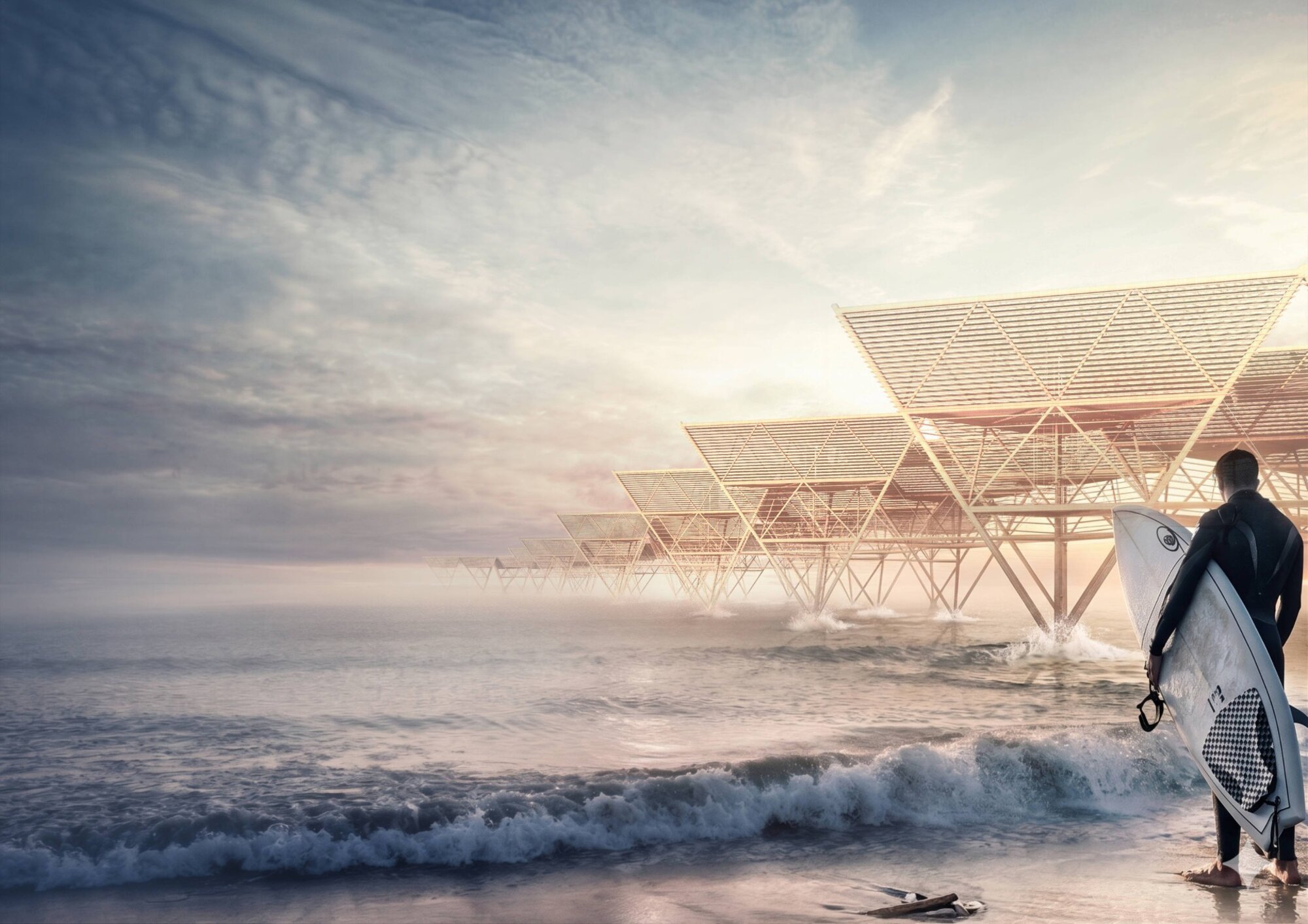
LANTERNS SEA VILLAGE
One hundred bamboo tetrahedrons suspended over the sea: a reversible village that leaves no trace on one of the Mediterranean’s most fragile coastal landscapes.
Sustainable Design
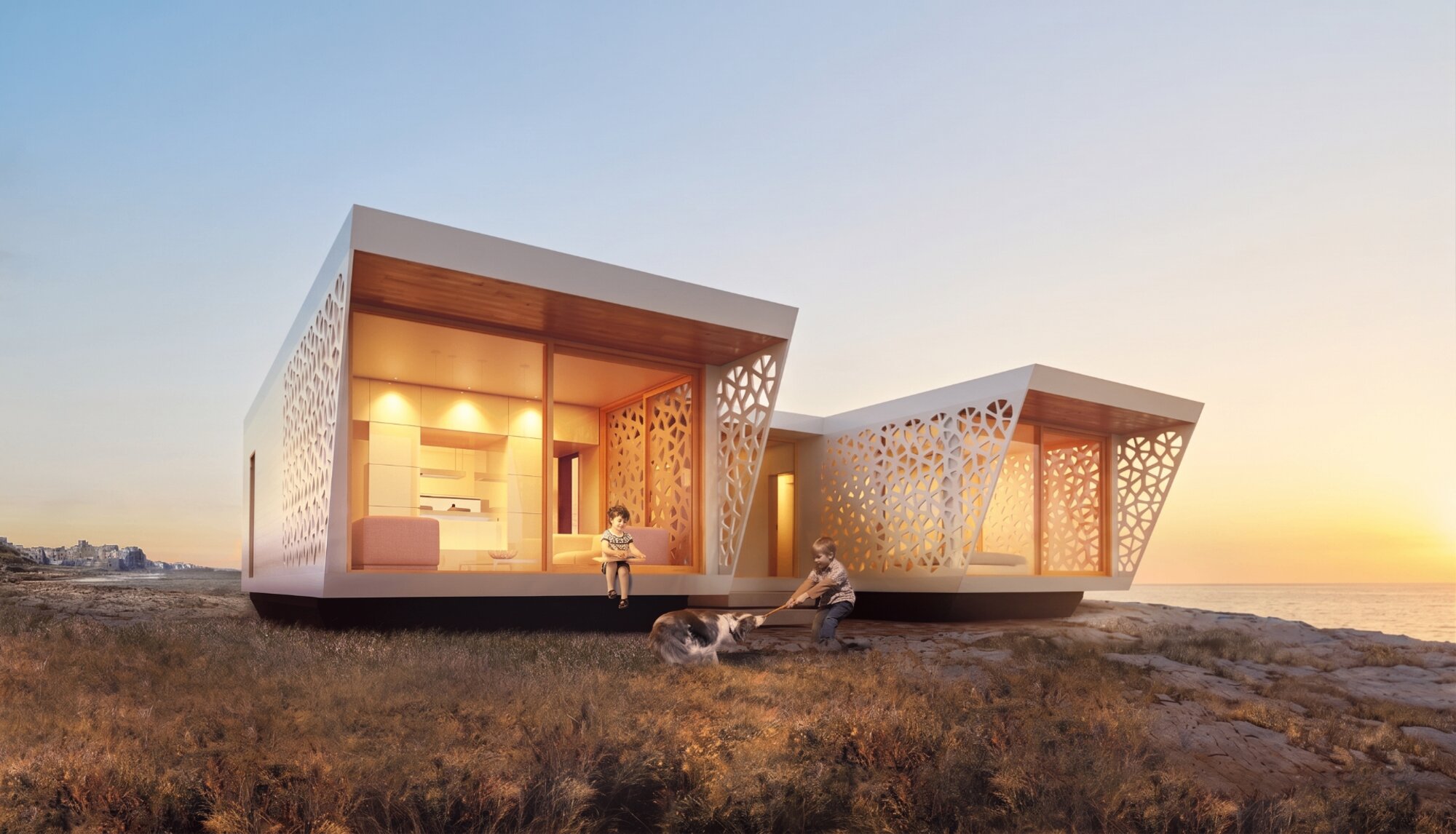
UNBOXED
A fully prefabricated, demountable and 100% recyclable X-lam house, designed to demonstrate that timber construction is a viable alternative to brick and mortar in southern Italy.