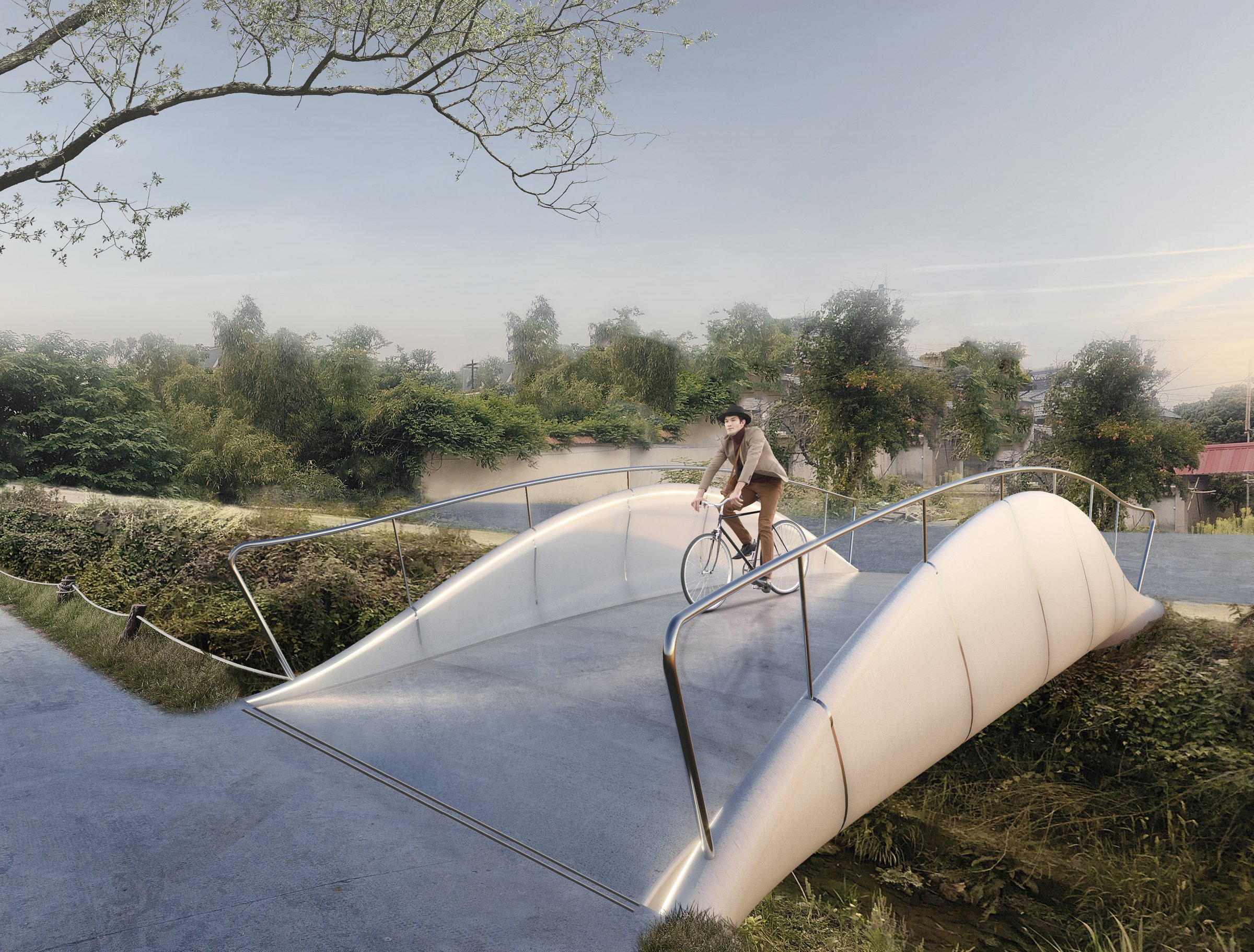
Flowin' Footbridge – Parametric low-carbon concrete pedestrian bridge in Moganshan, China
A 20 m² bridge made of modular, prestressed low-carbon concrete blocks with steel tie-rods (featuring a fluid, parametrically generated geometry) for the tourist district of Deqing County.
2023 · Moganshan Town, Deqing County (Zhejiang), China · Pedestrian bridge (Infrastructure) · Digital & Parametric Design + 3D Printed Design
A line flowing through the landscape
Moganshan, nestled in the hills of Zhejiang province just a few hours from Hangzhou, is one of the best-known mountain tourist areas in eastern China: bamboo forests, historic colonial residences, a sense of place built on tranquillity and the landscape. The Deqing County Cultural Tourism Development Group commissioned a new pedestrian bridge to integrate an experiential route into the fabric of the tourist district. The challenge was not only technical (supporting pedestrian traffic over a short span) but also one of identity: to design a contemporary structure that would engage with the landscape’s sensibility without reducing itself to a mere vernacular reference or an out-of-scale authorial gesture.
Barberio Colella Architetti, with Angelo Figliola and collaborator Zhenghui Chen, developed the project entirely using a parametric workflow, Rhinoceros and Grasshopper for modelling, Karamba for integrated structural analysis. The bridge’s form is not drawn out in plan and then verified: it emerges from the simulation of loads and constraints, so that every curve and every section is the direct result of structural behaviour. The result is a fluid, ‘flowing’ line (hence the name Flowin’ Footbridge) which crosses the site without imposing rigid directions on the surrounding landscape.
The construction system combines two materials with distinct roles. The deck and parapets are composed of modular blocks of eco-concrete: a low-carbon concrete that reduces CO₂ emissions compared to standard concrete thanks to the partial replacement of Portland cement with less energy-intensive binders and the use of recycled aggregates. The blocks are prefabricated with variable geometries (the sequence can be seen in the project’s Sections Progression) and are assembled in succession using post-tensioned steel tie rods that ensure the structural cohesion of the whole. The parapets, also made of steel, complete the formal composition and serve as a guardrail. The layering of discrete stone blocks and continuous steel tie rods is the principle on which BCA also worked in Hypar Gate (Troyes, 2016) and Additive Stereotomy: a contemporary stereotomic language, where the geometry is generated by an algorithm and translated into manufacturable modular components.
The project is currently unbuilt: presented as a poster at the joint ACADIA/CAADRIA 2023 conference, Flowin’ Footbridge documents the state of the art of BCA’s research into the integration of parametric design, computational structural analysis and low-impact materials applied to small-scale public infrastructure. For the Chinese tourism and cultural client, the bridge is an identity asset; for research, it is a publishable case study on the reduction of the carbon footprint of pedestrian infrastructure when the geometry itself becomes a tool for structural optimisation.
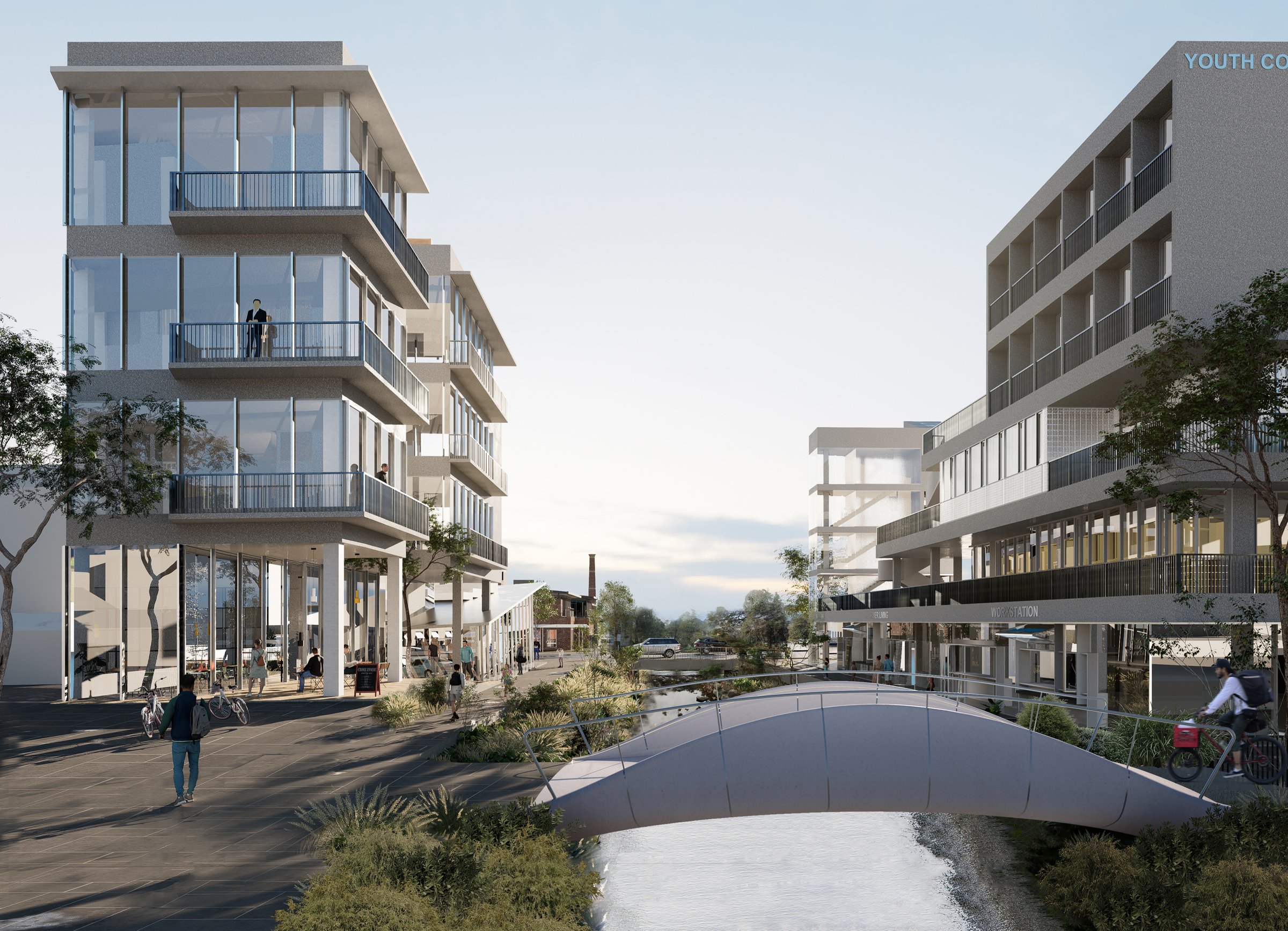
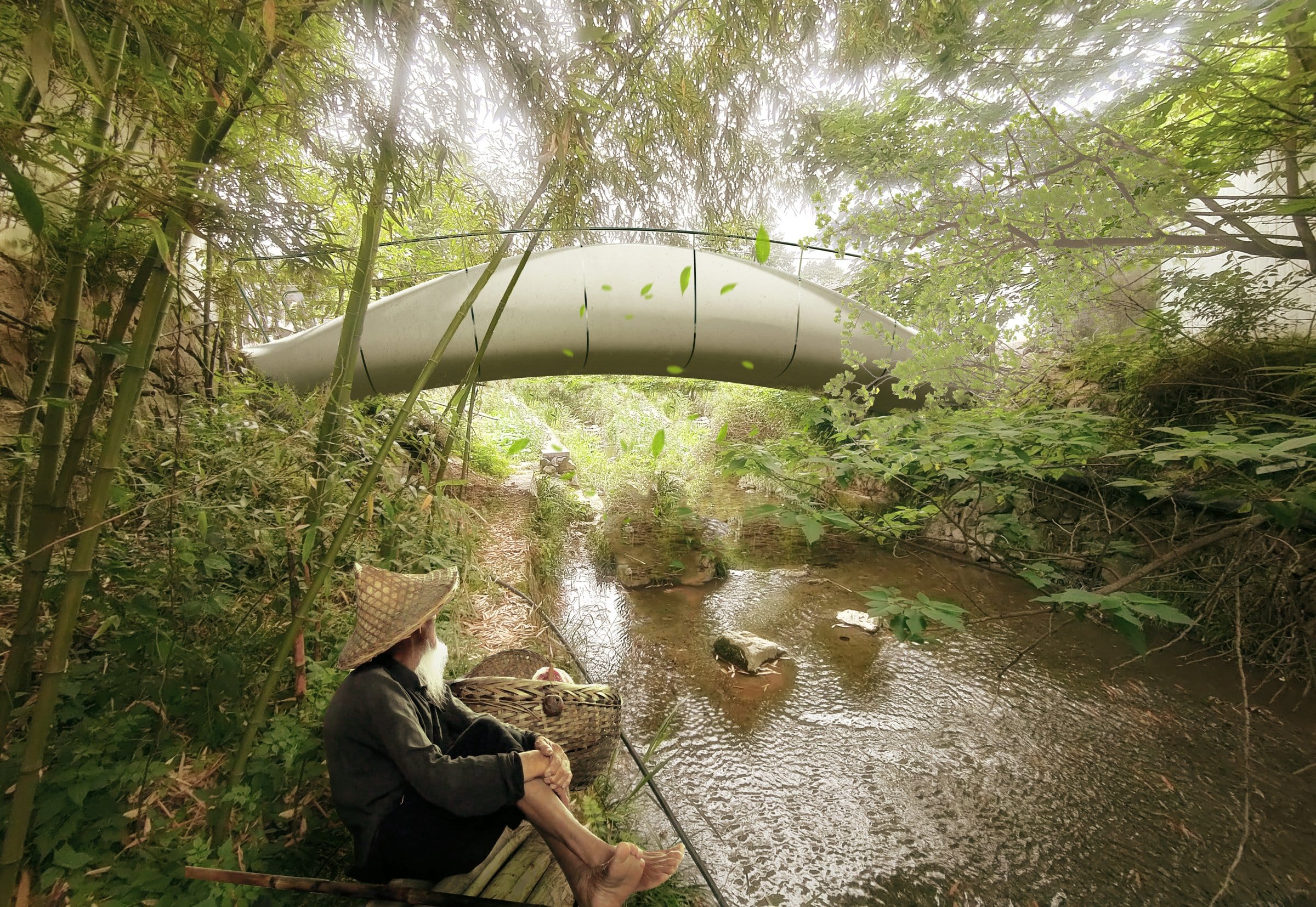
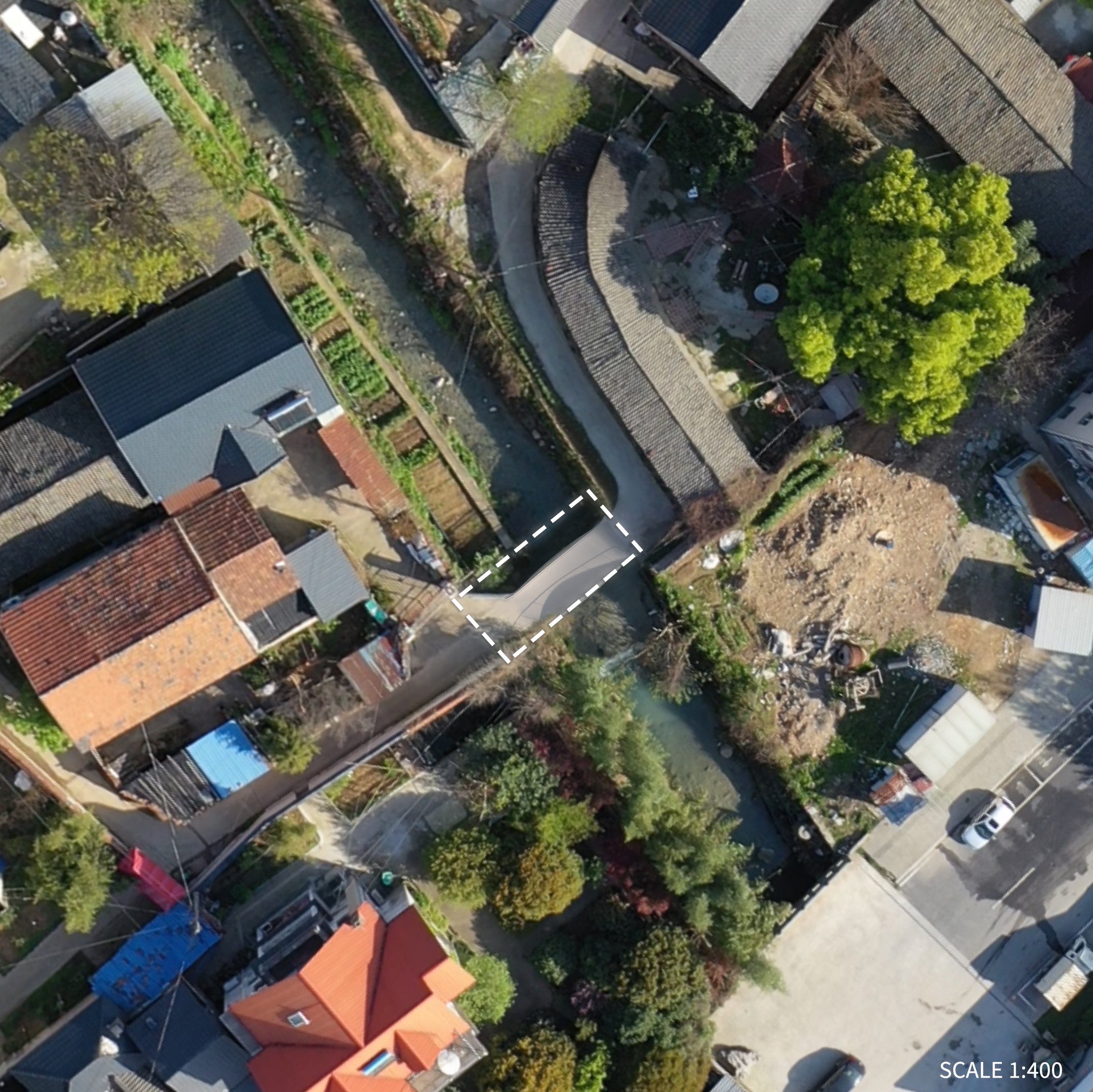
Renders & Photos
Technical specifications
- Location
- Moganshan Town, Deqing County (Zhejiang Province), China
- Year
- 2023
- Client
- Deqing County Cultural Tourism Development Group Co., Ltd.
- Typology
- Pedestrian infrastructure, Footbridge for a tourist area
- Built-up area
- 20 m²
- Project area
- 30 m²
- Status
- Unbuilt, a concept presented as a poster at the ACADIA/CAADRIA 2023 conference
- Lead Architects
- Maurizio Barberio, Micaela Colella (Barberio Colella Architects)
- Design Team
- Maurizio Barberio, Micaela Colella, Angelo Figliola
- Contributor
- Zhenghui Chen
- Landscape, Structural, Environmental & MEP, Lighting
- Barberio Colella Architects + Angelo Figliola
- Main materials
- Low-carbon concrete (prefabricated modular blocks) + Steel (prestressing tie-rods and parapets)
- Design tools
- Rhinoceros + Grasshopper (parametric modelling), Karamba3D (structural analysis integrated into Grasshopper), V-Ray (rendering)
- Publications
- ACADIA/CAADRIA 2023 Poster (joint conference of the two leading associations for computational design in architecture)
Technical drawings
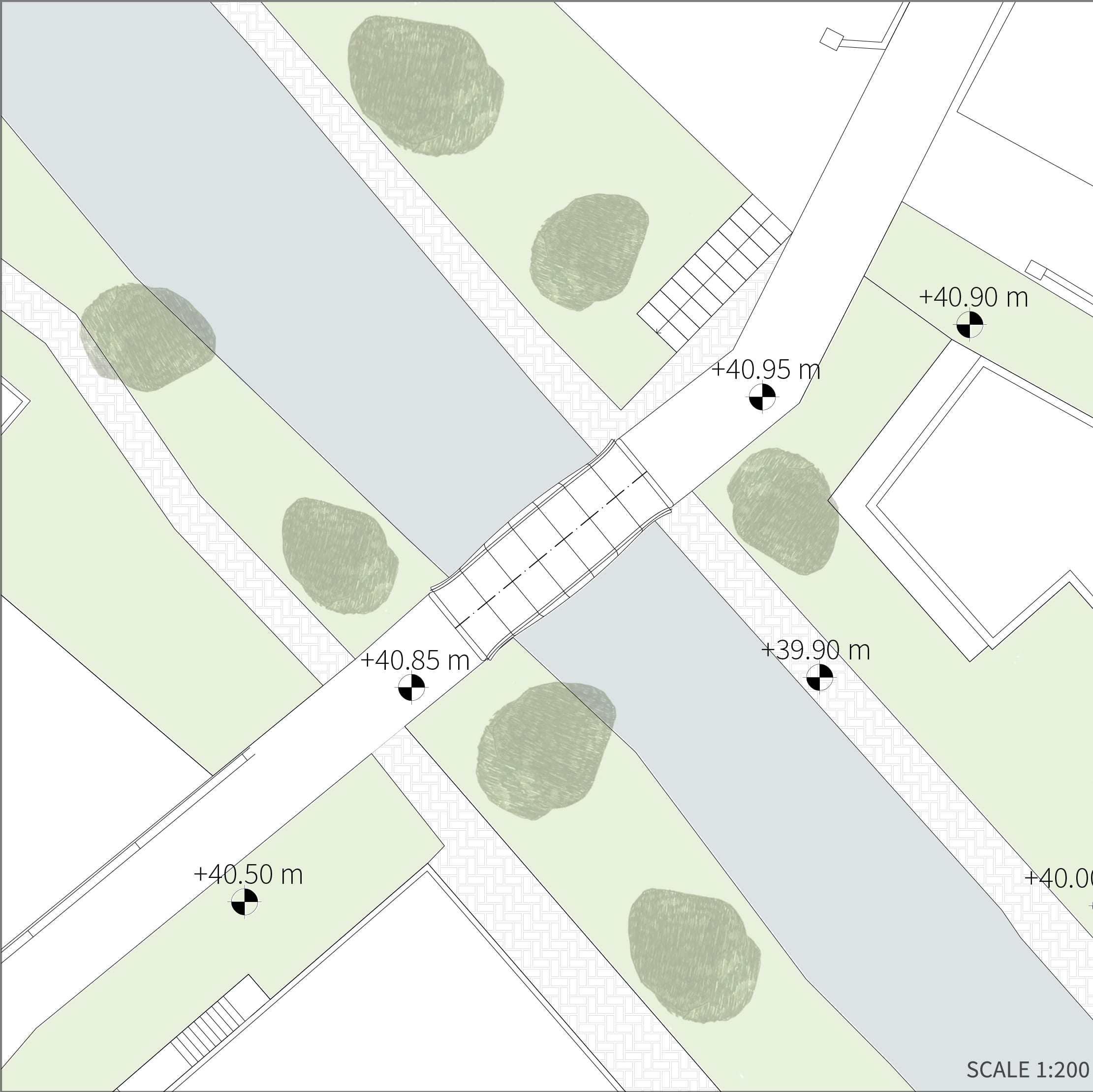
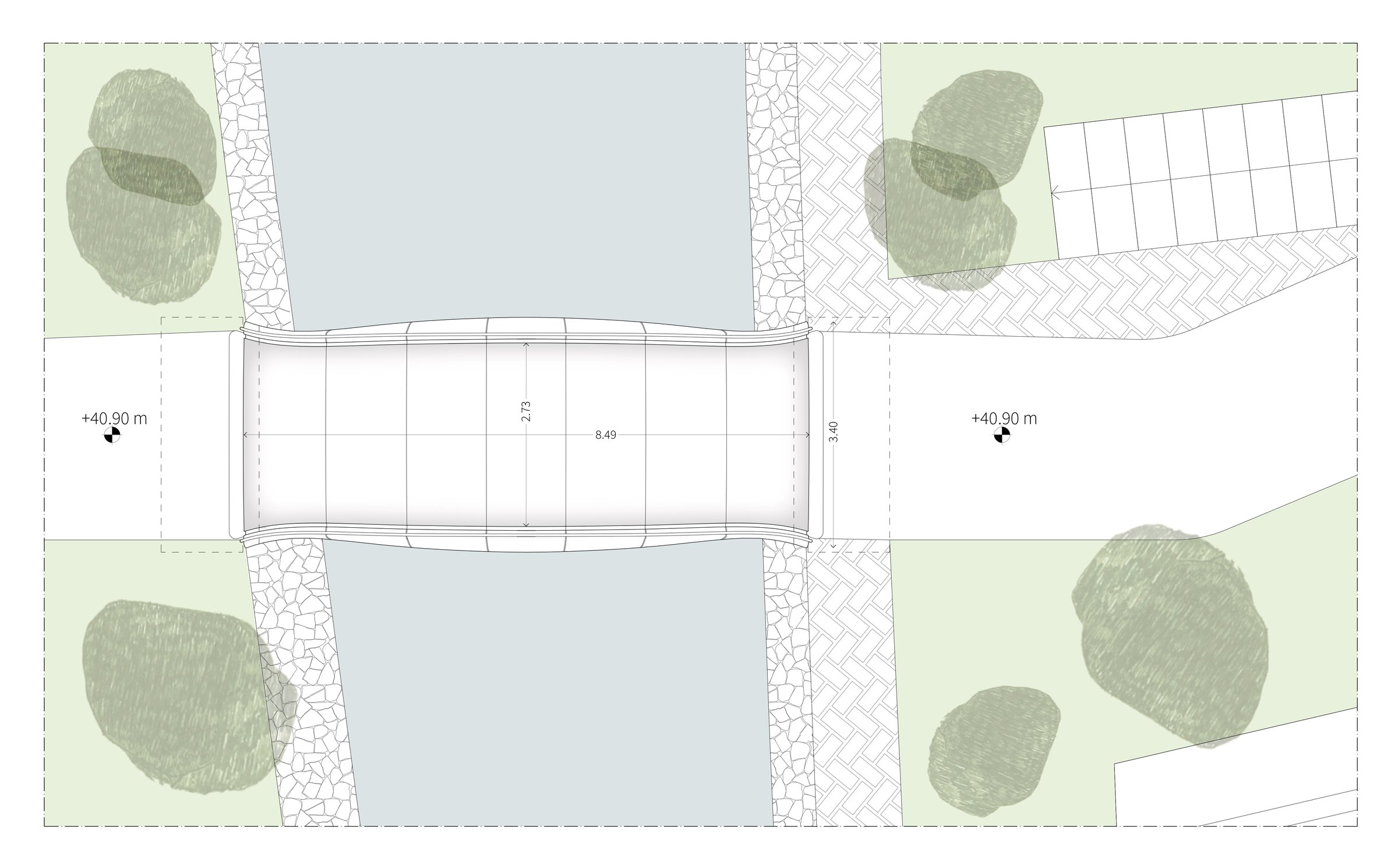
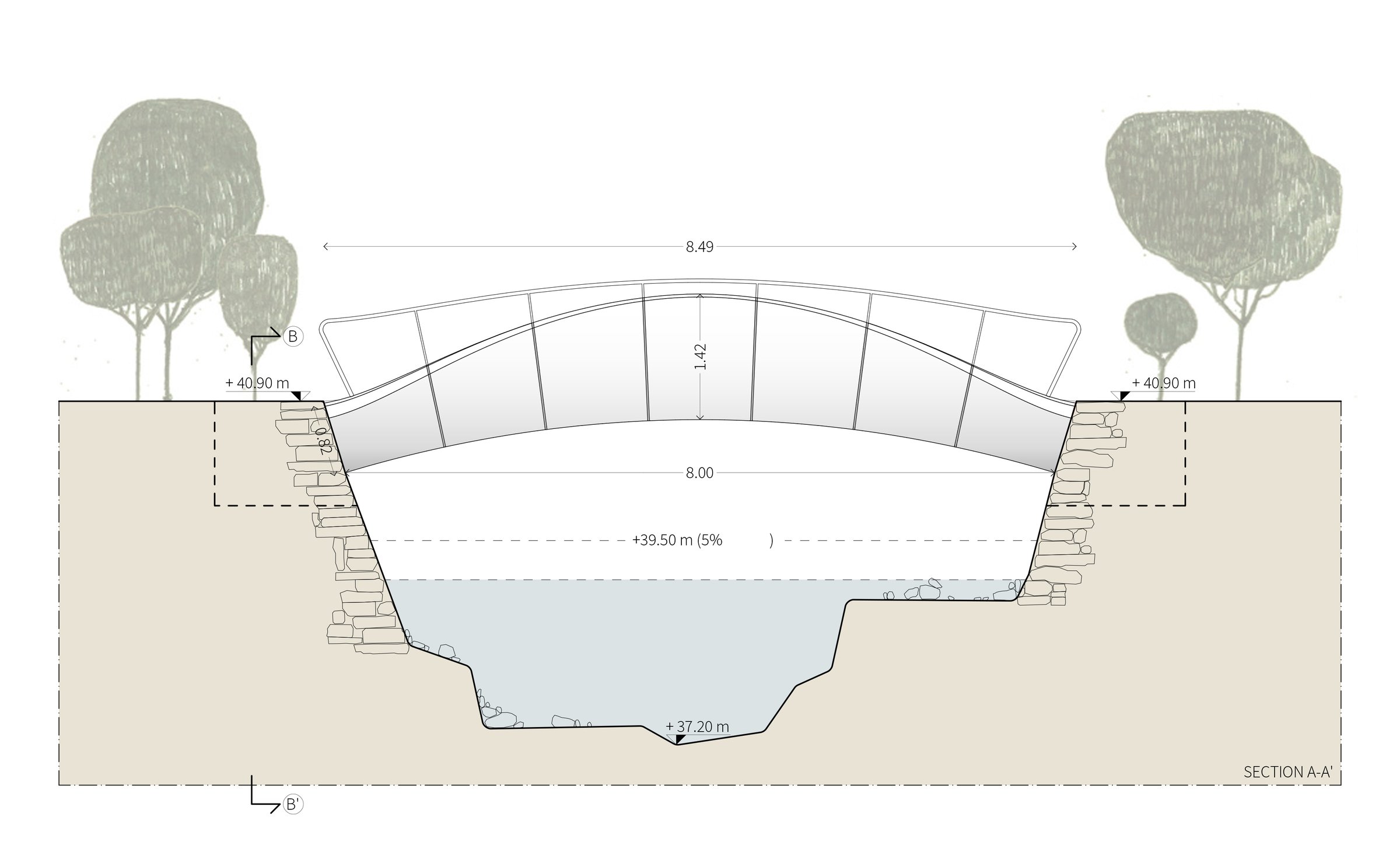
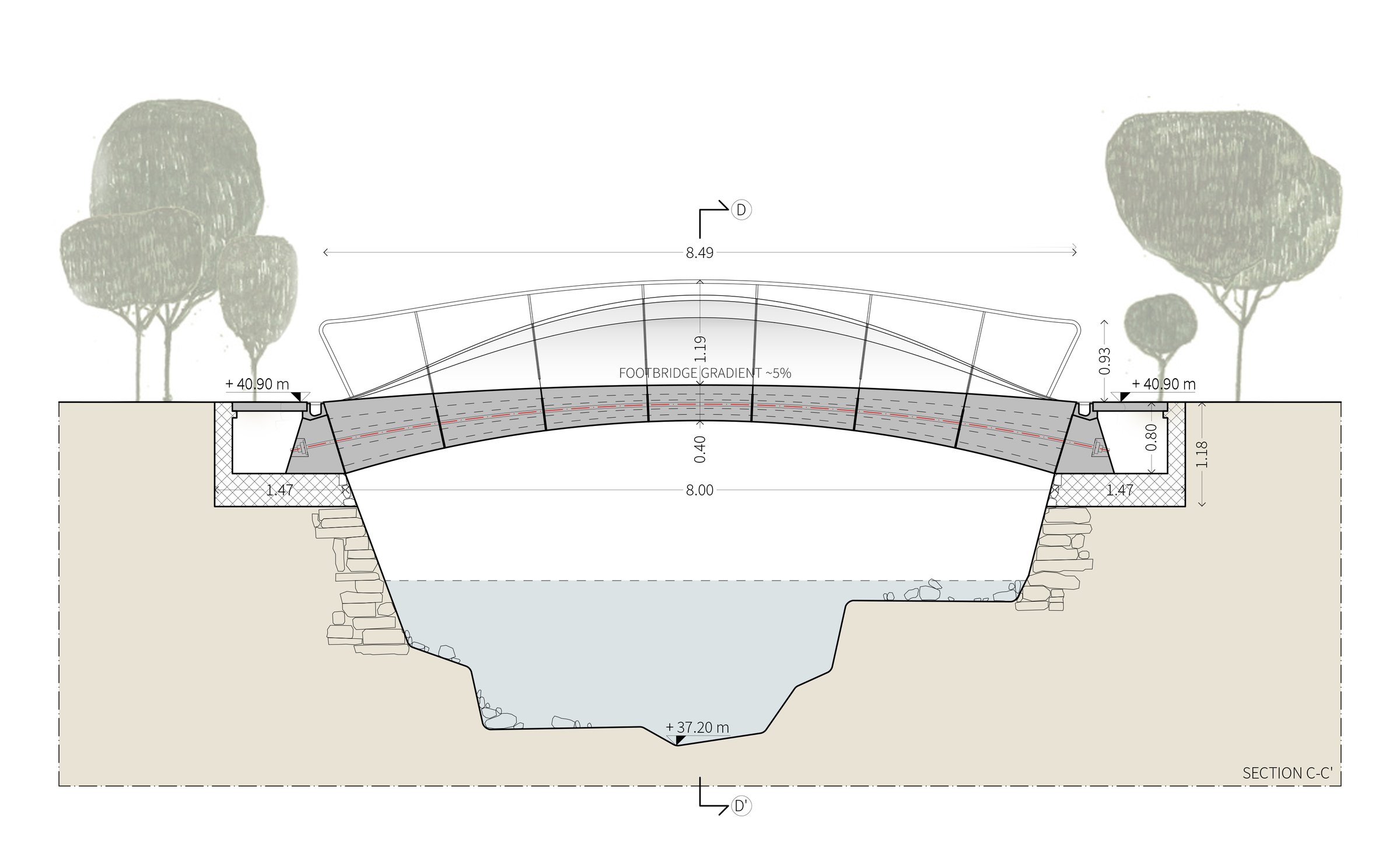
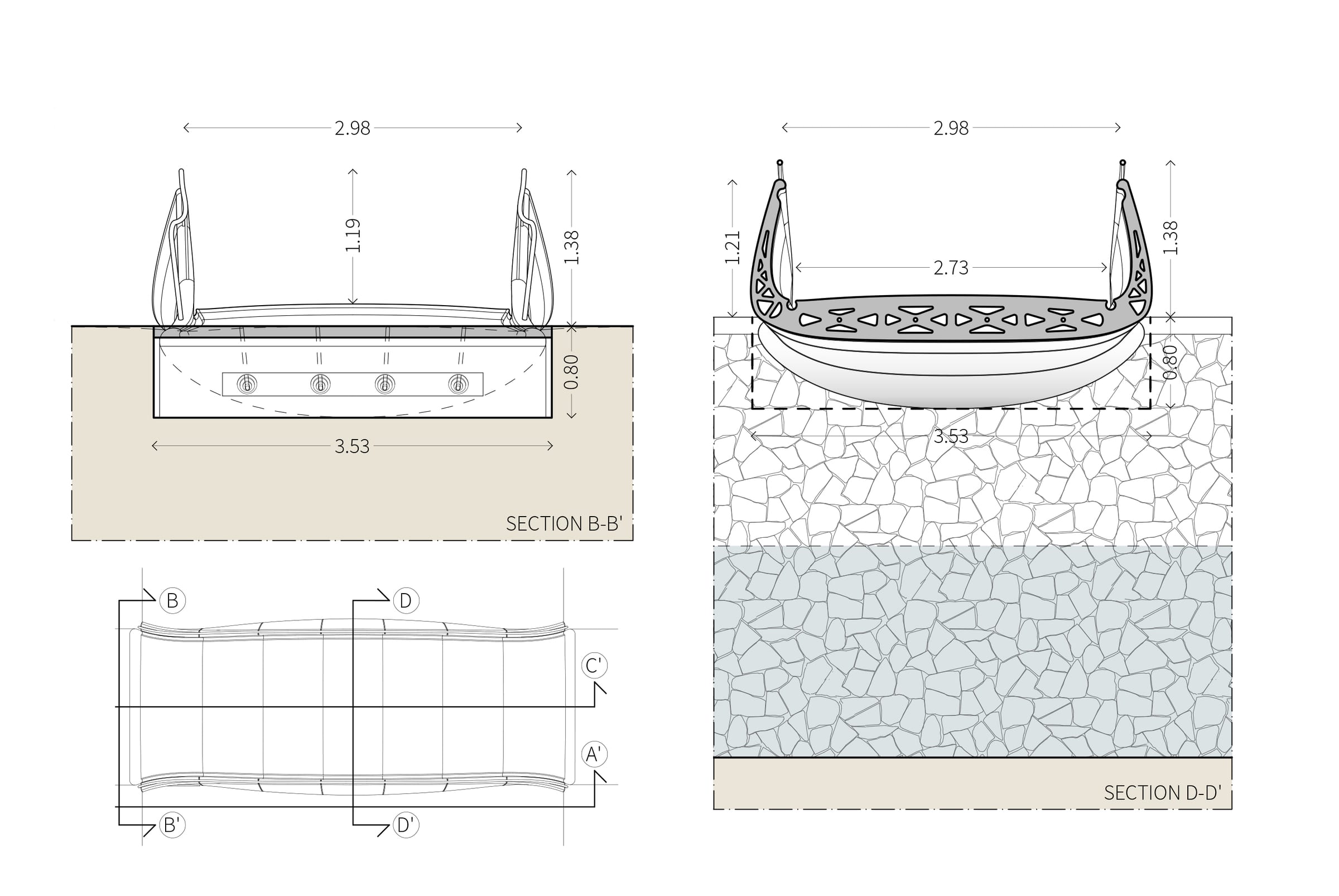
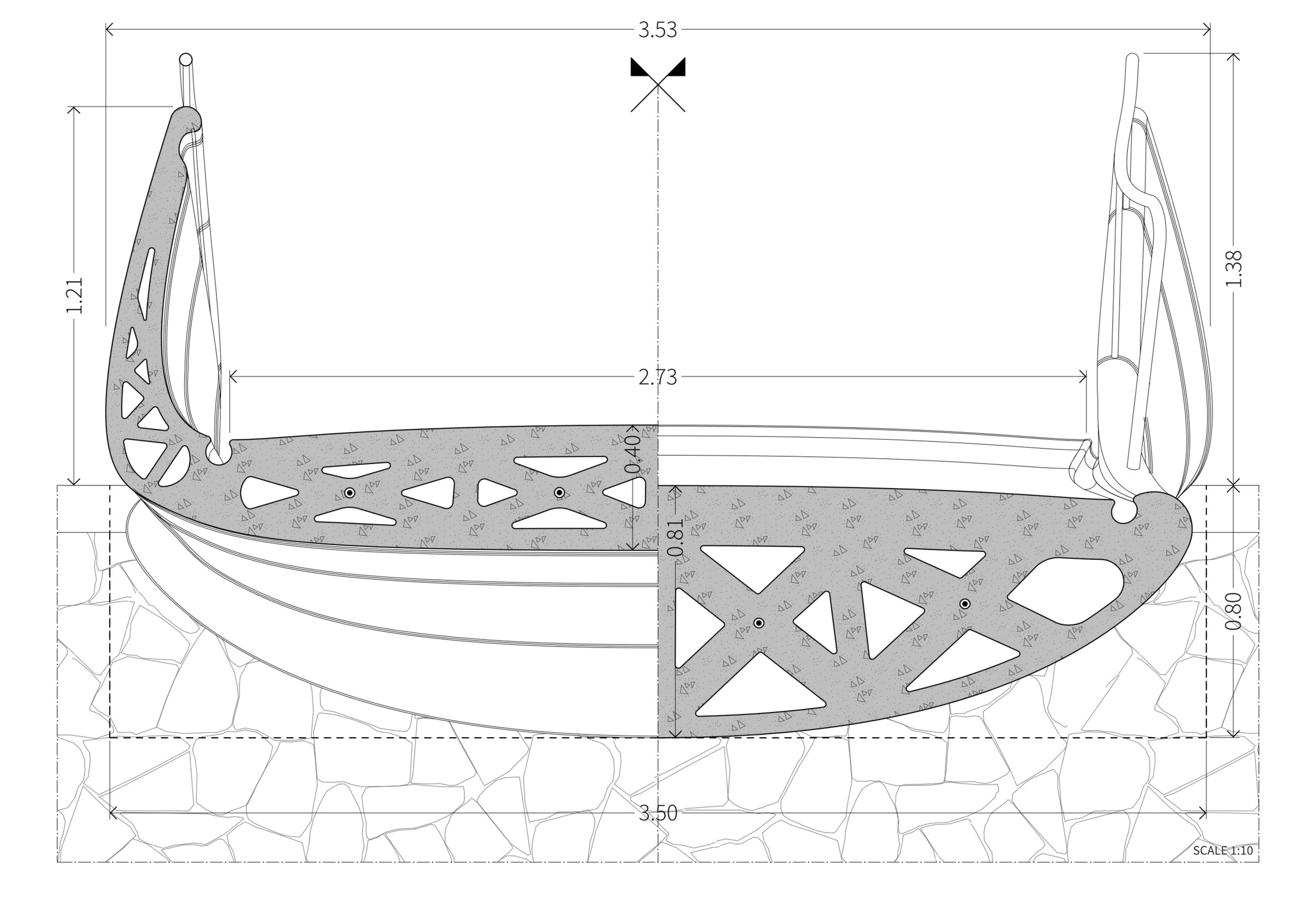
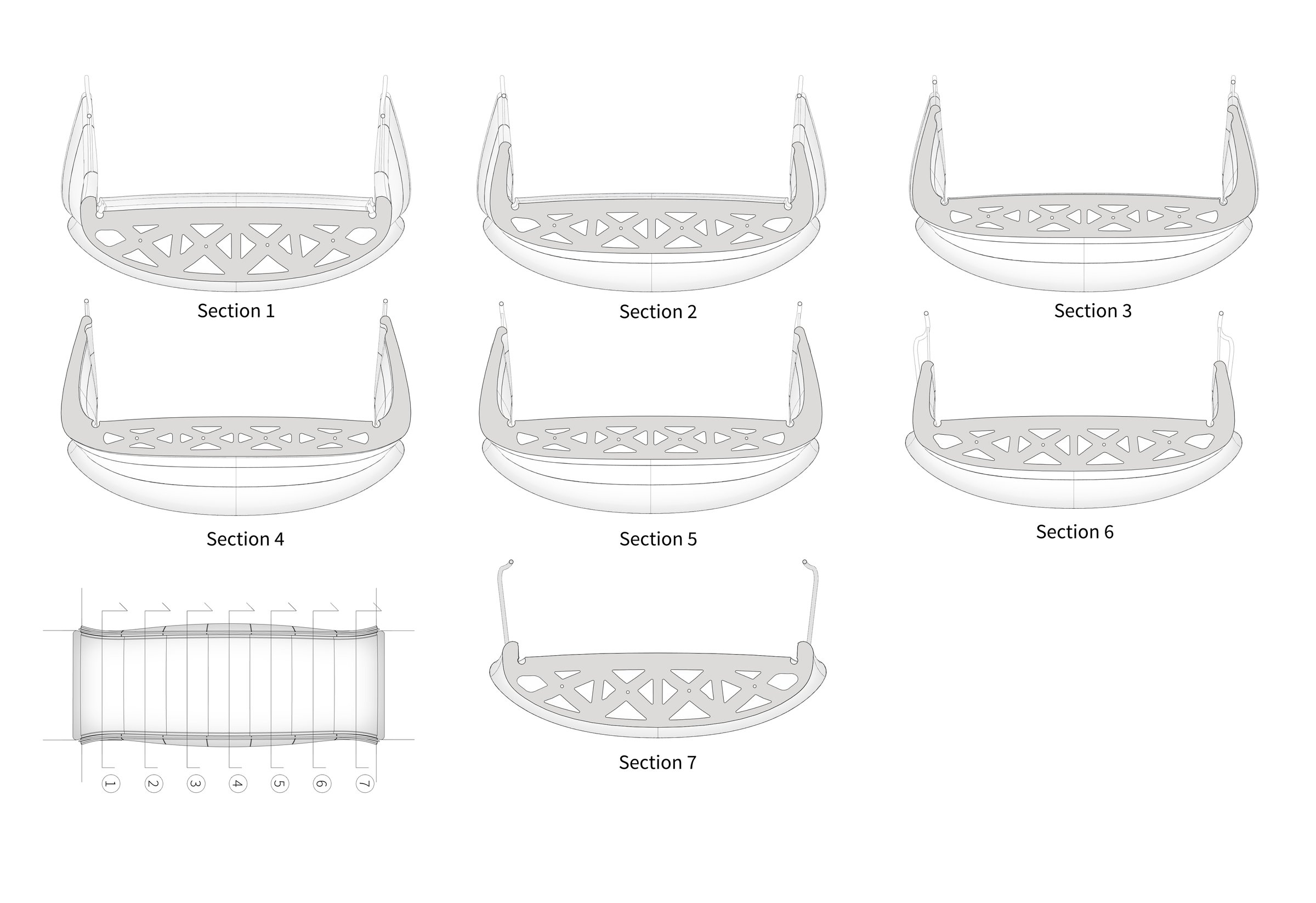
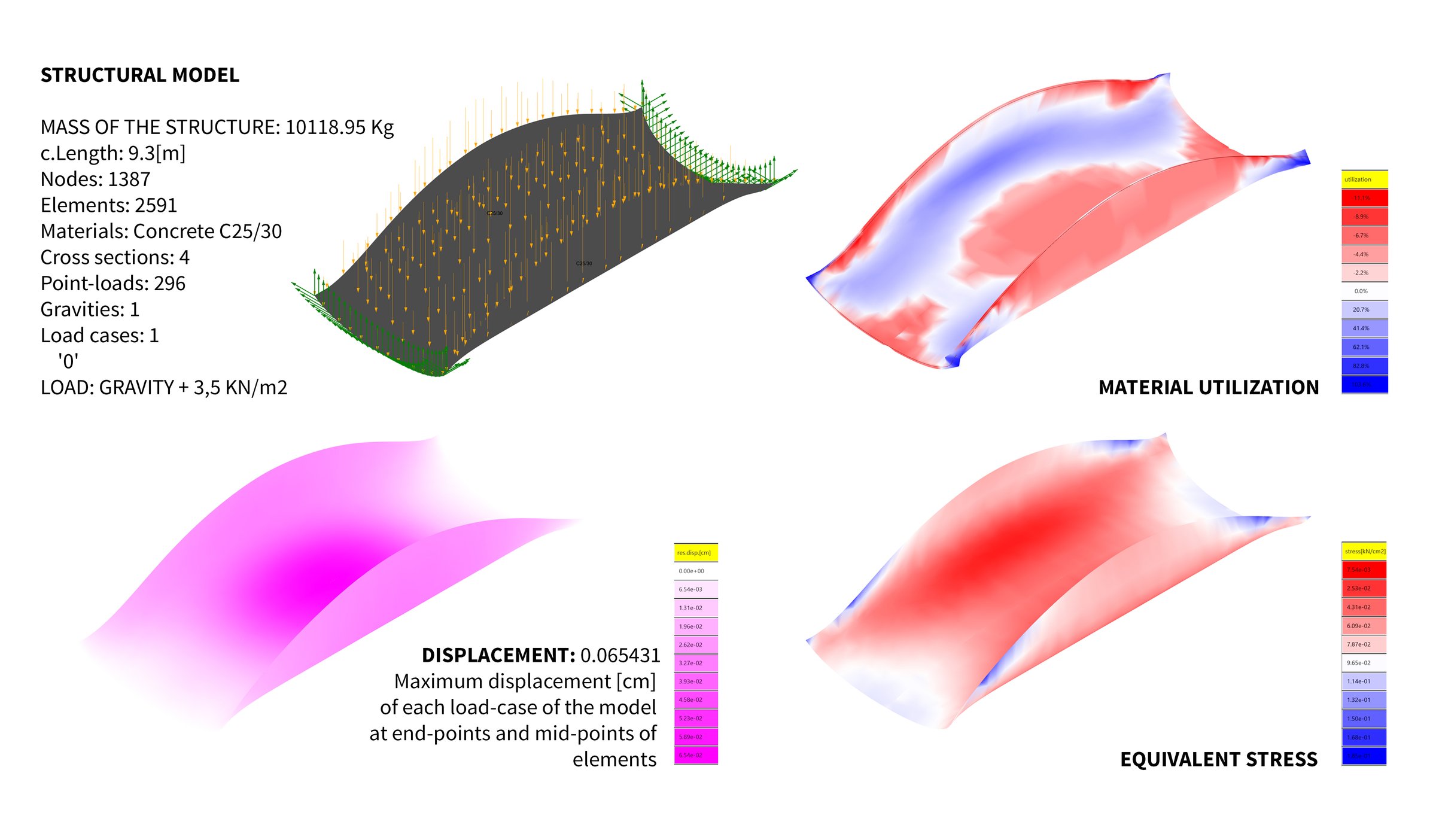
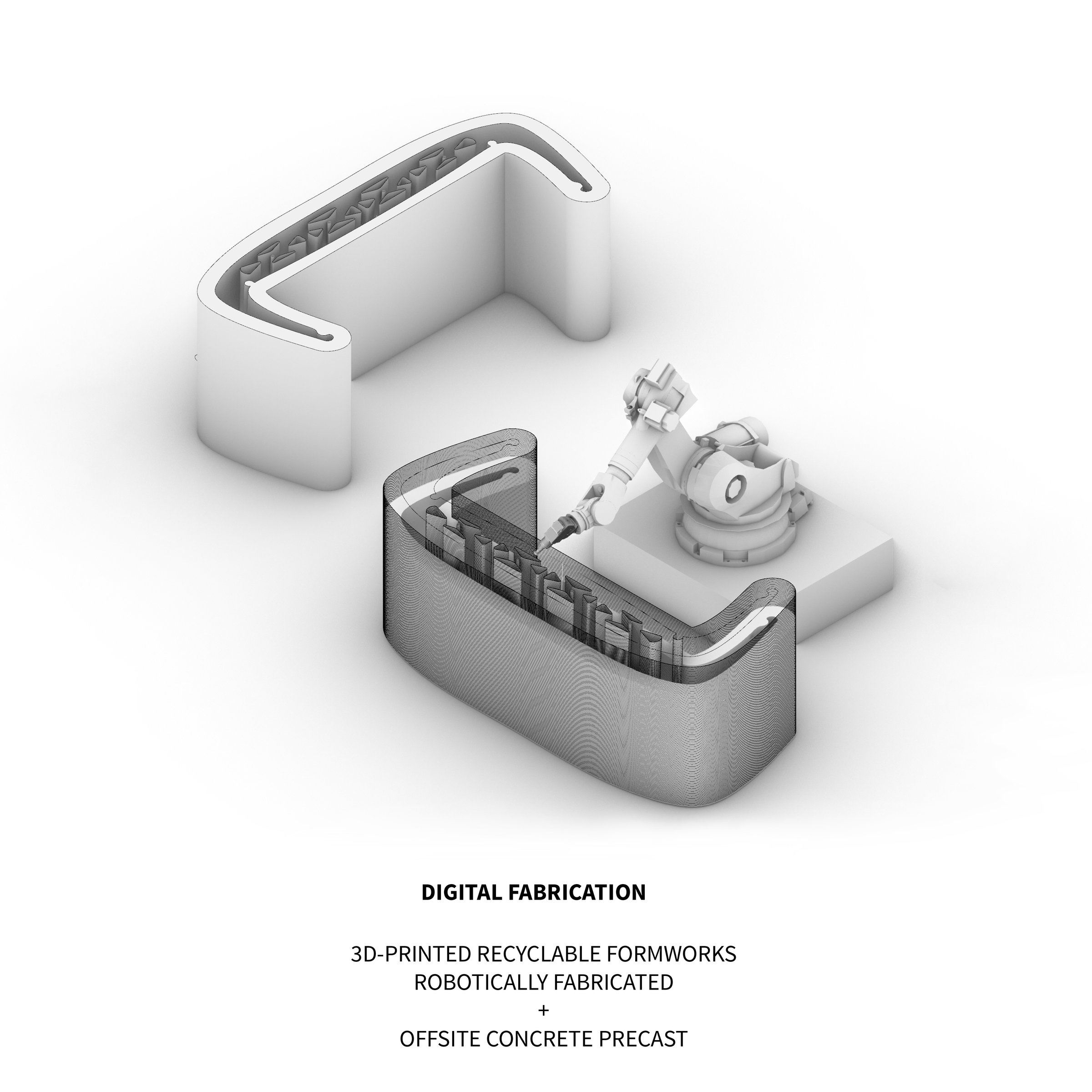
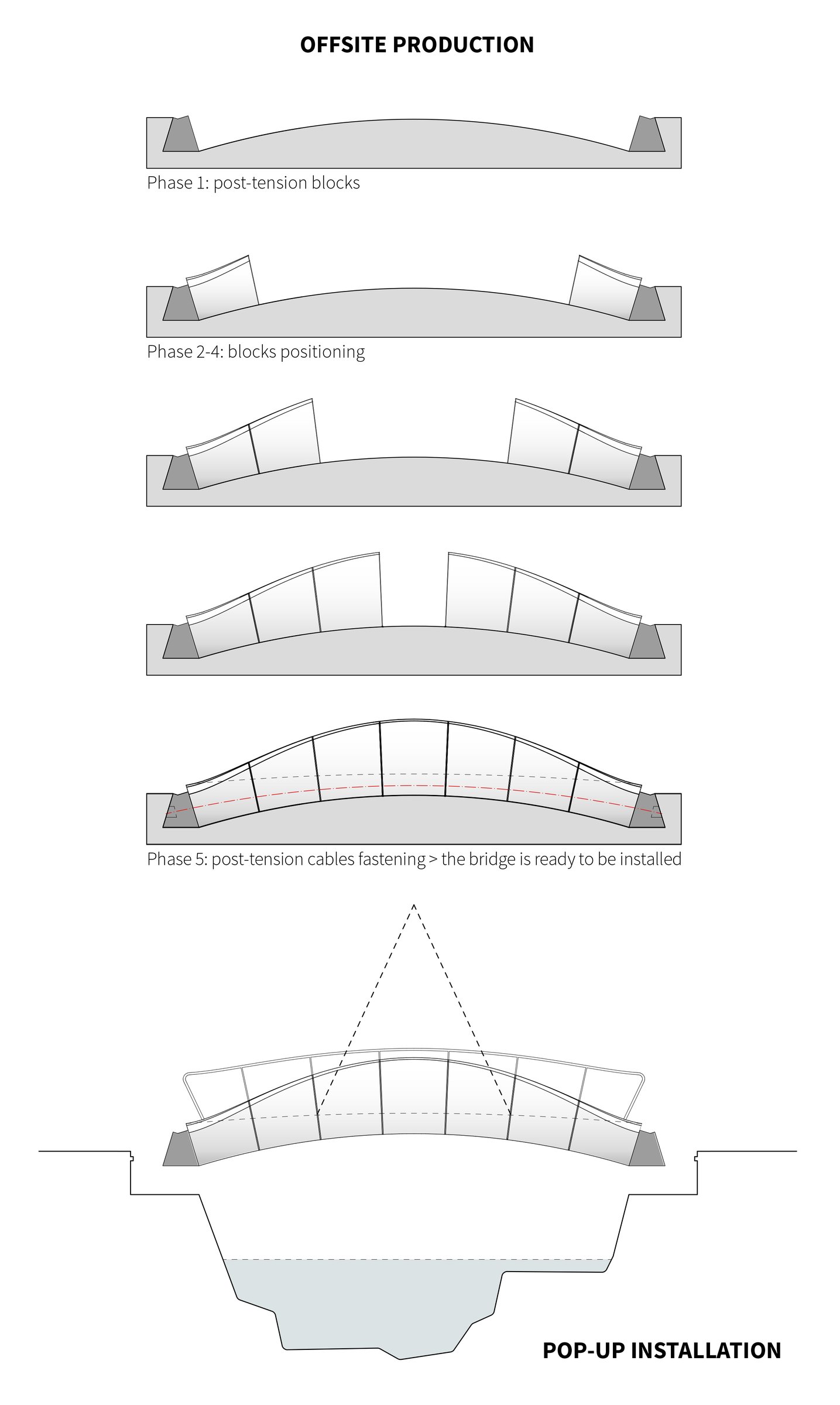
How does one design a small-scale public infrastructure that is distinctive, sustainable and structurally honest?
Small-scale pedestrian infrastructure (bridges, footbridges, viewing platforms) generally suffers from a dual shortcoming: either they are standardised catalogue products that ignore the context, or they are costly formal gestures that rely on inefficient structural solutions. In prestigious tourist areas such as Moganshan, the client’s brief is clear: a recognisable structure that becomes a stop on the experiential journey, yet is also environmentally sustainable and technically coherent. Flowin’ Footbridge demonstrates that parametric design is not an exercise in style but a tool for efficiency: the geometry arises from structural analysis, the modular blocks reduce fabrication waste, and the low-carbon concrete cuts down on embodied CO₂.
Frequently Asked Questions
Do you need to design a pedestrian infrastructure or a complex architectural feature?
Whether you are developing a bridge, a footbridge, a shelter or a bespoke structural component (for the public or private sector, in Italy or abroad) we can work with you to explore the integration of parametric design, structural analysis and low-impact materials. BCA handles the design process from concept to fabrication files, liaising with manufacturers to ensure successful completion.
Send us your briefWe’ll get back to you within 48 hours. No obligation.
Related projects

3D Printed Design
ADDITIVE STEREOTOMY
A new construction system that combines traditional stereotomy with additive manufacturing to create optimised vaulted spaces.
Sustainable Design
URBAN DUNES
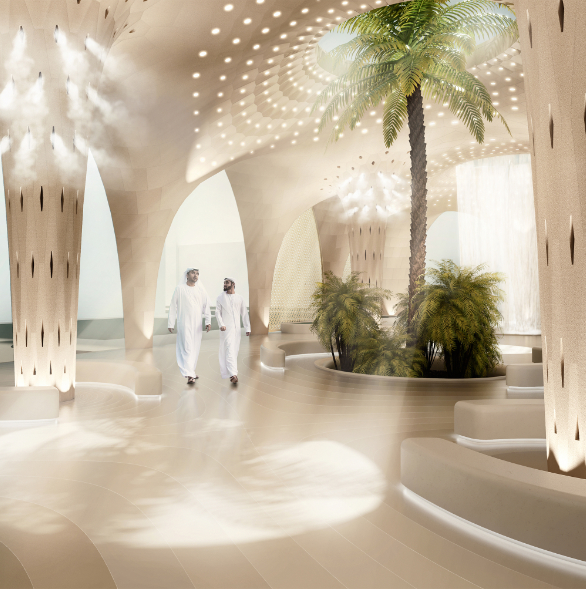
A 3D-printed desert sand structure that transforms a public space into a passively air-conditioned urban oasis.
Sustainable Design
3D-PRINTED MOSQUE
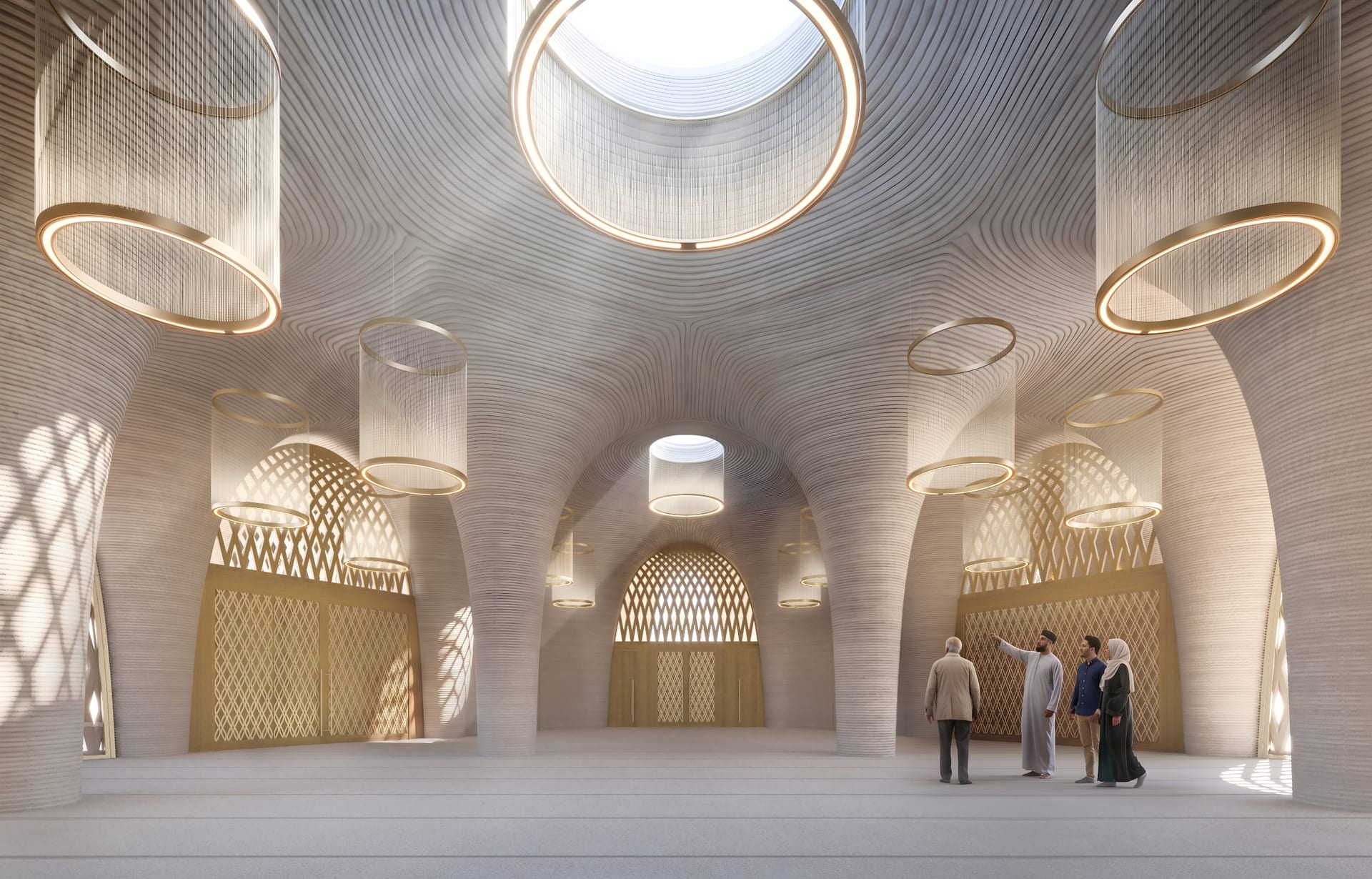
A place of worship where additive manufacturing makes it possible to create complex vaulted surfaces at a sustainable cost, reinterpreting Islamic architecture using contemporary techniques