Trani School – Pope John XXIII Bioclimatic School Complex
A new nursery and primary school complex that transforms a derelict area of Trani into an educational urban park, featuring a civic square and a regenerative approach that goes beyond the NZEB logic.
2021 · Trani (BT) · School architecture · Public & Commercial Architecture · Sustainable design
An educational park for Trani: agora, educational gardens and bioclimatic design
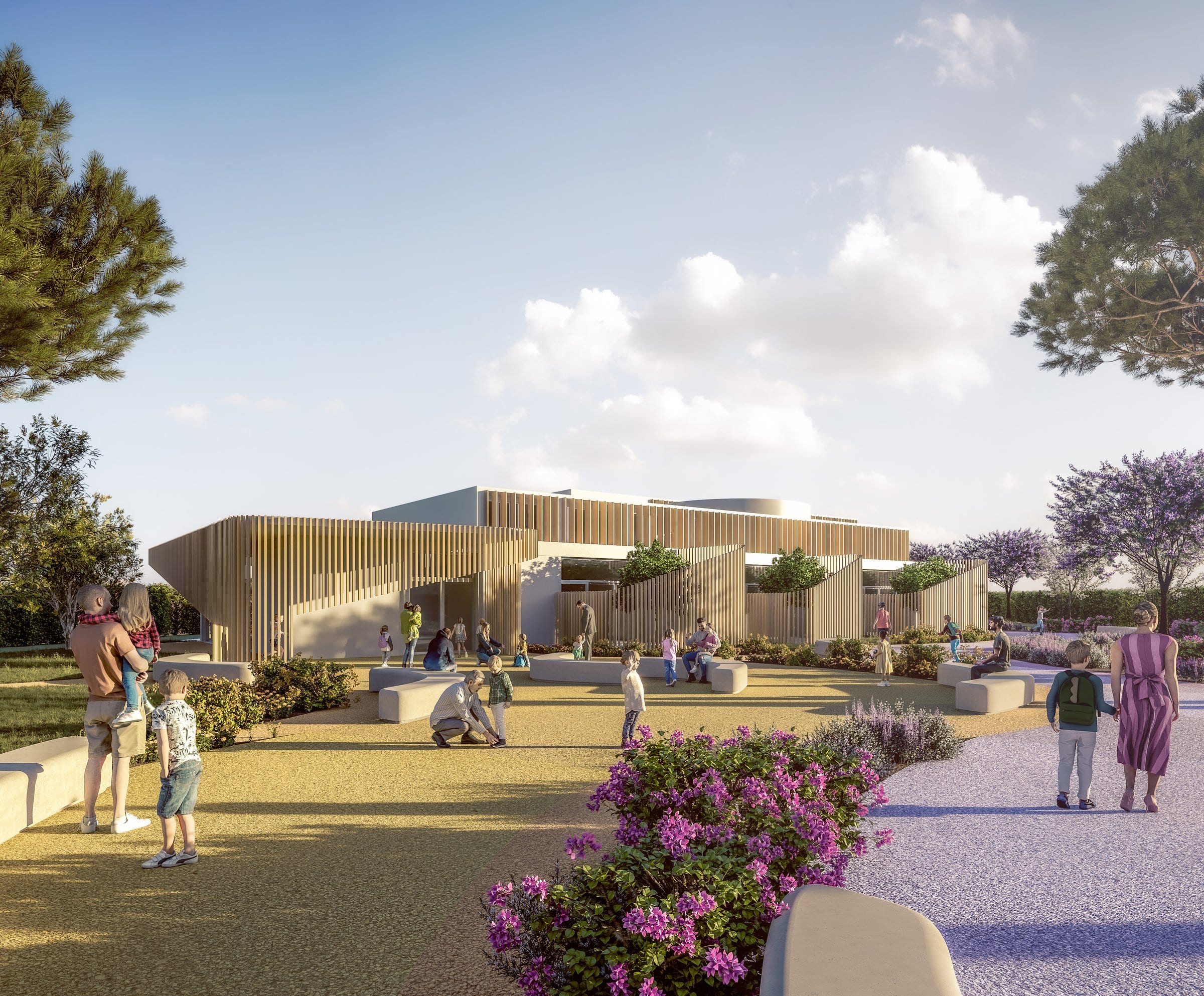
The design for the new Pope John XXIII school complex in Trani emerged from the FUTURA competition, the national programme for the regeneration of school architecture. The proposal, which came second (provisional rankings), addresses an urgent issue for the city: the redevelopment of the site of the former school complex, which was closed as a precautionary measure by the local council in 2019, into a new centre for nursery and primary schools capable of becoming an urban hub for the surrounding residential neighbourhood. The building is relocated from its previous site and situated within a new urban park that increases the green and permeable area of the plot, bordered by a service ring road.
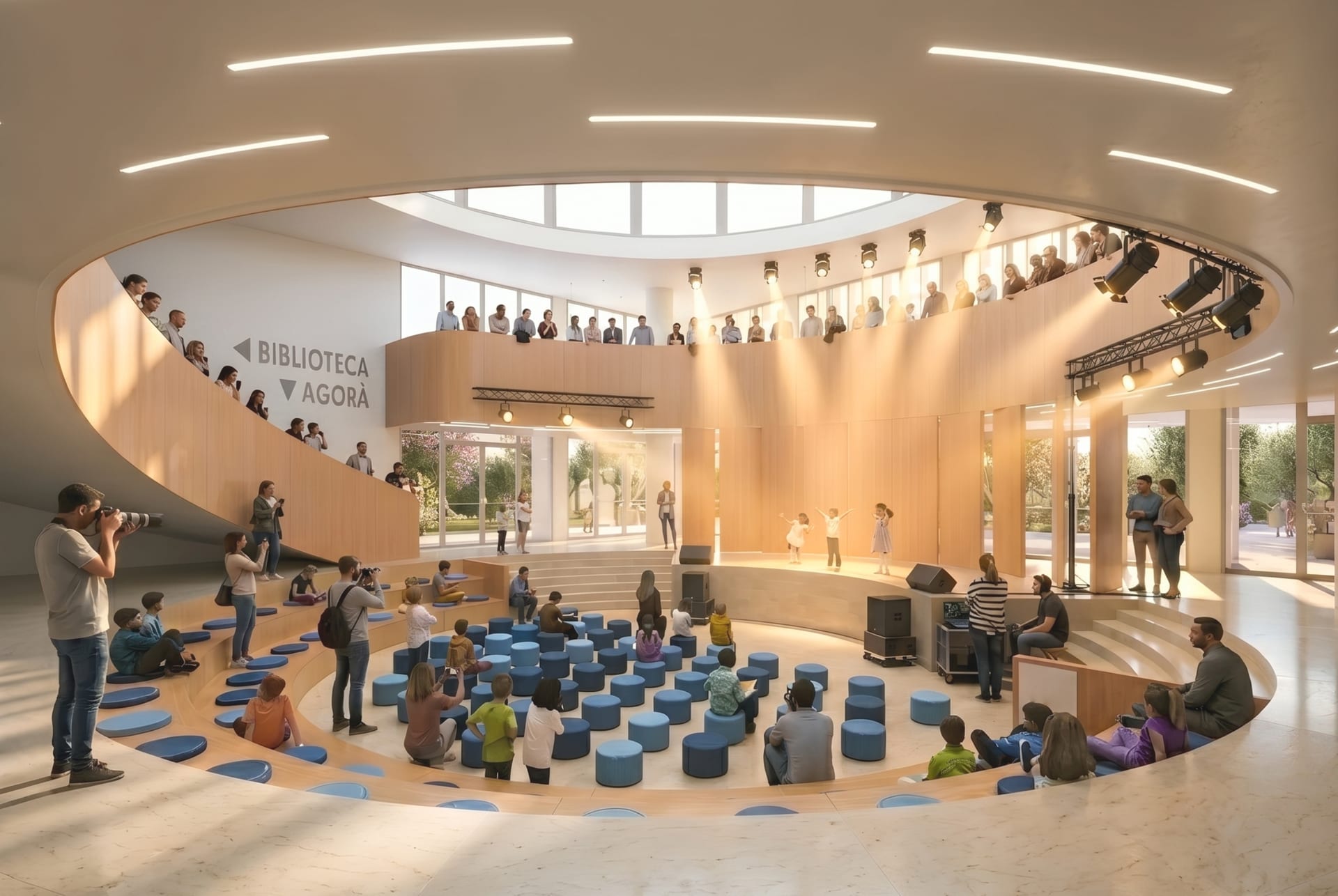
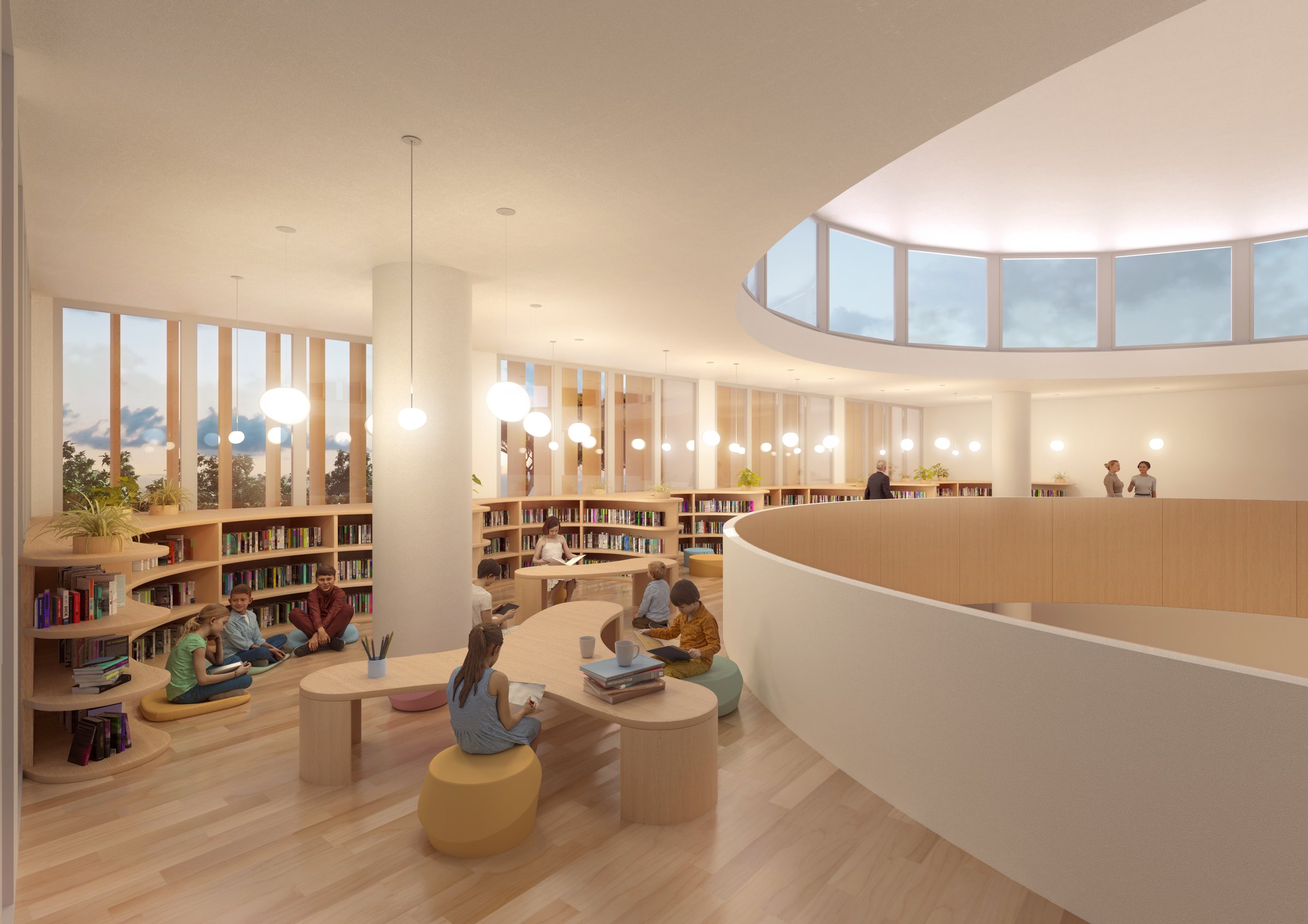
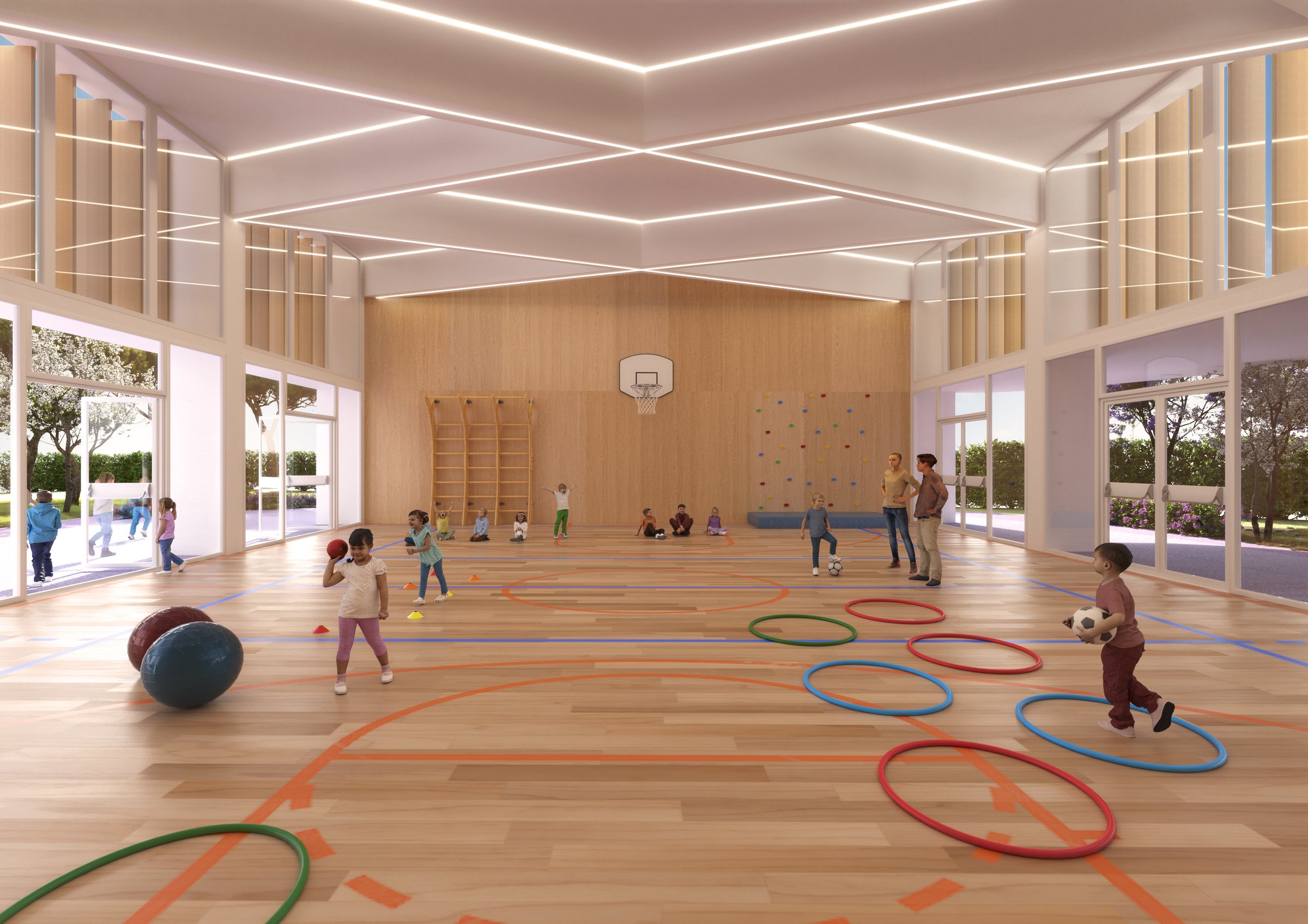
The heart of the project is the central agora: a double‑height space featuring a small sunken theatre for alternative educational activities and a semi-circular staircase connecting the two levels. On the ground floor, the agora serves as a reception area; on the first floor, it transforms into an open-plan library with alcoves for individual and group study. This space is not merely a connecting element: it is a bioclimatic device, the large windows and the solid Trani stone flooring accumulate heat during the cold months, whilst the openings at the top create a chimney effect for natural ventilation in summer. The division of the volumes allows access to the agora and the gym even during after-school hours, making the school a meeting point for the neighbourhood.
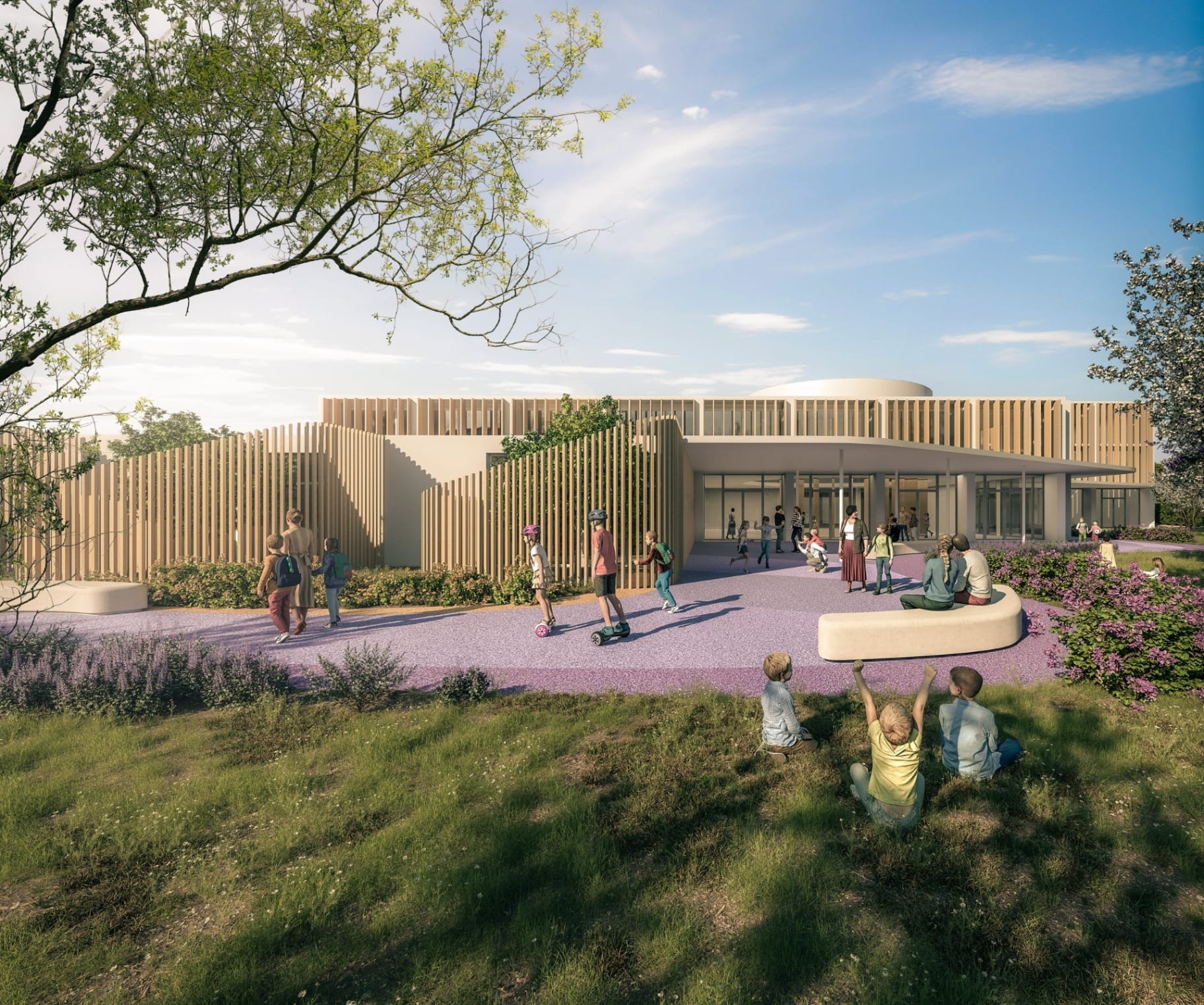
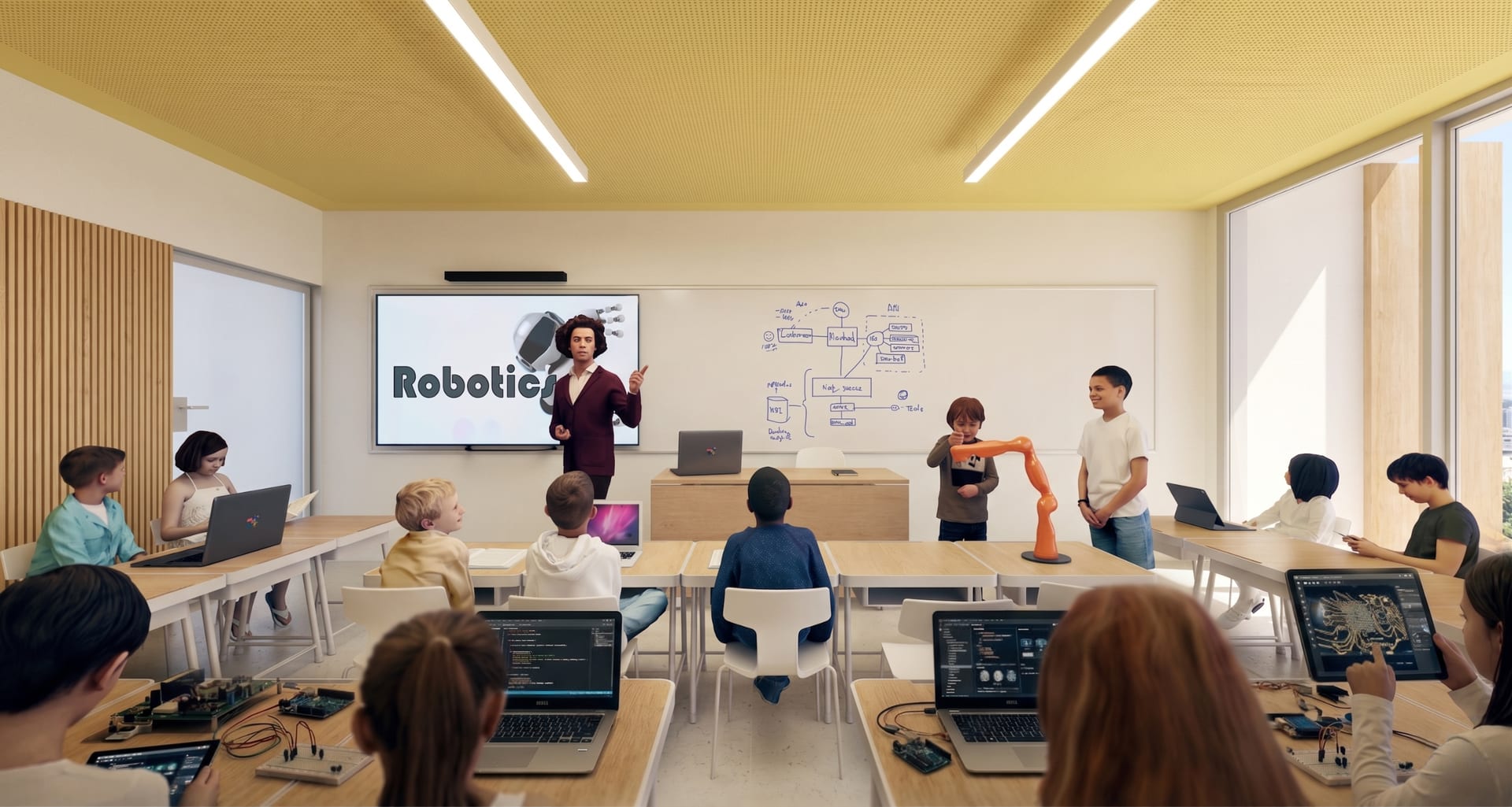
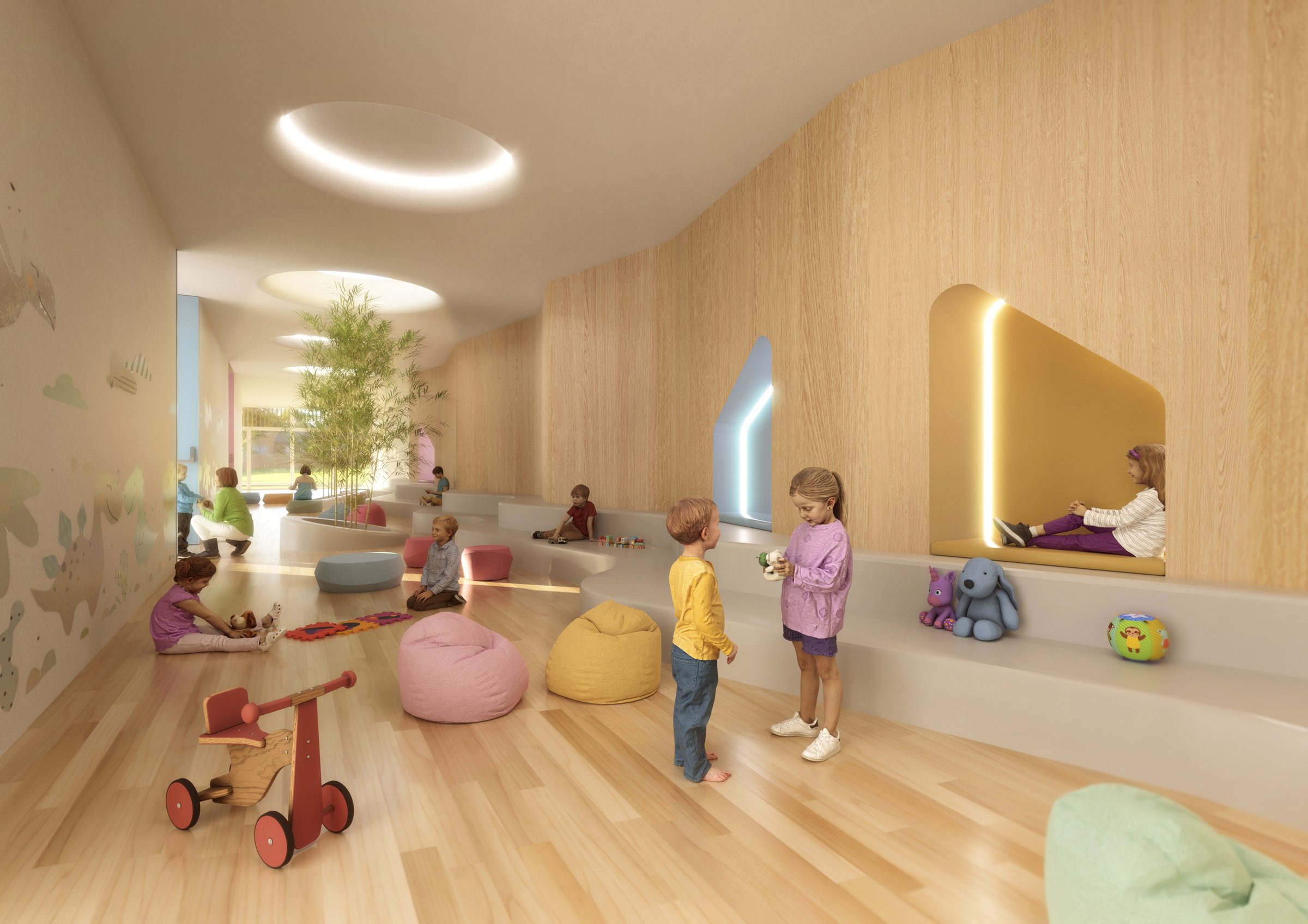
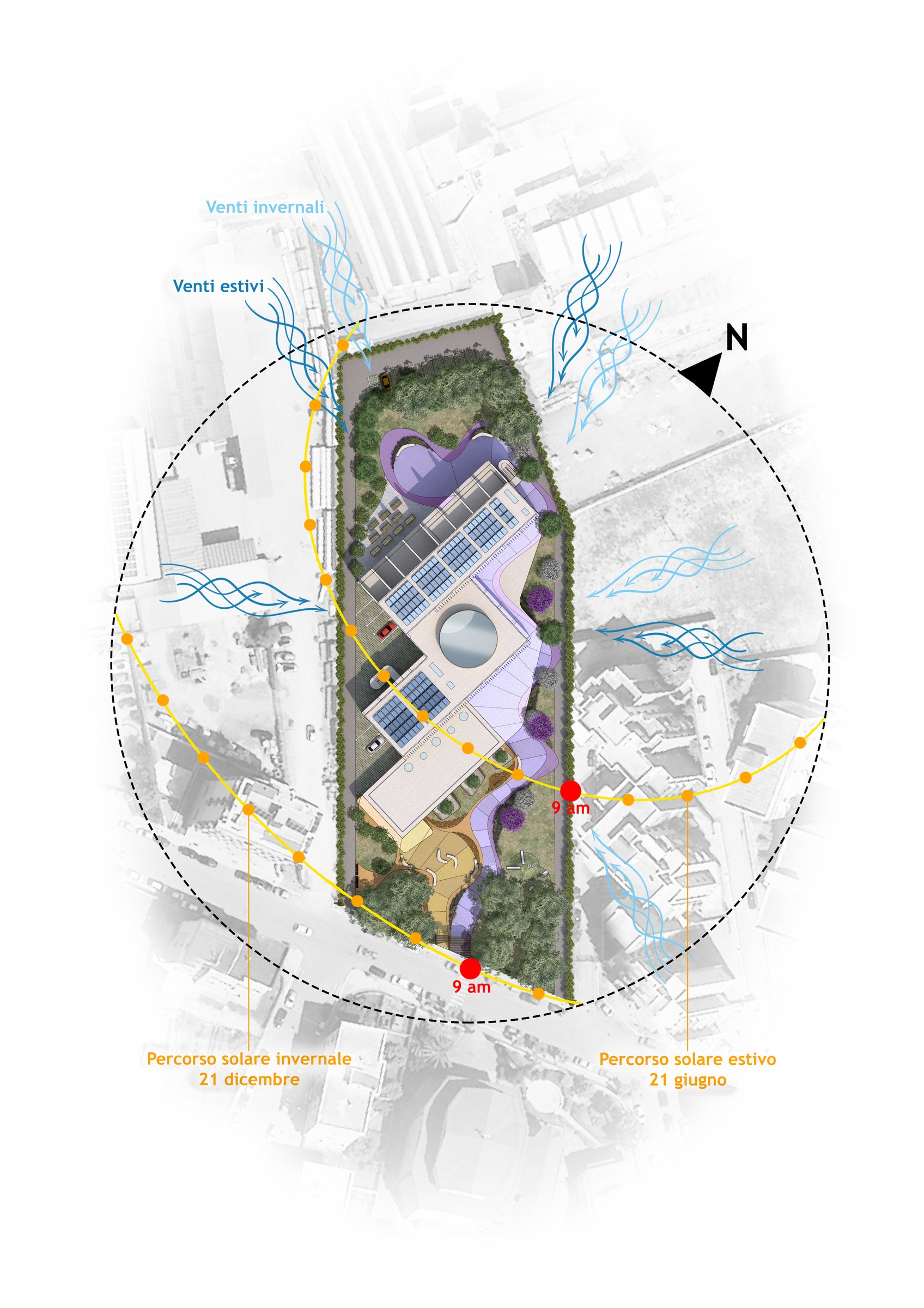
The building comprises three volumes of varying heights, sloping down towards Via Papa Giovanni XXIII, with a predominantly east-west orientation. All classrooms face east to maximise natural light during school hours, preventing overheating and glare. The nursery school, in the lowest volume, has a separate entrance and classrooms directly connected to enclosed green spaces; the primary school occupies the next two volumes, with spacious and flexible connecting areas. The outdoor space is an integral part of the educational programme: vegetable gardens adjoining the canteen to experiment with locally sourced produce, educational playgrounds, and a recycling centre to raise awareness of the waste cycle. The curved pathways are colour-coded (shades of yellow for the nursery, shades of purple for the primary school) with coordinated plant species.
The load‑bearing structure uses a prefabricated reinforced concrete (RC) system with green low-carbon concrete (CO₂ emissions up to 90% lower than standard concrete), hempcrete insulation, ventilated walls of local stone on the south-facing facades, and foundations on seismic isolators. The building envelope is designed to minimise the urban heat island effect thanks to roofs with a high solar reflectance index and ventilated cavities. The building services aim for energy self-sufficiency with rooftop photovoltaic systems, small-scale wind turbines, energy storage, chilled beams for silent air conditioning and circadian lighting that replicates the variation in natural light throughout the day. The vegetation (mimosas, jacarandas, citrus trees, lavender and rosemary) has been selected for its low water requirements and its role in regulating the microclimate: providing shade, filtering winds and purifying the air.
Renders & Photos
Technical specifications
- Location
- Trani (BT), Apulia
- Year
- 2022
- Client
- Municipality of Trani
- Typology
- School architecture, Nursery and primary schools
- Area
- 2,546.63 square metres (gross floor area of the new building)
- Status
- Design competition
- Designers
- Micaela Colella (group leader), Maurizio Barberio, Angelo Figliola, Ilaria Cavaliere, Dario Costantino
- Awards
- Second place (provisional rankings), FUTURA Competition, Papa Giovanni XXIII School
Technical drawings
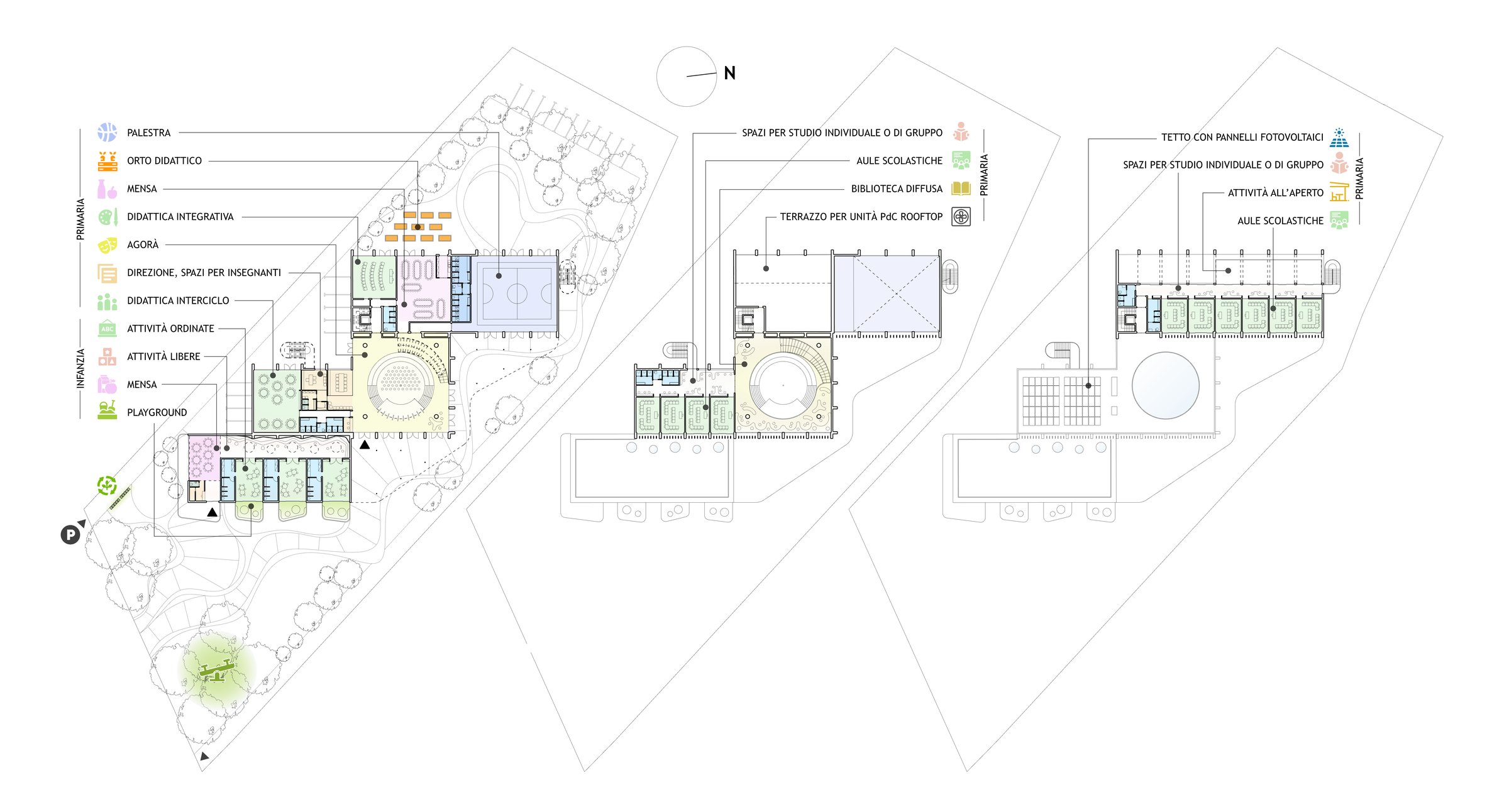
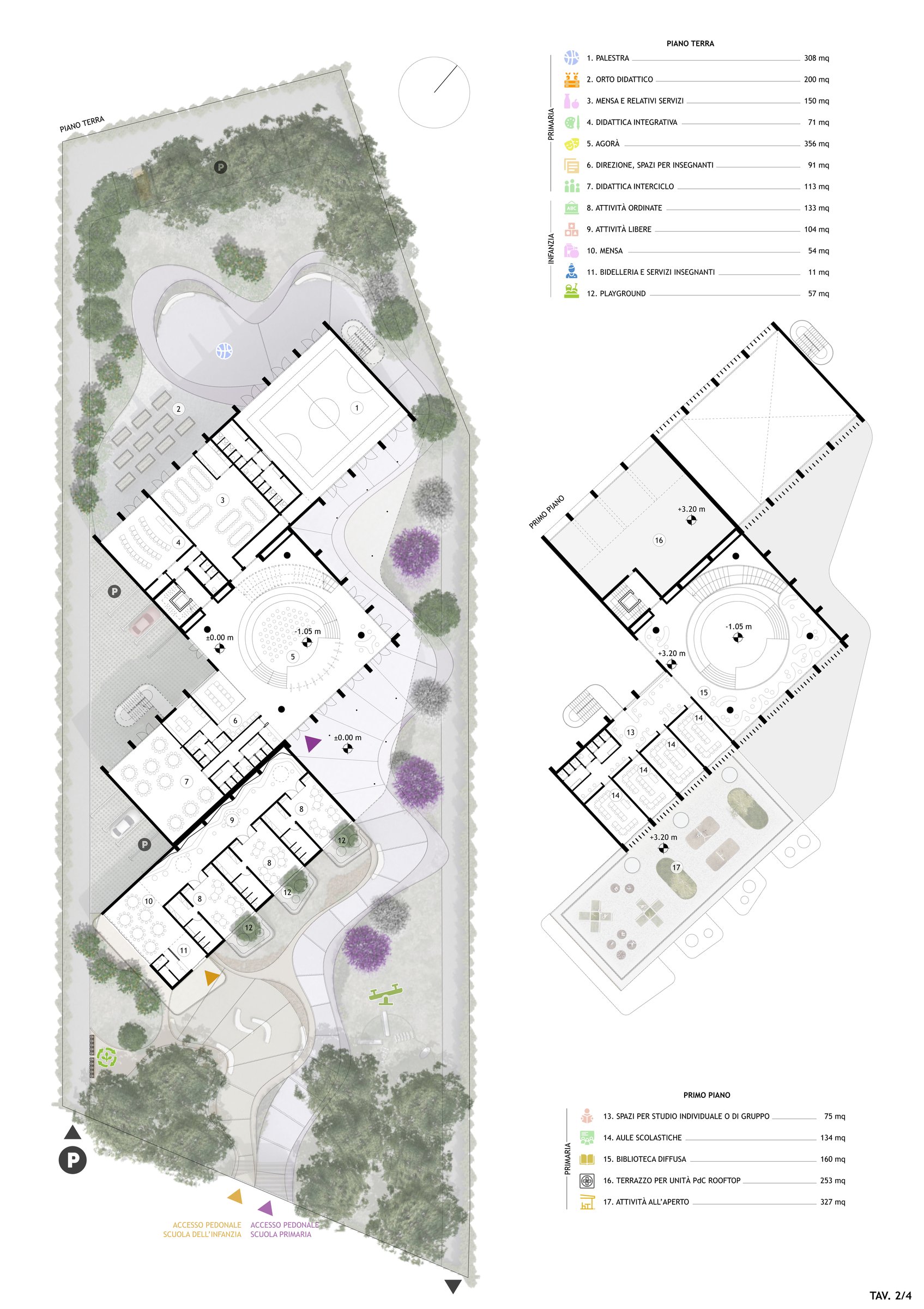
How do you build an innovative school in Southern Italy that is truly sustainable and open to the local community?
The FUTURA programme set a clear challenge: to move beyond the model of the school as a closed container of classrooms and corridors, and to design buildings that are simultaneously energy-efficient, flexible in their educational use, and capable of fostering connections with the local area. In Southern Italy, where school buildings are often the most dilapidated and where climatic conditions require specific strategies for summer cooling, the temptation is to rely entirely on mechanical systems or to replicate Northern models without adaptation. The project for Trani demonstrates an alternative approach: the architecture itself (orientation, building envelope, thermal mass, vegetation, open spaces) becomes the primary climate control system, with mechanical systems playing a supplementary role. The agora with its local stone paving, the educational gardens, the colour-coded pathways and the neighbourhood sports hall are not mere decorations: they are the physical embodiment of the idea of a school as civic infrastructure.
Frequently Asked Questions
Are you taking part in a design competition for a school or a public building in southern Italy?
School architecture projects are the sector where architectural quality and sustainability have the most measurable impact, on students’ comfort, energy costs and neighbourhood life. If you are working on a FUTURA tender, a PNRR competition or an urban regeneration project and are looking for a team with experience in integrated bioclimatic design and public competitions, we can discuss the opportunity together.
Let’s talk about your projectRelated projects
Public & Commercial Architecture
SCHOOL IN AOSTA
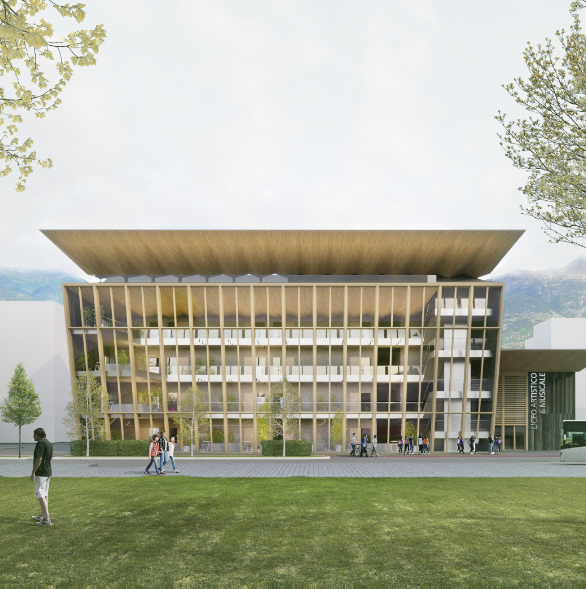
A regenerative school building that goes beyond the NZEB logic, transforming the sunspace into a civic element open to the community of Aosta.
Sustainable Design
POLYMNIA FUTURA
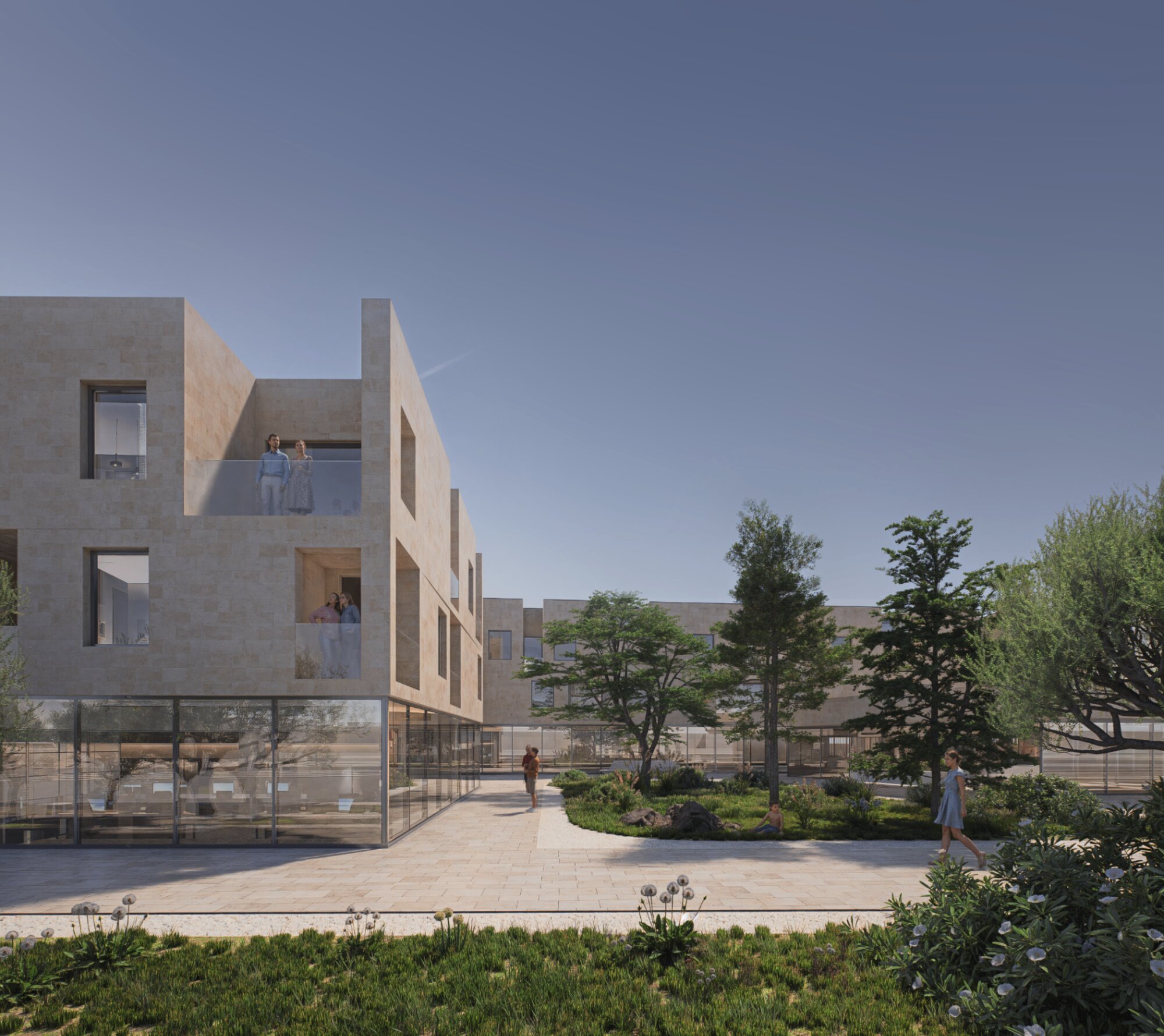
An urban regeneration proposal for Polignano a Mare that combines sustainable mobility, public spaces and new residential neighbourhoods: Special Mention at the Europan 18 European competition.