ROGO/RE-DO! – Sustainable urban regeneration in Rogoredo, Milan
A masterplan to transform a derelict site in south Milan into a people-friendly neighbourhood, where soft mobility is prevalent, green spaces permeate every corner, and timber-built residential towers define a new model of urban living.
2021 · Milan, Rogoredo · Urban regeneration · Sustainable design · Public & Commercial Architecture
Rebuilding Rogoredo starting with lifestyle
Rogoredo, on the south-eastern outskirts of Milan, is a neighbourhood marked by its proximity to the railway tracks, the traffic on Via Toffetti and a perception of urban marginalisation that has shaped its development. The ROGO/RE-DO! project stems from a firm conviction: urban regeneration is not achieved through buildings but through the lifestyle of its inhabitants. Even before designing the residential buildings, Barberio Colella Architetti planned how people would move about, meet and experience the open space. The result is a masterplan in which greenery, soft mobility and functional mixité are the load‑bearing structures, and the architecture is the consequence.
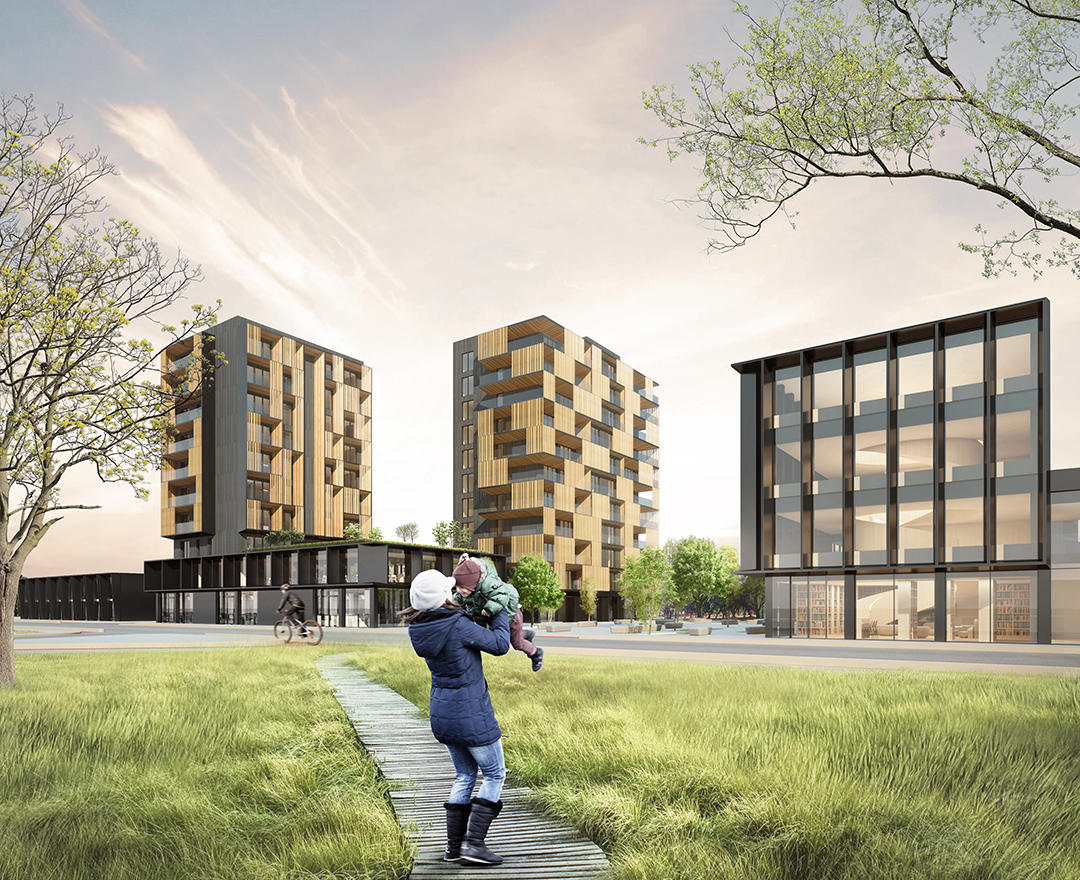
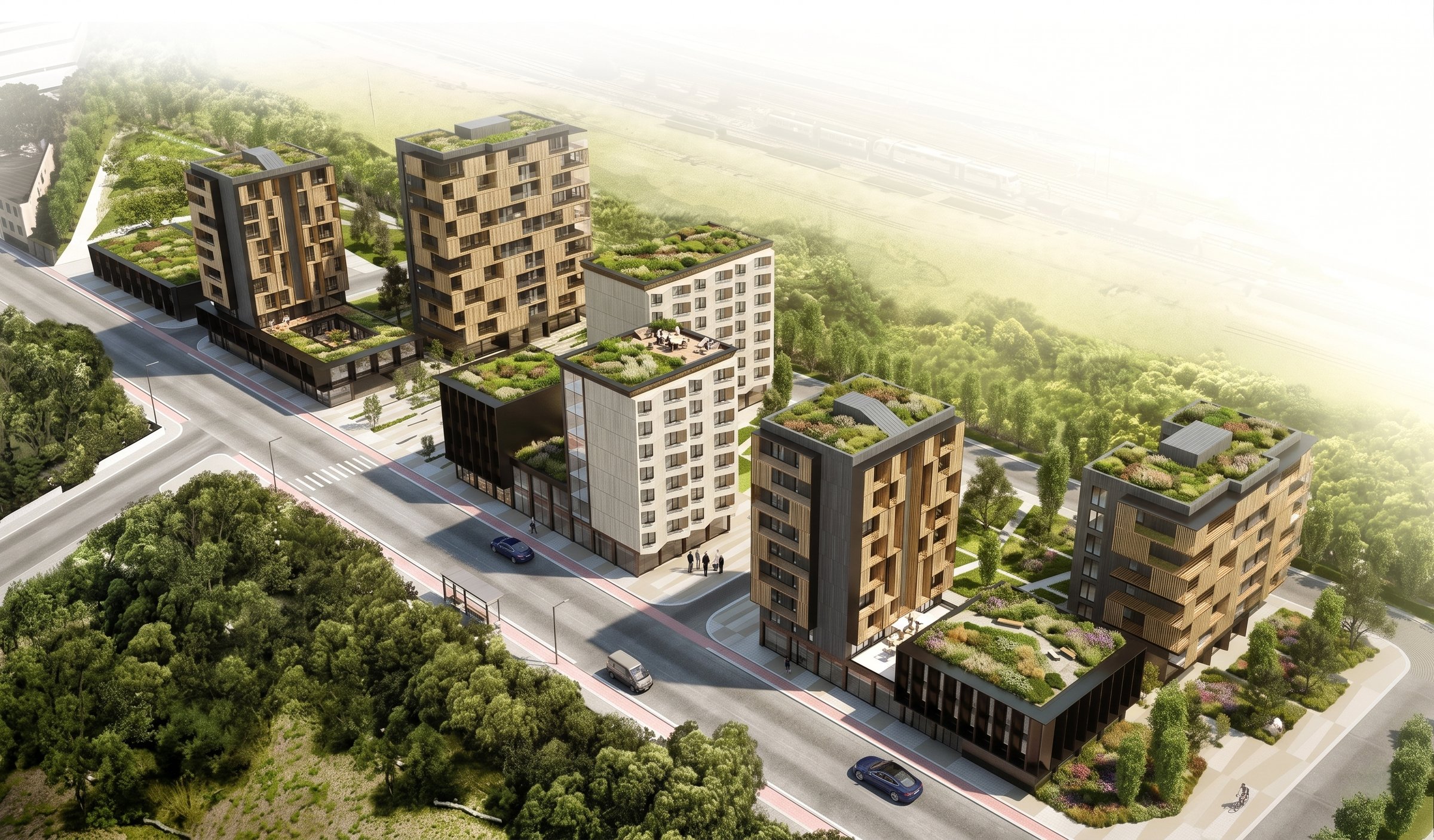
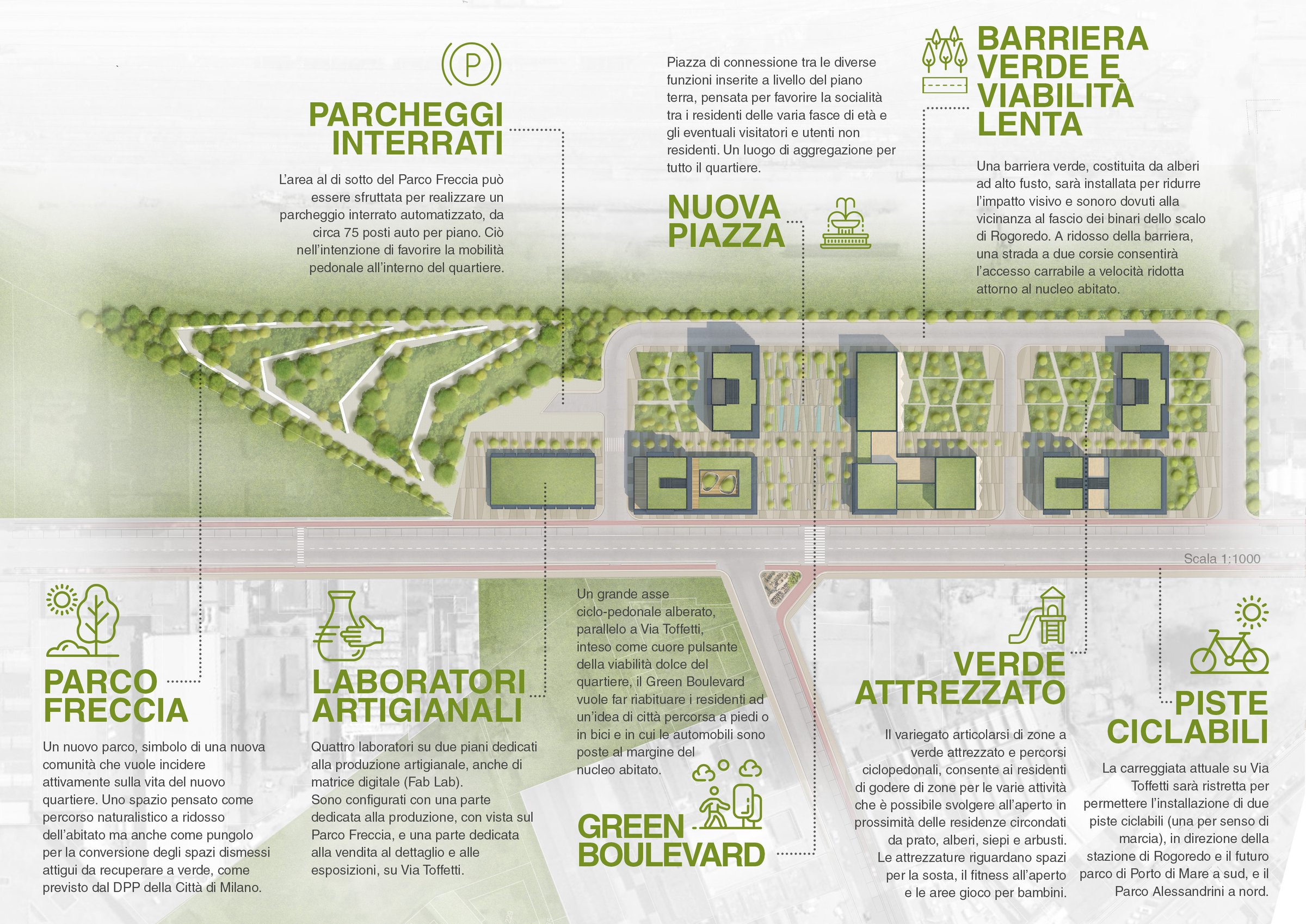
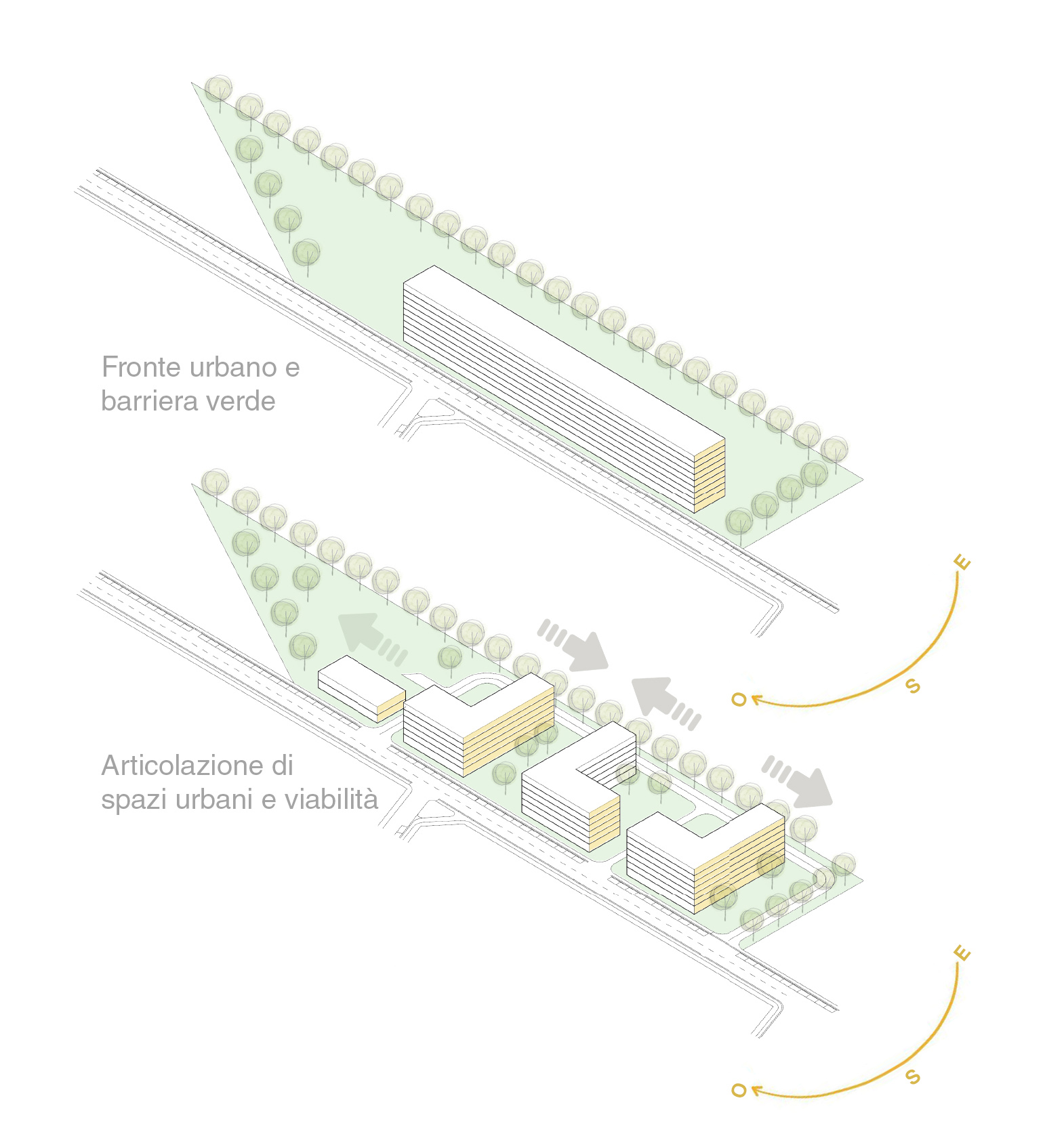
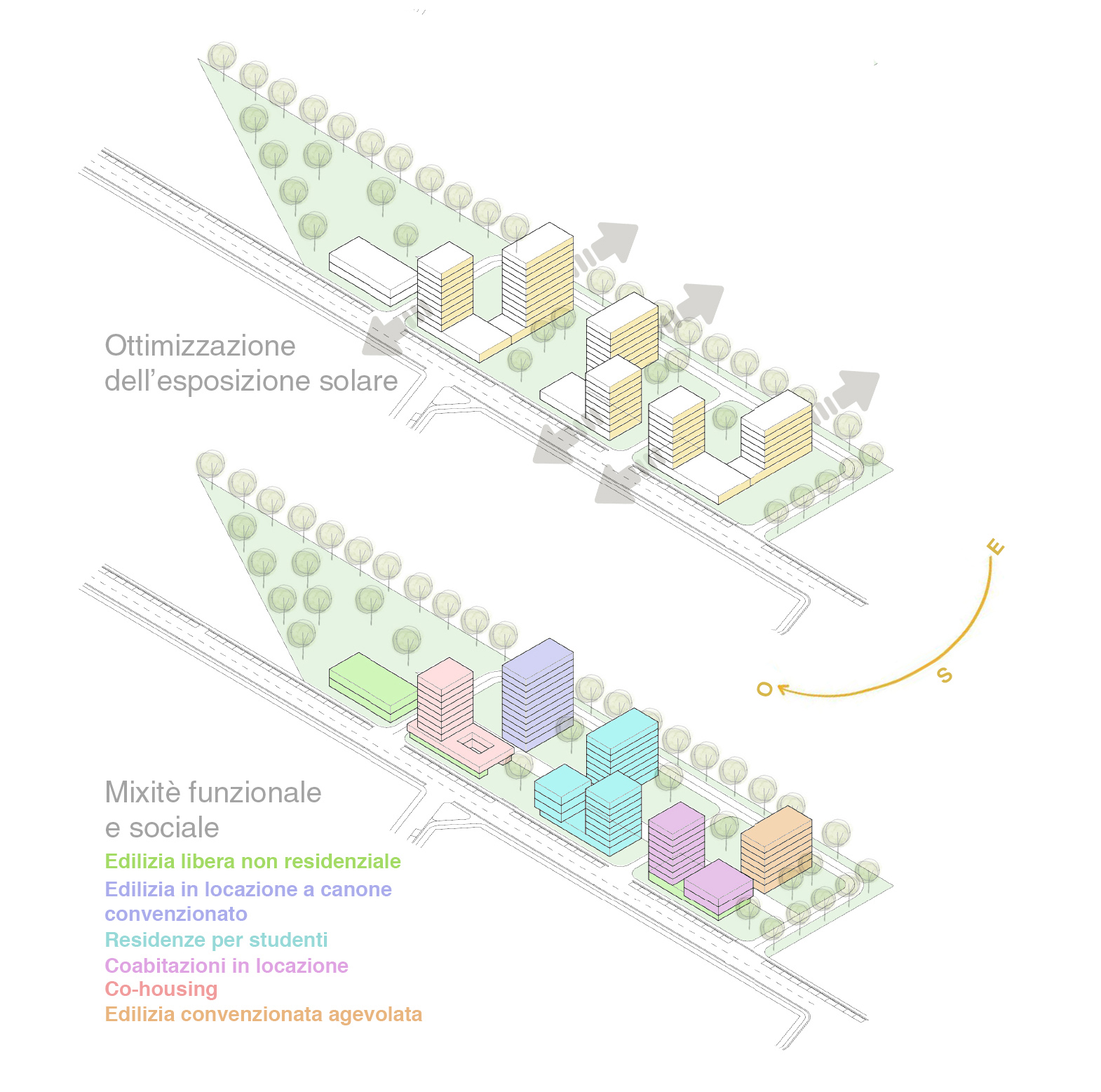
The heart of the project is the green boulevard: a large tree-lined pedestrian and cycling network, running parallel to Via Toffetti, which becomes the backbone of the neighbourhood’s soft mobility network. Surrounding the boulevard are a new public square (a meeting place for residents of all ages) equipped green spaces with fitness, play and rest areas, cycle paths leading towards Rogoredo station and the future Porto di Mare Park, and Parco Freccia, a new natural space to the north. A green barrier of tall trees mitigates the visual and acoustic impact of the railway tracks. Vehicular mobility is pushed to the edges of the area: car parks are located on Via Toffetti or underground beneath the park, and internal roads have speed limits. The aim is for residents to walk through the neighbourhood every day.
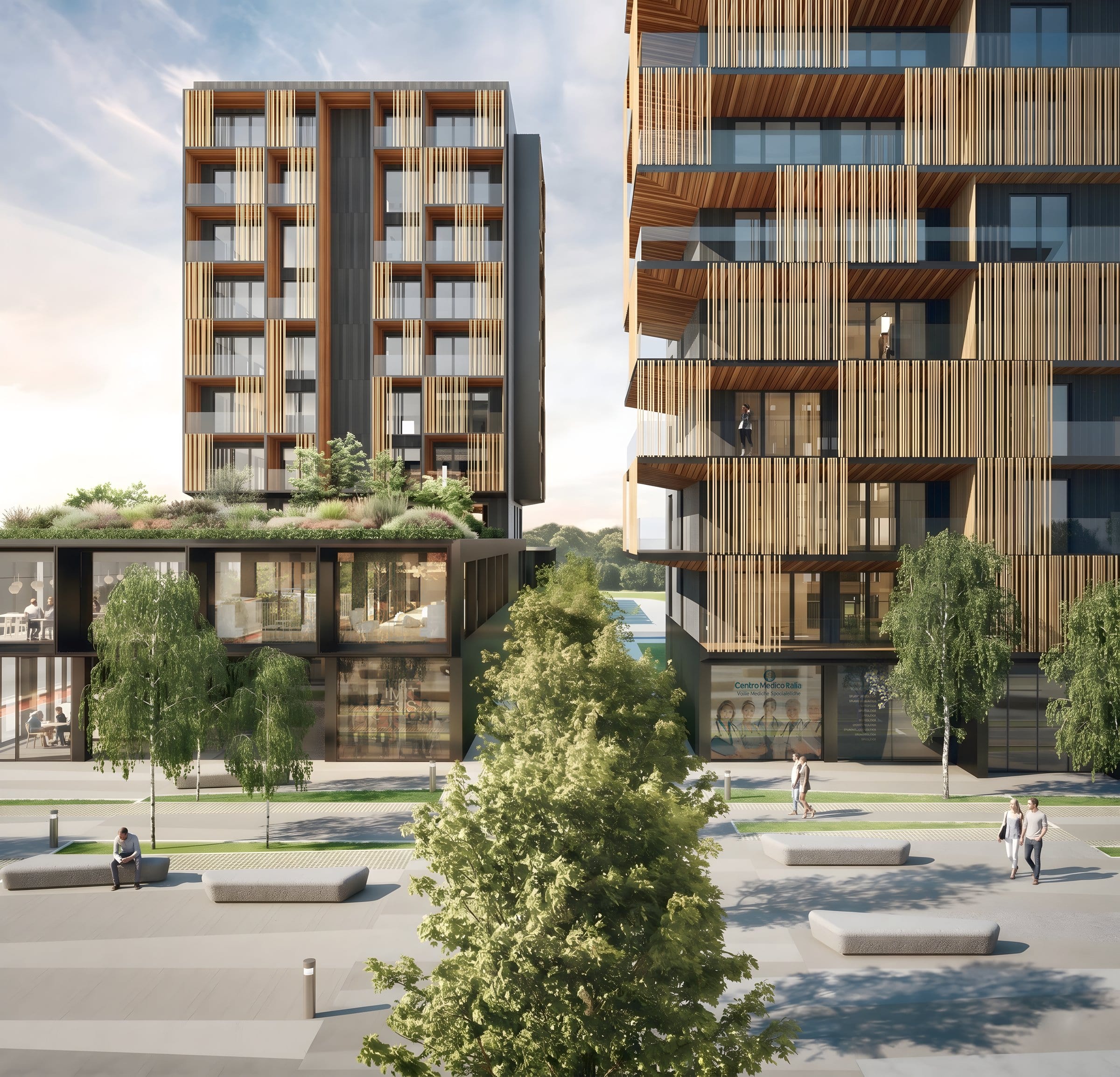
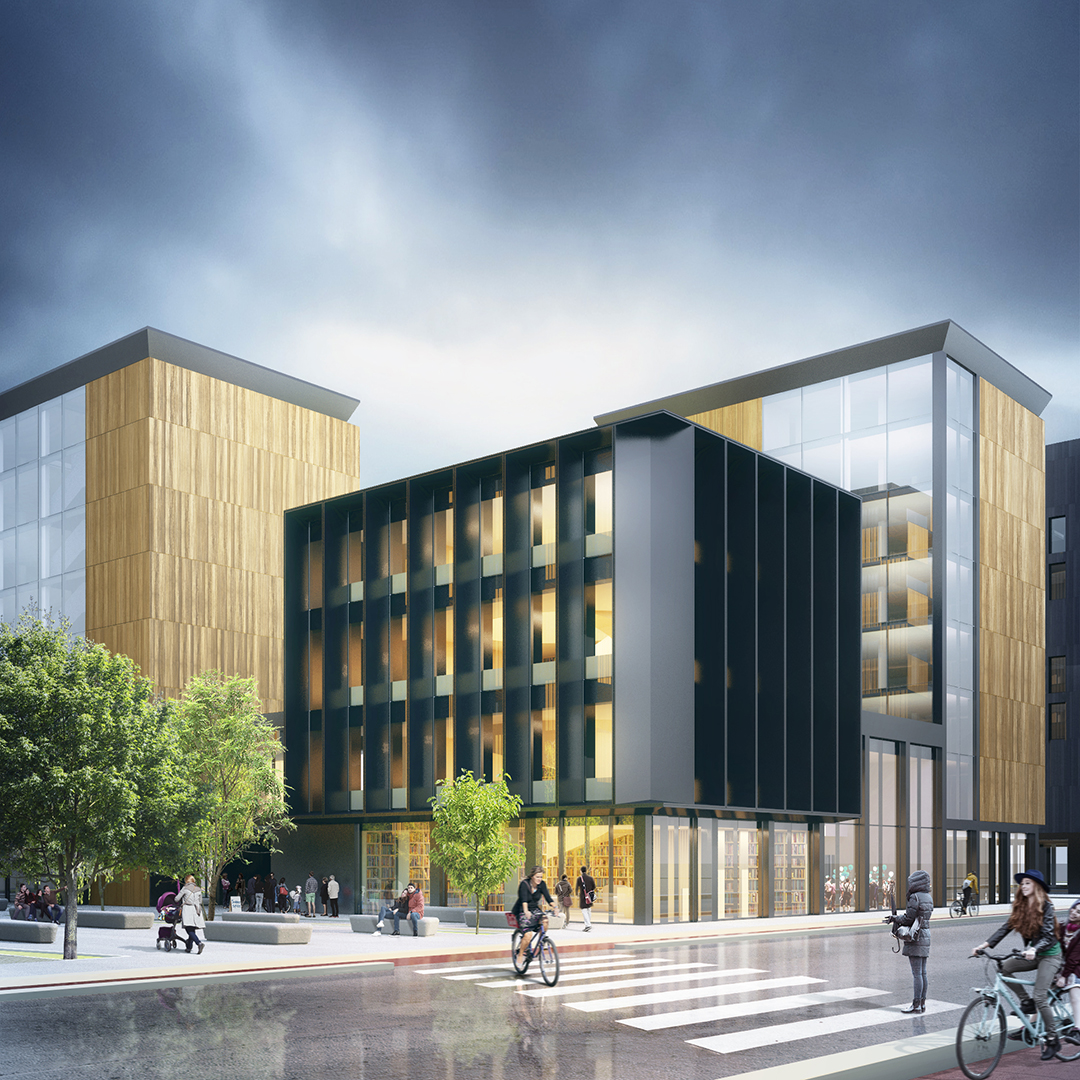
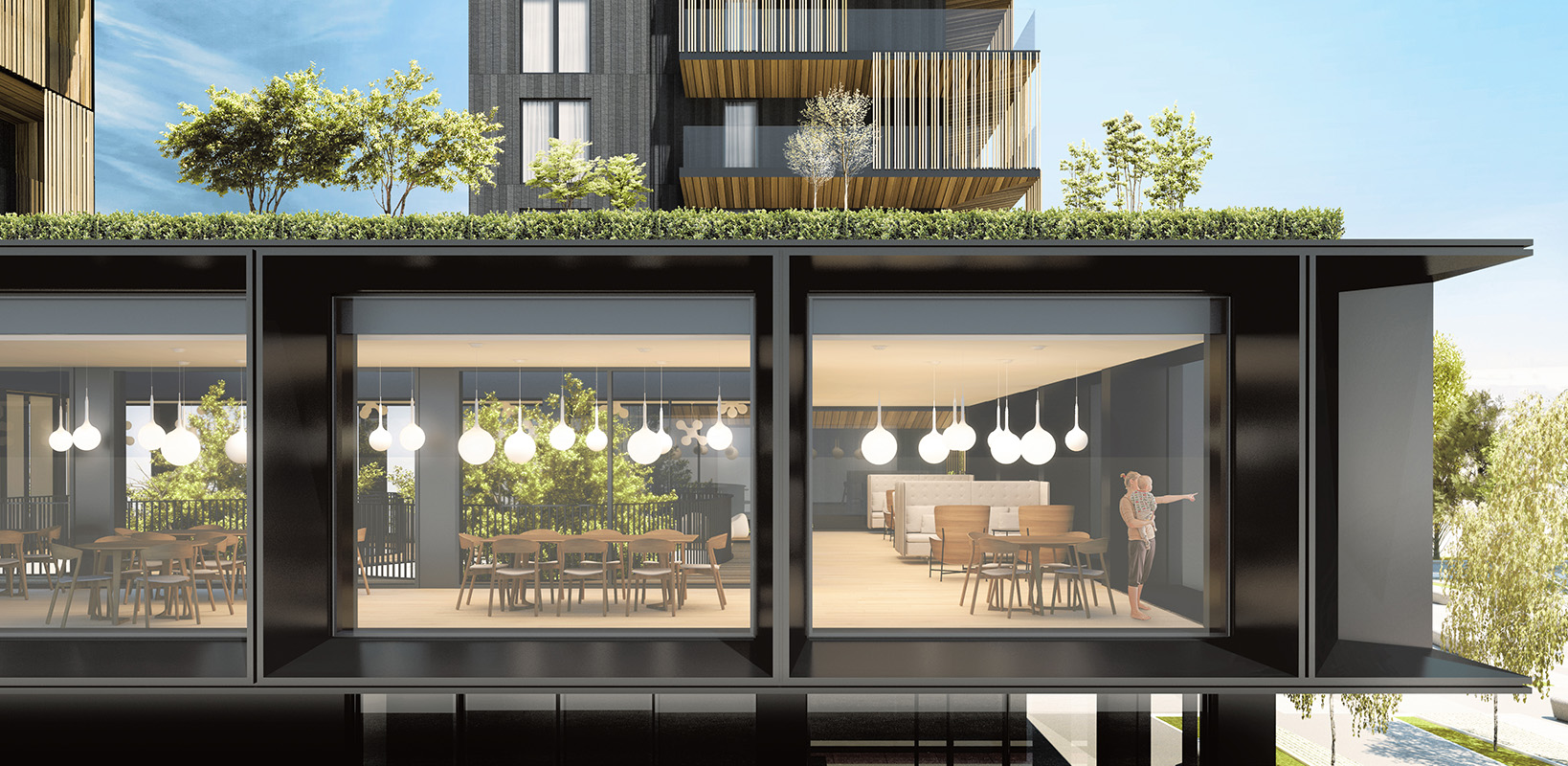
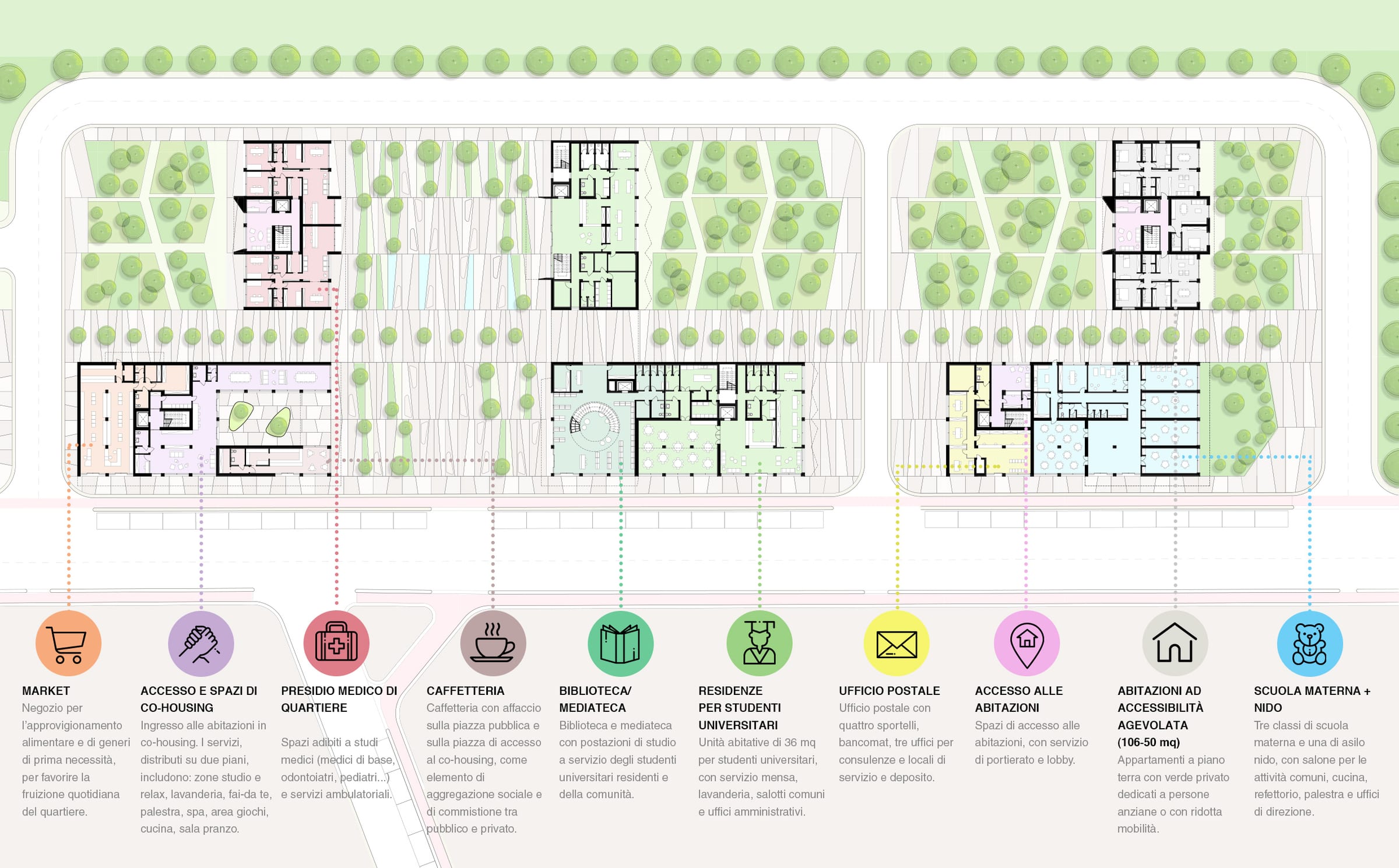
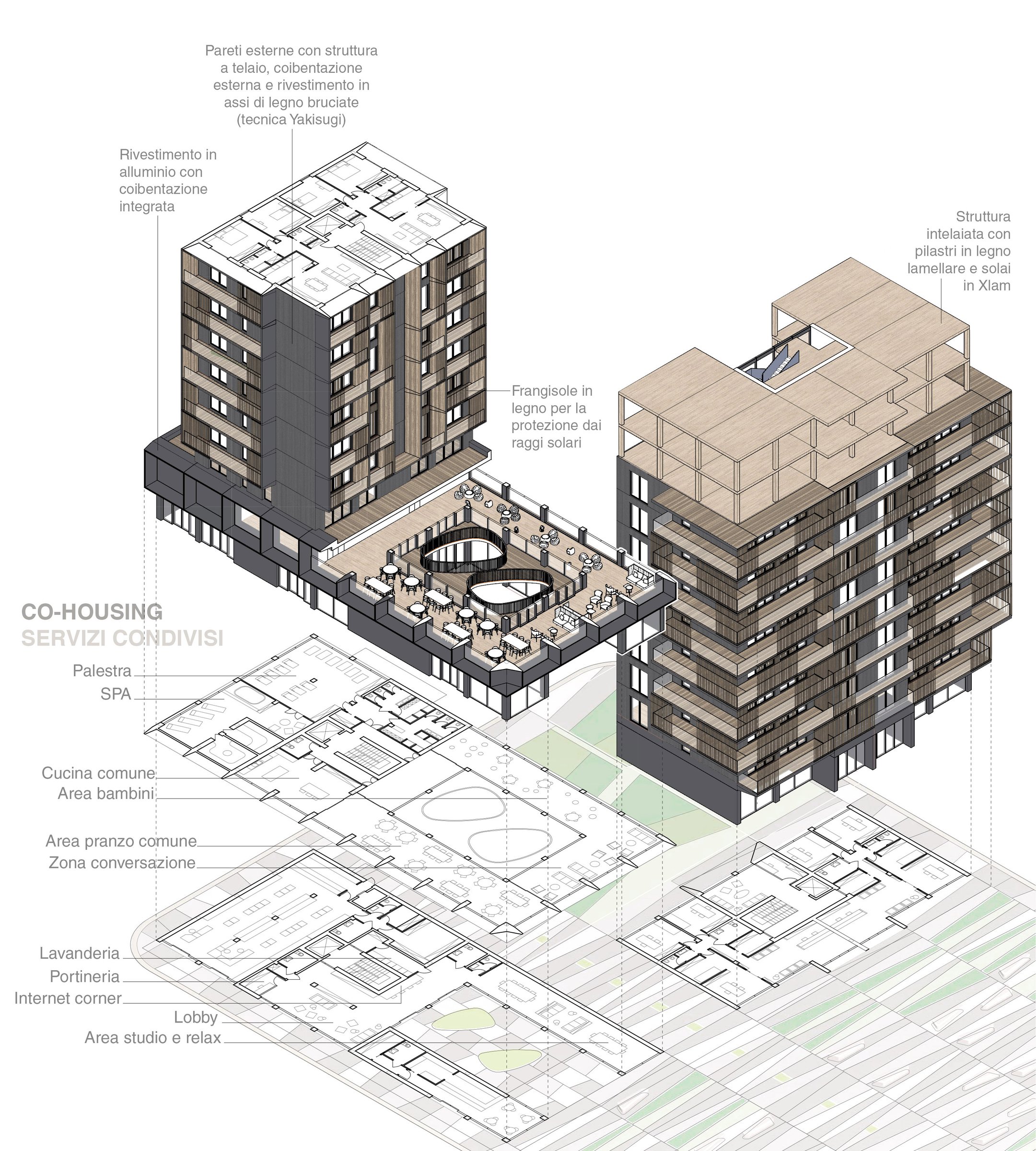
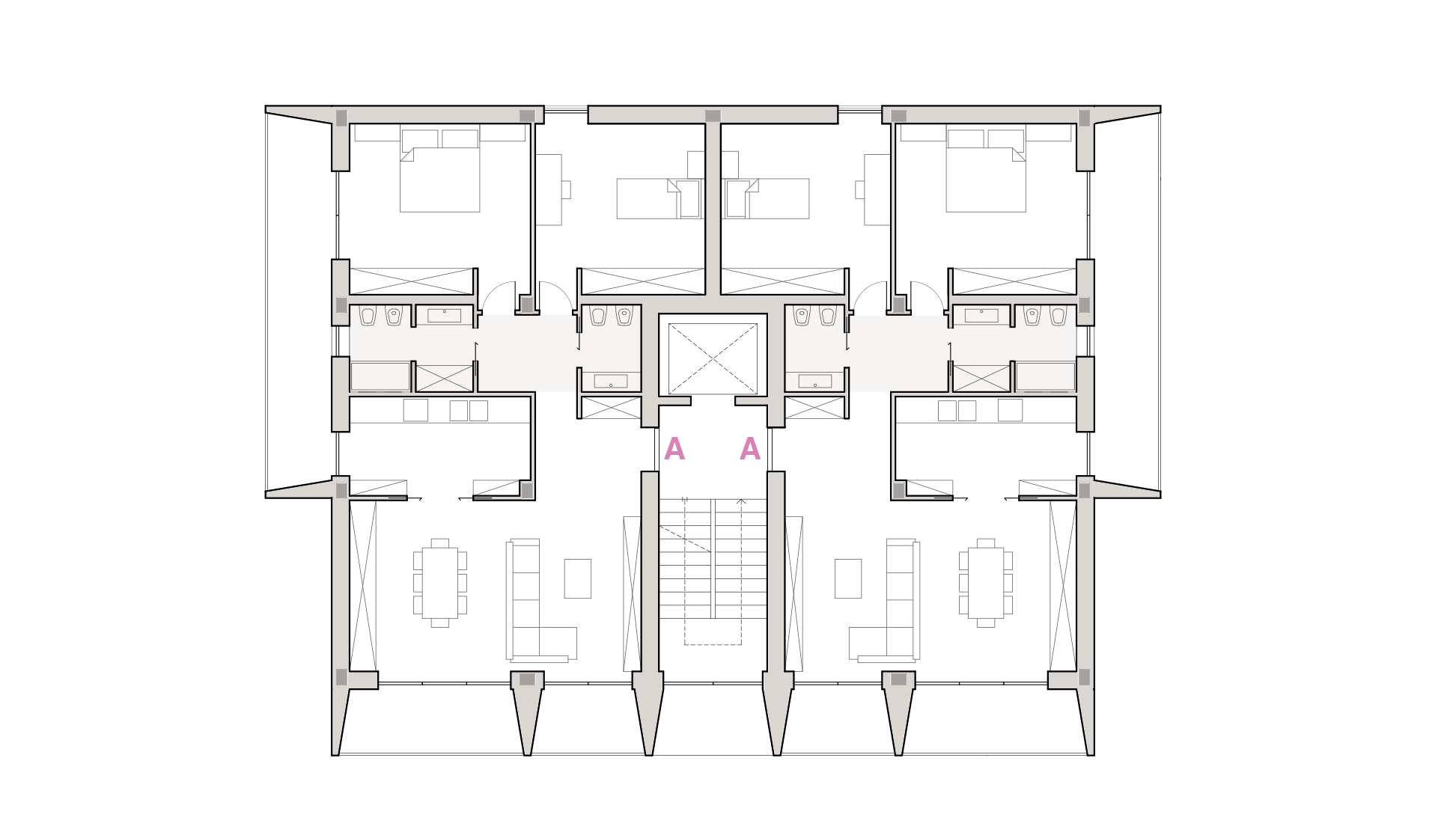
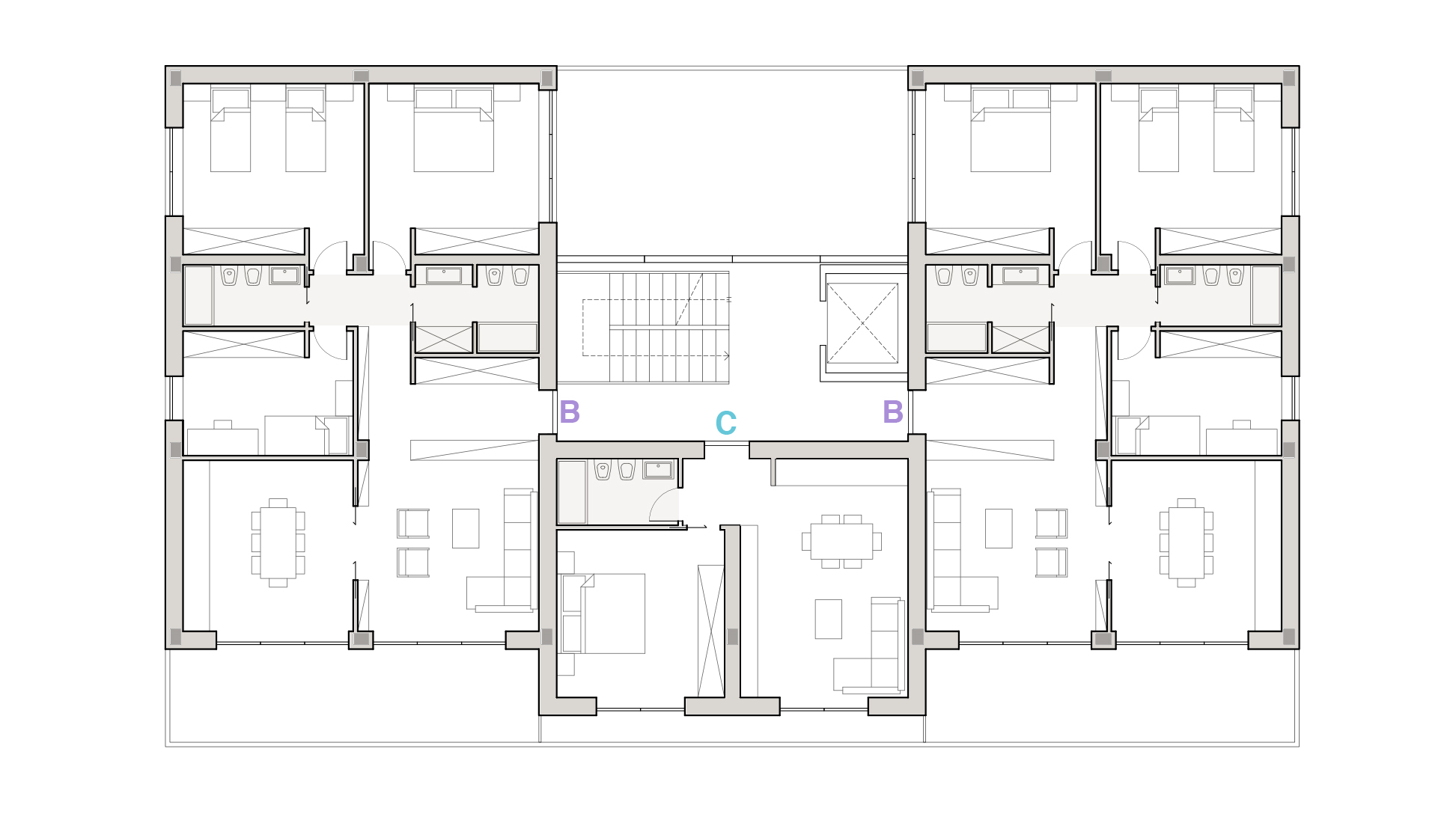
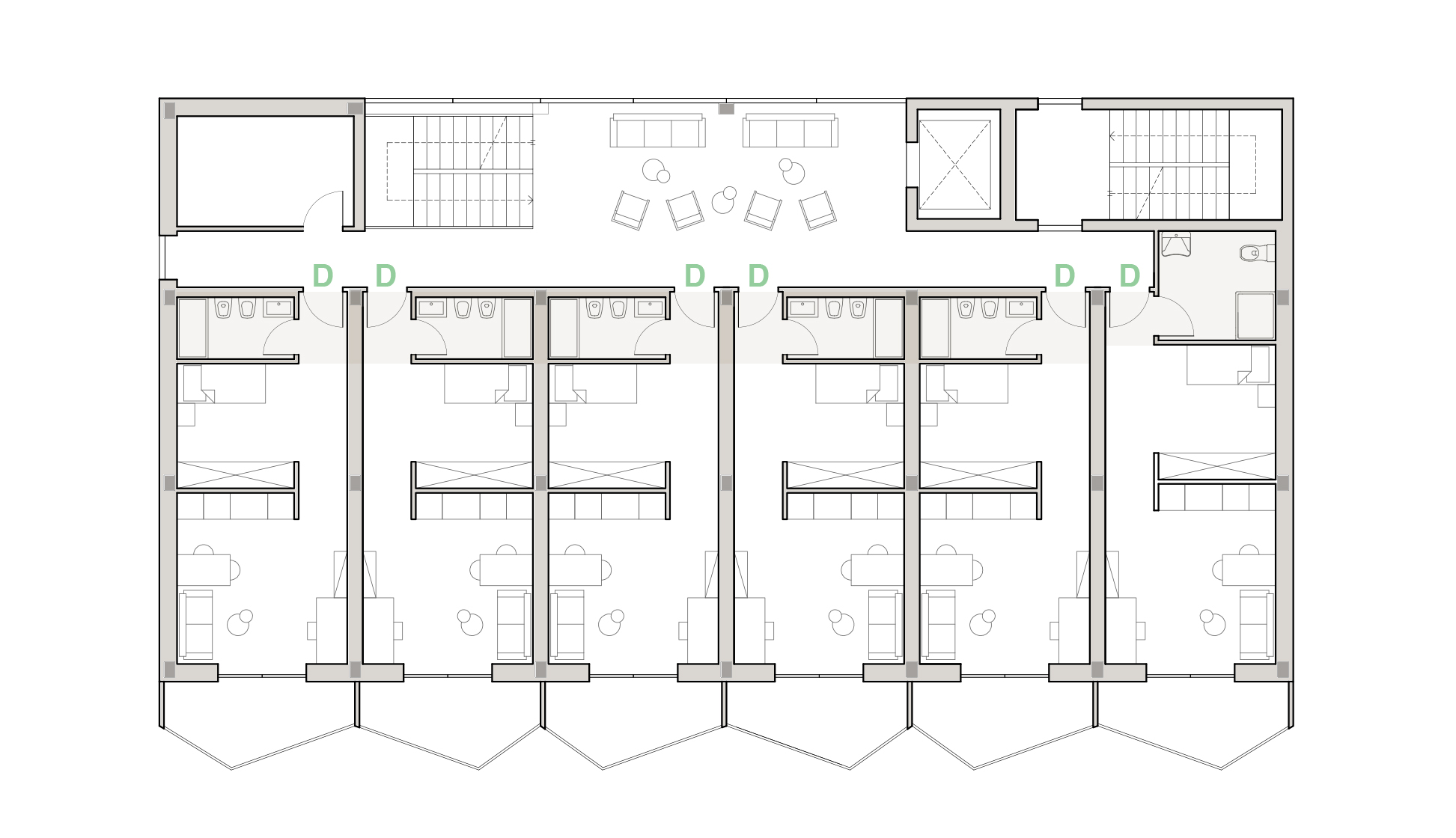
Six wooden residential towers rise above continuous urban facades dedicated to amenities. The load‑bearing structure is made of glued laminated timber (glulam) with XLAM panel floors, a building envelope with external insulation using natural materials, and an external cladding of burnt wood using the Japanese Yakisugi technique, which extends its lifespan through the carbonisation of the surface layer. The homes are designed according to bioclimatic principles: south-facing living areas, north-facing facades with few openings and greater opacity to reduce heat loss. The ground floor houses neighbourhood amenities (a library, medical centre, café, post office and nursery school) which bring the pedestrian and cycling network to life and encourage community life. Typologies include co-housing with shared facilities across two floors, 36-square-metre student residences with a canteen and laundry, and ground-floor flats with private gardens for the elderly or people with reduced mobility.
The ROGO/RE-DO! project received a Special Mention at the 2021 Golden Trezzini Awards, an international award promoted by the State Museum of St Petersburg. The masterplan also includes four two-storey craft workshops with exhibition spaces on Via Toffetti, to integrate craft production into the urban fabric. The project demonstrates that the regeneration of a suburb does not require dramatic architectural gestures, but rather a thoughtful urban design that prioritises the quality of life: clean air, quiet, green spaces, services within walking distance, and a sense of community born from shared spaces.
Renders & Photos
Technical specifications
- Location
- Rogoredo, Milan, Italy
- Year
- 2021
- Client
- Competition – project proposal
- Typology
- Urban regeneration masterplan, housing, amenities, public spaces
- Status
- Concept
- Designers
- Maurizio Barberio, Micaela Colella
- Awards
- Golden Trezzini Awards, Special Mention (2021)
- Main materials
- Glued laminated timber (glulam) (structure), XLAM panels (floors), natural materials for insulation, Yakisugi charred timber (cladding)
Technical drawings
How can a suburb be regenerated without erasing its identity and without creating a dormitory town?
The urban regeneration of Italian suburbs oscillates between two extremes: purely property-driven development, which builds homes without amenities or public spaces, and the ‘manifesto project’, which designs iconic architecture but does not change the daily life of residents. In Rogoredo, the problem was clear: an area marked by its proximity to the railway tracks, traffic on Via Toffetti and a fragmented social fabric. ROGO/RE-DO! does not propose ‘spectacular’ buildings but an urban design that focuses on the quality of life: soft mobility, services within walking distance, functional social mixité, and green spaces as primary infrastructure. Regeneration starts with how people move and interact, not with how buildings look.
Frequently Asked Questions
Are you considering an urban regeneration project or a neighbourhood-scale residential development?
If your project requires an integrated approach (urban planning, sustainable architecture, and functional and social mixité) we can offer expertise in bioclimatic design, knowledge of natural materials, and an urban vision focused on the quality of daily life.
Let’s talk about your projectRelated projects
Sustainable Design
POLYMNIA FUTURA
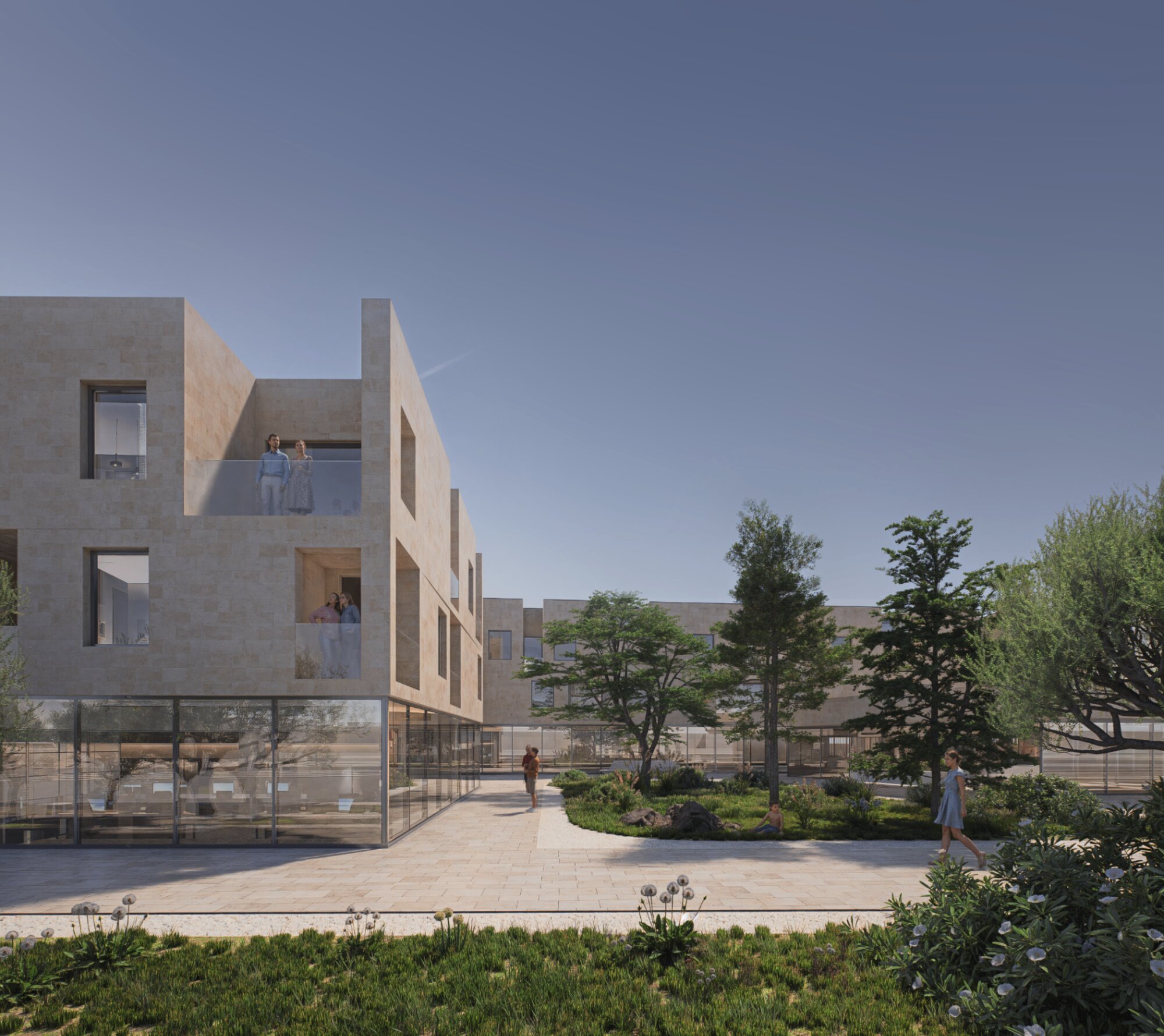
An urban regeneration proposal for Polignano a Mare that combines sustainable mobility, public spaces and new residential neighbourhoods: Special Mention at the Europan 18 European competition.
Public & Commercial Architecture
TRANI SCHOOL
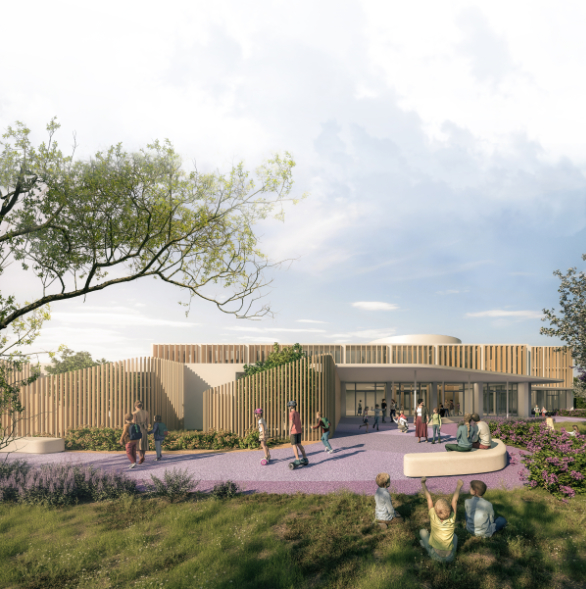
A new nursery and primary school complex that transforms a derelict area of Trani into an educational urban park, featuring a civic square and a regenerative approach that goes beyond the NZEB logic.