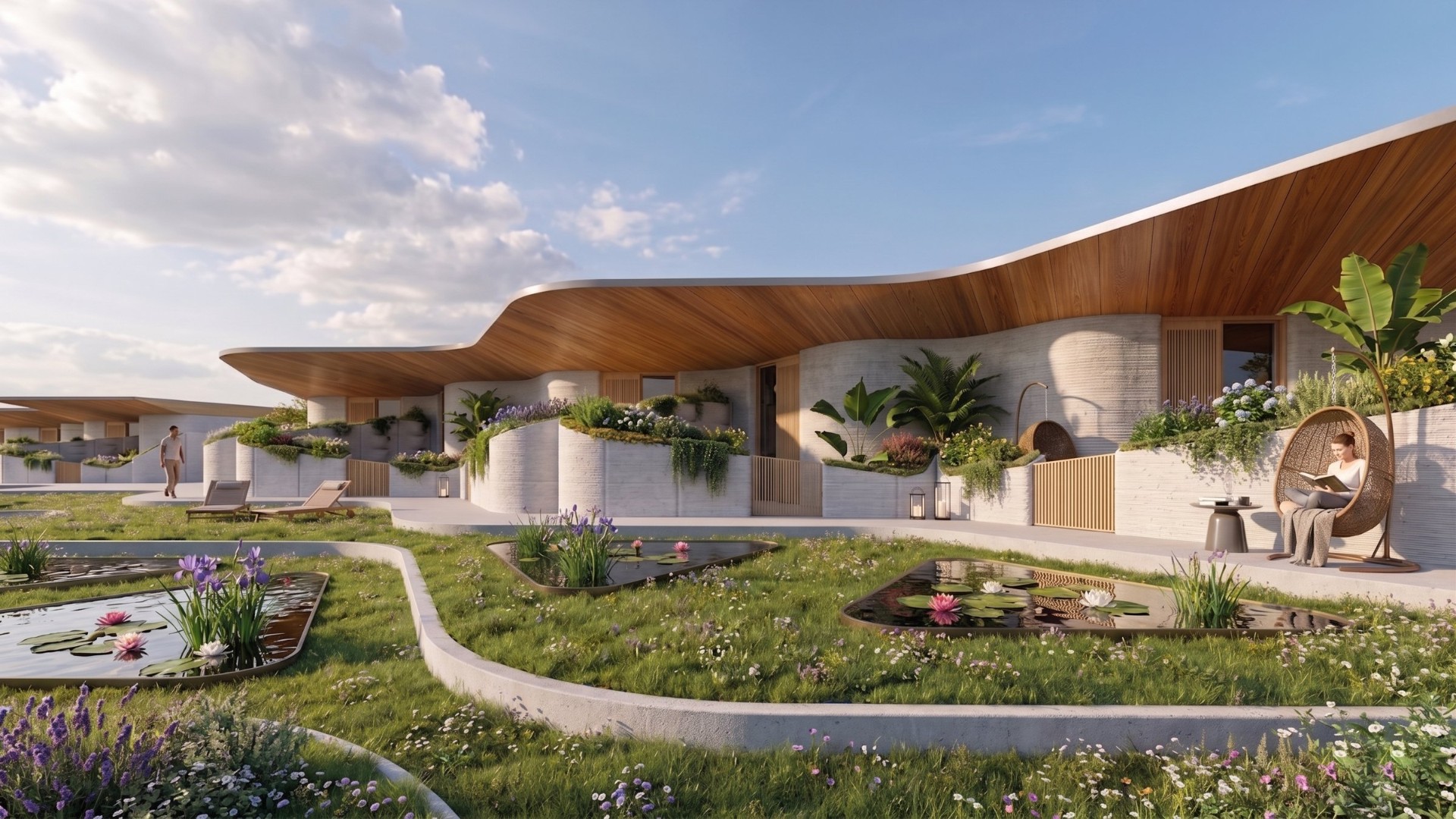
First Stone – 3D-printed housing units in New Orleans
Hurricane-proof houses costing $99,000, 3D-printed for those who cannot secure a traditional mortgage.
2024 · New Orleans, Louisiana, USA · Residential · 3D Printed Design
The first stone for those who cannot afford their first home
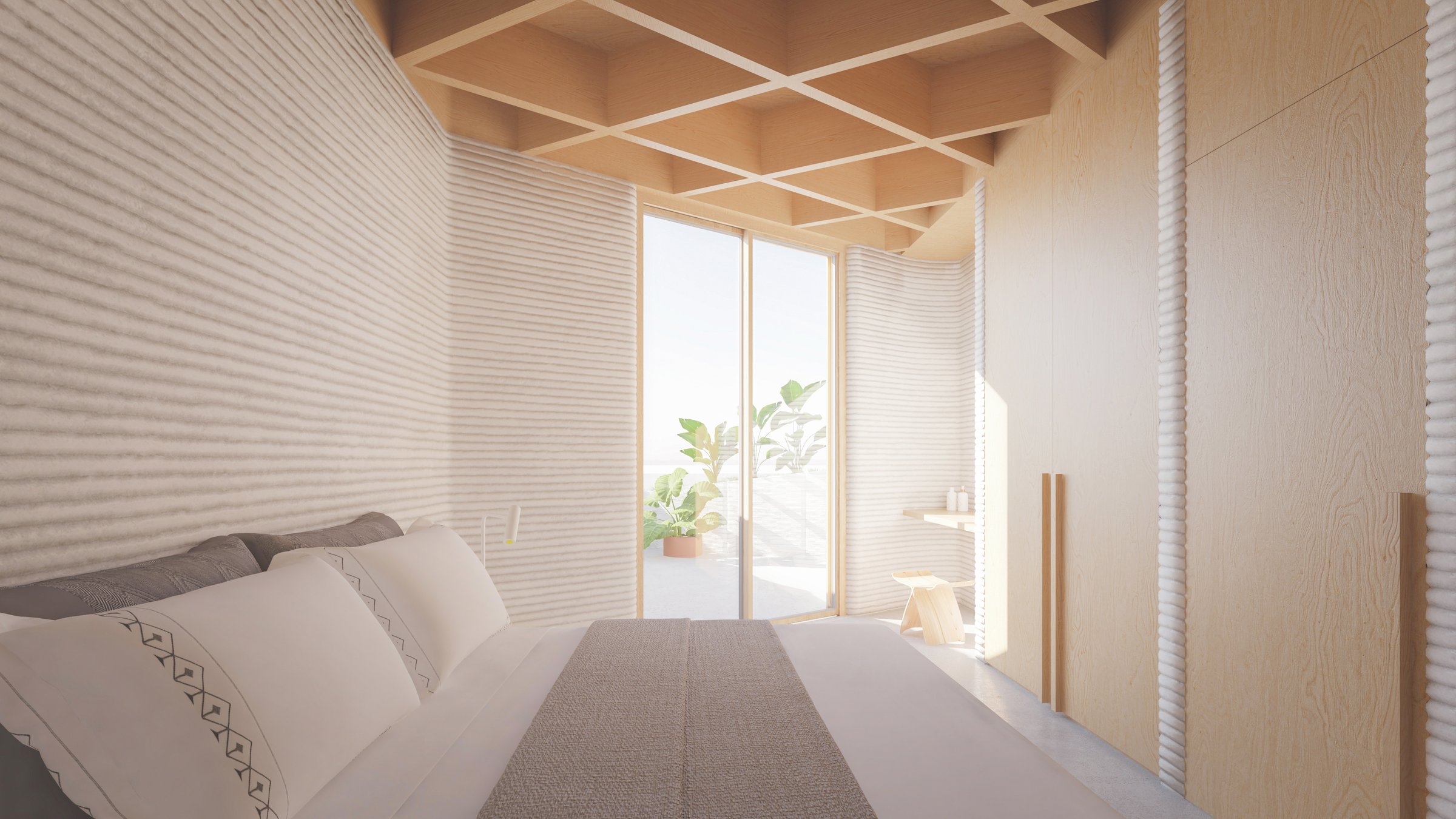
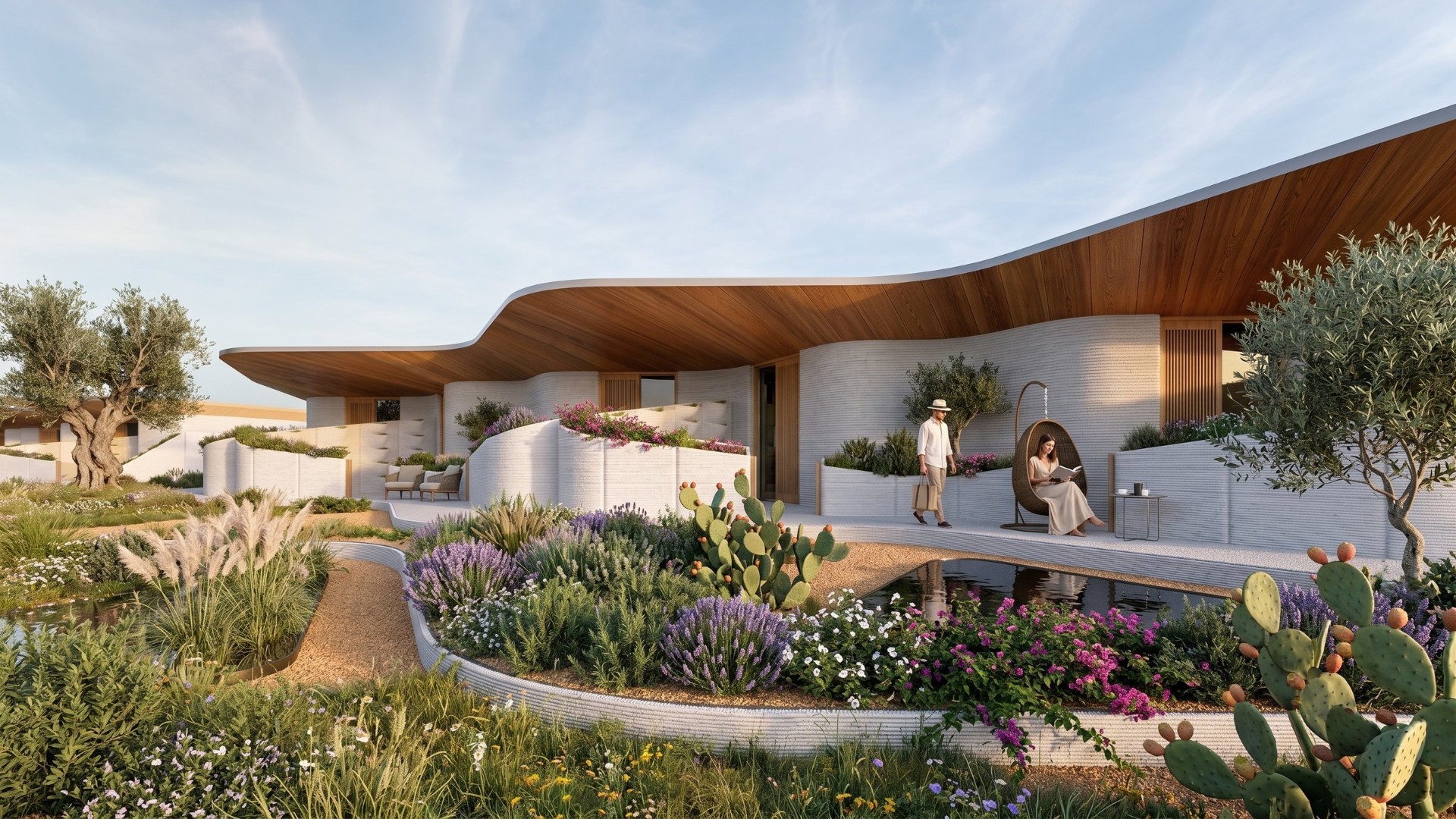
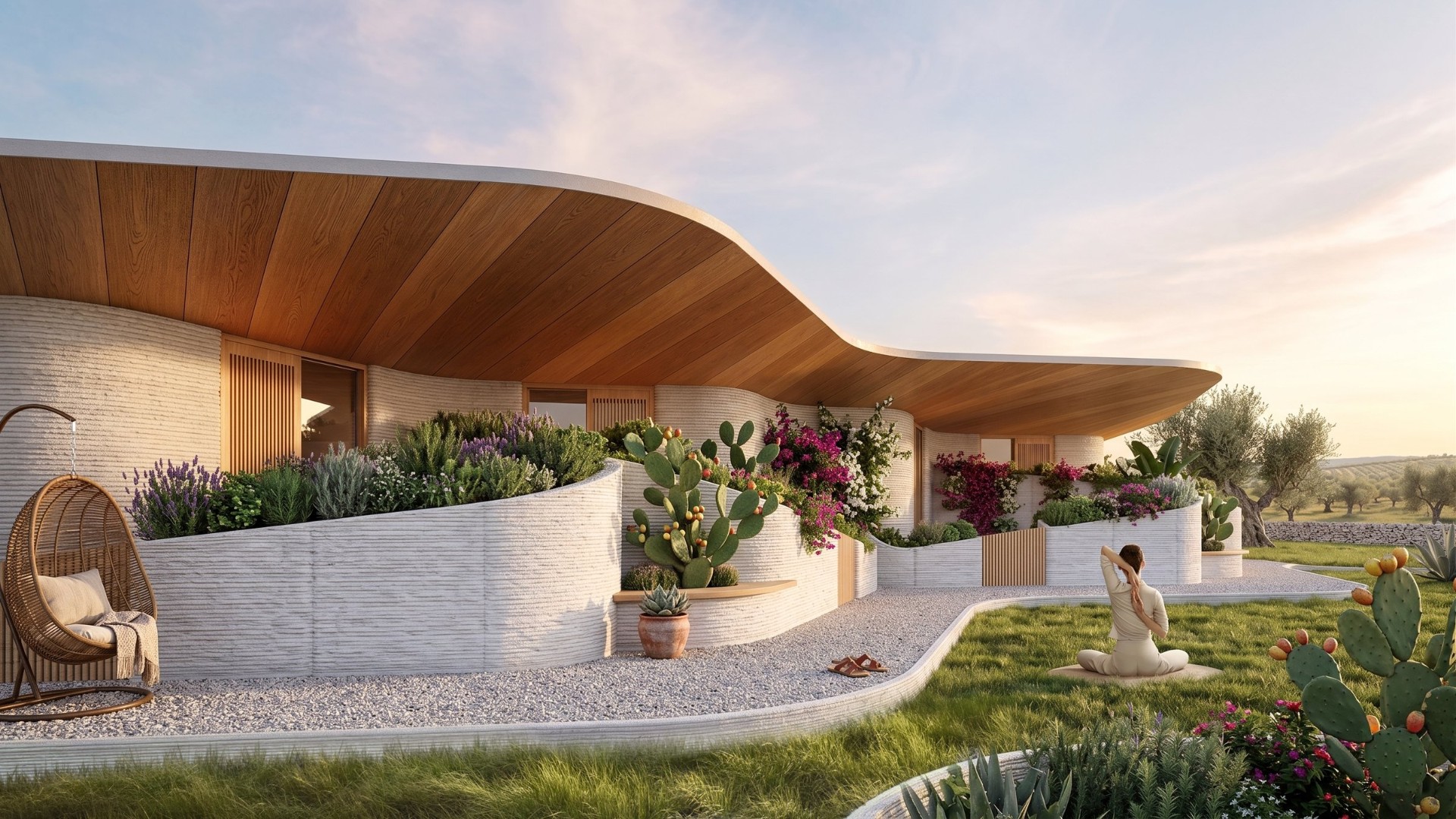
First Stone stems from a practical question: is it possible to build a decent, hurricane-resistant, energy-efficient and affordable home for young couples and single people who cannot access traditional mortgages? The New Orleans area in Louisiana, repeatedly hit by extreme weather events and marked by deep inequalities in access to housing, is the ideal setting to test this hypothesis. The project, developed by Barberio Colella Architetti with Angelo Figliola, proposes a system of 3D-printed housing units with a target cost of $99,000 per base unit.
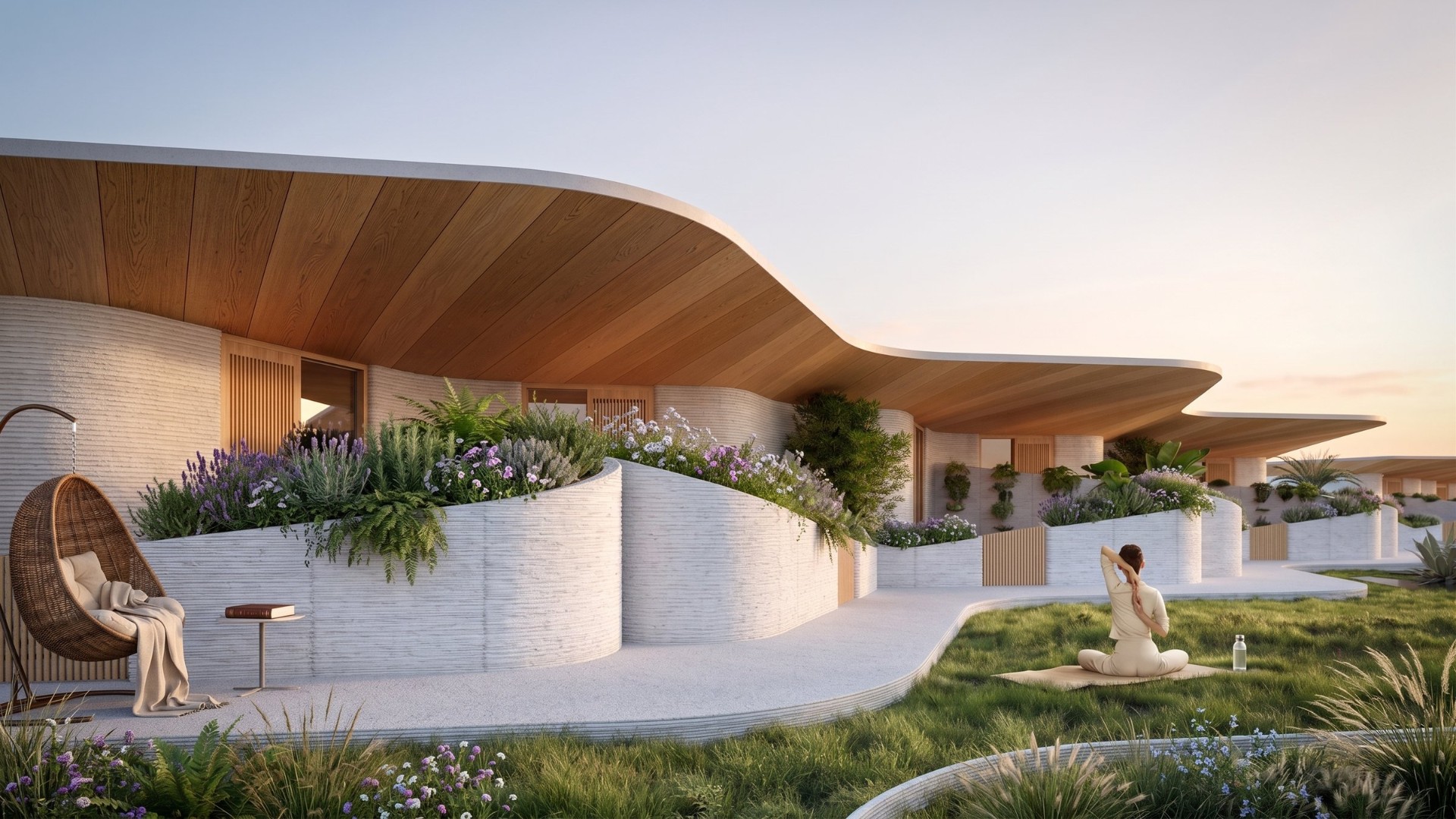
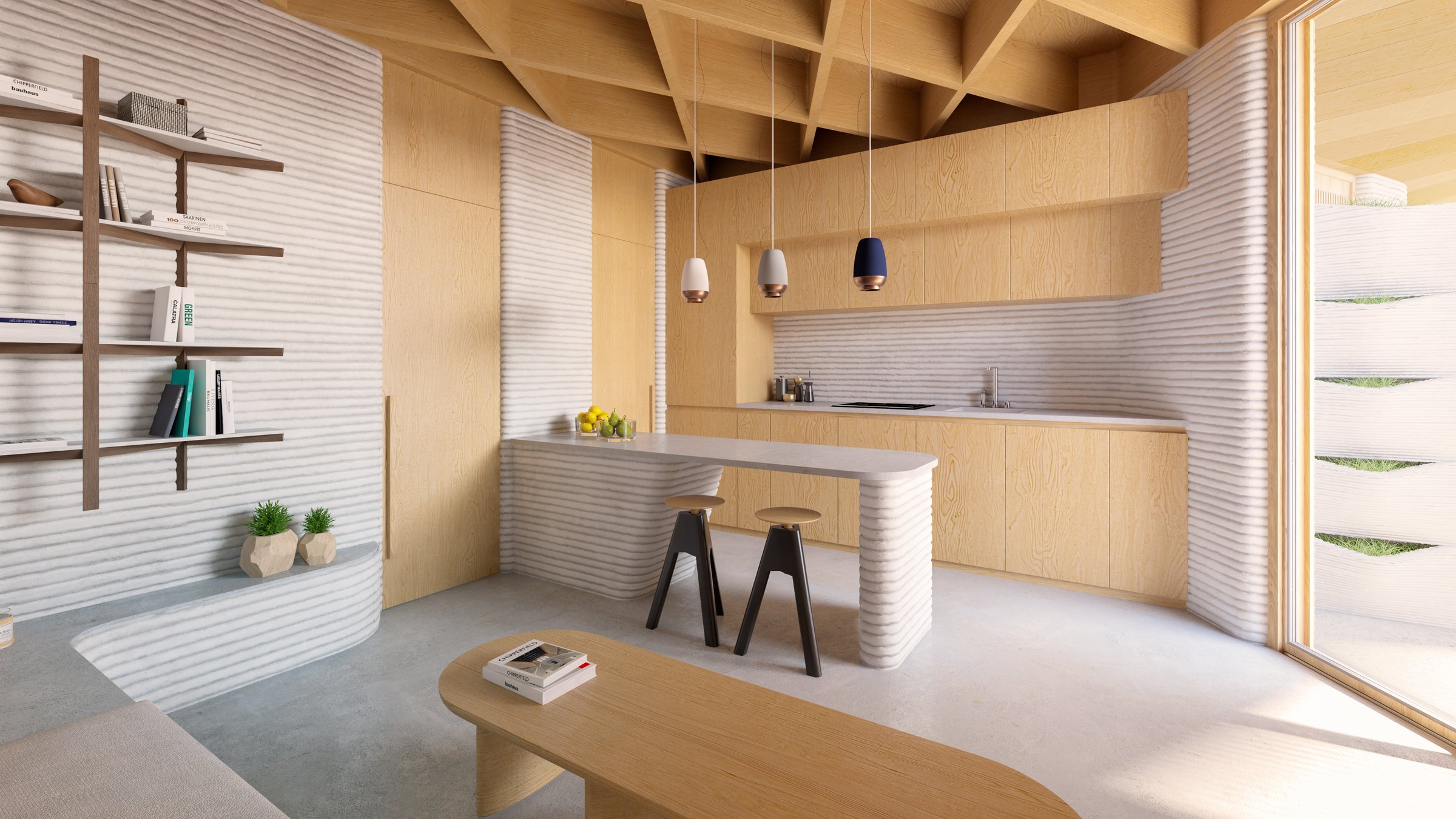
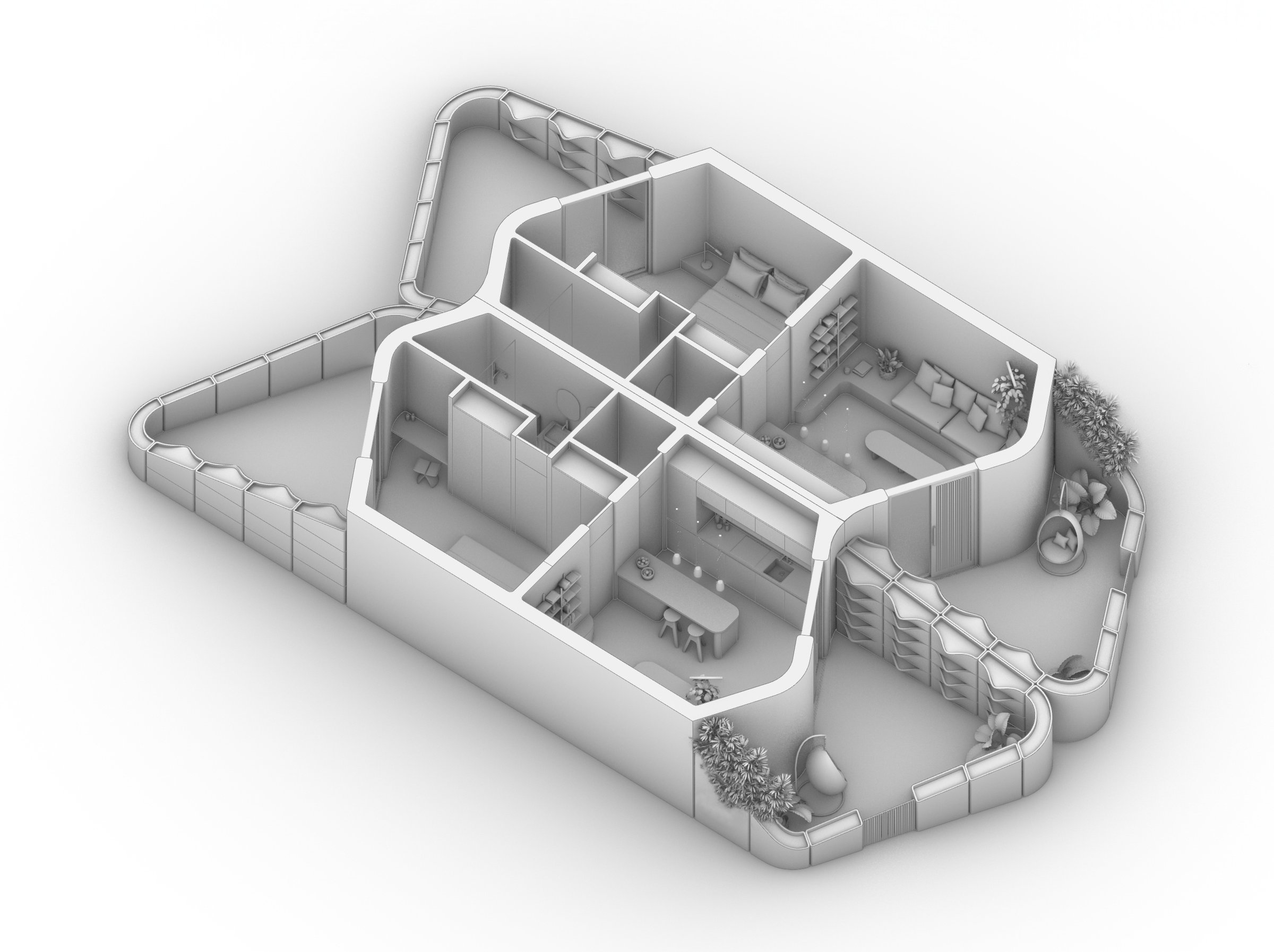
The design challenge was threefold: to keep costs down without sacrificing spatial quality, to withstand hurricane-force winds without resorting to heavy superstructures, and to apply genuine (not merely decorative) bioclimatic design principles in a humid subtropical climate. The solution is a compact volume with a north-south oriented plan and an aerodynamic shape, tested using CFD (Computational Fluid Dynamics). The long sides face north and south, sheltered respectively by adjacent dwellings and from the rain; the short sides, facing east and west, feature large glazed openings towards the private garden, allowing for cross-ventilation (living area to the east, sleeping area to the west). Generous overhangs provide protection from direct sunlight and driving rain.
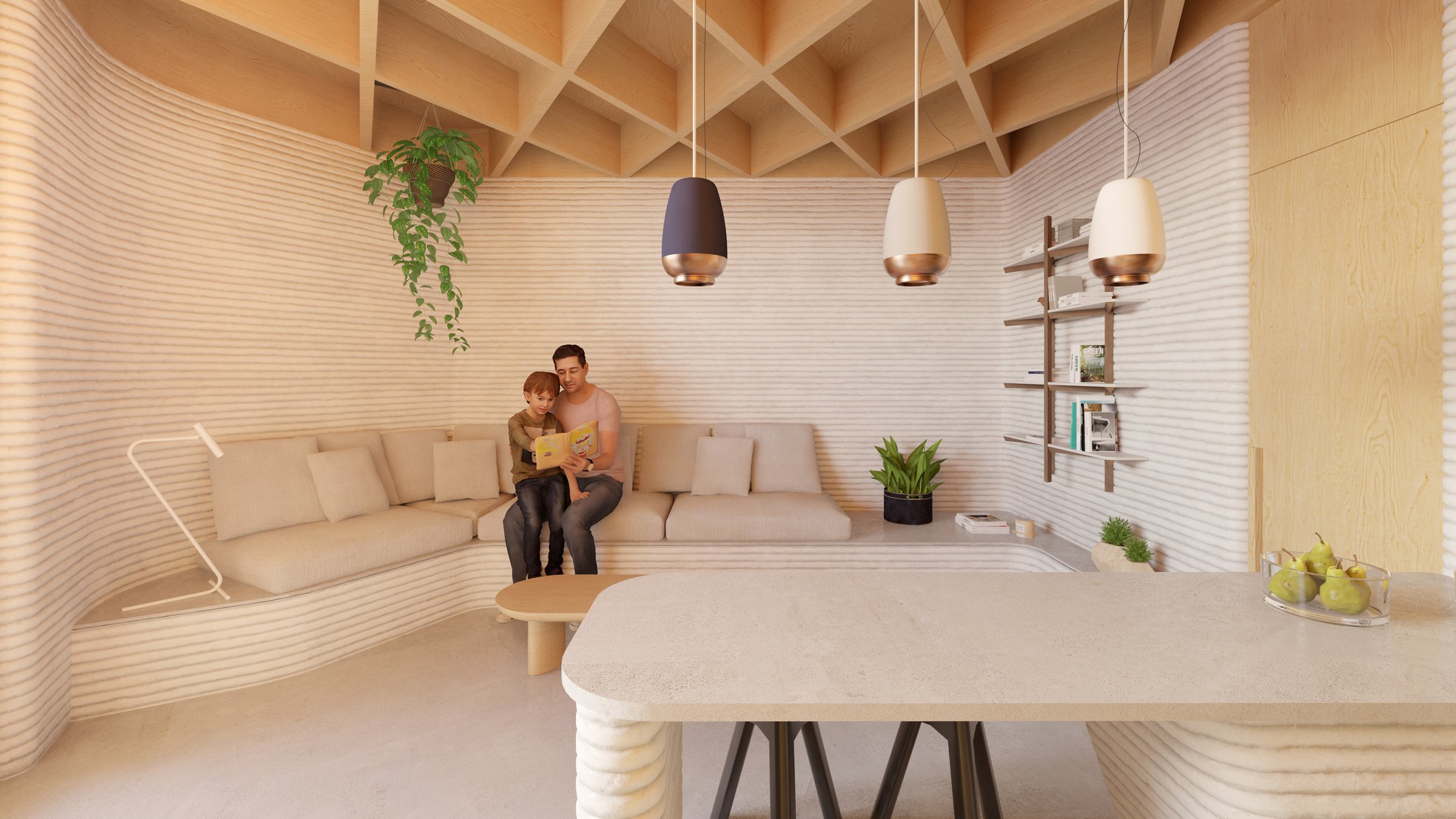
The base unit measures 45 m² (484 sq ft) and contains everything necessary for a single person or a couple. The system is designed to be doubled in size: by adding a second module, the floor area increases to 90 m² (968 sq ft) with 2–3 bedrooms. The photovoltaic panels on the roof power shared batteries as part of an energy community: each unit contributes to the neighbourhood’s electricity grid, reducing individual costs and increasing the system’s resilience. 3D-printed materials reduce construction times and site waste compared to traditional timber construction typical of US residential building.
The masterplan envisages a clustered layout where the units are arranged to form shared spaces and pedestrian paths, fostering community life. First Stone is not an emergency housing project: it is a proposal for a new neighbourhood model where construction technology (3D printing) serves a specific social objective, and where sustainability is not an additional luxury but a requirement integrated into the base cost of $99,000.
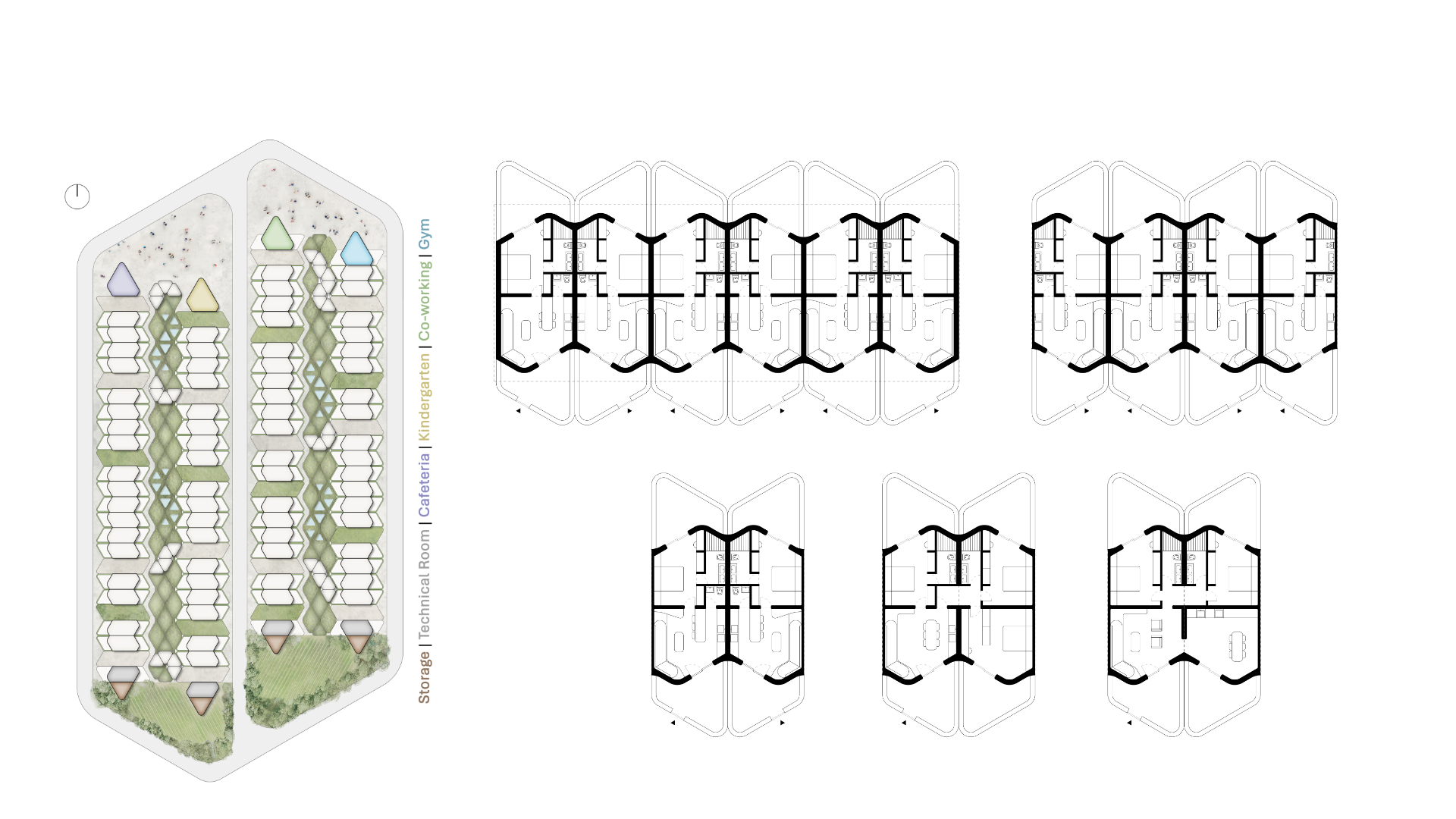
Technical specifications
- Location
- New Orleans area, Louisiana, USA
- Year
- 2024
- Client
- Research project
- Typology
- 3D-printed residential housing
- Area
- 45 m² (base unit) / 90 m² (double unit)
- Status
- Concept
- Designers
- M. Barberio, M. Colella, A. Figliola
- Target cost
- 99,000 USD per base unit
- Main materials
- 3D-printed concrete (ICON printer) for the walls; CNC-cut LVL (Laminated Veneer Lumber) for the roof and joinery; photovoltaic panels on the roof; shared storage batteries (energy community)
Is it possible to build a decent, hurricane-resistant home for less than $100,000?
In coastal areas of the United States, and particularly in the New Orleans region, the cost of housing is a structural barrier for young couples and single people on average incomes. Traditional construction using timber frames is vulnerable to hurricanes and requires expensive insurance. Existing hurricane-proof homes are out of reach for those unable to secure a traditional mortgage. First Stone offers a third way: 3D printing reduces construction costs by eliminating formwork and reducing the need for skilled labour, whilst the aerodynamic shape (tested using CFD simulation) provides resistance to hurricane-force winds without the need for costly superstructures.
Frequently Asked Questions
Are you looking for affordable and resilient housing solutions?
If you work in social housing, affordable housing or resilient communities and would like to explore how 3D printing could change the economic equation of your project, we can share our research and assess specific applications.
Send us your brief[Send your brief]
Related projects
Sustainable Design
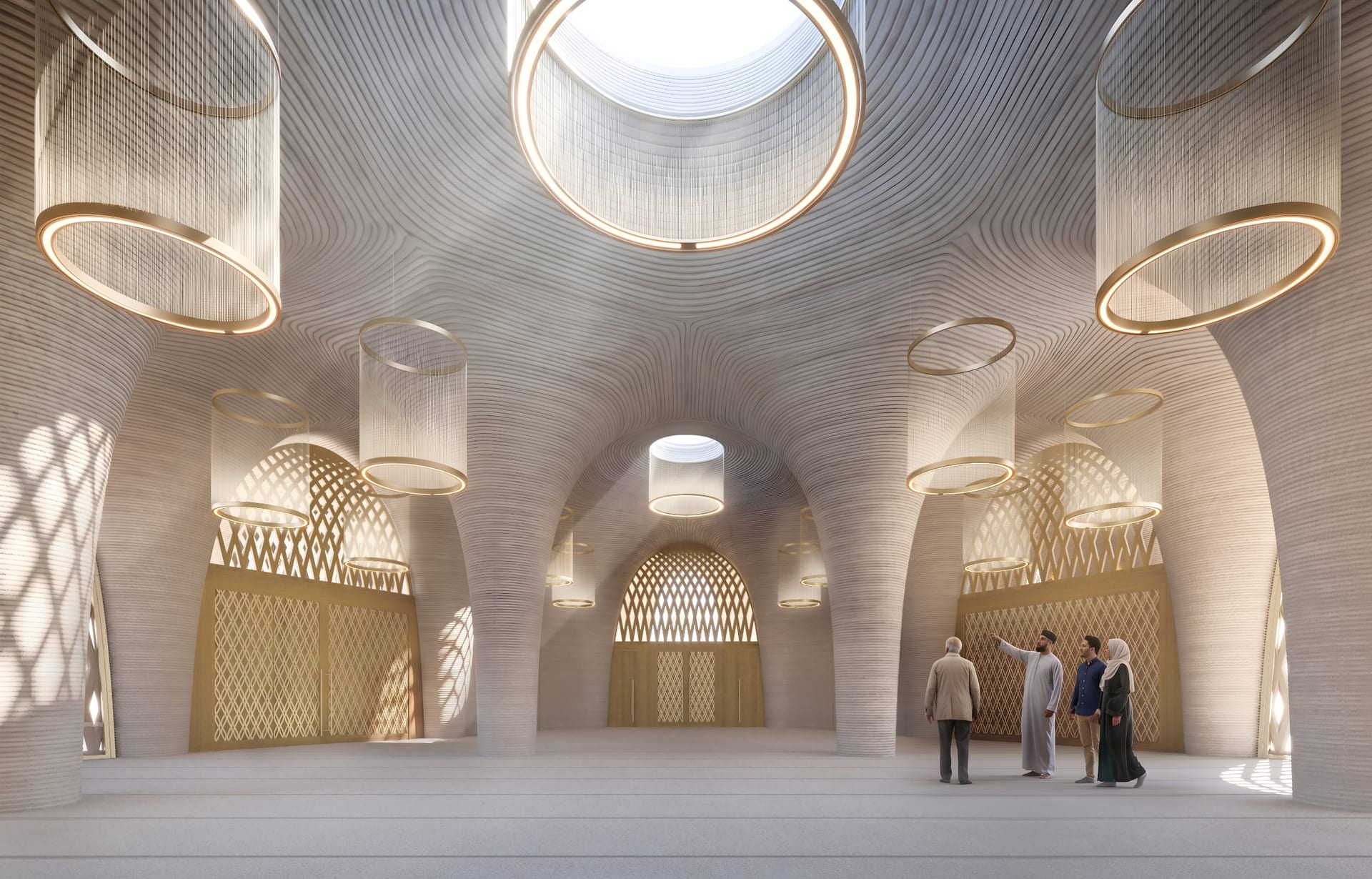
3D-PRINTED MOSQUE
A place of worship where additive manufacturing makes it possible to create complex vaulted surfaces at a sustainable cost, reinterpreting Islamic architecture using contemporary techniques
Sustainable Design
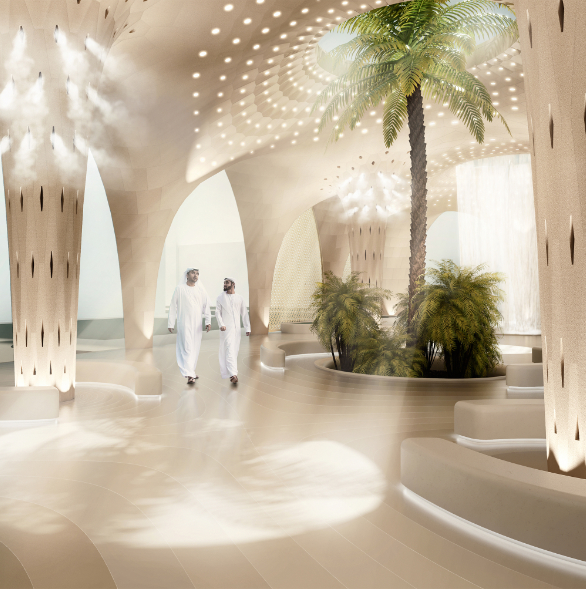
URBAN DUNES
A 3D-printed desert sand structure that transforms a public space into a passively air-conditioned urban oasis.
3D Printed Design
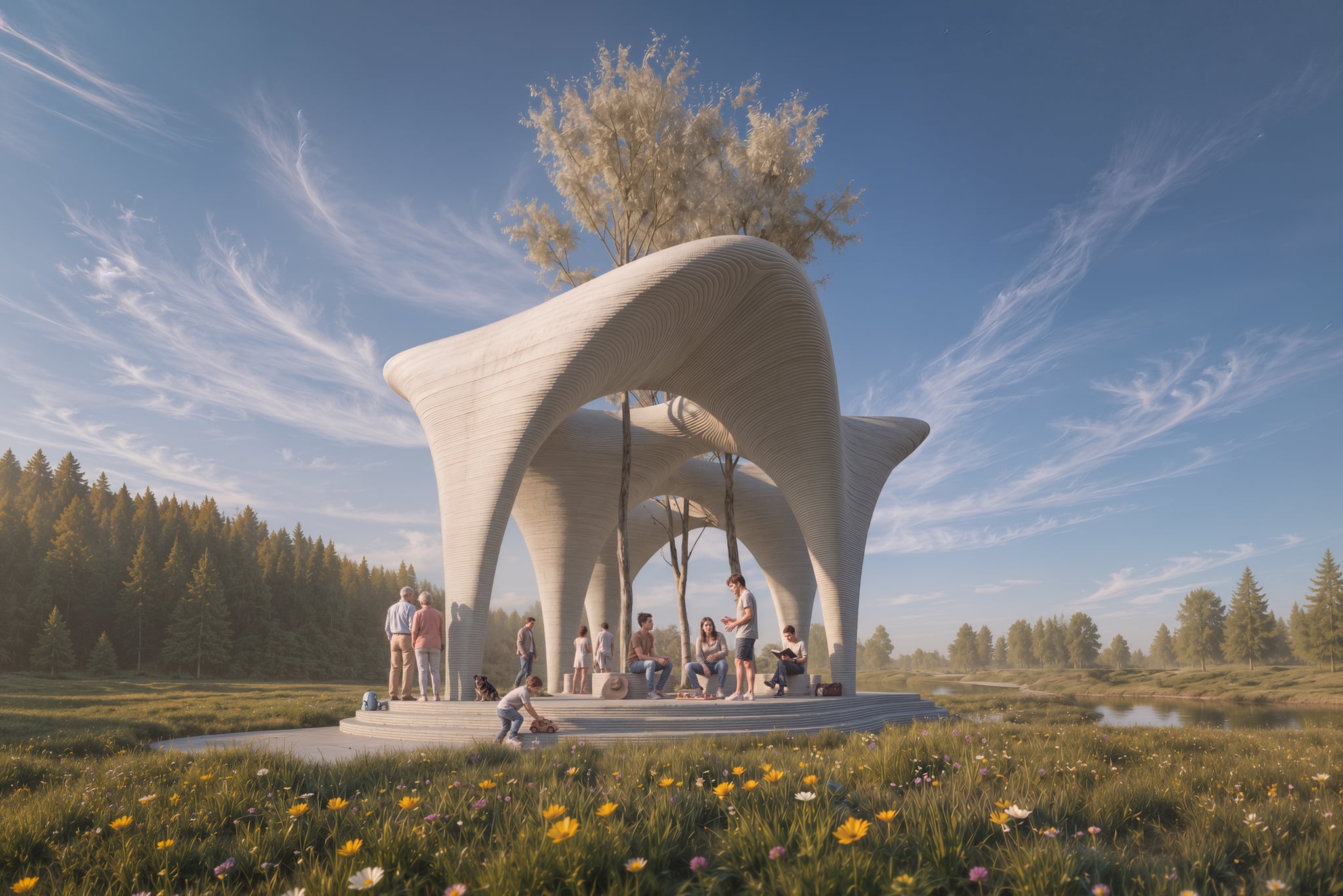
AETHERIUS
An organic structure in which additive manufacturing transforms waste from the stone industry into architecture for the city.