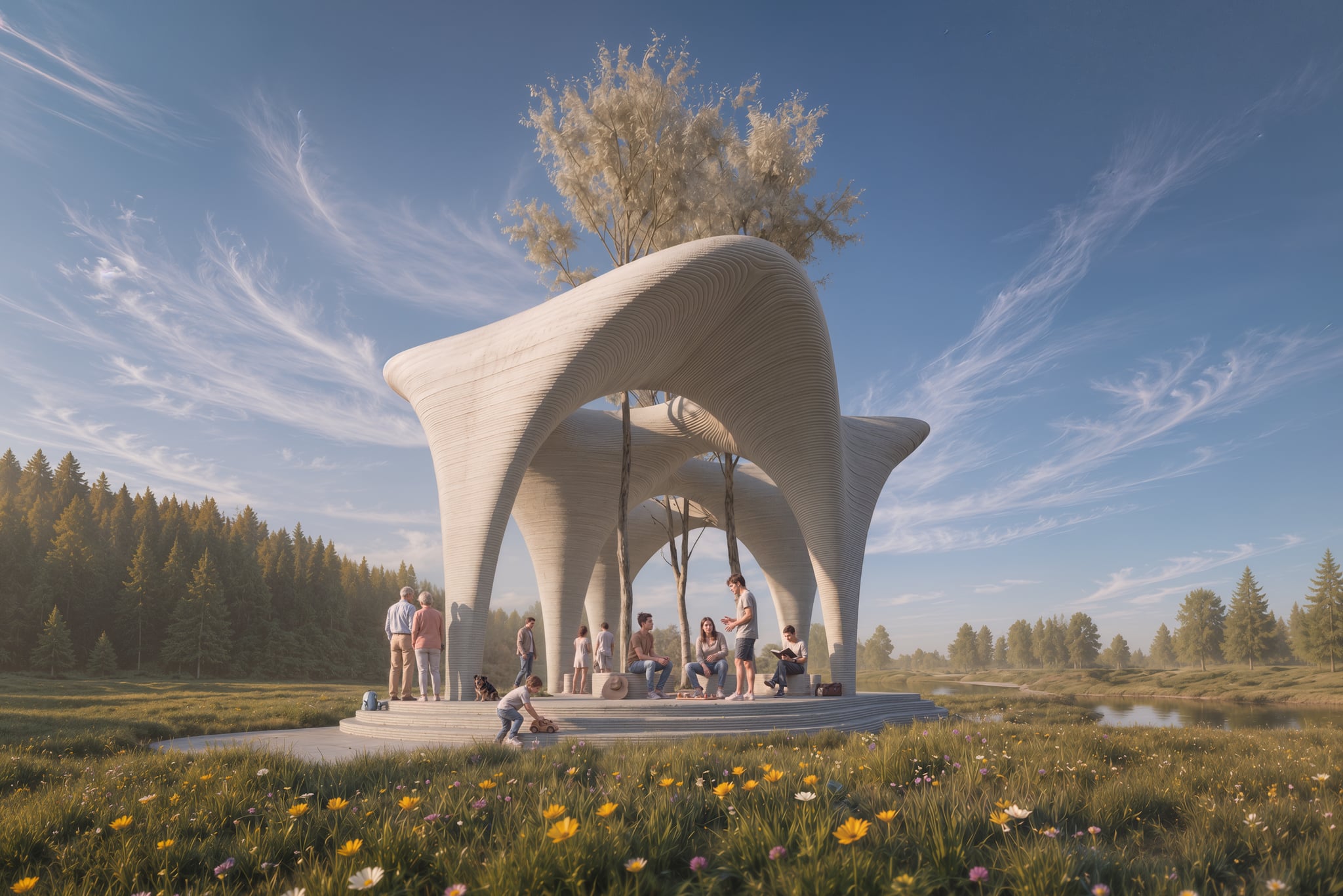
AETHERIUS – A modular pavilion 3D-printed using recycled stone aggregates
An organic structure in which additive manufacturing transforms waste from the stone industry into architecture for the city.
2024 · Puglia · Pavilion · 3D Printed Design
When waste becomes structure
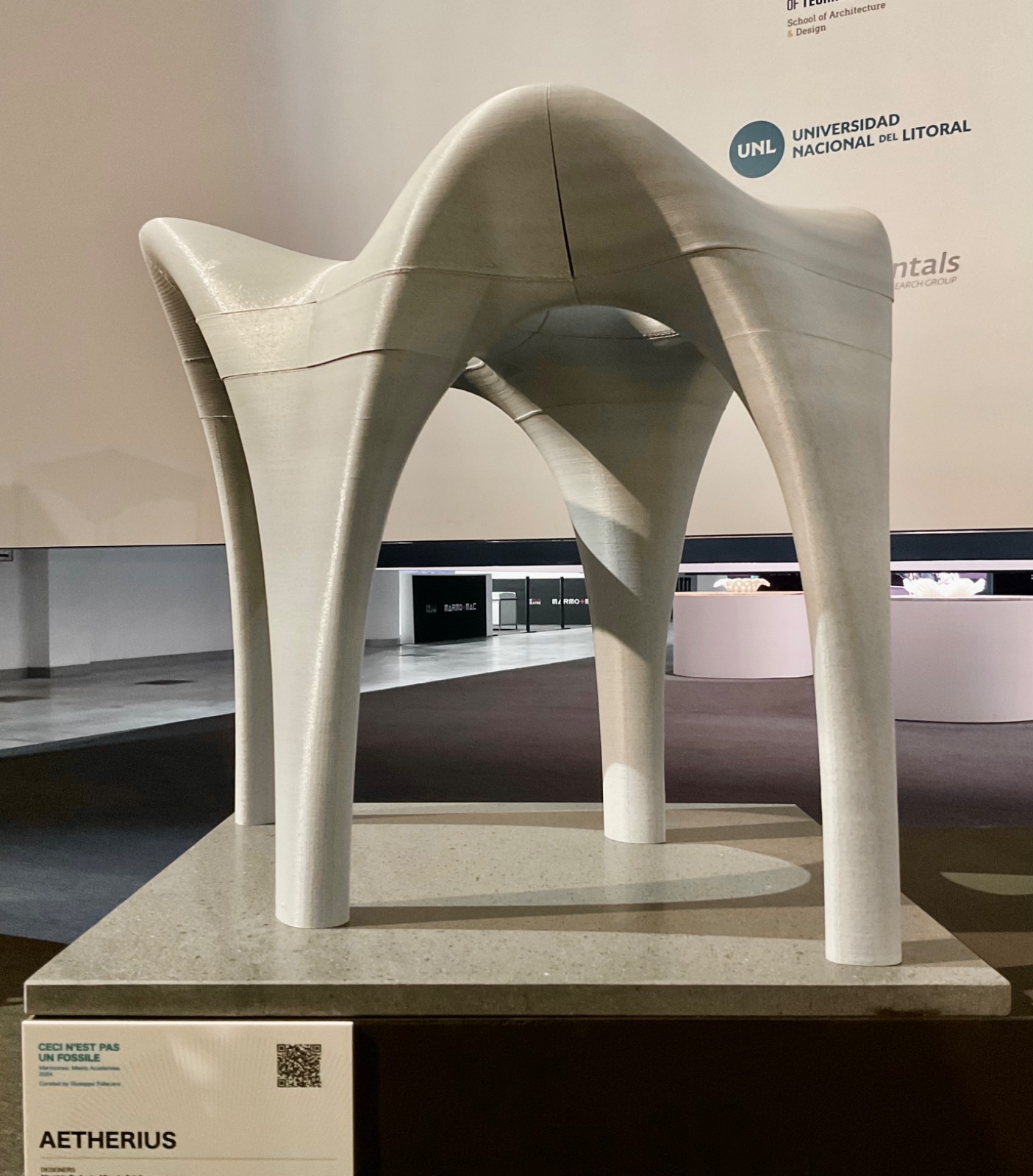
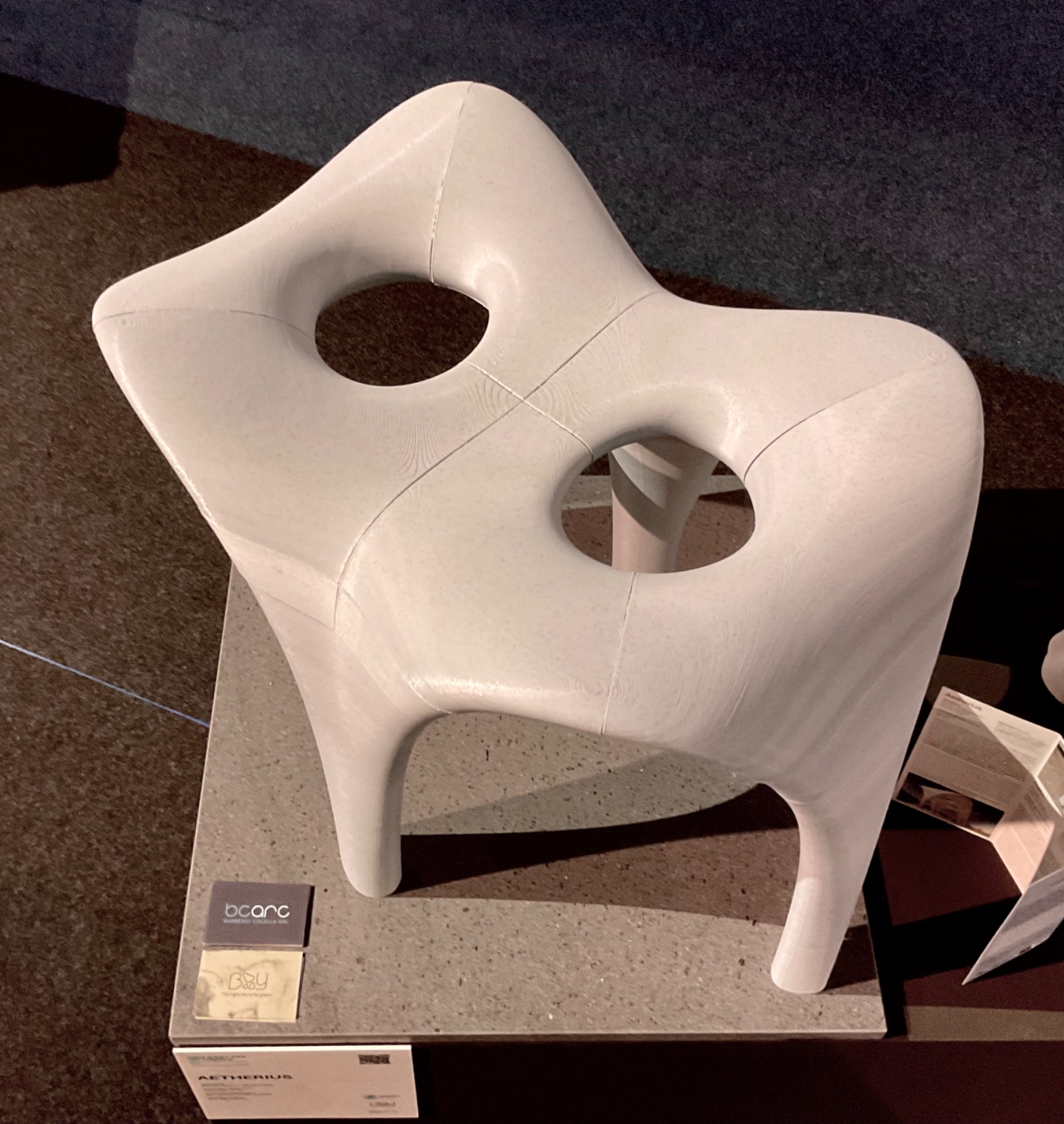
AETHERIUS stems from a desire to demonstrate that architectural 3D printing can generate forms of great geometric complexity using materials with a low environmental impact. The pavilion is conceived as a modular structure printed by extrusion, whose mortar is composed of marble dust, stone and aggregates recovered from the stone industry. This approach tackles two issues simultaneously: the search for new applications for additive manufacturing on an architectural scale and the reuse of industrial waste that would otherwise end up in landfill.
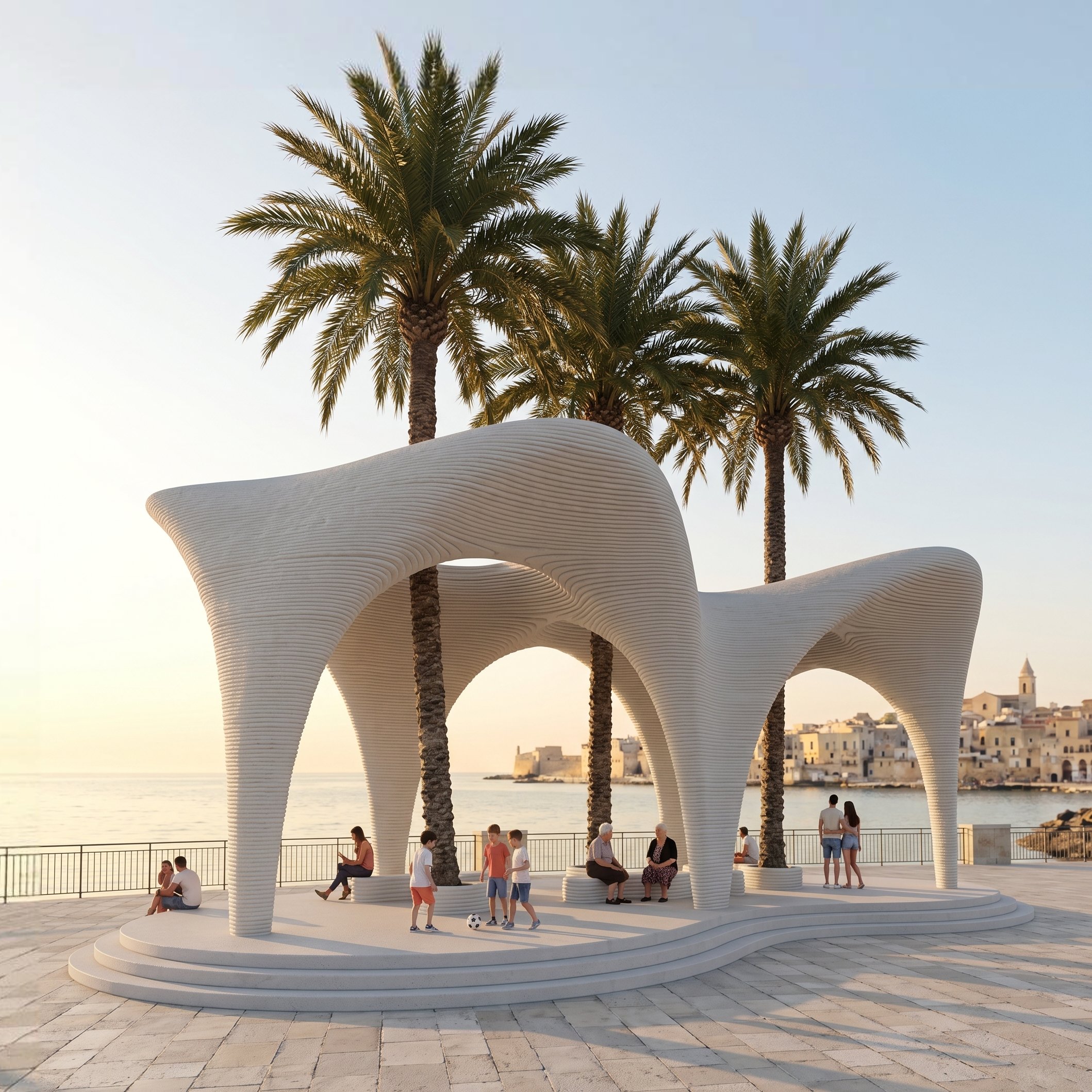
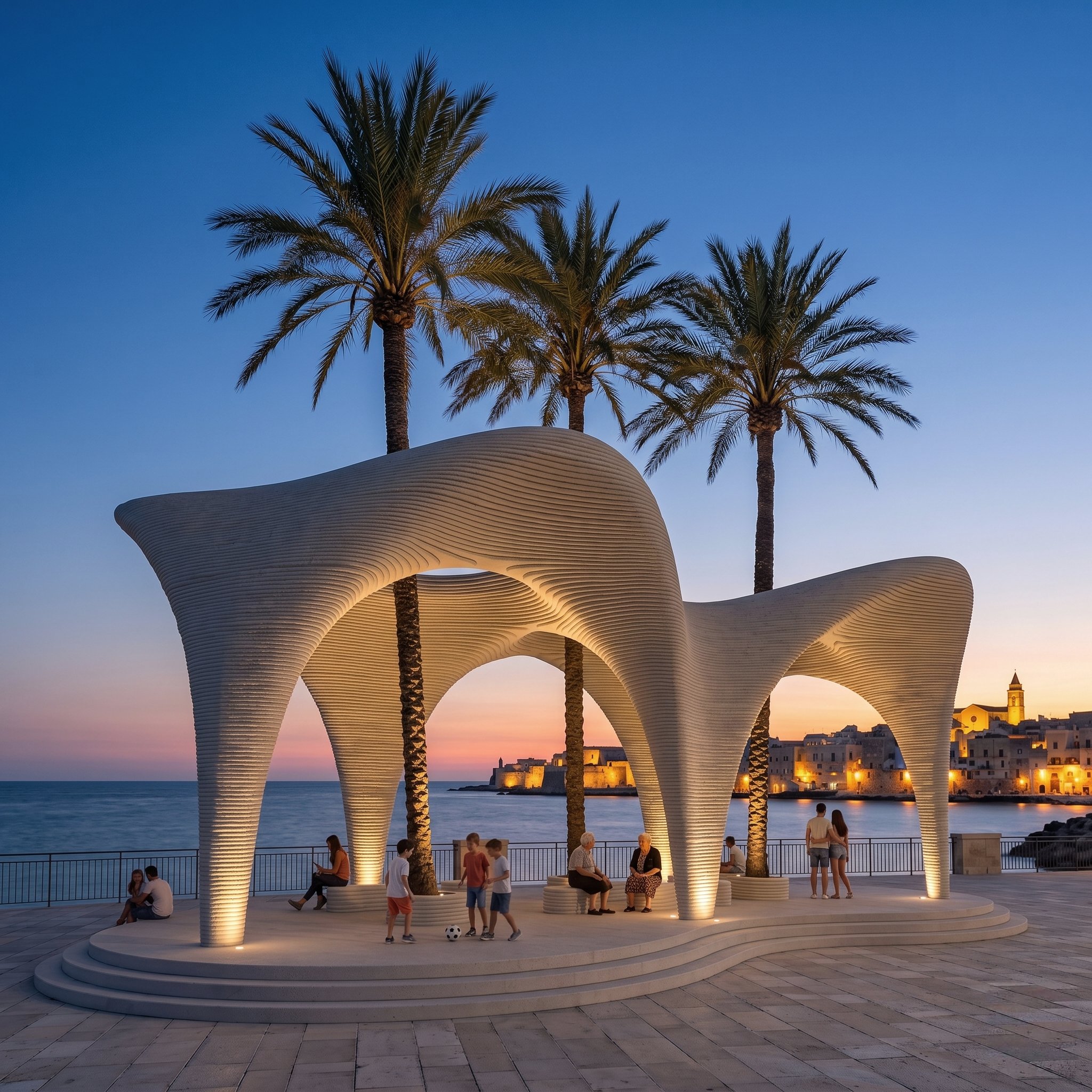
The design challenge lay in reconciling an organic, fluid morphology (inspired by natural forms) with the technical constraints of the extrusion process. Each module had to be printable as a standalone unit and assembled sequentially, ensuring structural continuity and formal coherence. The large openings at the top are not an aesthetic gesture but a deliberate strategy: they allow natural overhead light and natural ventilation to enter, reducing the need for artificial lighting and air conditioning.
The most distinctive feature of AETHERIUS is the three-dimensional texture of the soffit, generated directly by the printing process. Rather than concealing the traces of additive manufacturing, the design transforms them into a spatial quality: the 3D-printed layers are enhanced by the interplay between natural light and the sinuous three-dimensionality of the structure. The integration of trees into the structure (which grow through the upper openings) dissolves the boundary between architecture and landscape, making the pavilion a hybrid organism between the built and the natural.
The project has been developed in collaboration with B&Y Srl and is conceived as a replicable prototype: the modularity of the system allows the configuration to be adapted to different contexts, from temporary installations to permanent public spaces. AETHERIUS demonstrates that 3D printing is not merely an alternative construction technique, but a design paradigm that allows for the simultaneous rethinking of form, material and process.
Technical specifications
- Year
- 2024
- Client
- B&Y Ltd (in collaboration with)
- Typology
- Modular pavilion
- Status
- Concept
- Designers
- Maurizio Barberio, Micaela Colella (Barberio Colella Architects)
- Contributors
- B&Y Ltd
- Main materials
- 3D-printed mortar made from marble dust, stone and recycled stone aggregates
How can an architectural structure with organic geometries be created using recycled materials?
Those who design pavilions or temporary structures often find themselves at a crossroads: choosing simple, cost-effective forms that lack identity, or complex geometries that come with high costs and waste. Additive manufacturing opens up a third way, but most architectural 3D printing projects use conventional cementitious mortars, shifting the problem without solving it. AETHERIUS demonstrates that it is possible to print structures of great formal complexity using recycled stone aggregates (marble dust and stone dust that would otherwise be waste) transforming an environmental problem into a design resource.
Frequently Asked Questions
Are you looking into 3D printing for an architectural project?
If you have a concept with complex geometries that need to be translated into printable components, or if you want to understand how additive manufacturing can work with recycled materials, we can assess the feasibility together. BCA designs for 3D printing and coordinates the fabrication process.
Send us your brief[Send your brief]
Related projects
3D Printed Design
FIRST STONE
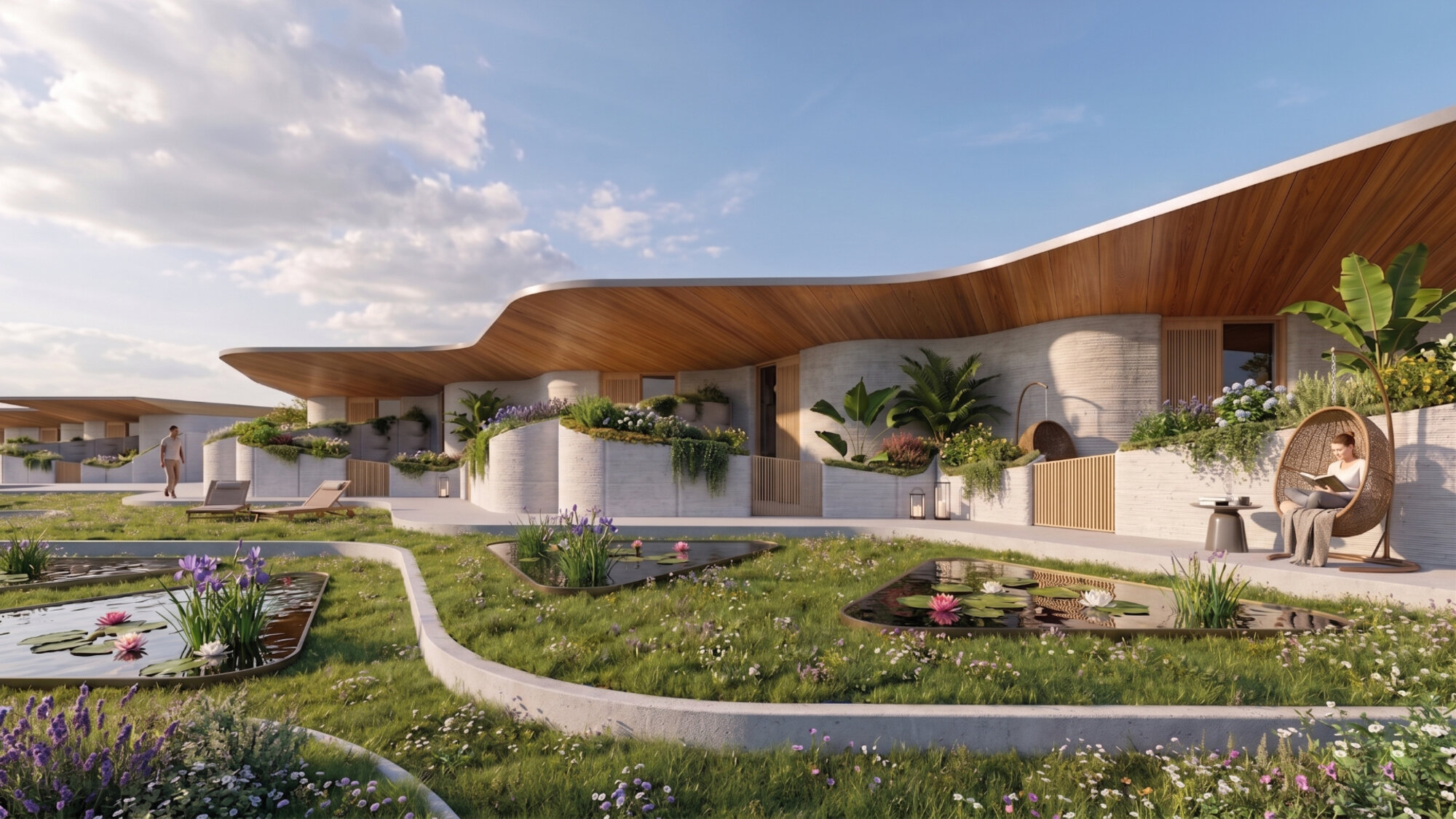
Hurricane-proof houses costing $99,000, 3D-printed for those who cannot secure a traditional mortgage.
3D Printed Design
FLOWIN' FOOTBRIDGE
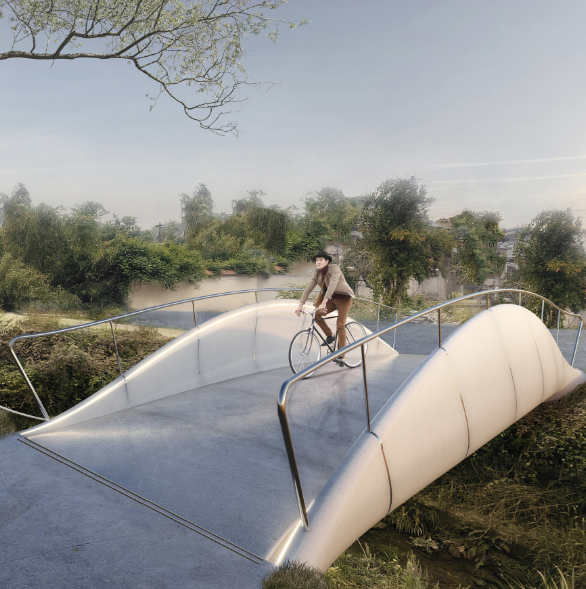
A 20 m² bridge made of modular, prestressed low-carbon concrete blocks with steel tie-rods (featuring a fluid, parametrically generated geometry) for the tourist district of Deqing County.
Sustainable Design
URBAN DUNES
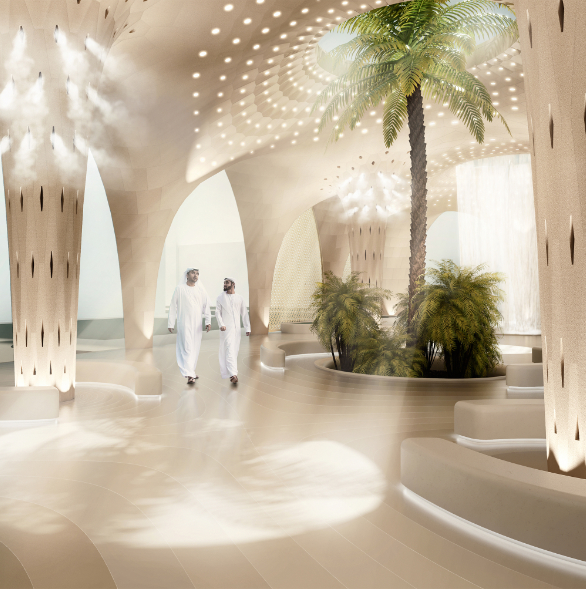
A 3D-printed desert sand structure that transforms a public space into a passively air-conditioned urban oasis.