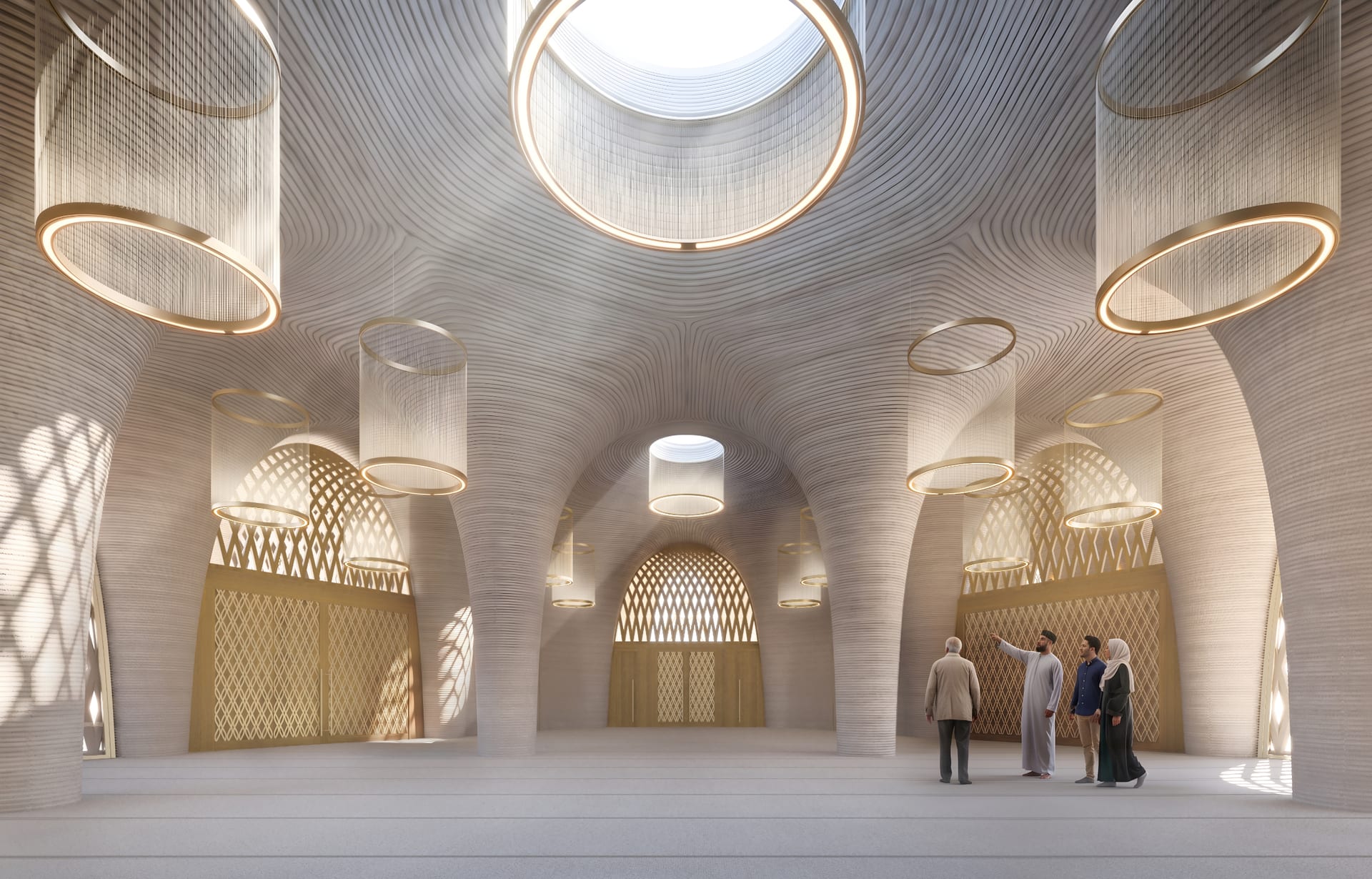
3D-Printed Mosque – A 3D-printed mosque in Kuwait
A place of worship where additive manufacturing makes it possible to create complex vaulted surfaces at a sustainable cost, reinterpreting Islamic architecture using contemporary techniques
2025 · Kuwait · Place of worship · 3D-printed design + sustainable design
When 3D printing meets Islamic tradition
In a new neighbourhood under construction in Kuwait, the Kuwait Real Estate Company (AQARAT) has commissioned a mosque intended to become the spiritual and cultural focal point of the community. Barberio Colella Architetti has designed a building that combines the technique of 3D printing via the extrusion of cementitious material with the traditional structural system of reinforced concrete (RC), producing an architecture where technological innovation and cultural identity reinforce one another.
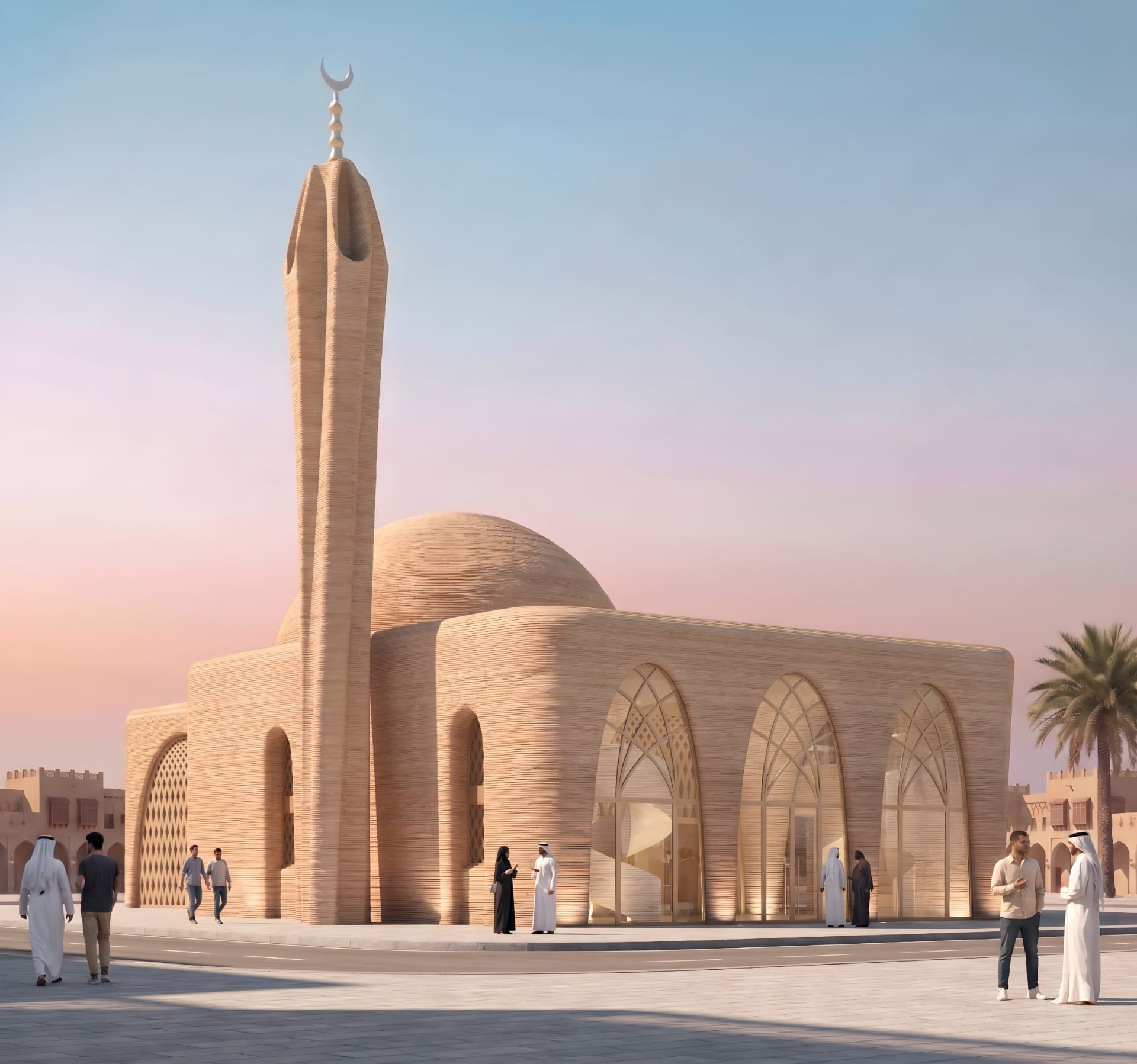
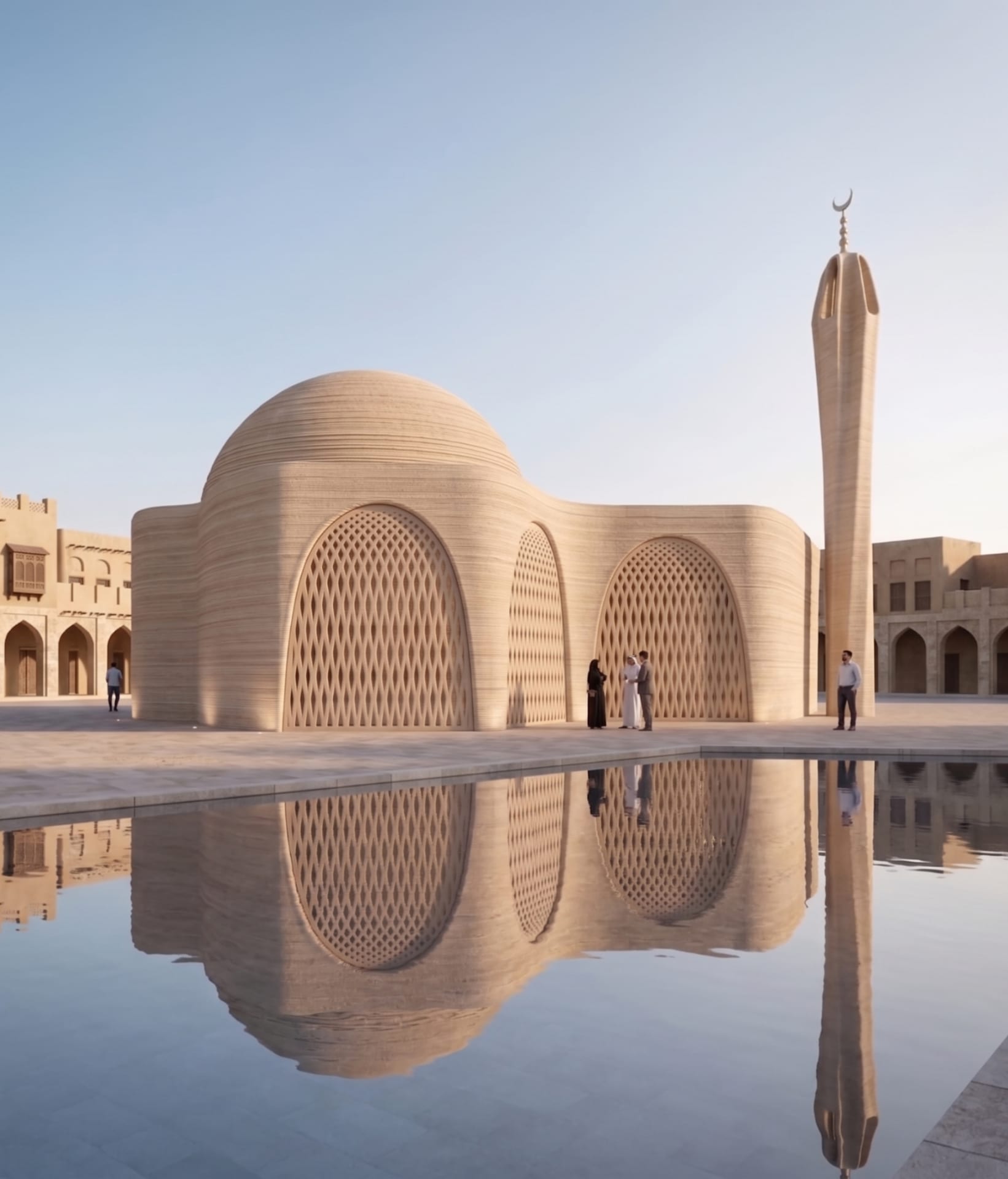
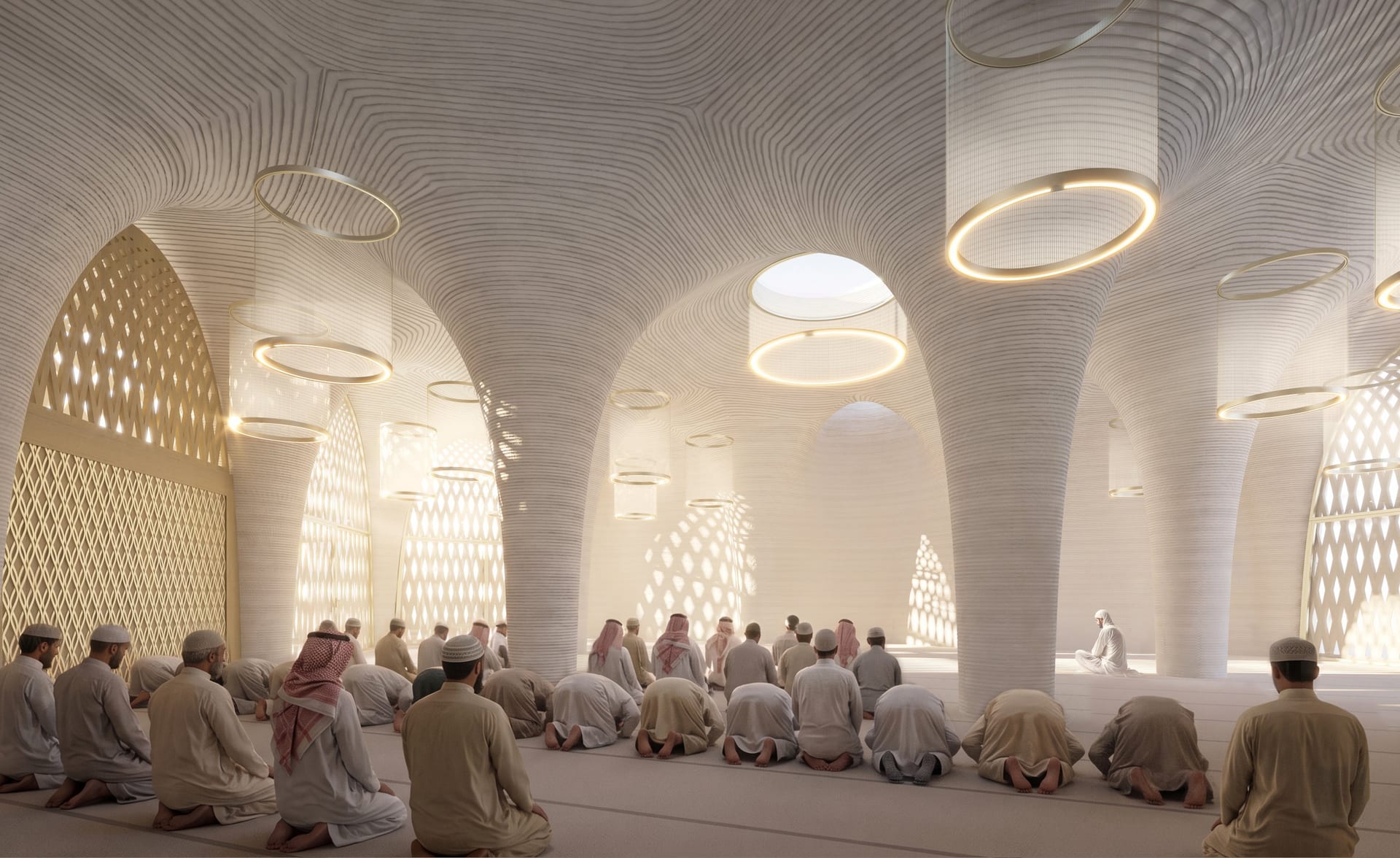
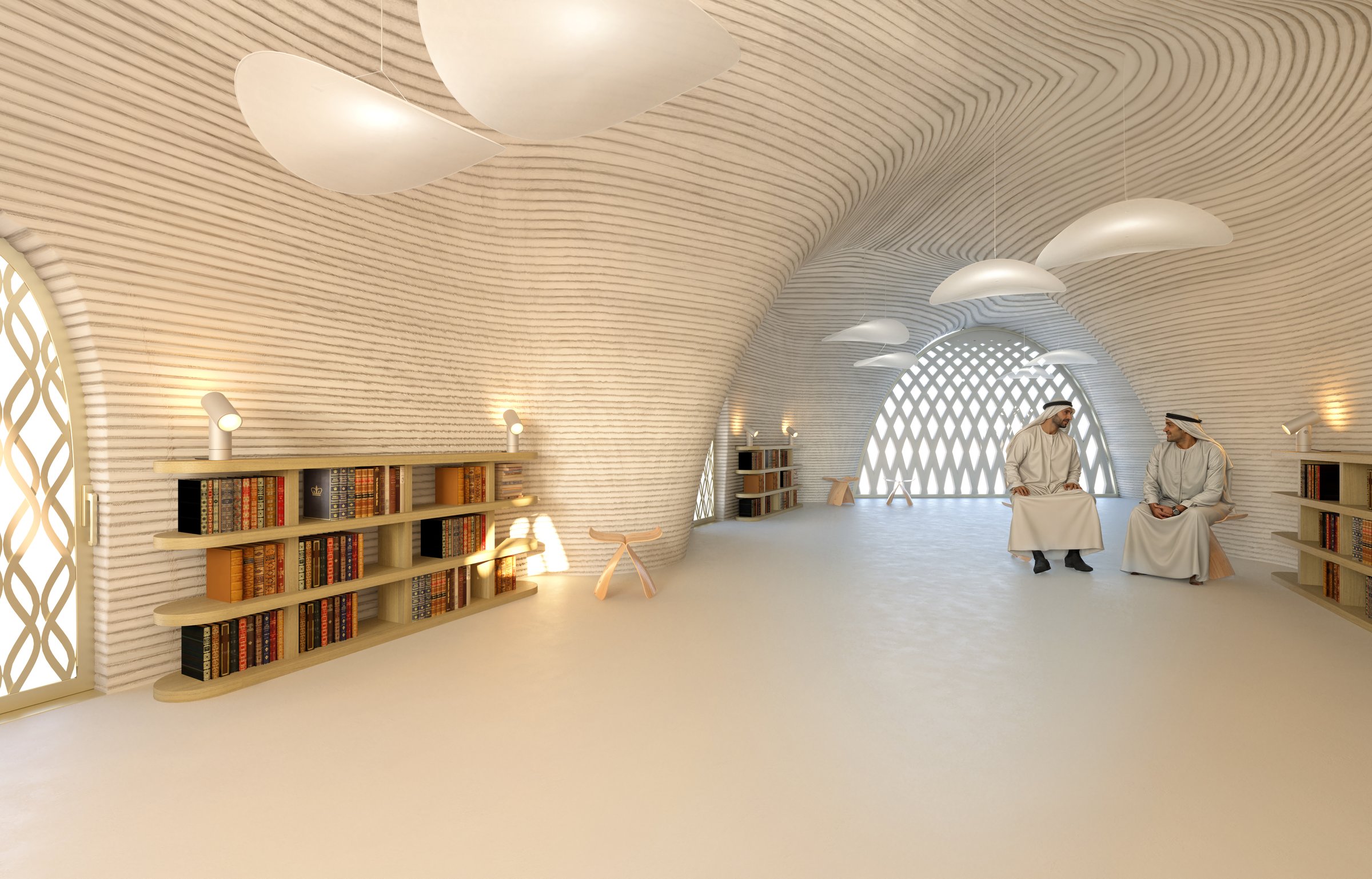
The concept reinterprets the fundamental elements of Islamic architecture in a contemporary key: vaulted spaces, mashrabiyyas as shading and ventilation devices, and zenithal skylights for natural light. The form is based on a modular composition of hexagonal and triangular shapes, creating a 297 m² diamond-shaped prayer hall (capable of accommodating 356 worshippers) covered by complex vaults with two central domes featuring skylights. The mihrab, on the wall facing Mecca, is illuminated from above by a zenithal skylight that creates a pool of natural light.
The construction system is the technical heart of the project: the 3D-printed parts act as permanent formwork for the reinforced concrete (RC) structure, creating a monolithic whole. Printing takes place in two stages (on-site up to a height of 3 metres, off-site for the upper modular elements) with the insertion of layers of fibreglass to improve flexural strength. The printed vaults, with optimised thicknesses, offer high thermal inertia that stabilises internal temperatures, whilst the large GFRC mashrabiyyas screen out solar radiation and promote cross ventilation.
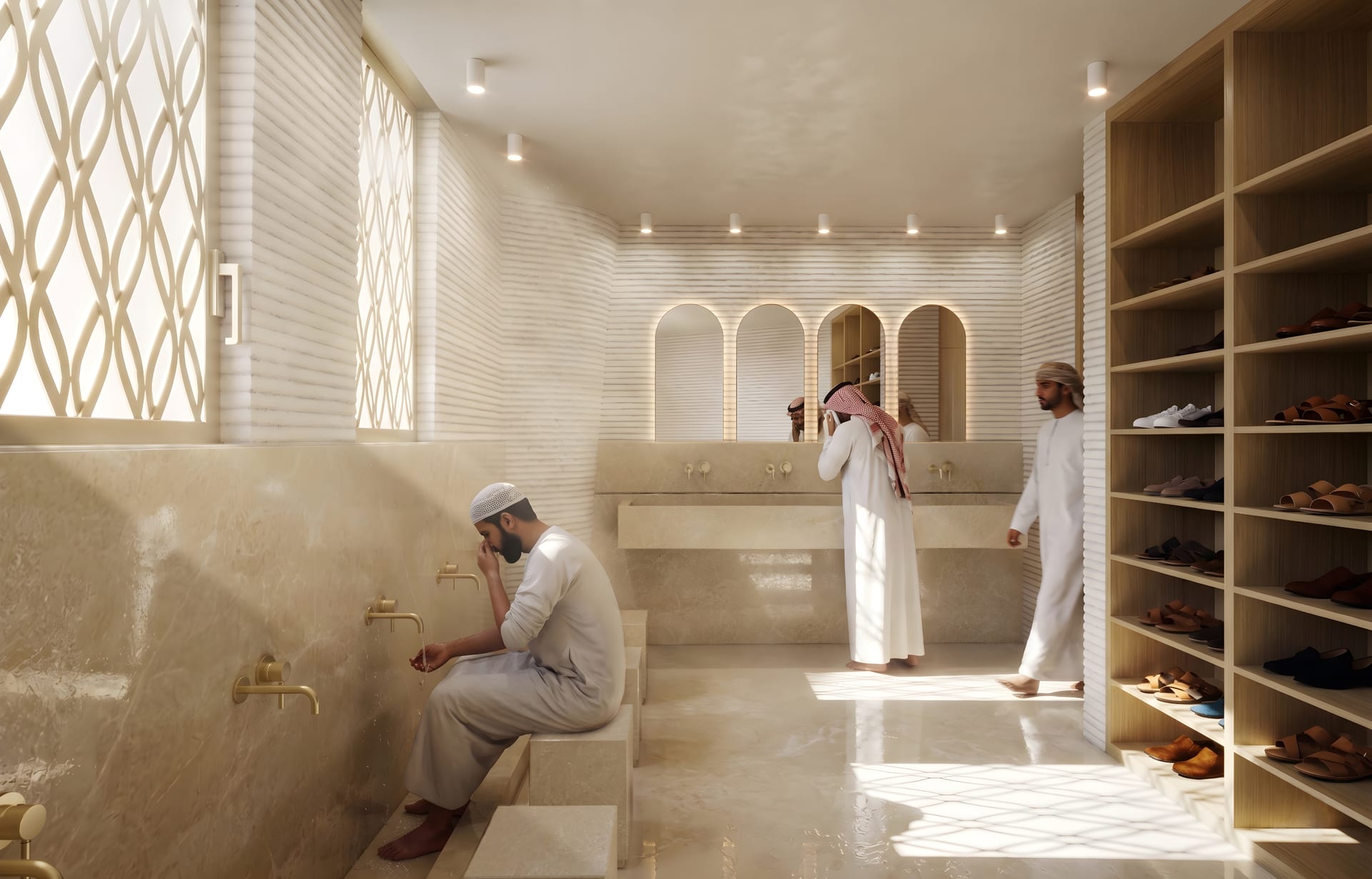
The minaret, with its slender and slightly twisted form, completes the building’s identity. The materials, beige cement mortar (evoking sand), Burdur Beige marble, Iroko timber, and gold-coloured aluminium, form a palette consistent with local tradition yet realised with digital precision. The project includes COBOD as consultants specialising in 3D printing and Abyan Building Construction as the general contractor, establishing a complete supply chain from design to construction.
Technical specifications
- Location
- Kuwait
- Year
- 2025
- Client
- Kuwait Real Estate Company (AQARAT)
- Typology
- Place of worship (mosque)
- Area
- 495 m²
- Prayer hall
- 297 m² (capacity: 356 people)
- Status
- Detailed design completed
- Lead designers
- Micaela Colella, Maurizio Barberio (Barberio Colella Architects)
- General contractor and co-designers
- Abyan Building Construction WLL
- 3D printing consultants
- COBOD (Simon Klint Bergh, Roshin Anthoora Valappil, Laith Sharar)
- Main materials
- 3D-printed cementitious mortar, reinforced concrete (RC), GFRC (mashrabiyye), Burdur Beige marble, Iroko timber, gold-coloured aluminium
How can a mosque be built that is technologically innovative without losing the identity of Islamic architecture?
3D printing in architecture risks producing generic forms that do not engage with the cultural context. On the other hand, traditional construction struggles to create complex vaulted geometries at sustainable costs. The 3D Printed Mosque resolves this paradox: additive manufacturing becomes the tool for precisely reinterpreting the fundamental elements of Islamic architecture (vaults, mashrabiyya, minaret) producing forms that conventional construction could not achieve with the same efficiency. The printed parts act as permanent formwork for the reinforced concrete (RC), creating a monolithic structure where innovation and tradition are integrated at a structural level, not just a formal one.
Frequently Asked Questions
Do you have a project that requires additive manufacturing on an architectural scale?
If you are exploring 3D printing for a complex building (whether a place of worship, a public building or a commercial property) BCA has the expertise to turn your concept into a buildable design, coordinating the entire process from parametric modelling to site preparation.
Send us your brief[Send your brief]
Related projects
Sustainable Design
URBAN DUNES
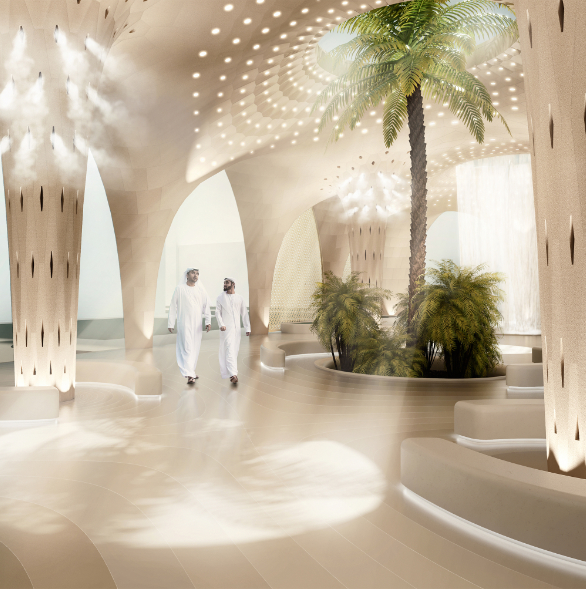
A 3D-printed desert sand structure that transforms a public space into a passively air-conditioned urban oasis.

3D Printed Design
ADDITIVE STEREOTOMY
A new construction system that combines traditional stereotomy with additive manufacturing to create optimised vaulted spaces.
3D Printed Design
FIRST STONE
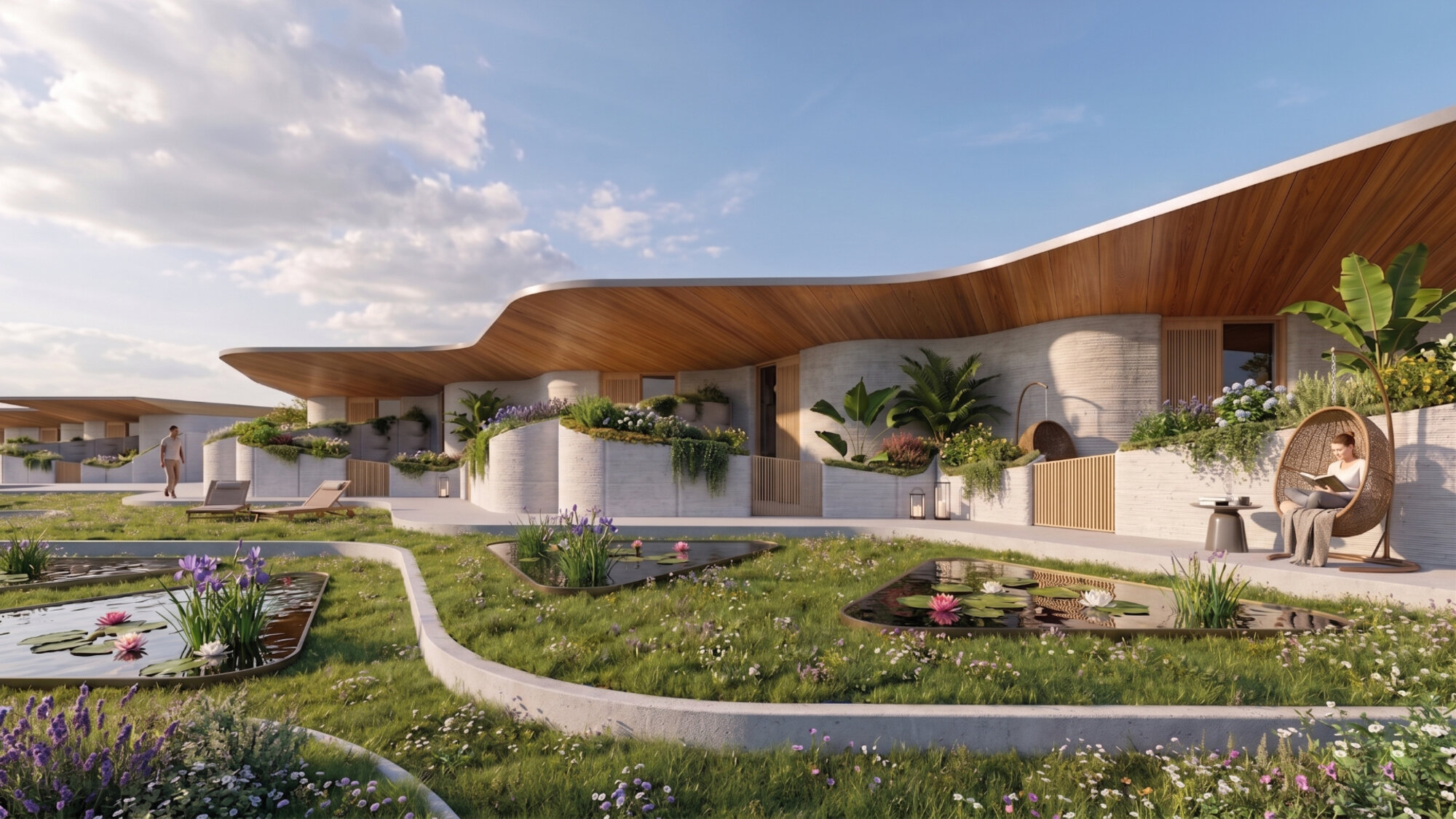
Hurricane-proof houses costing $99,000, 3D-printed for those who cannot secure a traditional mortgage.